How many castes are Newars? Where is his settlement? In the 5 books of 'Neva: Cultural Encyclopaedia', there are not only information about tolls and tolls of the valley, but also stories from gods, temples, currency to Nepal Samvats.
We use Google Cloud Translation Services. Google requires we provide the following disclaimer relating to use of this service:
This service may contain translations powered by Google. Google disclaims all warranties related to the translations, expressed or implied, including any warranties of accuracy, reliability, and any implied warranties of merchantability, fitness for a particular purpose, and noninfringement.
Ayla: Oh yes, its name alone can thrill many. You have to taste it at least once to know the sensation it creates. There are many who say 'mouth watering'. Again, Ayla has its own history. Making technology is also own.
Ayla: It doesn't happen by itself, it needs a lot of other things. refuse like Ayla: Not only rice and chiura, mana is also essential to make. Now the question may be, what is this Mana and how does it become? Special utensils are also required for making
Ayla. As, Pwatasi. The knife thing again. At least once a year it is equally discussed, during Maghe Sankranti. The technique of making knives is also its own, and the necessary materials for this are also the same.
More brick things. How is it made? How many types is it? How is Chiura even made? How much it really is will have its own funny story.
is interesting to many, if the answer to all these can be found somewhere, it will be a rule. Or let's say, it must have been written somewhere. Now it's done. We have before us, so to speak, five books.
All the names are 'Neva: Cultural Encyclopedia', but it is written in five different genres. It itself is very comprehensive, very painstakingly written. So it is also unprecedented. If the pages of all the five books are joined in one place, it is 2 thousand 415. The
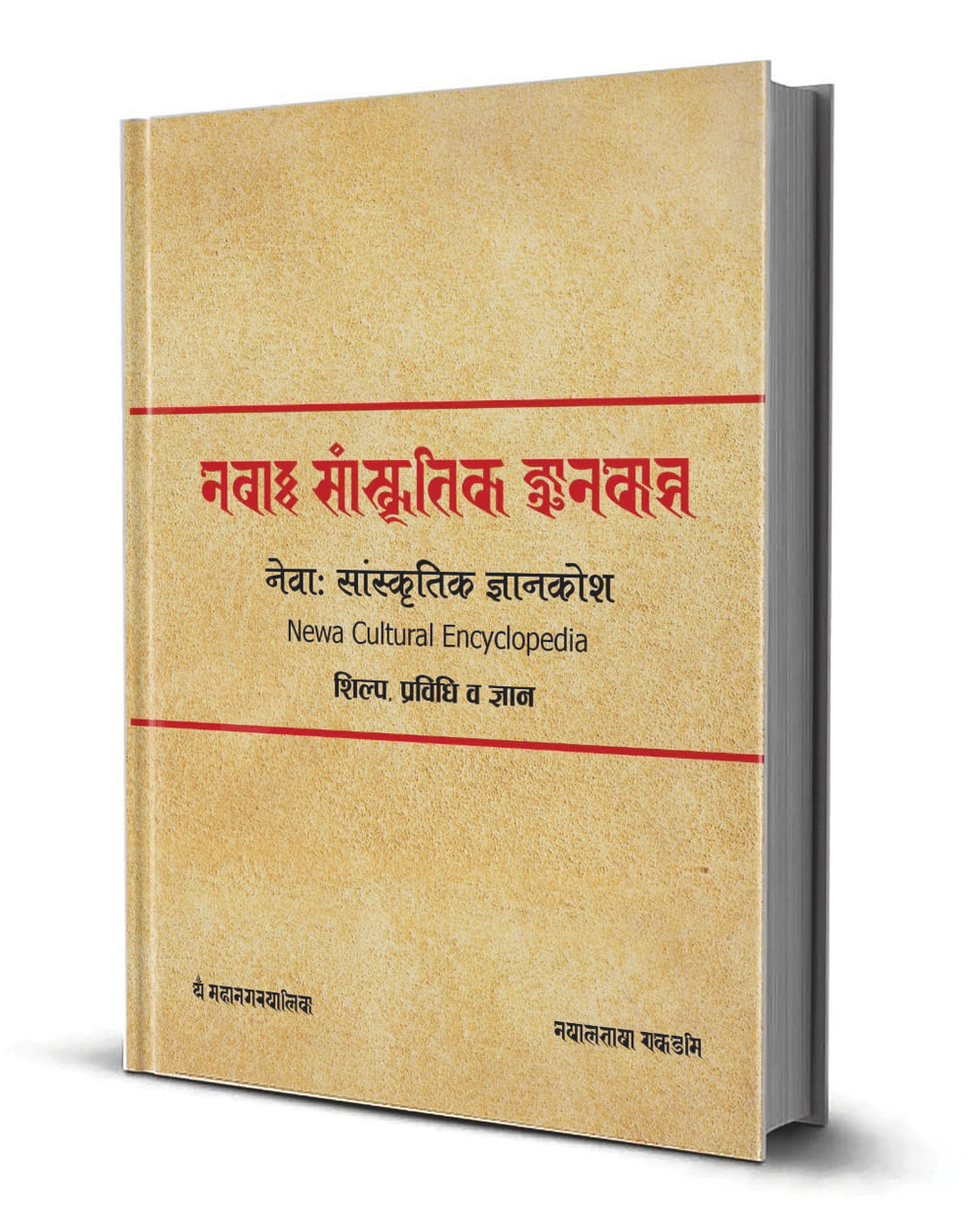
we discussed above is a book about Ayla, Knife and Brick, 'Crafts, Technology and Knowledge'. It discusses all those things made of clay and metal. In the same way, the Newar caste is a farmer. This in itself became a huge topic. Especially, the agricultural work done in Kathmandu Valley is different from other places, the tools used in it are even more different. The answer to all this is in this book. Not only the
, but most importantly, it has solid information about the sculpture and the hit system. After preparing such a background, everything will collide directly. It has become Newar, 'Neva' in Nepali language. The Newars became Nepal's own original human community. Therefore, it has been rightly said, based on cultural anthropology, it has also become a very elaborate civilization. If we want to introduce our country to the international level, Neva: Civilization has become a big base.
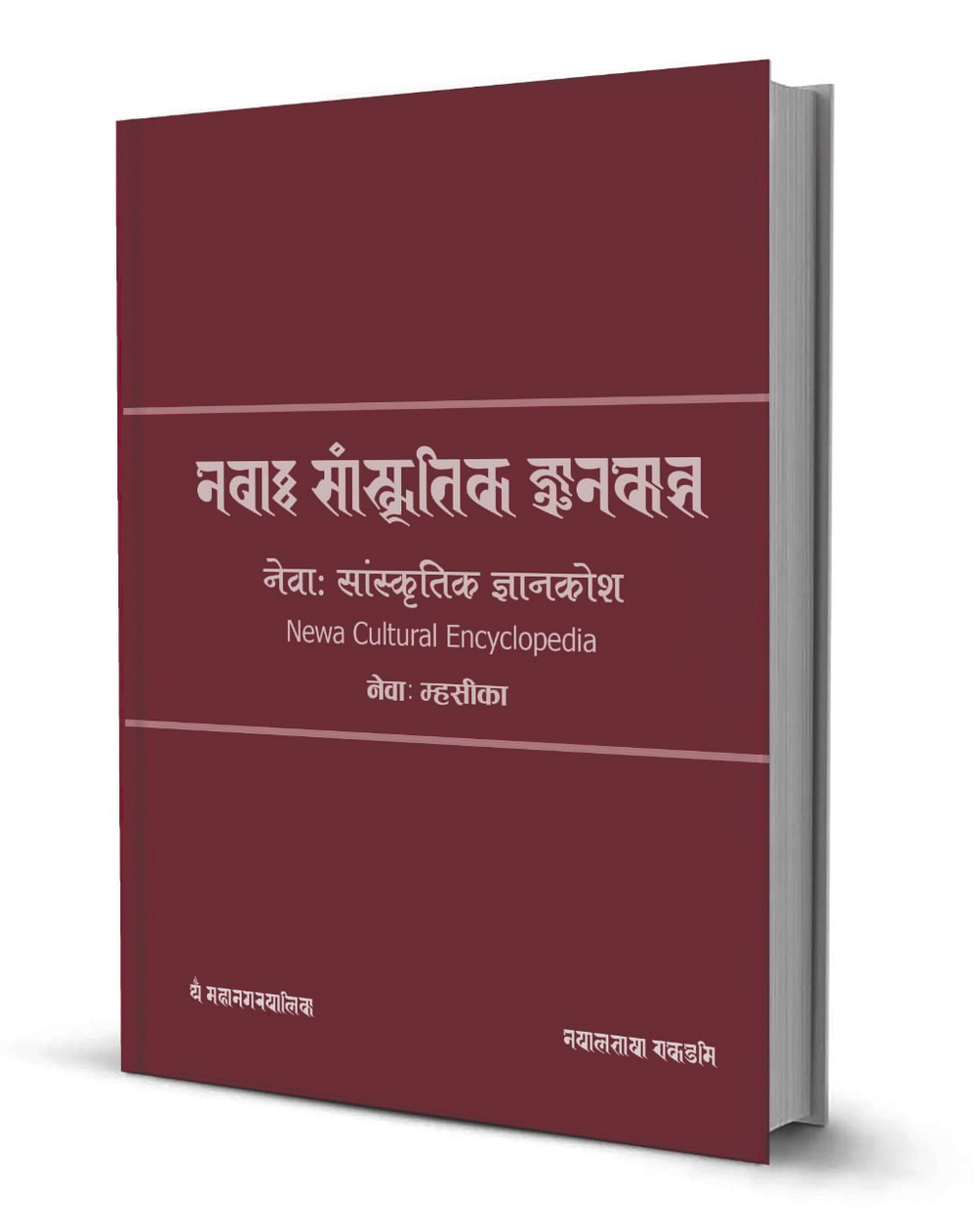
Again, there is not only depth in this Newar civilization, but also diversity. Not only national, but international studies are being conducted on this. Therefore, we have a lot of knowledge about Newar civilization, history, caste, culture, language, literature etc. Now the question is, is it officially in one place? no If not, now there is and this is this 'Neva: Cultural Encyclopaedia'. It is the second book of this collection written in Nepali language, 'Neva: Mhasika'.
It is written about the historical development of the Newar race. How many types of castes are there within Newar, where are their settlements, this is discussed in Newa: Mhasika. This book does not only contain the names of Toltols of Kathmandu Valley and information about them, it also contains enough information from deities, temples, currency to Nepal Samvat. It also mentions the Nepalese language movement, which itself is quite suitable for study.
This is followed by the third book 'Culture and Heritage'. This is probably the most important book of all. Because it mentions in detail Guthi, Jatra, festivals, ornaments, clothes, beauty, rituals, deity, healing and medicine and traditional instruments. Guthi may be a subject that many people do not understand what it is.
In this case, there is a lot of information about not only Guthi, but also who are Guthiars, what is the basic policy of Guthi, how many types of Guthi are there. Guthi also has its own rules, it also has theoretical and philosophical aspects. What is more interesting is that the development of Guthi took place in different ways during Lichchavikal, Mallakal and Shahakal. So if anyone wants to know more about Guthi, this book can be the best resource. Not only that, what kind of medicine was used in Kathmandu Valley in the olden days, it can also be a topic for further study.
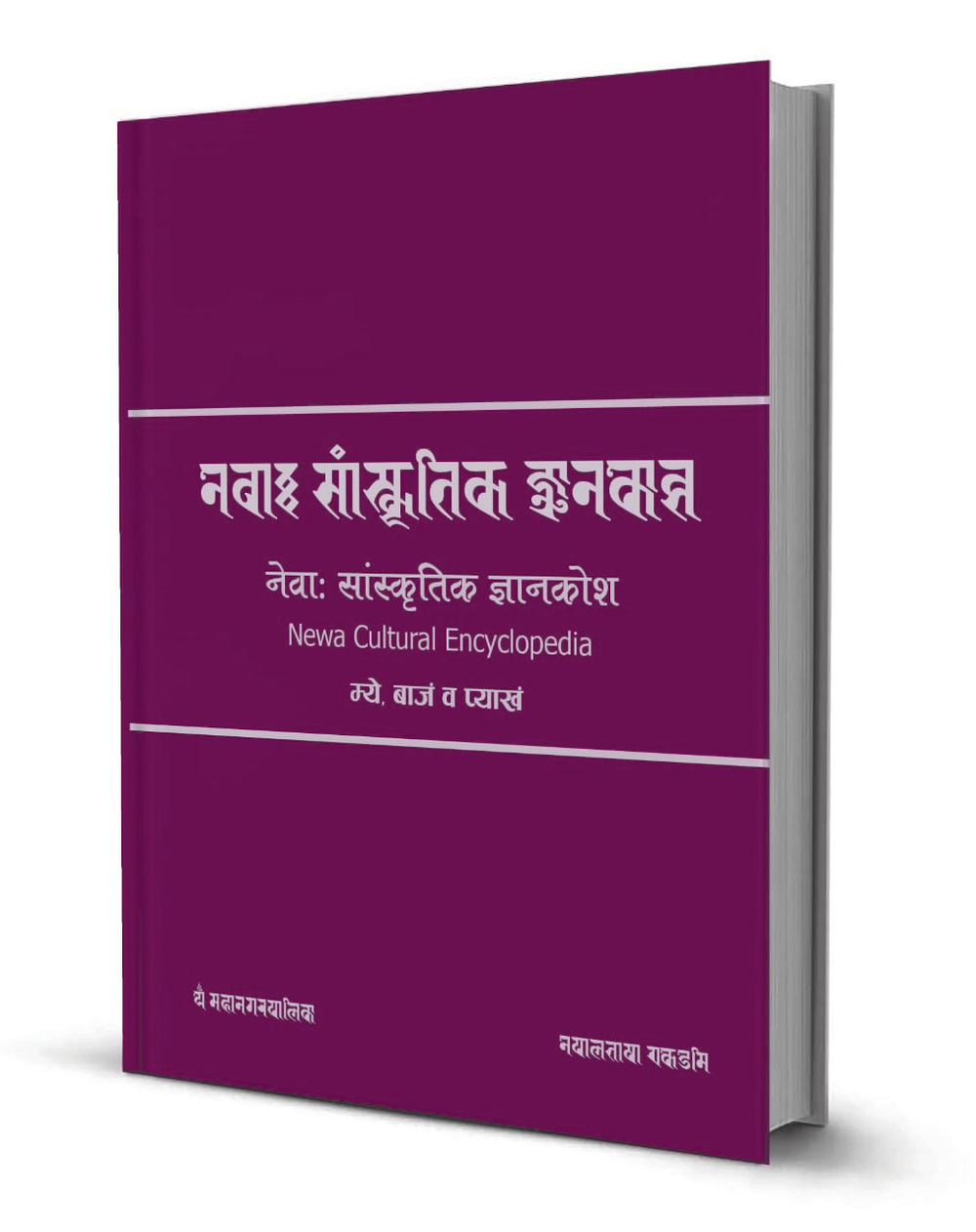
Another important topic mentioned in 'Culture and Heritage' is information about world cultural heritage in Kathmandu Valley. It happened, the legacies created by our ancestors. It contains a lot of information about the Viharas of Bhaktapur, Thimi, Lalitpur and Kathmandu. After saying Newar, there was also a feast that came together. The feast is not of the same type, according to the different feasts, the dishes served in it are also different. The feast of happiness, the feast of sorrow, the feast of coming back from the pilgrimage are all different. The
is the fourth book, 'Mye, Bajan Va Pyakham'. That is - songs, musical instruments and cinema. This will be a very useful book for those interested in this genre. The topics that are provided information on it are - from musical instruments, songs, drama, cinema to the discussion of personalities who have made a significant contribution in this field. While talking about this, it will be necessary to mention here a little about Naasah Dyaah, because it is also a different and interesting topic in itself. Rather than
, there will be a god of acting, dance and music and that is him, Nasadya. It is more like a guru of that genre. He is a deity that should be accepted by artists and seekers. Almost everywhere in the Newar settlement there is a tradition of baja and dance. That is why nasadya is established in almost every settlement. Even in the old settlements in Kathmandu alone, there are 48 places where Nasdya has been established. Nasadya: Pooja is performed before starting any program of cinema, song and baja.
The original source is Kavilas of Nuwakot district. Every time it was difficult to reach there, they were dragged according to the law and established in their own tol neighbors according to their convenience. It is believed that all the musical instruments and dances of Kathmandu Valley have been created by Nasadya. It is believed that after worshiping him one will get success. Hence the tradition of nasadya: worship is given great importance.
and the fifth and final book is about 'Language, Script and Literature'. It is the thickest of the other four books. It will be the most suitable destination for those who want to understand the three subjects of Nepalese language, language, script and literature. Among the languages of Nepal, Nepali language is considered to be more rich in both script and literature. Talking about the script itself, its count reaches around a dozen. Many must have heard only about the Nepalese script and the Ranjana script.
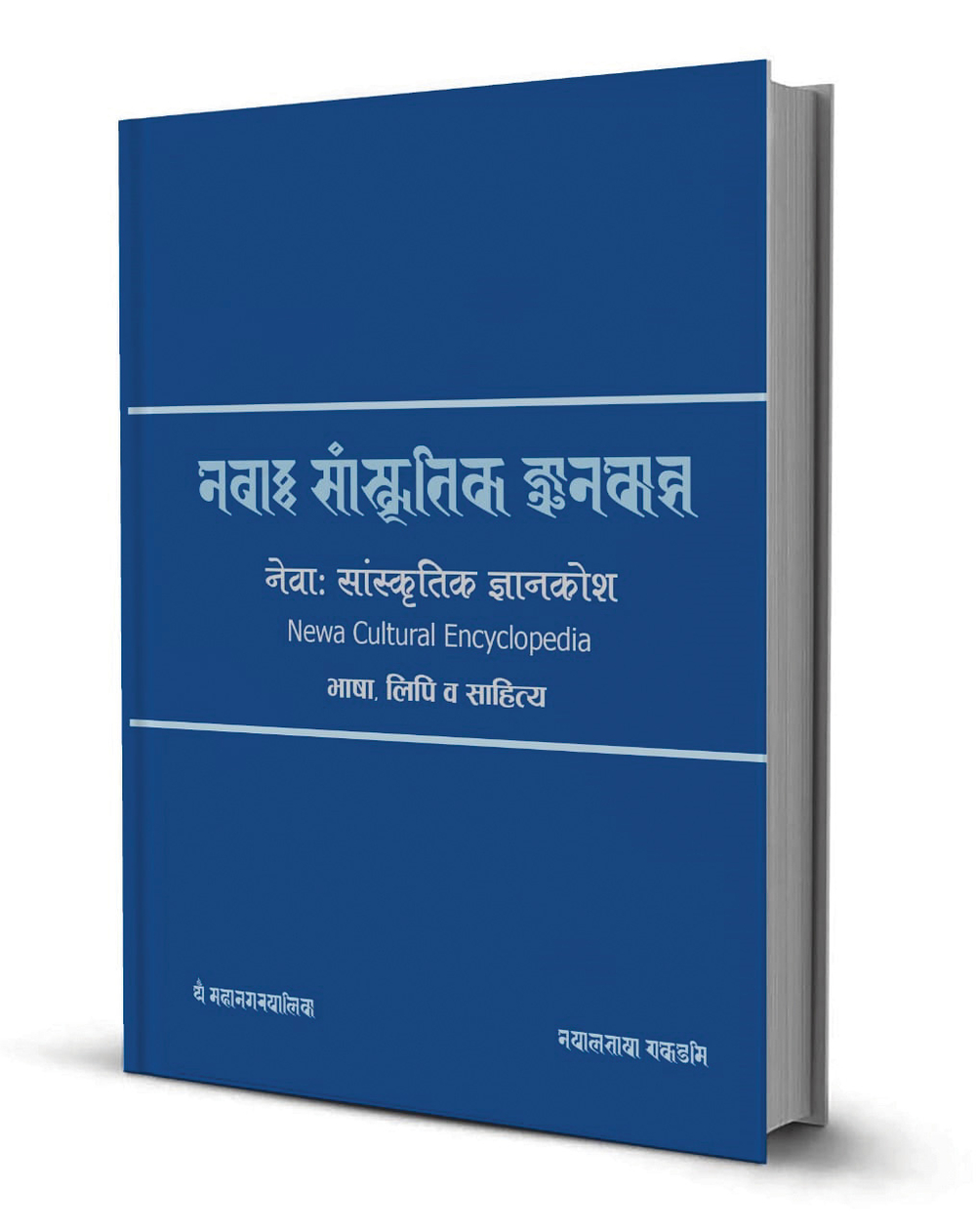
There are other scripts along with this. Like, bhujinmol, golmol, litumol, queymol, kummol, hinmol and even pachumol. What is this script? How are these scripts written? These questions are equally important. It also mentions in detail about the ancient, medieval and modern period of Nepal language literature. It has information about all the new and old writers of all genres as well as local and foreign scholars. And, at the end, there is also a little written about Nepali language journalism.
Now there may be more questions, who is the author of these books? It does not have a specific author. Who can write alone on so many topics? Therefore, it is the summation of the long-term study, experience and inquiry of more than a hundred authors. This book is a collection written by the author in the genre he is used to. Its creator and coordinator is Malla K. are beautiful Its publisher is Nepal Language Academy and Kathmandu Metropolitan City.
Kathmandu Metropolitan City has raised financial resources. It is a collection of five such books, which can be considered as sources of many subjects. Now you can study more by focusing on the subject you are interested in. For example, an engineer may be interested in how temples and traditional houses are built. A practitioner may be interested in what traditional medicine was like. The seeker may be interested in what the song was like. From
sociologists, anthropologists and historians to the general curious, this collection of books is equally useful. This article has questions from the beginning. The last question is, such a useful collection of books is already in Nepali language, we need it in Nepali language too, why not? The answer is yes. Need it anyway. The work of translating it into Nepali language was also started, but it could not progress further. Now this should work.

