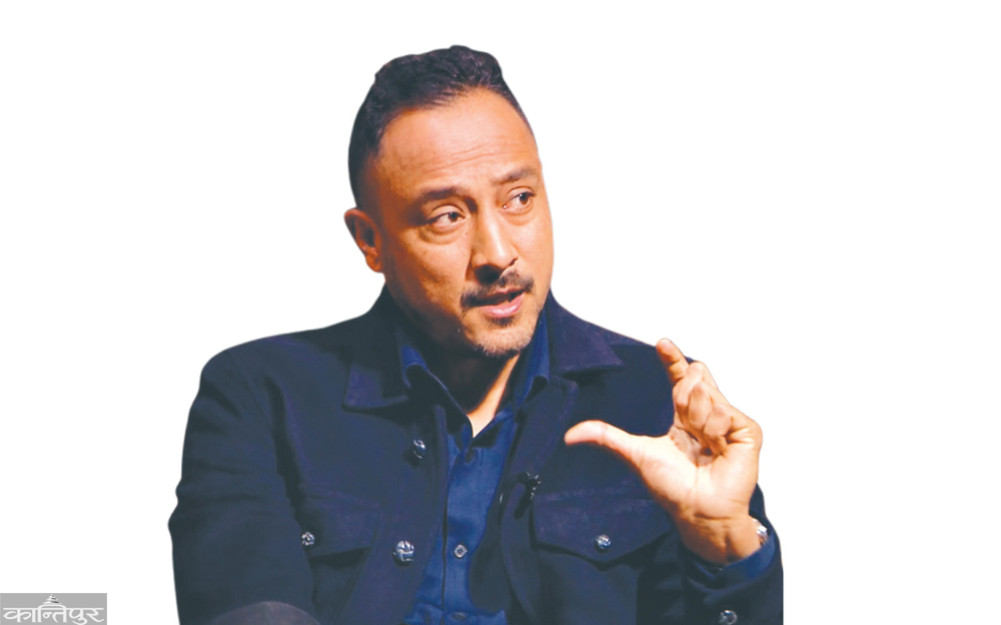
Paras Khadka is not only a skilled player on the field, but also skilled in personal strategy. He is happy to make a strategy according to the strength of the opposition.
We use Google Cloud Translation Services. Google requires we provide the following disclaimer relating to use of this service:
This service may contain translations powered by Google. Google disclaims all warranties related to the translations, expressed or implied, including any warranties of accuracy, reliability, and any implied warranties of merchantability, fitness for a particular purpose, and noninfringement.
As much as Paras Khadka has become the subject of congratulations for the successful organization of the Nepal Premier League (NPL), he also deserves congratulations when he captained the national cricket team of Nepal for 10 years. While 'Quiet Quitting' was going on in corporates around the world, Paras retired from the game in a similar fashion.
Paras, who left the captaincy of the national team on October 28, 1976, announced his retirement on social media on the morning of July 19, 1978, almost two years later.
Contrary to the tradition of players who have had a successful playing life, who usually announce their retirement from the field, Paras prepared for his retirement quietly and sent the retirement letter to Can only after writing it on Facebook. This was 3 years ago.
Some time after announcing his retirement, when he was called for an interview on 'Fireside', Paras told about his decision to retire. He said that he had been mentally preparing himself for some time to make that decision. After making up his mind, he consulted some very close friends.
The discussion with friends was not for taking advice, but only for the purpose of giving a decision. Even in the family, he did not consult anyone, only passed the decision. He did not care much about the response. Even his own grandfather, who had watched Paras's cricketing life most closely and knew him personally, did not consult him, only informed him of his decision to retire.
Gyanendra Malla, who was the vice-captain when Paras was captain, says, 'When he left the captaincy or retired, he talked to us, but he was clear about his decision.' Nepal won the first match in ODI cricket. In the match against Netherlands, Paras performed very smartly in the decisive mode and secured a thrilling victory by one run.
Paras was not so happy after his retirement. Having spent 20 years playing cricket on the field, he did not think that he should wait for the match on the field to retire. "The time I spent on the field, I had the support of the supporters. I received a welcome when I returned from abroad and a farewell when I left. I didn't think that I should go around the field and ask for leave to take sannyas again," he told me.
was his honest expression, 'I stopped thinking that I can play with my life on the field. So playing for the sake of playing would be like betraying my team.' Ex-captain Gyanendra says, 'He is instinctive, understands things quickly and can make decisions after thinking.' Among all the qualities of
leadership, the most important are - wise decision-making ability and the ability to prove the decision is correct. It is said that a person's leadership ability is proven only when he can confirm the occasional decision he takes. He later confirmed that, by being elected as a CAN officer and by the actions he took after. He did as much as he could while leading the national team. It was not possible to improve the fate and future of cricket as a whole by wearing the captain's cap.
He was also clear that he should go into sports management after retirement and only then can cricket be uplifted. Being aware of Can's condition while he was the captain, he was not only a witness to the edge, but also played hand to hand with Can. Those who disliked Paras called it factionalism, those who believed in him called it rebellion.
Paras, who has seen the chaos in the can since his suspension from international cricket, felt that there could be no improvement in cricket without a can. So, after retiring from active playing life, Kane was convinced that this was the way forward.
What to do if you succeed in entering the can? He had a vision for it. "We talked a lot about that," says Gyanendra, "Being a player, we thought more about cricket than ourselves. Paras kept talking about what can be done to elevate cricket, self-less. Who to tell? Why tell? He doesn't tell everything, waits for the right time and just adjusts the volume according to need. Although Caan was sure of the way of entry, he did not tell at that time. Because, it wasn't that easy either. Perhaps, at that point in his career, his ever-present confidence had faltered a bit.
Even though Paras was a little hesitant at first after seeing the election calculations and games after running for CAN's secretary. Gyanendra says, 'That was the time when I saw Paras a little in the last period. The field players were somewhat discouraged by the election game. However, Paras overcame it. The story of that time is different. Oh, I will tell you someday,' confirmed Paras. Telling that story today might make him uncomfortable with the cleaning he wants inside the can, he knows.
In the latter part of his playing life, he had the experience of directly participating in the Pokhara Premier League project. He also had the experience of watching the regional leagues closely. It was the experience of starting the cricket academy and advancing the activities. The
was with the players who were together as captains and also with the senior players. Along with this, as a captain, he was in contact with people and groups from different levels who are concerned with cricket. However, it was not easy to make a place in the can.
Paras tells, "There were many people who met and called you to join our party." That is, after wearing the party flag, entry into the can is easy. He met with leaders of every party. However, he did not want to enter Caen through the same route as the subject he was opposed to. After many meetings and meetings with representatives of CAN at the district level, he entered CAN from Kathmandu district and finally submitted his candidacy for CAN's secretary. Almost 2 decades of field experience and consistent practice won him the position of secretary of CAN.
What was it with Paras that led him to Cannes? Paras is not only a skilled player on the field but also skilled in personal strategy. According to the strength of the opposition, he knows how to make a strategy, he is good at rhetoric. He rarely talks about his problems and weaknesses. That's the power of Paras, who shed tears on stage at an event after returning from the T20 World Cup in 2014, he can hide his tears.
Except for that one incident, there are few moments where he is seen as emotional. He says, 'I can't tell my problems to others. I don't do that.' Instead, he focuses on where and how affection can be used. He focuses on what can be achieved from which individuals and groups and how to achieve it. Neither on the field, nor outside the field, he never showed great enthusiasm in victory and did not show pain in defeat.
His ability to control his emotions is terrifying. Sabina Karki, who has been doing sports journalism for a long time in 'Kantipur Television', says, "I have not seen Paras celebrate by raising the bat even after scoring a century."
Paras is the first player to score a century in ODIs for Nepal. "Even in such a success, Paras didn't pick up the bat while it is a natural but awkward occasion for cricketers to celebrate." Sabina says, "Paras' confidence is always the same." "His aura is unique," says Sabina about Paras's personality, "that's what made him a captain and that's what got him to Can." Paras always maintained that ability. In an interview for 'Fireside' after the success of the NPL, I asked, 'What was going through your mind the evening or the next morning?' , the women's under-19 team has qualified for the World Cup, the men's under-19 qualifier is being held in Nepal next year, the infrastructure for next year's NPL is to be prepared, etc.' He was not just excited or puffed up by the success of NPL, he was planning for the future. He said all this formally on the record, he was also saying the same in informal conversations before and after the recording. It's not that he wasn't proud, more than that, he was very serious about tomorrow.
Meanwhile, 38-year-old Paras could take a one-and-a-half month vacation and go abroad, switch off his mobile phone and spend personal time. But no, from the next morning after completing a grand cricket festival like NPL, he started working on the next year's sports activities. A person's presentation plays a very important role in getting him into leadership and keeping him in leadership. The presentation of the
passage has consistency, enough subtlety and clarity as needed. As he said after NPL - CAN is not a fraternal organization of any party. He is successful in giving a clear message to the political parties.
His way was the same in sports life too. His team mates were also convinced by the nature of not being able to celebrate the joy of winning the game and start preparing for the next game. After the defeat, he was focused on the review and then preparing for the next game. It is this nature and style that has made him different from others.
After retiring from active sports life, Paras, who completed his MBA, was the coordinator of the Governing Council of the NPL. In the first season, a sponsor of crores was attached to the league. He also played a role in managing the live broadcast of the league in Action Sports to bring Nepali cricket to the audience around the world. He is also the one who took world cricket legend Brian Lara to the commentary box of NPL.
And Paras is the one who got down at the gate himself to remind the spectators who came to watch the game without buying tickets at the Kirtipur cricket ground. It is Paras Khadka who leads CAN in everything from corporate negotiations to on-field spectator management, from bringing political leadership to the ownership of the league to ensuring the standards of the clubs.
Most of NPL's success is attributed to him. Paras was chanted on social media saying 'right man, right place'. Some called him 'player of the series'. However, when congratulated for this success, his answer is different, "Congratulations to you too." Congratulations to everyone, congratulations to Nepali cricket.'
He can, from all the teams and players participating in the league to the spectators who come to watch the game every day, watch and discuss the game through various media, and because the league is successful, he participates in all of it. "That's what Paras is, that's what Paras is," say those who know him closely.
Paras believes that success is like an Instagram story, which doesn't last more than 24 hours and doesn't mean success if you don't take another step every 24 hours. That is, there is no other option for success except persistence. Paras' same persistent quality has made him a leader, made him an unceasing captain in Nepali cricket.