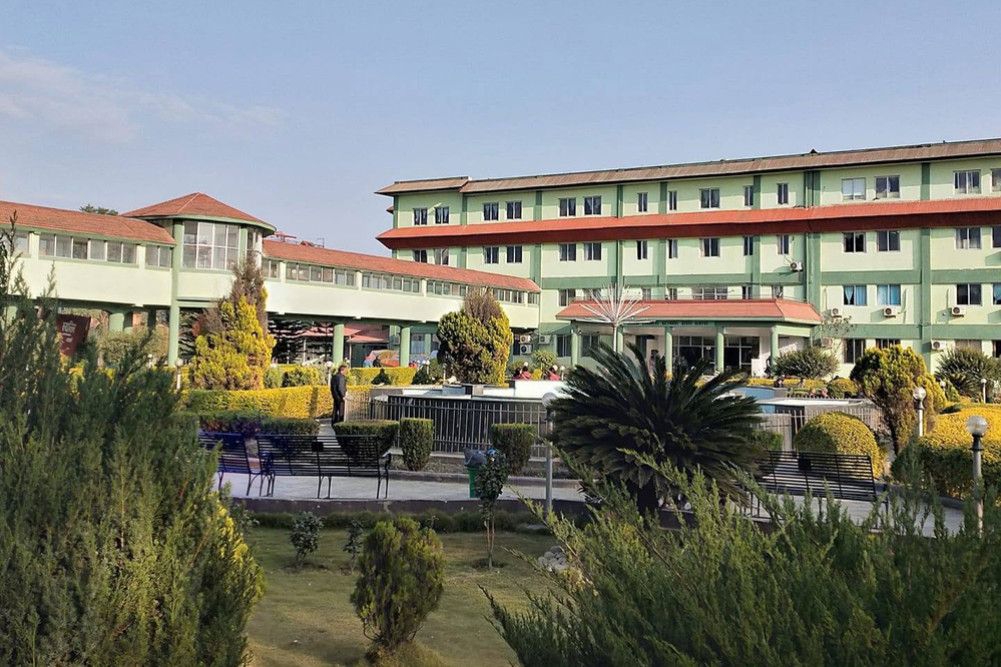
Due to the ceiling imposed on treatment expenses, many parents facing financial difficulties have been forced to take their children with heart disease back home without treatment, while some sick children never return to the hospital for further treatment.
We use Google Cloud Translation Services. Google requires we provide the following disclaimer relating to use of this service:
This service may contain translations powered by Google. Google disclaims all warranties related to the translations, expressed or implied, including any warranties of accuracy, reliability, and any implied warranties of merchantability, fitness for a particular purpose, and noninfringement.
A few days ago, 16-year-old Sunita Kumari from Bara was once again admitted to the Shahid Gangalal National Heart Center. She was hospitalized for the fourth time because doctors said her heart valve needed immediate repair and replacement surgery.
But as before, this time too, her parents are worried that they may have to return home without treatment due to lack of funds. "Previously, after being admitted two or three times for surgery but failing to raise the money, her parents requested discharge, saying they would collect the funds and return soon," said Meena KC, in charge of the hospital's pre-operative ward. "But they only came back after several months. To treat their daughter, they raised 70,000 rupees from relatives. But that amount was spent on bus fare, medicines, laboratory tests, and other expenses."
Sunita is just a representative case. Due to the government-imposed limit on treatment expenses, hundreds of children suffering from serious heart disease like her have been deprived of treatment. To address this problem, after the hospital administration decided to increase the limit of funds available under the free treatment program, Sunita will now be able to receive treatment.
"We have revised the treatment expense limits. Now, up to 250,000 rupees in free treatment will be available for patients in normal condition, 400,000 rupees for moderate complexity, and up to 600,000 rupees for complex cases," said Dr. Ravindra Bhakta Timila, acting executive director of the hospital. "We saw many children being sent home without treatment. Many never returned to the hospital because they couldn't raise the money, so we made this new decision."
The decision to increase the treatment expense limit is solely the hospital's. Even if the Commission for the Investigation of Abuse of Authority or any other body investigates or takes action because of this decision made to save children's lives, I am ready to face it. We made this decision to prevent a situation where many children would die without receiving treatable care. - Dr. Ravindra Bhakta Timila, Acting Executive Director, Gangalal Heart CenterGangalal Hospital is also the national referral center for heart disease, where hundreds of heart patients come for treatment every day.
About two and a half years ago, after the government stopped providing additional budget for the free heart treatment program for children under 15, the hospital began charging families for expensive surgeries and other treatments. Due to this government decision and the hospital's imposed treatment expense limits, hundreds of children were deprived of treatment. Many parents in poor financial condition were forced to take their children home without treatment.
Some parents, after hearing about the high cost of treatment, would plead with doctors for free or discounted care, while others would borrow money from relatives and acquaintances to save their children. Those unable to raise the funds or receive help from doctors and donors were forced to take their children home without treatment.
Sartima Kumari Gupta's 12-day-old infant also has a serious heart problem and needs immediate surgery. But her family cannot afford the treatment costs. However, the hospital administration has reassured the family that the baby's treatment will be free.
According to Timila, the decision to increase the treatment expense limit is solely the hospital's. "Even if the Commission for the Investigation of Abuse of Authority or any other body investigates or takes action because of this decision made to save children's lives, I am ready to face it," he said. "We made this decision to prevent a situation where many children would die without receiving treatable care."
According to officials, the hospital has also been covering the treatment costs of poor and helpless children from its own funds when they cannot raise the money.
The government has been allocating a budget of 250,000 rupees per patient for free heart surgery for 500 children under 15 each year. But according to the hospital, the number of children seeking free treatment exceeds 1,000.
"Hundreds of children with serious heart disease are waiting their turn for surgery," said Timila. "Some families sell property or take loans for treatment. But many cannot raise the money, so they are deprived of treatment."
According to doctors, in some complex cases, the treatment cost for a single child can reach up to 3 million rupees. "Many parents of children with heart disease simply cannot raise the treatment costs," said Srishti Shrestha, in charge of the hospital's general ward. "Some parents and caretakers cannot even afford food expenses for themselves and the patient."
The free heart treatment program for children under 15 was started during the tenure of then Health Minister Gagan Kumar Thapa. When the program began, it was estimated that the annual allocation of 120 million rupees would be sufficient to cover treatment costs.
In Nepal, it is estimated that 8 to 10 out of every 1,000 children suffer from serious heart disease. Along with the free heart treatment for children under 15, the government also provides free treatment for patients with rheumatic heart disease, balloon valvuloplasty for narrowed heart valves, free treatment for senior citizens over 75, and up to 100,000 rupees in free treatment for extremely poor patients.