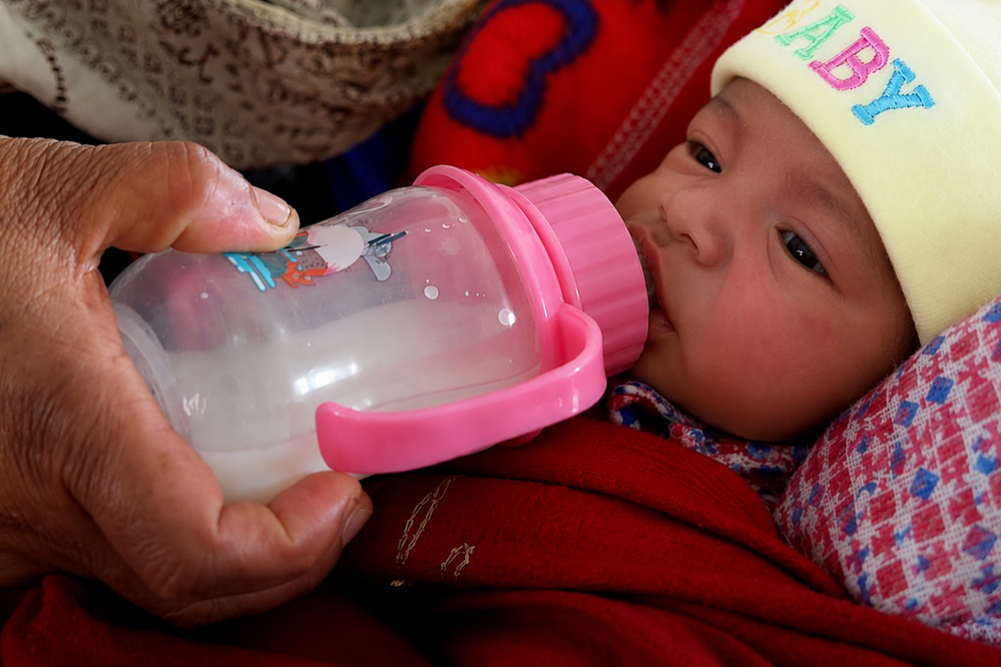
Milk is certainly important, but a balanced amount is even more important. It is necessary to change the mindset that “more milk means more nutrition.”
We use Google Cloud Translation Services. Google requires we provide the following disclaimer relating to use of this service:
This service may contain translations powered by Google. Google disclaims all warranties related to the translations, expressed or implied, including any warranties of accuracy, reliability, and any implied warranties of merchantability, fitness for a particular purpose, and noninfringement.
When it comes to children's health in Nepal and South Asian societies, the first thing that comes up is 'milk.' Many parents believe that if children do not eat well, giving them more milk will fulfill their nutritional needs.
However, this belief is not always correct. In fact, more milk than necessary can have negative effects on children's health.
Is milk essential?
If children over one year of age are consuming a balanced and nutritious diet, there is no problem even if they do not drink milk throughout the day. This may surprise many, but the truth is that milk is not an 'essential' food if the child's overall diet is good.
Why does excessive milk become a problem?
When children drink too much milk, their stomach fills up quickly. After that, they do not feel like eating necessary solid foods such as lentils, rice, bread, vegetables, and fruits. As a result, the body may lack iron, protein, and other micronutrients it needs. In particular, 'iron deficiency' has become an increasing problem among children, and one reason for this is excessive milk consumption.
What amount is appropriate?
For children over one year old, a maximum of 350–500 milliliters (about 2 cups) of milk per day is sufficient. There is no need to give more than this.
The main source of nutrition for children should be solid and balanced foods. For example: lentils, rice, bread, green vegetables, fruits, and protein-rich foods (lentils, eggs, meat, etc.). Such foods play an important role in children's physical growth, immunity, and brain development.
Attention to food
When preparing food for the family, it is better to use less oil, salt, and spices. If a separate portion is taken out for children before adding spices, they can easily eat the same family food, which is healthy and safe.
Suggestions for parents
Every child is different—their hunger, taste, and needs are also different. Therefore, rather than focusing only on the amount of milk, their overall diet and relationship with food are important. It is necessary to develop the habit of letting children eat according to their own hunger rather than forcing them to eat.
Forcing children to eat can reduce their interest in food and lead to negative habits. When junk food and excessive milk are reduced, they naturally start eating solid and nutritious foods.
Milk is important, but balanced quantity is even more important. It is necessary to change the belief that 'more milk means more nutrition.' The foundation of a healthy future for children is their overall diet, diversity, and balance.