Clove oil has also been found to reduce cholesterol. Researchers speculate that it may be useful in humans as well, as it worked in mice.
We use Google Cloud Translation Services. Google requires we provide the following disclaimer relating to use of this service:
This service may contain translations powered by Google. Google disclaims all warranties related to the translations, expressed or implied, including any warranties of accuracy, reliability, and any implied warranties of merchantability, fitness for a particular purpose, and noninfringement.
The easily available titepati around the house is not only used for religious purposes, it is an old custom to apply titepati paste to heal wounds. Research by the Agriculture and Forestry University (AFU) in Rampur, Chitwan, has proven that titepati oil is useful in destroying fungi that harm crops. Tests conducted on mice have found that titepati oil reduces cholesterol.
Saroj Sapkota, an associate professor at the Department of Agriculture, Botany and Environmental Conservation under AFU, had researched the useful elements in titepati for his PhD. He has completed his PhD by researching this. 'Titepati oil has solved problems from crops to animals,' he said, 'It has not been tested on humans. Since it was worked on mice, it is expected that it will be useful for humans too.'
He said that further research is needed to complete the process to determine whether it works in humans or not. Increased cholesterol causes heart problems. 86 elements were found in the oil of the bitter gourd. Among them, an element called amorphine controls mold. Similarly, an element called terpenoids was found in high amounts and this helped prevent cholesterol when tested on mice, Sapkota said. 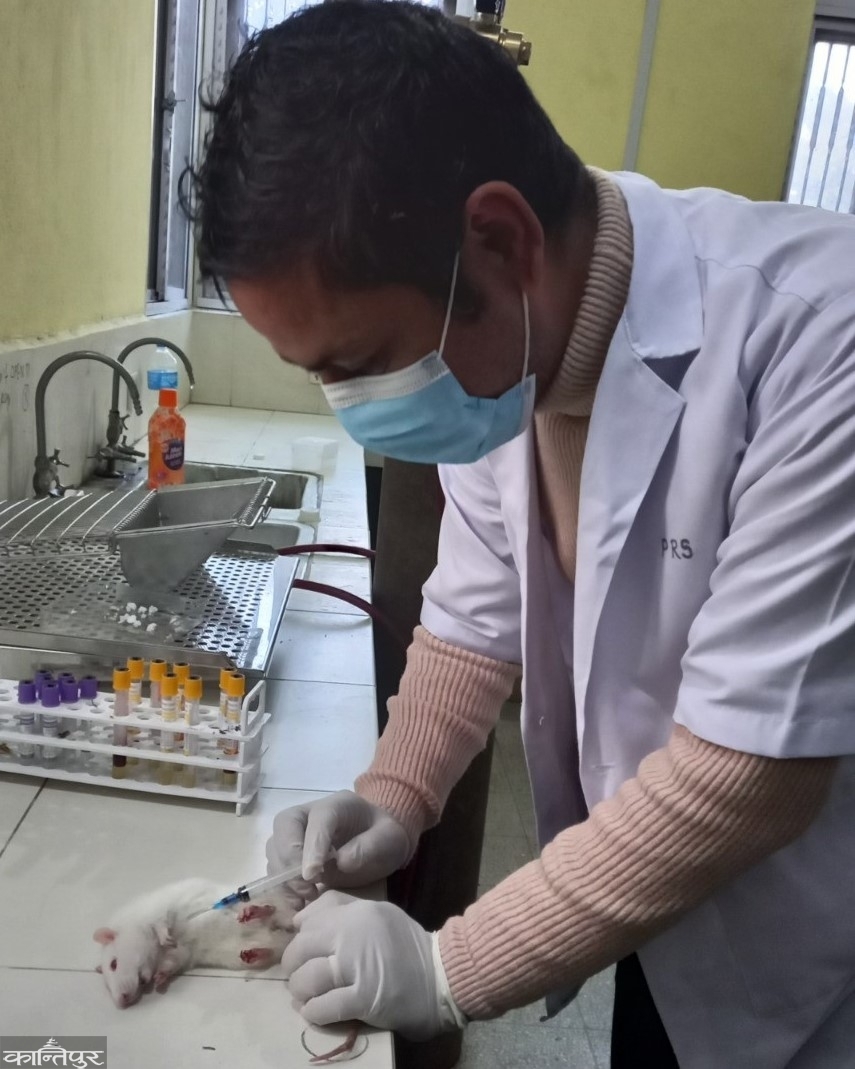
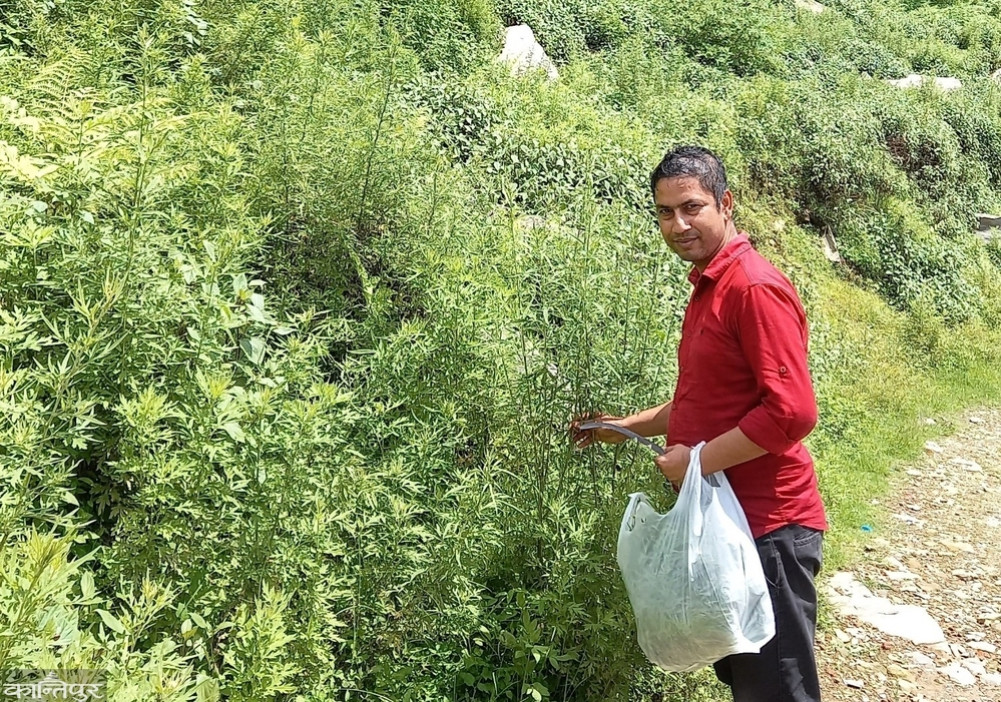
‘The aim of my research was to find out what the chemical elements are in the bitter gourd produced in which geography,’ he said, ‘and to test what those elements can do.’ For this, he said that he collected bitter gourd growing from Shaktikhor to Siraichuli in Chitwan.
He said that bitter gourd was collected from seven places at an altitude of 200 to 2,000 meters above sea level. Among them, research has confirmed that good ingredients for medicine have been obtained in the thorny plants at an altitude of 1,700 to 1,800 meters. Sapkota said that if commercial production of thorny plants is to be carried out in the future, this geography would be suitable for planting thorny plants.
‘There is an opportunity to earn good income by planting thorny plants in abundance on the hillsides of this altitude,’ he said. One quintal of thorny plants is consumed to extract one liter of oil. He said that good oil is obtained from the plants that are about to bloom. He said that the oil-producing machine costs from 20,000 to 500,000 rupees. He said that large machines can be installed in groups in the village.
He said that his study has shown that one liter of oil can be sold for up to 10,000 rupees. Molds on crops are causing great damage in the agricultural sector. Sapkota said that using various chemical pesticides against it has a negative impact on human health and the environment. ‘The biological pesticide made from the ingredients found in the oil of the bitter melon does not have a negative effect,’ he says.
He said that since it has shown an effect on mice, he has taken the initiative to start research to use it in humans. ‘After the Medical Ethical Board gives its approval, the test can be started in humans.’ It has shown an effect on mice. If research can be done on this basis and it can be used in humans as well, it would be an important step to protect the heart by controlling cholesterol,’ Sapkota said.
Professor Ishwori Prasad Kadariya, chairman of Sapkota’s Academic Advisory Committee, said that although bitter melon has been used traditionally for religious and other purposes, there has been no scientific research. He said that Sapkota’s PhD research has filled this gap.
‘The study also found out at which altitude bitter melon has good medicinal properties.’ The state should pay attention to effectively implementing the results of the study. The state will benefit from the work that has been discovered with the oil of the bitter melon,' said Professor Kadaria.
Useless shrubs have started growing in Nepal's forest areas and open spaces. He said that it is necessary to spread plants like the bitter melon in such places. Himal Luintel, director of the Biotechnology Center of AFU, said that after the study, industrialists should take the initiative to produce it on a large scale.