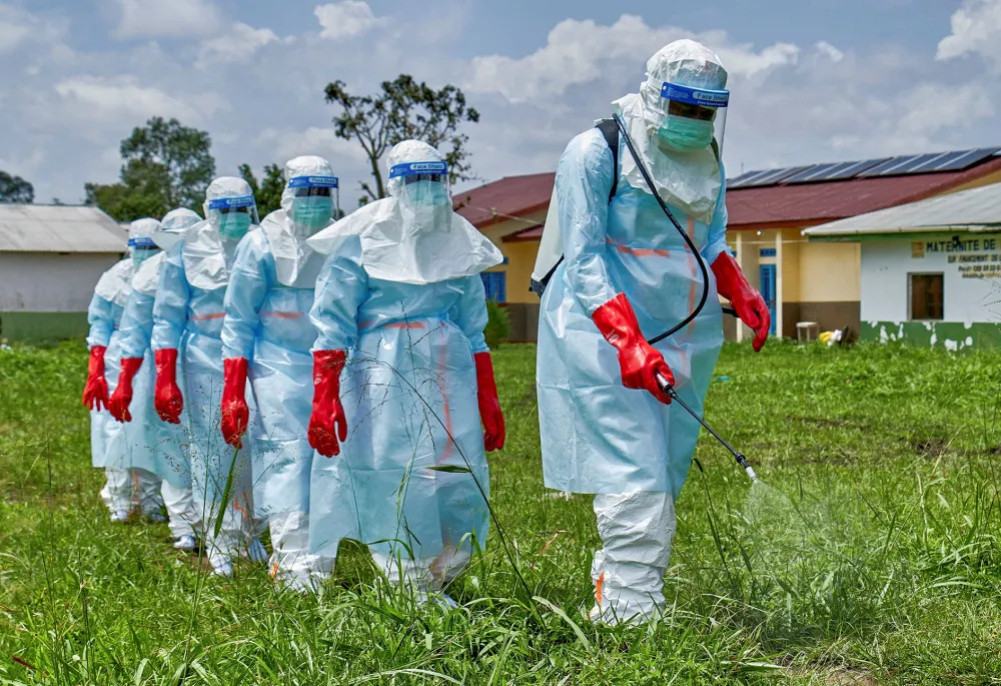
The number of suspected Ebola cases in Congo has exceeded 1,000, and more than 246 people have died.
We use Google Cloud Translation Services. Google requires we provide the following disclaimer relating to use of this service:
This service may contain translations powered by Google. Google disclaims all warranties related to the translations, expressed or implied, including any warranties of accuracy, reliability, and any implied warranties of merchantability, fitness for a particular purpose, and noninfringement.
The international health charity Médecins Sans Frontières (MSF) has said it is deeply concerned by the rapid spread of Ebola in the Democratic Republic of Congo. MSF Assistant Director Dr. Alan Gonzalez said that it has never seen such a large number of infections in such a short time. Earlier on Saturday, World Health Organization Director-General Dr. Tedros Adhanom Ghebreyesus visited the Ebola-hit Ituri province of Congo. The number of suspected Ebola cases in Congo has exceeded 1,000. More than 246 people have died.
In neighboring Uganda, nine people have been infected and one has died. Gonzalez said that his team, which went to the Ebola-affected area, has seen the virus spreading very quickly.
‘Today, no one knows the true size and severity of this epidemic. New suspected cases are being reported daily. Hundreds of samples have yet to be tested,' he said.
He said the closure of borders and airports is making it difficult for humanitarian aid to reach the country. The ongoing civil war in Congo has also made it difficult for the WHO to control the Ebola epidemic.
On May 15, the Congolese Ministry of Health confirmed the outbreak of Ebola in the country after eight samples were confirmed to be positive for the Bundibugyo Ebola virus.
Two days later, the World Health Organization declared the Bundibugyo Ebola virus a public health emergency of international concern. This is the 17th Ebola outbreak in Congo according to government records.
'The situation in Ituri has become very alarming in the two weeks since the Ebola outbreak was declared,' Gonzalez said in a statement on Saturday. 'This is the highest number of cases in the two weeks since the outbreak was declared.'
Ebola patients are kept in isolation wards in hospitals. There is no proven vaccine to prevent the current outbreak of the Bundibugyo strain of Ebola. That is why patients are treated based on their symptoms.
“We are here to understand the problems here,” WHO Director-General Tedros said in Bunia, the provincial capital of Ituri, on Saturday. He urged local communities to step up their efforts to fight the disease.
“The local communities here understand the problems and their solutions very well,” he said. He said that while attending funerals is a matter of great honor for people, taking precautions is the best option in this situation. “Certain practices, including touching the bodies of people who have died of Ebola, can spread the virus. We mourn the dead. But we must take all necessary precautions so that we do not lose another person,” he said. Ebola can spread through contact with the body fluids of an infected person (blood, vomit, phlegm, saliva, sweat, feces, etc.). Such fluids can enter the body, especially through wounds or pores in humans. Ebola can also be transmitted through wounds or pores when coming into contact with surfaces or objects (needles, beds or clothes) that have such fluids.
The University of Oxford in the UK is developing a vaccine to prevent the currently spreading Bundibugyo virus. But it will take about two to three months to send it for clinical trials, according to the BBC. There is currently no guarantee that this vaccine will be effective. It will be tested first on animals and then on humans.
Dozens of rebel and combatant groups have existed in eastern Congo for years. Some of these groups also have ties to foreigners. The Congolese government remains in control of the northeastern Ituri province, the epicenter of the Ebola outbreak, but its presence is weak.
As a result, the rebels have repeatedly launched attacks. The Ugandan rebel group Allied Democratic Forces, which is affiliated with the Islamic State, is one of the main rebel groups there. It has been targeting public infrastructure and civilians. Experts say the violence by armed rebel groups, the massive displacement of people, the failure of local governments and the reduction of international aid have left the health service in a state of disarray. Physicians for Human Rights has expressed concern about the current situation, calling it a “catastrophic series of crises.”
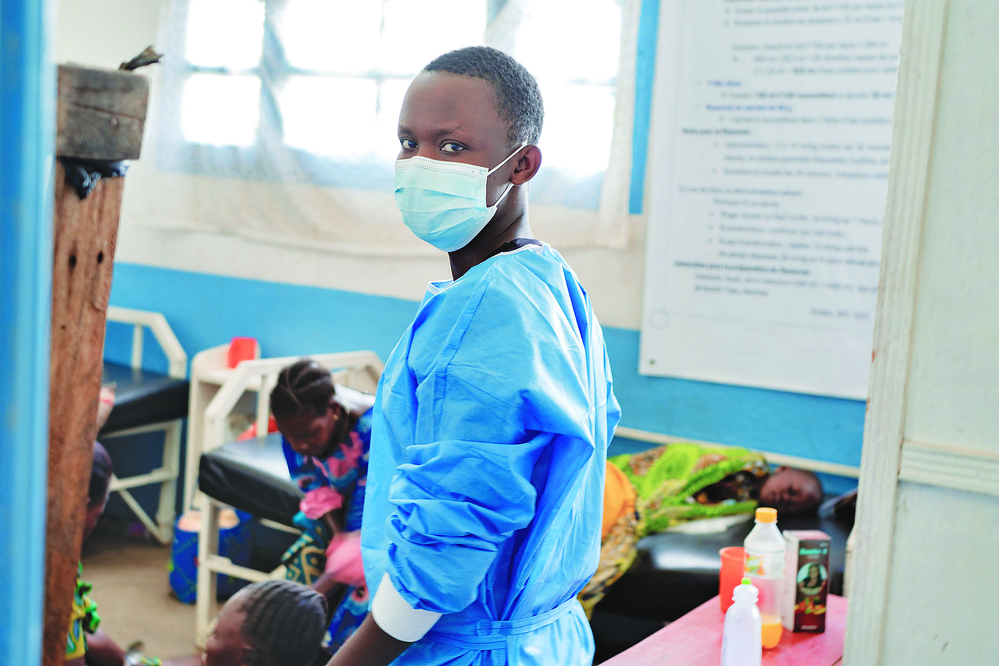
A report by Doctors Without Borders (MSF) before the Ebola outbreak noted that the security situation in Ituri was poor. The report stated that insecurity was forcing doctors and nurses to flee the region. The report also noted that the surge in patient pressure at health facilities has created a “catastrophic situation” in some areas. The Ebola outbreak has made the situation even more dire.