The Ministry of Health and Population has stated that air pollution kills around 42,000 people in Nepal every year. According to the ministry, 21 percent of them are children under the age of 5.
We use Google Cloud Translation Services. Google requires we provide the following disclaimer relating to use of this service:
This service may contain translations powered by Google. Google disclaims all warranties related to the translations, expressed or implied, including any warranties of accuracy, reliability, and any implied warranties of merchantability, fitness for a particular purpose, and noninfringement.
Haleshwor Bidari, 70, a resident of Bidari village, Tokha Municipality-1, has been suffering from asthma for the past few years. Despite having asthma problems, he used to take regular medication and consult a doctor, and was able to walk and was in a normal condition. However, a few days ago, he began to have difficulty breathing and make wheezing and wheezing sounds while breathing.
His son-in-law took him to the hospital. After the doctor said that his asthma had worsened, he has been receiving treatment in the Intensive Care Unit (ICU) at Green City Hospital for the past four days.
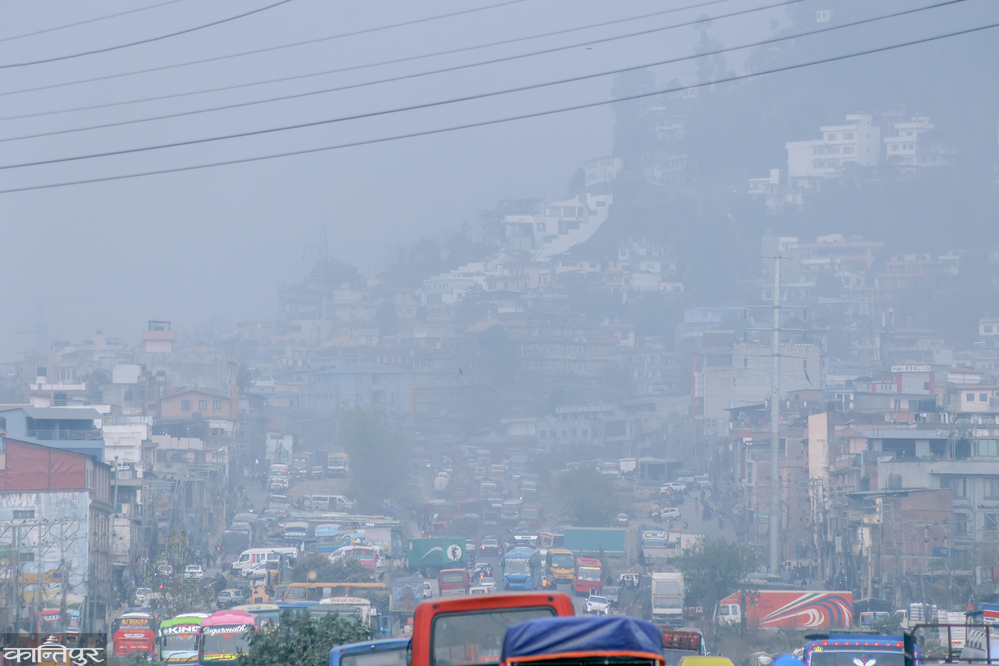
Despite light rain on Thursday and Friday, Kathmandu's pollution has not decreased. According to IQ Air, which measures air quality, Kathmandu's AQI (air quality index) was measured at 169 on Saturday evening. Generally, AQI between zero and 50 is considered satisfactory. Above 150 is considered unhealthy. Experts say that AQI between 150 and 200 affects sensitive people. AQI between 2010 and 300 increases the health risk of people of all age groups. 301 to 500 indicates an emergency.
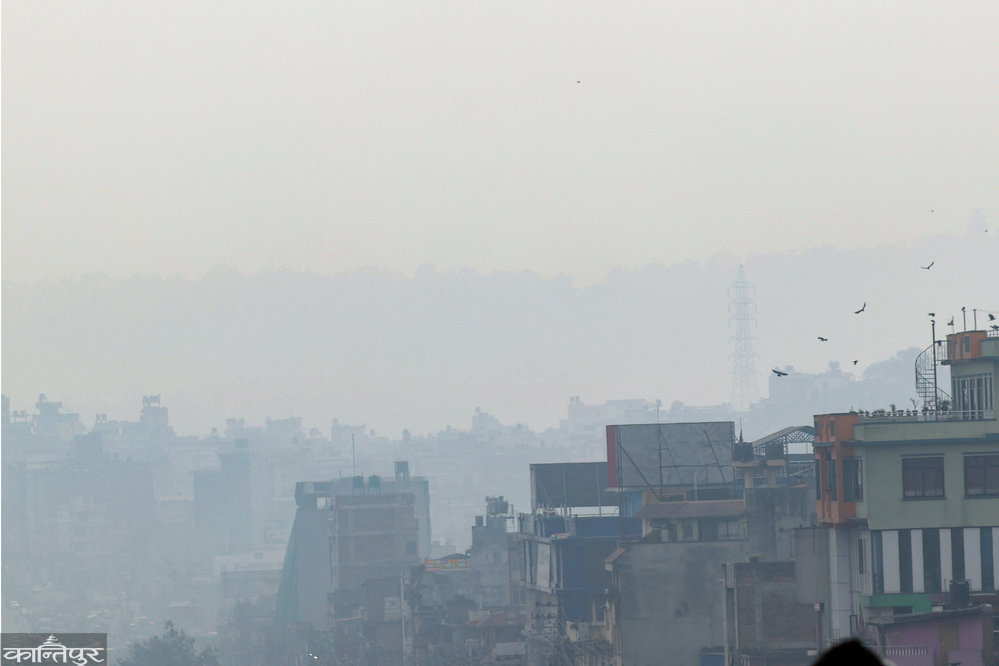
According to the World Health Organization (WHO) standards, the amount of PM 2.5 in the air should be 5 micrograms per cubic meter or less. But the amount of PM 2.5 in Kathmandu's air is 80.5 per cubic meter. PM 2.5 is tiny particles with a diameter smaller than 2.5 microns in the air. Weather forecasters say that pollution will not decrease until there is heavy rain.
Some time ago, the Ministry of Health and Population issued a press release and asked everyone to be cautious as pollution in the Kathmandu Valley has reached high levels. The ministry had also urged people to be cautious as the increase in pollution is more likely to affect children, senior citizens, and people with chronic respiratory diseases such as asthma and cough.
Doctors say that due to air pollution, people are suffering from various health problems such as asthma, chest problems, and heart disease. Doctors say that the number of old asthma patients coming to hospitals due to re-occurring problems has increased, and the number of new patients has increased by 15 to 20 percent.
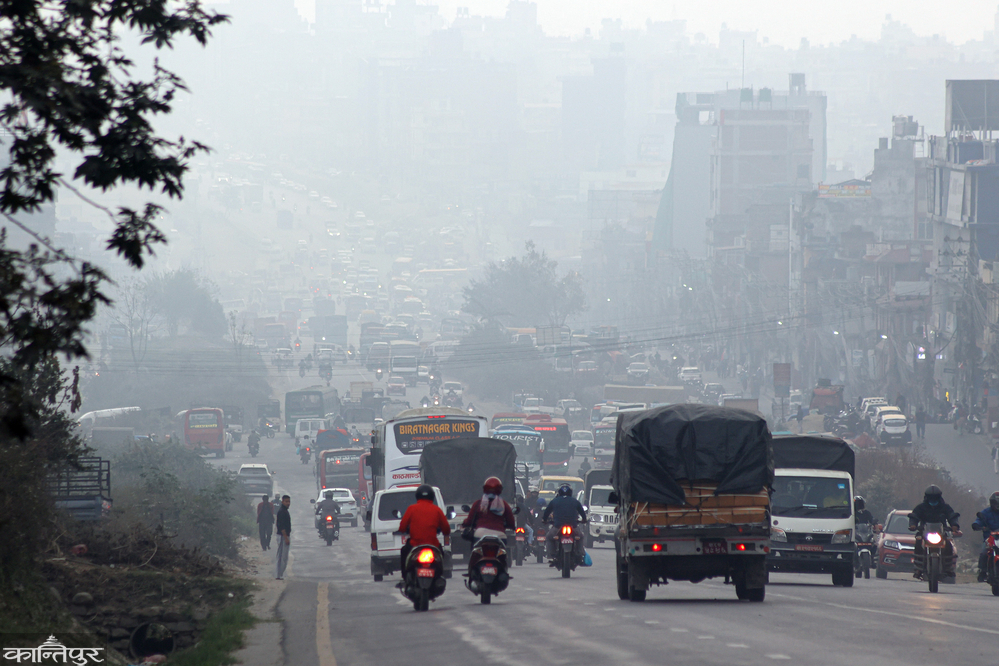
According to Dr. Neeraj Bam, senior chest specialist at Tribhuvan University Teaching Hospital, Maharajgunj, the number of patients has also increased due to the increase in air pollution across the country. ‘There is a situation of fog, clouds, and haze. With the increase in air pollution, viral, bacterial, and fungal infections are increasing,’ he said, ‘due to which people are coming in with problems such as burning eyes, itchy skin, allergies, colds, persistent coughs, chest pain, and blood in sputum.’ He said that the number of respiratory and asthma patients has increased significantly.
‘Old asthma patients are having problems again, and new asthma patients are also increasing. The number of asthma patients in the hospital's emergency department has increased significantly,' he said, 'It has increased by 15 to 20 percent compared to the number of regular patients. We should say more about that.'
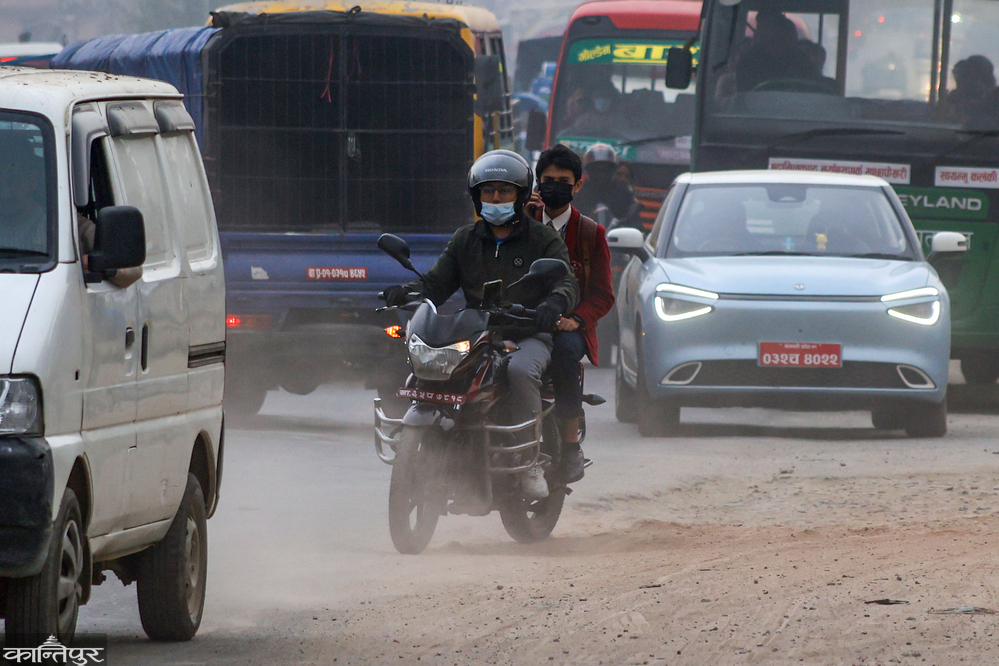
Air pollution poses a risk to patients with problems such as cancer, kidney, liver, high blood pressure, and diabetes, and senior citizens, children, and pregnant women should take special care, Bam said. He said that children should also be very careful during times of environmental pollution.
'Air pollution is called the 'silent killer'. Although it may not seem to have any effect right away, it starts to become a big problem in a few years,' he said.
He said that while air pollution causes many types of problems, lung cancer has also increased. He said, 'Due to the polluted environment, lung cancer is also becoming more common in non-smokers.' This greatly increases the risk of high blood pressure, diabetes, stroke, and heart attack.' According to the World Health Organization, one in every 10 deaths is directly or indirectly caused by environmental pollution, he said. He said that a long-term plan should be made and implemented concretely.
He said that the government should bring policies and regulations to reduce air pollution. 'The government should bring strict policies and regulations to control the smoke from old vehicles. All construction should be made environmentally friendly. Fires should be controlled and smoke from factories should be managed scientifically,' he said, 'It is necessary to carry out scientific greenery development so that cities have more greenery than homes.'
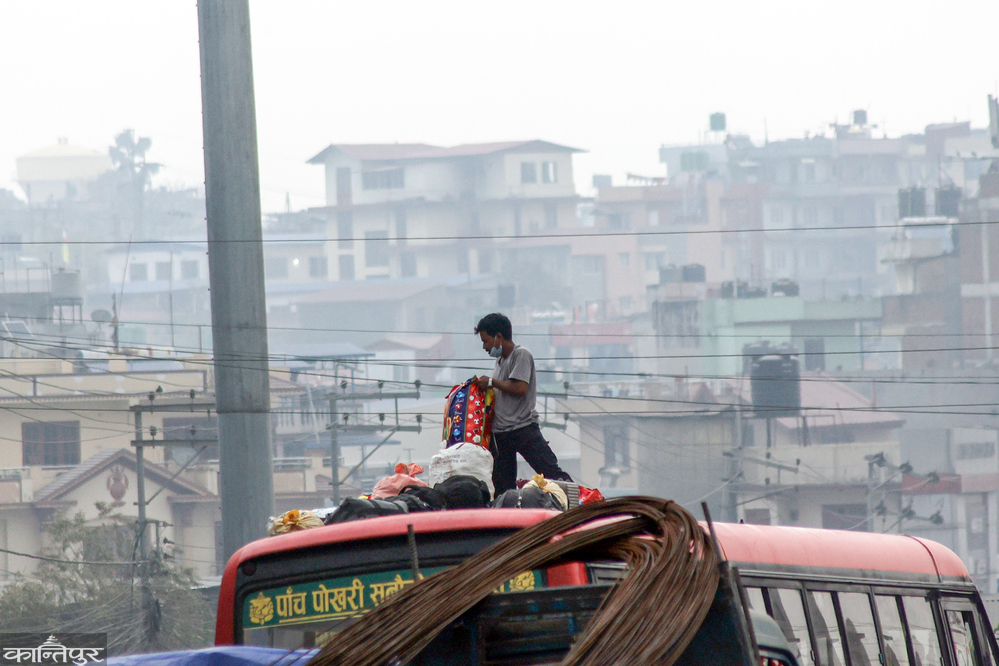
He suggested that people should go out only for essential work, use masks compulsorily when going out, avoid smoke and dust, keep the windows of the house closed but keep the ventilation open, keep the environment clean, and pay attention to personal hygiene. He also said that it is necessary to practice social distancing, stay away from smoking, alcohol, drink lukewarm water, and seek immediate medical advice if you have a cold or cough or if your oxygen levels drop.
The Ministry of Health and Population has stated that 42,000 people die in Nepal every year due to air pollution. According to the ministry, 21 percent of them are children under the age of 5.
Due to air pollution, the number of patients has increased not only in Kathmandu but also in various parts of the country.
According to Dr. Bhojraj Adhikari, a senior physician at Pushpanjali Hospital in Bharatpur, Chitwan, the number of people who go out of the house and patients with chronic diseases returning to the hospital has increased. He said, "Asthma patients who have recovered from the hospital and gone home are having to be readmitted within 2 or 3 days due to air pollution."
According to the official, the number of people who go to school, college, office, walk in the morning or work outside the house during the day has also increased significantly due to various problems. He said, "A large number of people who go to college in the morning and evening, work outside, have come with problems such as difficulty breathing, burning eyes, tearing eyes, and shortness of breath due to allergies."
He said that although the group did not come to be admitted, many came for consultation. However, he said that asthma patients, chest and heart problems, and chronic patients have been admitted to the hospital.
The official said that air pollution also causes a lot of changes in human behavior. He said, "Bad weather causes a decrease in oxygen levels, 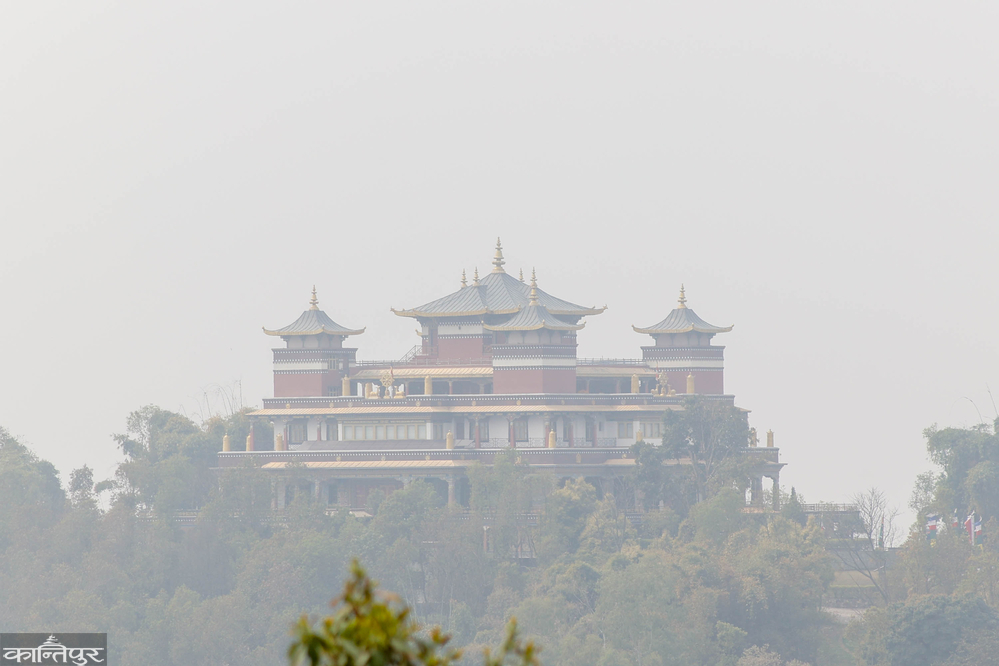 and it seems to have brought about very negative changes in people's mood and behavior," he said, "When air pollution persists for a long time, it also causes fluctuations in blood pressure."
He said that due to air pollution, there has been a 15 percent increase in patients in the hospital's OPD, as well as a 10 percent increase in the number of patients in the hospital's normal ward and emergency room compared to before. He also suggested not to go out except for essential work due to the bad environment.

