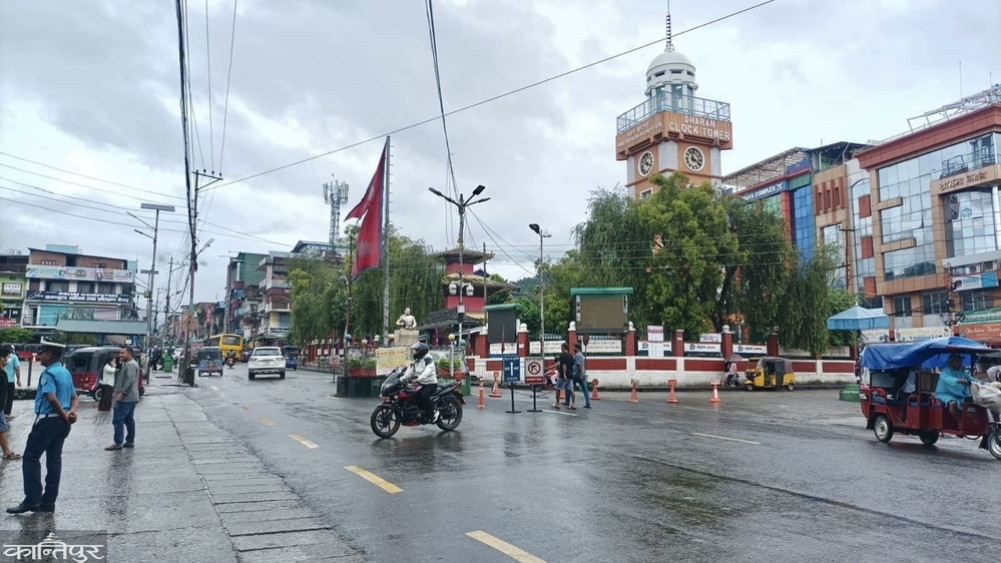
For those heading toward the eastern hills, the uphill climb would begin from here, while for those descending from the hills, this very intersection used to serve as the main gateway to the Tarai.
We use Google Cloud Translation Services. Google requires we provide the following disclaimer relating to use of this service:
This service may contain translations powered by Google. Google disclaims all warranties related to the translations, expressed or implied, including any warranties of accuracy, reliability, and any implied warranties of merchantability, fitness for a particular purpose, and noninfringement.
Cities change with time. Roads become wider, new structures are built, and old centers gain new identities. Bhanu Chowk in Dharan is currently witnessing such a transformation. Once known for its crowds of travelers, heavy traffic, and bustling commerce, this chowk is now beginning to look different. With the nearly three-decade-old bus park plan finally materializing, the bus park has been relocated to a new site. As the bus park moved, Bhanu Chowk’s identity has also gradually begun to change.
There was a time when the rush of passengers from morning till evening, the shouts of tempo drivers, travelers waiting for buses while sipping tea in hotels, and buses running along the street made Bhanu Chowk lively. Now, the traffic has decreased, the roads appear open, and the atmosphere is calmer than before. This change has surprised many, but many also see it as a sign of modern urban management.
Bhanu Chowk was not just a chowk. It was the backbone of the local economy and a ‘transit point’ for almost every traveler coming to Dharan. For those heading to the eastern hills, the uphill journey began here, while for those descending from the hills, this chowk served as the gateway to the Terai. It was the first meeting point not only for Dharan’s residents but also for visitors from outside. That’s why Bhanu Chowk had another identity—the ‘heart of Dharan.’ With the relocation of the bus park, Dharan has not just moved a bus station; it has changed a ‘transition point’ for travelers.
According to locals, the biggest change after the bus park’s relocation has been in the environment. The dust, smoke, traffic jams, and constant honking have now greatly decreased. Pratik Rai, a resident of Dharan-10, says, “It’s now easier to walk, and the environment feels much calmer.” When the bus park was here, the hustle and bustle of people and vehicles made Bhanu Chowk one of the busiest intersections in Dharan. But today, Bhanu Chowk is peaceful. “It does feel a bit sad. But change is necessary for the city to develop. Dharan is developing, and that makes me happy,” he added.
Especially for students, senior citizens, and pedestrians, locals say this change has made things easier. Now, the road is becoming safer not just for vehicles but also for people, says 60-year-old local Harilal Yadav.
The bus park, which had operated for a long time in a cramped space, had made Bhanu Chowk, Dharan’s main market, congested; the crowds and traffic had marred Dharan’s beauty. But now, Dharan has a modern smart bus park, says Jeevan Rai. He says this has helped not only travelers but also all locals, making the city more convenient, well-equipped, and developed.
But with change have come some challenges. Shopkeepers sitting in front of their stores are now waiting for customers. The change is not just the relocation of the bus park; its impact has touched the daily lives of thousands.
Long known as Dharan’s main transport hub, Bhanu Chowk was the gateway connecting the eastern hill districts and the Madhesh. Passengers would come here to board or get off buses. The hotels, restaurants, fruit shops, mobile stores, clothing businesses, and public transport services that depended on this crowd made their living here. But since the new bus park began operating, that bustle has been fading.
While this change is positive for locals, for business owners, this peace has become a matter of economic concern. According to Ashok Karki, who runs a mobile shop in Dharan-13, business has dropped by more than half since the bus park moved. “Earlier, customers would come all day. Now, it’s hard to do even five hundred rupees’ worth of business in a day. If things go on like this, it will be difficult to even pay the shop rent,” he laments.
According to him, Bhanu Chowk was not just a place where buses stopped; it was a commercial center. Travelers waiting for buses would buy fruit, mobile accessories, clothes, medicines, and other necessities here. Now, as most buses go directly to their destinations from the new bus park, travelers have stopped stopping at Bhanu Chowk.
Fruit vendor Ramesh Sunuwar has had a similar experience. “Earlier, I used to do business worth 10,000 to 15,000 rupees a day. Now, I can’t even sell goods worth 3,000 a day.” He complains that the number of customers shopping has decreased since the bus park moved.
The change is also clearly visible in the transport business. Avichandra Subba, a tempo driver from Dharan-15, says, “Earlier, we could find passengers right at the station. Now, we have to roam the market looking for passengers. Fuel costs have increased, but income has decreased.” According to him, now that passengers board and get off directly at the new bus park, there are very few passengers around Bhanu Chowk.
Bhanu Chowk’s business owners are not opposed to the decision to move the bus park. They accept that urban management is necessary. But why was no alternative arrangement considered for the business owners and workers directly affected by development plans? The relocation of the bus park from Bhanu Chowk has greatly affected business, says Ram Swaroop Sharma, first vice president of the Sunsari Chamber of Industry and Commerce. He says plans should be brought to increase the bustle of the market and make Bhanu Chowk lively again. According to him, not only Bhanu Chowk but also the Putaliline, Deshiline, and Vegetable Market areas have seen a decline in business. With fewer travelers, hotels, tea shops, grocery stores, clothing, and retail businesses in those areas have all been affected.
Businessman Ashok Karki also suggests a solution. According to him, if arrangements could be made for travelers heading to the hills to be dropped off at Bhanu Chowk before the bus goes to the new bus park, some of the market’s bustle could return.
Meanwhile, Dharan Sub-Metropolitan City has said it is preparing to revitalize Bhanu Chowk. According to acting mayor Aindra Bikram Beg, there are plans to build a permanent stage in the upper part of Bhanu Chowk and hold daily cultural programs. He said that by organizing programs that the general public can watch for free, the movement of people will increase, which is expected to help business as well. Mayor Beg said that areas previously occupied by the bus park and transport services will gradually be developed as citizen-friendly open spaces, cultural centers, and tourism promotion sites.