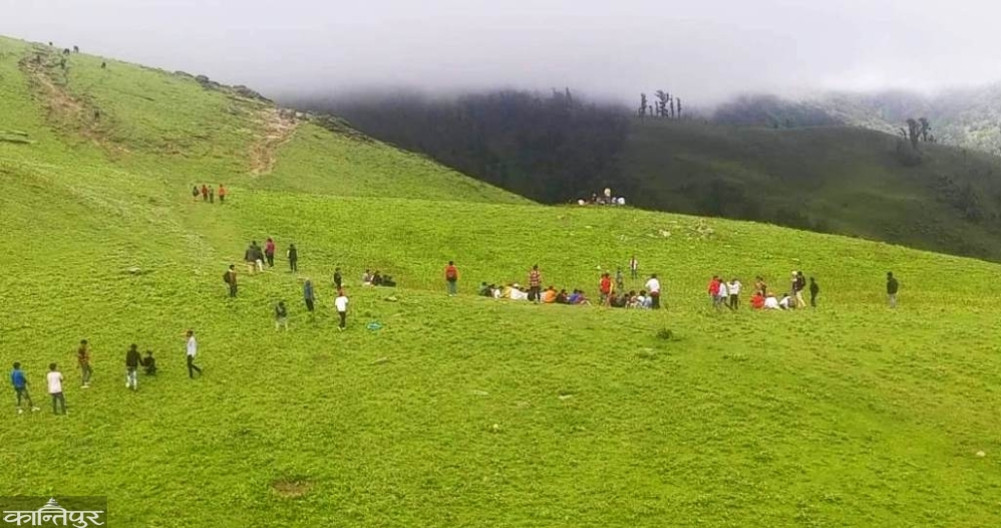
The people of Sinjali celebrated a cultural festival reflecting ancestral traditions on the last day of Ashar by picking peanuts, playing Deuda, and having a communal feast.
We use Google Cloud Translation Services. Google requires we provide the following disclaimer relating to use of this service:
This service may contain translations powered by Google. Google disclaims all warranties related to the translations, expressed or implied, including any warranties of accuracy, reliability, and any implied warranties of merchantability, fitness for a particular purpose, and noninfringement.
The morning sun had not yet reached Patan. The village streets were already bustling with activity. Some were carrying straw hats, some plastic bags. The young women were laughing and climbing uphill. The young men were following them. Everyone had the same destination - to pick ripe groundnuts in the middle of the forest.
The last day of Ashar in the Sinja area of Jumla looks like this every year. This is not just a day to pick wild fruits, but a day to meet a culture that has been preserved for generations. On the last day of Ashar, the young men and women here go to Patan to play Deuda and sing Chadkila. They tell stories of love and affection through songs. Some love stories start from here. The elders tell stories of relationships that started from this and led to marriage. This day is also known as a day to pick and eat groundnuts and build relationships, informed the rural municipality chairman Purna Prasad Dhital.
In many villages of Sinja, Hima and Kanakasundari, it is still believed that the month cannot be said goodbye without eating kafal on the last day of Asar. Kafal, which starts ripening from mid-Jeshtha, is the tastiest at this time. If the kafal is missed on the last day of Asar, there is a popular saying that one has to wait until next year.
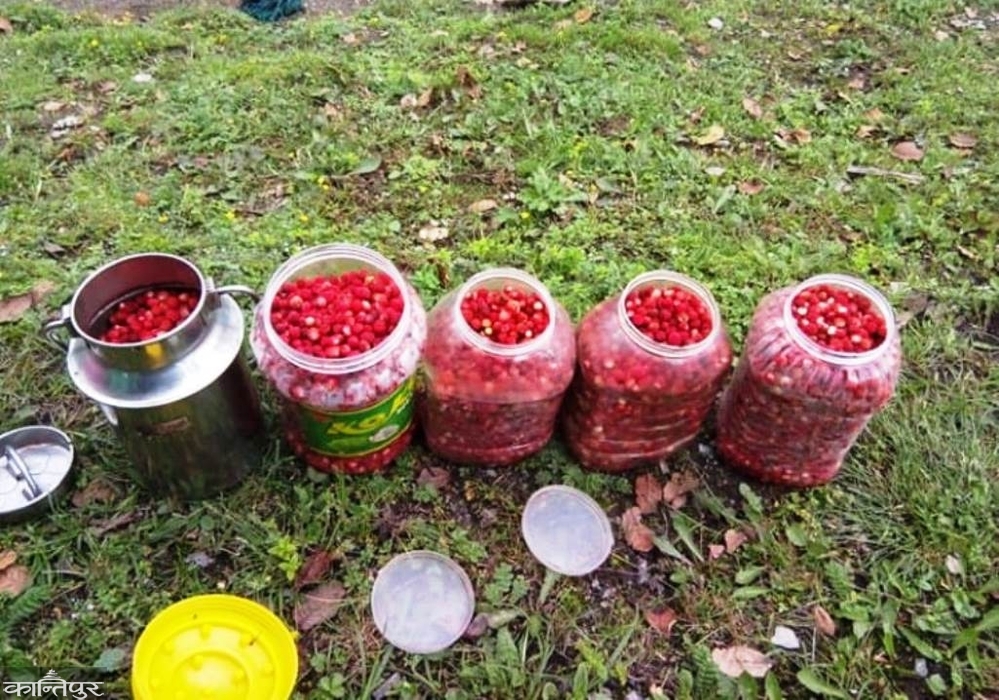
On this day, a group feast of kafal, curd, milk, Jumli Marsi kheer, meat, puri and vegetables is also held in Patan. It is also customary to tie a noose around the neck of a cow for the first time from this day. It is also believed that the daily journey of shepherds to the lake began from this day.
Rain on the last day of Asar is also considered auspicious here. Local Sunaulo Chhetri says that the faces of those playing Deuda while getting soaked in the torrential rain that falls in Patan look more happy than tired. 'We say goodbye to Asar by picking kafal. After the rain, it is believed that Shrawan has arrived. It feels like the new season has begun on this day,' he said.
Man Bahadur Budha of Sinja-6 said that the sound of birds chirping in the forest is also connected to this culture. When birds start chirping, it is known that the kafal is ripe. 'The forest is dark, birds also rejoice, and so do humans,' he said. According to the elders, this kafal is considered useful for fever, sore throat, asthma or loss of appetite. Although modern science has not confirmed all the claims, the locals have respected it as a priceless gift of nature.
Recently, many things have changed with time. Many youths of the village have gone out for studies and employment. Jumli Marsi khir is not cooked in every house like before. Some patans do not even look as full as before. 'But the tradition still survives,' said Man Bahadur.
To preserve this identity, Sinja Rural Municipality has started celebrating the day of eating kafal officially as 'Kafal Day'. Chairman Dhital informed that this tradition has been celebrated more systematically every year after the village assembly institutionalized it.
This year too, hundreds of locals gathered in the Patans of Gowani, Damaimare, DK, Dilauri, Mazharka and Chaurimel. The sound of Deuda resounded in these places, the drums rang and the carts taken to pick Kafal were filled. When everyone returned home in the evening, they had Kafal in their hands and a smile on their faces and the hope of gathering again next Ashar.
People's representatives and employees of Sinja Rural Municipality also visit Patan to eat Kafal. Locals said that this has increased the beauty of Patan and has given them the courage to preserve local traditions. Chairman Dhital said that in the coming days, along with eating Kafal, the issue of preserving Kafal will also be given priority. 'This is our culture, a mark left by our ancestors,' Dhital said, 'We are preparing to uplift it and make it more refined.'