“Only a single pair of underwear and a shirt that the child was wearing are left. I don’t know what I’ll dress him in now,” Savitri said, choking back tears. “More than anything, the documents from my heart surgery 12 years ago and some medicines were left behind there.”
We use Google Cloud Translation Services. Google requires we provide the following disclaimer relating to use of this service:
This service may contain translations powered by Google. Google disclaims all warranties related to the translations, expressed or implied, including any warranties of accuracy, reliability, and any implied warranties of merchantability, fitness for a particular purpose, and noninfringement.
5 a.m. Displaced squatters were sitting outside the flooded Radhaswami Satsang Holding Center in Kirtipur, their eyes sleepless.
Some people were holding their heads as they looked at the scattered belongings piled near the gate, while others were wringing out their wet clothes. Gayatri Shrestha, carrying two bags on her shoulders, was holding the hand of her four-year-old daughter, who was rubbing her eyes. Her daughter was standing barefoot on the cold ground. “We couldn’t retrieve her shoes, slippers, clothes, books, or notebooks. Everything was lost in the flood,” Gayatri said, looking at her daughter’s sad face.
Since Friday evening, continuous rainfall had been swelling the Bagmati River. Around 12:30 at night, there was suddenly a commotion inside the holding center. Gayatri’s family, who had been sound asleep, also woke up. “The water had already started rising high. We hurriedly got up. We managed to grab two bags and a few documents and came outside,” Gayatri recounted.
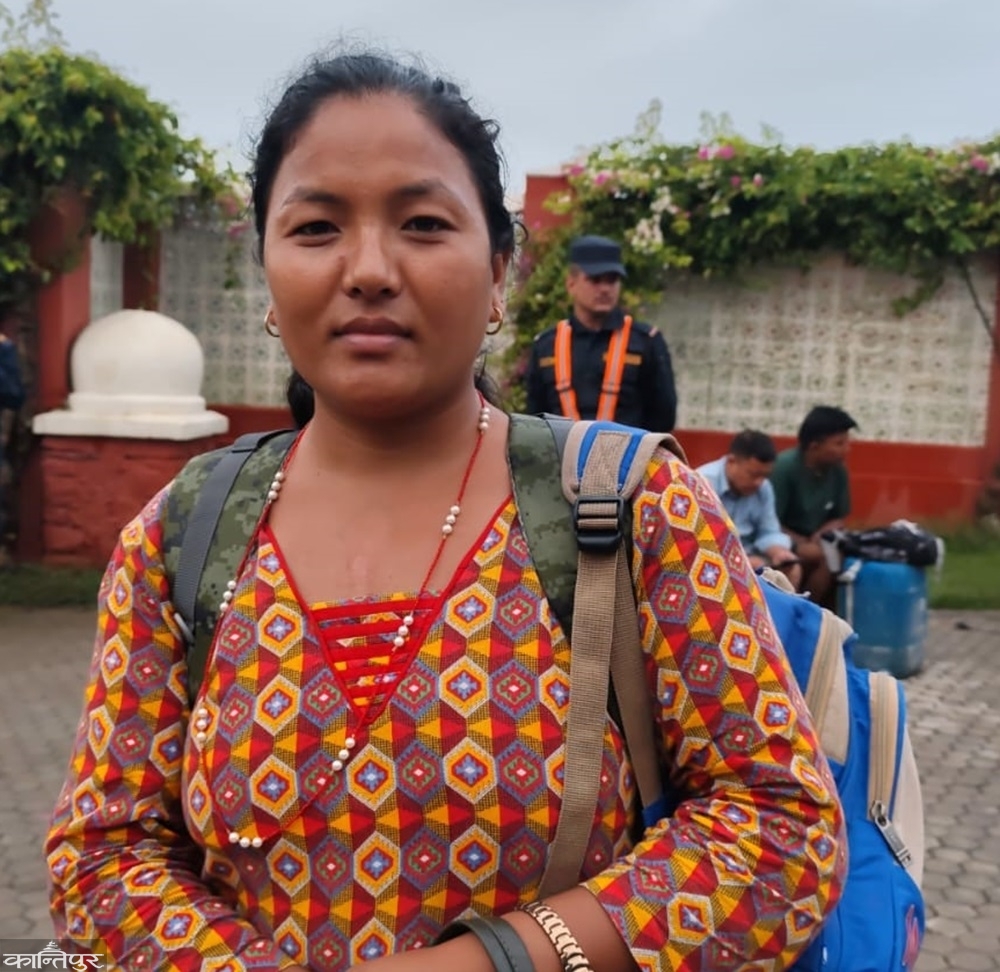 Her daughters were frightened. “The child is left with only a pair of underwear and a shirt. I don’t know what she’ll wear now,” Savitri said with a sigh. “More than anything, the documents from my heart surgery twelve years ago and some medicines were left behind.”
After the government demolished the squatter settlement on Baisakh 12, the displaced people from Thapathali and Shantinagar had taken shelter at this holding center. They were living inside tents. “The government said they brought us here to protect us from floods. But the flood here turned out to be even bigger than there,” said Kamali Uraun, leaning against the wall.
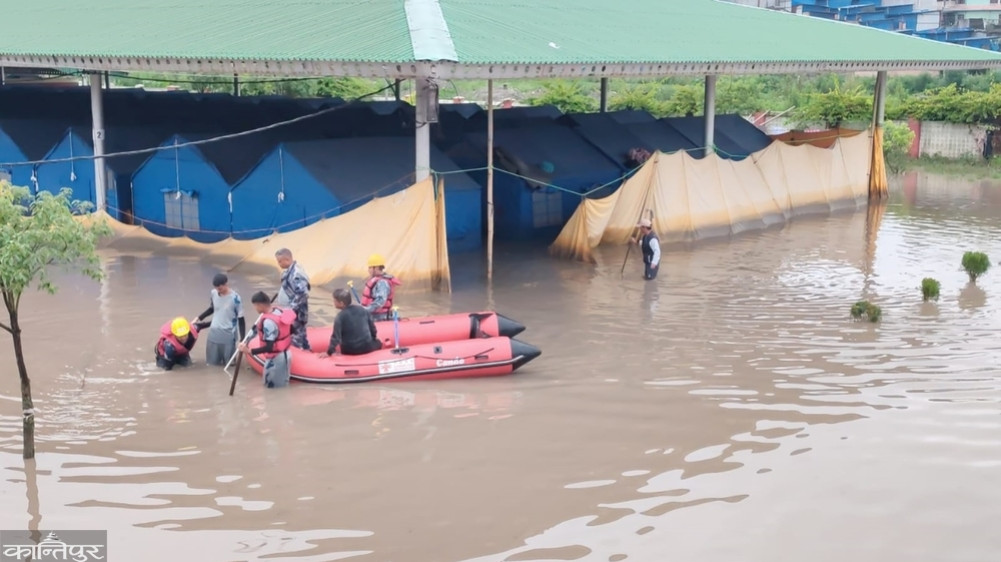
After the flood entered the holding center, security personnel arrived here around 2 a.m. In the morning, some displaced squatters and security personnel were searching for belongings by floating on boats. Fifty-one-year-old Kamala Rai called out loudly from the side, “I left my medicine behind. Please check if it’s there. I’ll come myself if needed.” But the reply came from the other side, “The medicine won’t be of any use now.”
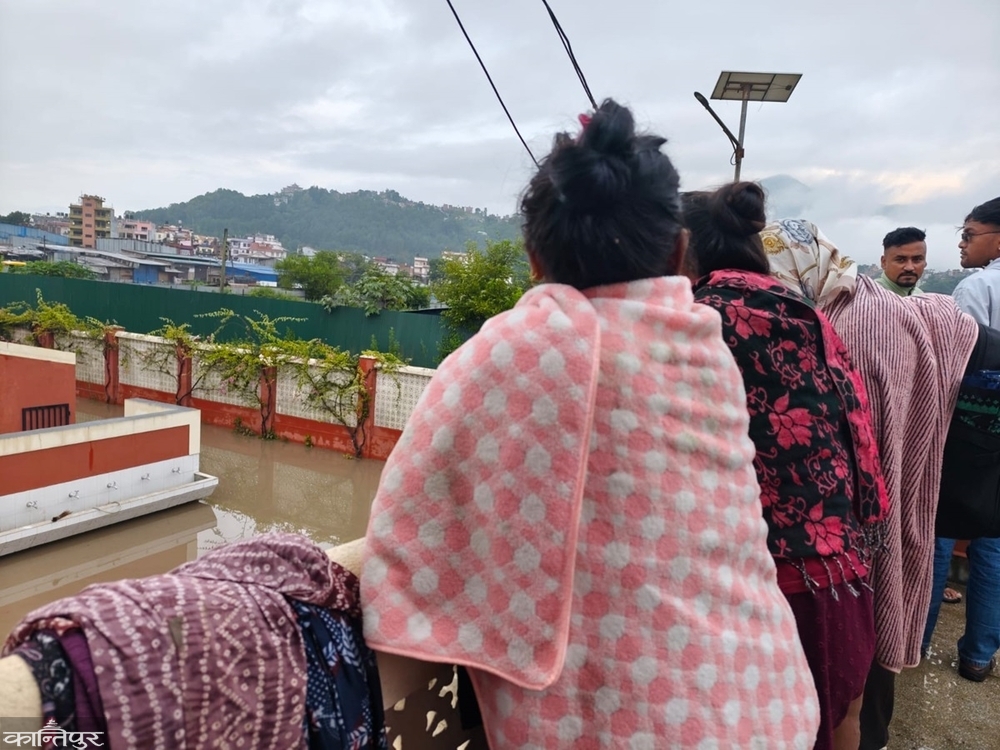
Kamala looked dejected. “I had medicine for blood pressure, thyroid, and cholesterol. I have to take them early in the morning. Now there’s neither medicine nor drinking water,” she said in a faint voice. Kamala was sitting dazed on the roof of the building next to the holding center. A woman nearby, trying to sleep leaning against the wall, said, “Oh right. There’s not even water to drink. It would help if someone brought a couple of jars.”
Kamala had been taking medicine regularly for three years. After coming to the holding center, diabetes was added to her list of illnesses. “I had just bought new medicine. Now where will I get the money to buy more?” she said in a choked voice. As the conversation continued, Kamala’s gaze drifted back toward the flooded area. Seeing two YouTubers wading knee-deep in water, engrossed in making video content, made her angry. She shouted, “Go ahead and drown! We drowned because of fate, but you’re drowning for fun!”
Thirty-year-old Upama Magar, who was with her, recounted the terrifying events of the night again: “After I found out, I alerted everyone. At that time, the water had reached our ankles. In no time, it started rising above our knees, and we panicked.” More than anything, they were worried about the children. After getting the children out, they started retrieving more belongings.
“The police only arrived after everything was already submerged,” she said. Upama has no idea when she’ll get to sleep in a bed again. Remembering the belongings inside her flooded tent from the rooftop, she said, “Now the water will dry up. We’ll go to the side. We’ll clear the mud. We’ll wash the clothes. If the sun comes out, we’ll dry them. If they’re ruined, we’ll just leave them there.”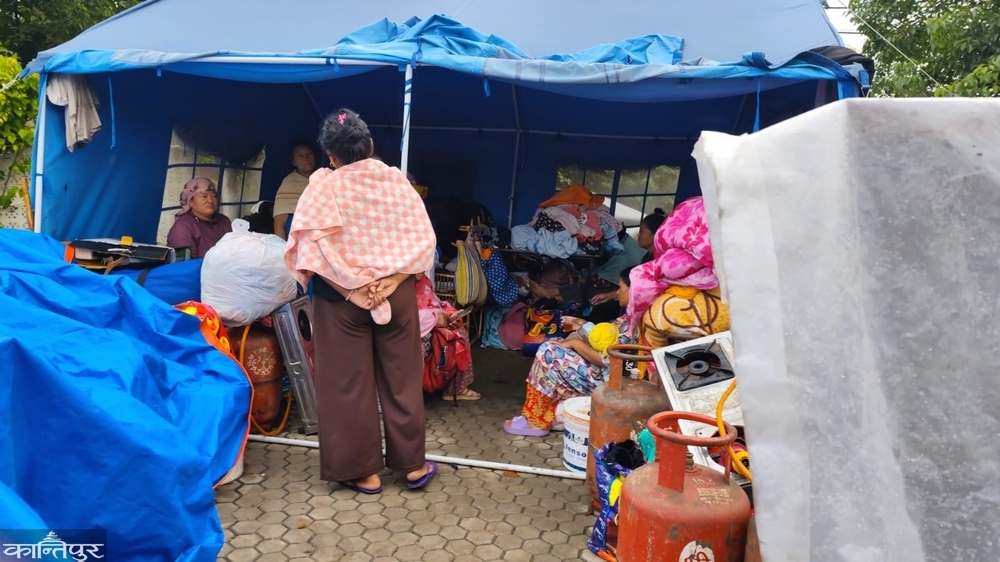
Rijan Lama, a fifth grader, had been delighted just two months ago to receive new books and a new uniform. But his happiness didn’t last long. Nothing was left after the night’s flood. He couldn’t even save the notebook he had done his homework in to show his teacher. “I was sleeping. I couldn’t take anything out. I just got up and left. I feel sad now,” he said in a tearful voice.
Looking toward the flooded area, Manoj Mahato told us, “There were a few belongings left after the government demolished everything. Now those are gone too,” he added with a wry smile. “People go looking for water, but water comes looking for us. Strange, isn’t it?” He also requested that arrangements be made for bedding and blankets for them.
Girwanika Thapa, who had informed us by phone at 1 a.m. that the flood had entered, was also sitting quietly with her ten-month-old son in her arms. “The children are sleepless. They keep crying. There’s nowhere for them to sleep. How am I supposed to console them?” she said anxiously.
She had sent Pundebi Paswan’s children to the nearby Smriti Building. Some people were rescued and taken there by security personnel. “Their clothes are wet. On top of that, they’re crying because they couldn’t sleep there either,” she added.
According to the National Disaster Risk Reduction and Management Authority, out of the 154 people at the holding center, 54 have been rescued and taken to the Smriti Building at TU. “Currently, the relevant agencies are actively managing food, water, and other necessary supplies,” the authority stated.