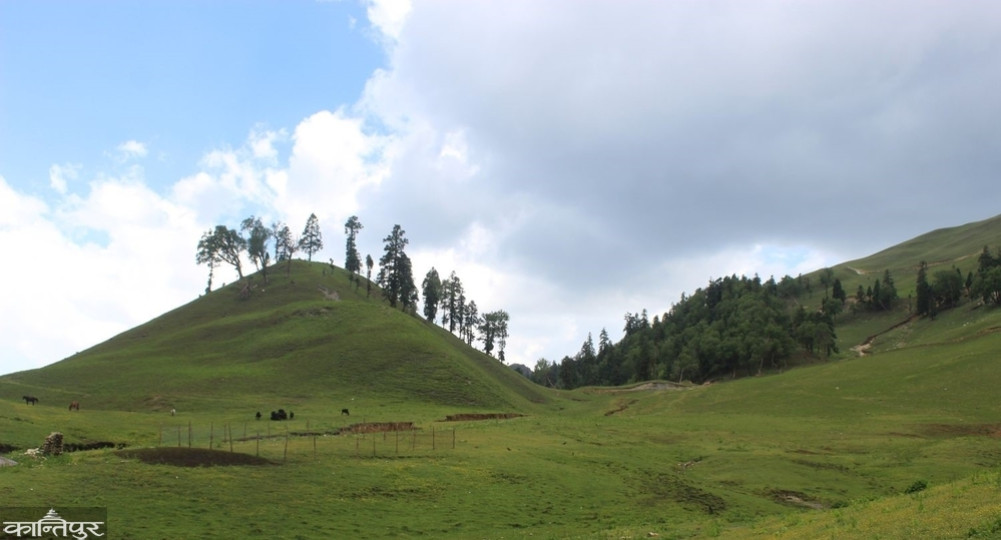
After the month of Asar begins, herders arrive here with their cows, buffaloes, sheep, and goats. The vast valley spread out under the open sky and the aroma of milk and curd ripening in the sheds make Guthi Chaur feel like a living museum of Himalayan culture.
We use Google Cloud Translation Services. Google requires we provide the following disclaimer relating to use of this service:
This service may contain translations powered by Google. Google disclaims all warranties related to the translations, expressed or implied, including any warranties of accuracy, reliability, and any implied warranties of merchantability, fitness for a particular purpose, and noninfringement.
The name Jumla conjures up images of remote geography, deprivation, poverty, disease, and a difficult lifestyle. For many years, this was the district’s reputation. Now, times have changed. Instead of stories of scarcity, discussions are increasingly focused on opportunities and possibilities.
Although the district remains distant from the mainstream of state development, nature has bestowed it with many unique gifts. The lush pastures in the district have now become centers of attraction for tourists.
The green meadows at the foot of the Himalayas, pristine glacial rivers, rare Himalayan herbs, biodiversity, herding culture, and an authentic way of life are giving the district a new identity. In recent years, Khali Patan, Guthi, and Dhimichaur have become new attractions for domestic tourists. The meadows, which are grassy fields, have now become the foundation of tourism. During the monsoon, the vast fields covered in greenery, colorful wildflowers, flocks of sheep, goats, cows, buffaloes, and yaks grazing in lines, the melody of the herder’s flute, and the cold wind blowing from the mountains offer a vibrant experience of nature. Such an environment is now drawing tourists. The meadows along the route to and from Rara have become attractive rest stops. They have become popular for photography, observing natural scenery, and studying medicinal herbs.
The herding culture in Guthi Chaur is also renowned. After the start of Asar (mid-June), herders arrive from Jajarkot with cows, buffaloes, sheep, and goats. The gentle sound of bells hanging from horses’ necks, the vast valley spread under the open sky, and the aroma of milk and yogurt being prepared in the herders’ huts make Guthi Chaur feel like a living museum of Himalayan culture.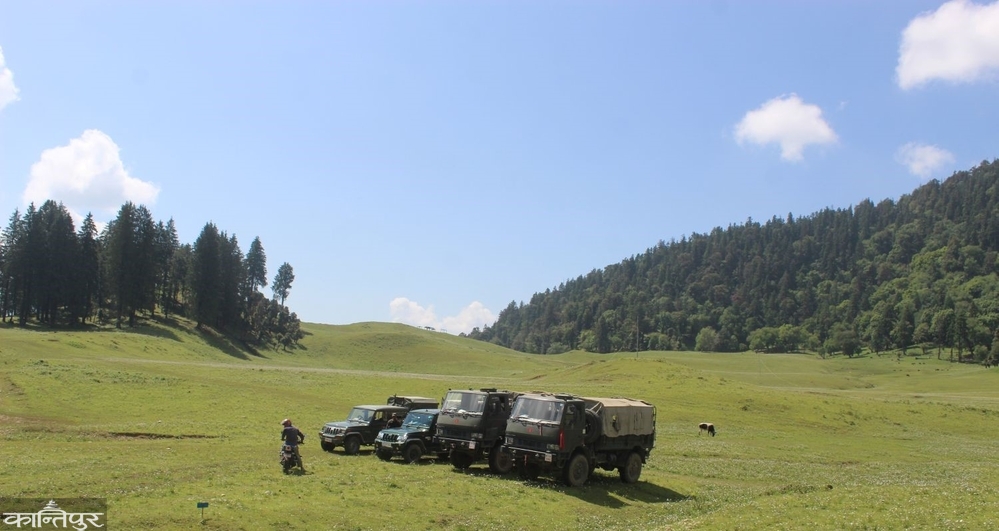
Dhimichaur, located near the district headquarters, has become a destination for youth, students, family gatherings, and picnics. In Saun and Bhadau (mid-July to mid-September), the blooming wildflowers, dense forests, and open fields attract tourists. In recent years, improved road access, promotion through social media, and a trend of traveling within the country have increased tourist activity in the meadows. Positive impacts are now being seen in local hotels, homestays, transportation, agriculture, and animal husbandry. Anyone who visits these beautiful meadows is enchanted. However, reaching there is still a challenge. The lack of adequate infrastructure, organized trails, toilets, information centers, and safe rest stops poses problems. Plastic waste has started to accumulate. According to tourism experts, only the conservation of natural resources and local participation can ensure sustainable tourism. They say that infrastructure development, sanitation, environmental protection, and effective promotion will attract both domestic and foreign tourists.
Last Saturday, Ramesh Rokaya set out from Birendranagar, Surkhet, to observe tourist destinations in Karnali Province. Until now, he had only known Rara Lake, Shey-Phoksundo, and Chandannath Temple as tourist sites. But upon reaching Khali Patan on the way to Rara Lake via Khalanga, he said he felt as if he had reached heaven. “The meadows encountered while traveling from one tourist destination to another are also beautiful tourist destinations of Karnali,” he said. “After spending an hour enjoying Khali Patan, I went to Rara Lake.” Khali Patan in Patarasi-7 is becoming known as a major destination for domestic tourists. After about an hour’s drive from the district headquarters via Urthu Bazaar and Patmara, one reaches the vast green meadow. This is on the main route to the famous Rara Lake in Mugu. Locals say Khali Patan has become an unforgettable rest stop for most tourists traveling to Rara.
With the onset of the monsoon, colorful wildflowers bloom in Khali Patan. The cold Himalayan wind, surrounding hills, and open sky create an extraordinary atmosphere. In winter, snowfall turns the area completely white. Valuable medicinal herbs such as Atis, Satuwa, Panchaunle, Katuko, Bhulte, Bayo Jadi, Chuk, and Gannaino are found here. Dozens of species of wildflowers, including white chimallo, transform the meadows into a natural garden during the monsoon. This area, considered a habitat for birds like the Himalayan monal, kalij, and chukar, is also seen as a potential habitat for the rare red panda.
Karn Bahadur Basnet of Kalikot says the Khali Patan meadows of Jumla are truly captivating. According to him, tourists capture the scenery on their cameras when they visit. Many come to learn about medicinal herbs and plants. He says the number of tourists has increased after photos and videos of Khali Patan started going viral on social media. Hotels have opened near the meadows, contributing to tourism. According to local hotel entrepreneur Lalita Thapa, thousands of domestic and foreign tourists visit every month. She says there is a rush from Asar to Asoj (mid-June to mid-October). According to her, tourists stop here for sightseeing, photography and videography, studying medicinal herbs, and resting during their trip to Rara.
Some Khali Patan meadows have also developed as picnic destinations. According to local Ram Maya Budha, government and non-government offices, students, and various groups in Jumla choose these meadows on Saturdays and public holidays. Due to the vast open fields, peaceful environment, and easy access, the attraction here is continuously increasing. According to the older generation, the late King Birendra once spent a night in this area during his visit to Rara Lake. In his memory, the field is also called “Raja Chaur” (King’s Meadow). Despite being rich in natural resources, Khali Patan is still waiting for adequate promotion.
Dhimichaur, located in Chandannath Municipality-4, is becoming a popular peaceful destination for tourists. The vast field, reached after an hour’s walk from the district headquarters Khalanga, is spread amidst dense forest. Nestled in nature, the cold breeze, birdsong, and greenery are enchanting. Dhan Bahadur Rawat of Tila-9 says Dhimichaur is a beautiful destination in Karnali. “The meadows are not just suitable for grazing,” he said, “they are places where tourists can enjoy themselves.” In Saun and Bhadau, Dhimichaur shows its most beautiful form. Colorful wildflowers cover the meadows, the surrounding forests shine with greenery, and the open fields give tourists a sense of freedom. Because of this natural beauty, every Friday, Saturday, and public holiday, there is a significant crowd of students, employees, families, and youth. Used as a cowshed during the rainy season, Dhimichaur is becoming a favorite destination for picnics, camping, photography, and spending time with nature during the dry season.
It has been a month since Hastabahadur Budha from Barekot, Jajarkot, arrived in Guthi Chaur to herd buffalo. He is not just a buffalo herder. He also provides milk and yogurt to tourists upon request. Every day, more than 20 tourists come to the kharka (pasture) in search of milk and yogurt. “In the past, there were only herders,” he said, “now tourists are coming too.” As the bells on the horses ring in the green fields at the foot of the Himalayas, nature creates its own melody. Guthi Chaur in Jumla is one of the rare places where this music can be heard. Located in Guthi Chaur Rural Municipality-2, Guthi Chaur Patan has in recent years established itself as a major tourist attraction in Jumla. The bowl-shaped valley spread over thousands of bighas, green hills all around, grassy fields in the middle, and pristine glacial rivers descending from the mountains captivate anyone who visits at first sight.
As soon as Asar begins, the scene in Guthi Chaur changes. Locals bring cows, buffaloes, sheep, goats, horses, and mules from various districts up to the local meadows. Temporary huts are built under the open sky, the aroma of fresh milk and yogurt fills the air, the gentle sound of bells hanging from horses’ necks, and the daily life of the herders make Guthi Chaur a living museum of Himalayan culture. This unique natural scene is now attracting domestic tourists. Every day, tourists come here for camping, picnics, photography, and to experience Himalayan life. By tasting milk, yogurt, and local dishes prepared in the herders’ huts, tourists have the opportunity to get closer to nature.
In recent years, Guthi Chaur Rural Municipality has undertaken various initiatives to promote tourism. Paragliding trials, improved road access, and expansion of tourist infrastructure have further highlighted its potential. After climbing the Lakna hill to the north, the breathtaking views of Kanjiroba Himal and the Patarasi mountain range instantly relieve the fatigue of the journey. Guthi Chaur is not only a destination of natural beauty but also a foundation of the local economy. Animal husbandry, dairy production, local cuisine, and tourism are becoming complementary to each other. Stakeholders say that with planned conservation, promotion, and infrastructure development, Guthi Chaur has ample potential to become one of Nepal’s top Himalayan tourist destinations.