
The highest ascent of dreams
The family named her 'Sapna' as a symbol of the pain of not having a son. Today, that same Sapna is the most powerful judge in the country.
We use Google Cloud Translation Services. Google requires we provide the following disclaimer relating to use of this service:
This service may contain translations powered by Google. Google disclaims all warranties related to the translations, expressed or implied, including any warranties of accuracy, reliability, and any implied warranties of merchantability, fitness for a particular purpose, and noninfringement.
The parents named their daughter ‘Sapna’ not as a wish for the future, but as a sign of their own disappointment. Two daughters had been born in the family before her. When she was pregnant as the third child, the family had long hoped that ‘now they will definitely have a son’. But when she was born, it was decided that she was not a son. The family named her that, which meant something that could not be obtained even if desired – ‘Sapna’.
Sapna Pradhan Malla grew up understanding this fact associated with her birth. She always finds this matter amusing in a way that some people find amusing when they think of things that have caused her pain.
‘Maybe that is why my nature is like that of a boy,’ she recently told Kantipur at her residence, ‘I always walked in groups with boys.’
Sapna is now the acting Chief Justice. She has become the most senior judge in a country whose legal structure she fought for three decades outside the court and finally entered it. Her role now has been determined by the situation where the Chief Justice could not be appointed on time through the process prescribed by the constitution. Sapana has now been given that responsibility under the rule that the judge who is next in line in the order of seniority should take over the responsibility of acting leadership after the retirement of the then Chief Justice Prakash Man Singh Raut.
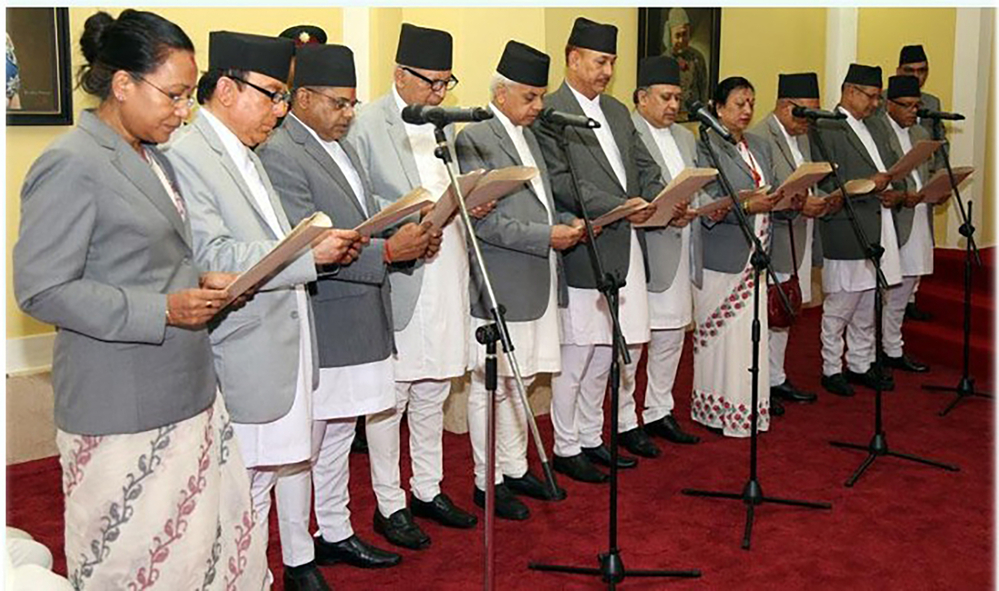
Taking oath as a permanent judge of the Supreme Court
If the tradition of making the most senior judge the Chief Justice continues, Sapana will be the next Chief Justice. For that, the formal process including the recommendation of the Constitutional Council, parliamentary hearing and appointment by the President has to be completed. Although the appointment should have been made a month before the vacancy, the recommendation has not been made because the council has not been completed. In the meantime, she is leading the court. The judiciary has only been headed by a woman once before, in 2073, by Sushila Karki. Now Sapna is in line to become the second.
Sapna was born on 29 Kartik 2020 to Govinda Bahadur Pradhan and Radha Pradhan of Ramgram village in Nawalparasi. She was the kind of girl who refused orders that she considered unfair. When contemporary girls wore ghanghar and chaubandi choli, she wore a t-shirt and pants. Once she went to a fair wearing a t-shirt and pants, someone 'told her father'. When she returned home, her father beat her. But she did not change her clothes even after that.
‘Even then, I felt like rebelling,’ she says, ‘I felt like I should be allowed to wear whatever I wanted, and I did.’
This incident is mentioned in detail in Simran Napit’s biography ‘Judiciary’s Dream: Sapna’. But it is an important fact from her childhood that shows that if the rules are wrong, they must be broken.
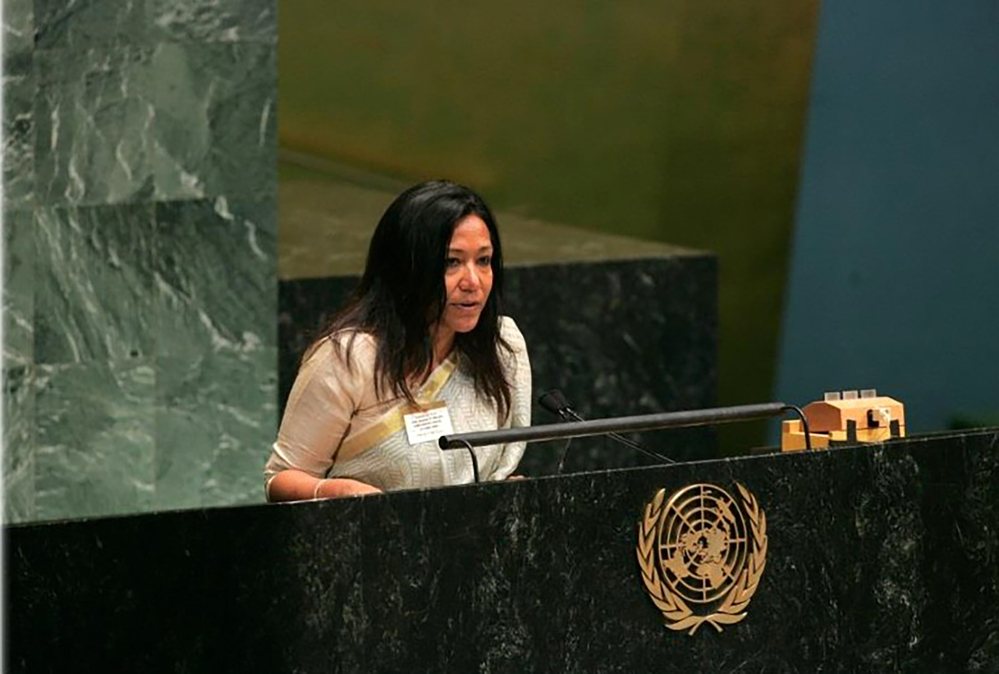
Sapna had seen women working in the home being treated differently from others as a child, and she spoke out about it. After all, she was not the kind of girl who kept what she saw to herself.
Sapna told her family that she wanted to study law. Her desire was not due to any particular case or injustice. She felt that law was the field where her ambitions would take flight. The family agreed. After completing her schooling from Nepal Adarsh Vidyalaya in Kathmandu, she enrolled in Nepal Law Campus under Tribhuvan University.
Her classmate Shashi Adhikari at the Law Campus remembers Sapna as an unforgettable person. Pretty, attractive, able to mingle with friends quickly and, if necessary, able to push away stray boys. ‘She was equally active in both studies and extracurricular activities,’ said Shashi, who later taught at the Law Campus. Sapna came first and Shashi came second in a college-level elocution competition. Sapna danced well, for which she was praised. At that time, her focus was on ‘career’.
Sapna was an avid reader. She read not only law, but also novels a lot. ‘That habit became like an addiction,’ she says.
While in college, she made it a habit to read two novels a week. Her first choice was Sidney Sheldon, who wrote thrillers with a legal background and a female character at the center of the story. The heroine and villain could be anything. She also read ‘The Other Side of Midnight’, ‘If Tomorrow Comes’, ‘Master of the Game’.
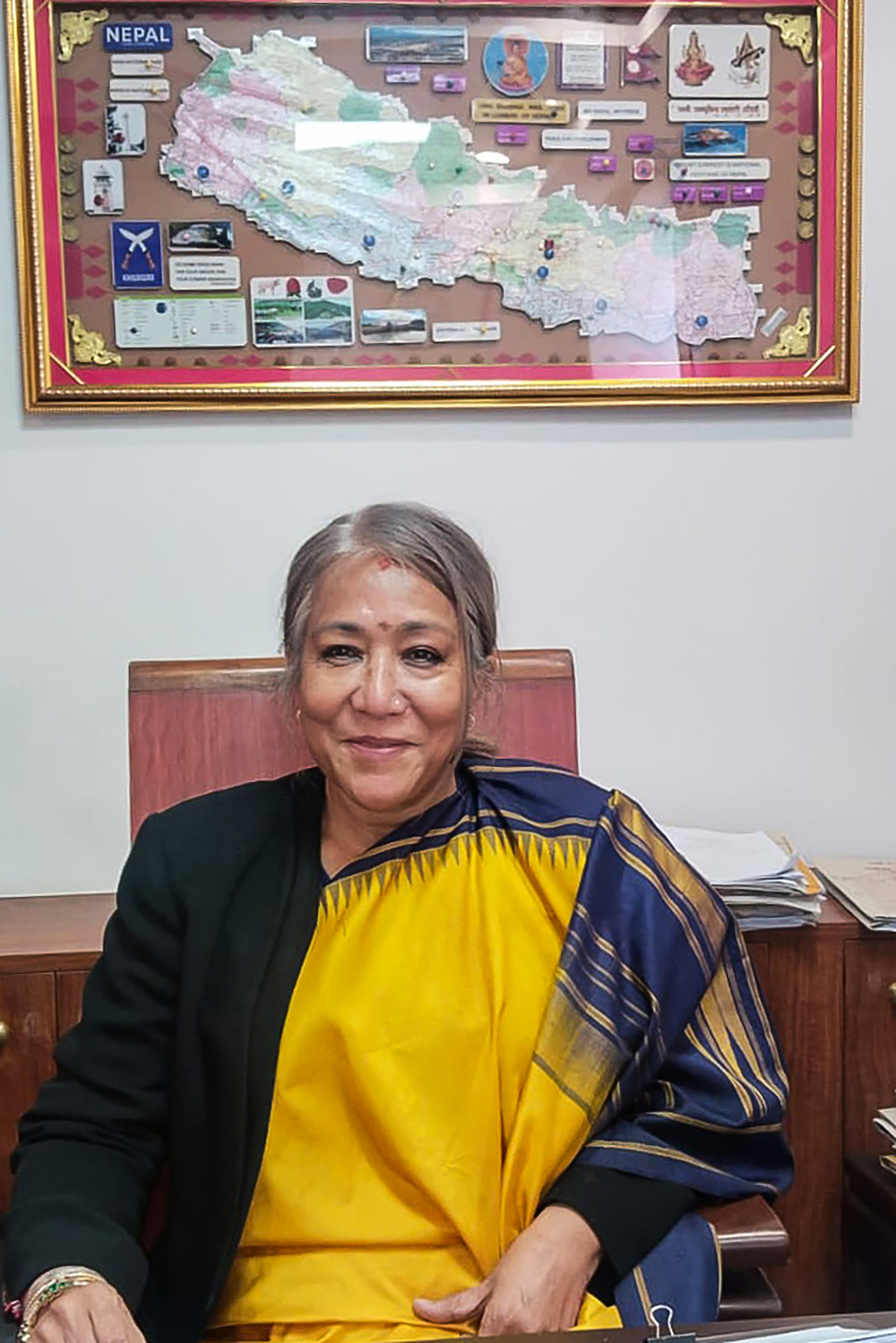
The book that made Sapna committed to the legal profession as the Chief Justice of the Supreme Court
was ‘Rage of Angels’. This book, which is a mixture of law and love, tells the story of a female lawyer struggling in a male-dominated world. ‘This novel inspired me to become a lawyer after studying law,’ she told Kantipur.
She also read Diamond Shamsher’s Seto Bagh and Vasanti, as well as the Ramayana, Mahabharata and Gita. It was an attempt to understand that world.
Sapna still remembers the limitations of the law campus library. ‘Our reading materials were just notes given by the teacher,’ she said, ‘there were some books by Nepali authors in the library. The materials were limited.’
Sapna says that she understood what a library was only after she reached Delhi University for higher education. She was selected for the university along with Prakashmani Sharma, Narayan Belbase and Upendra Acharya. When she saw the racks filled with books by authors she had only heard of in Delhi’s vast library, she suddenly remembered her days at Nepal Law Campus. There, she got the reading opportunities she had not had in Nepal. ‘I understood the importance of the library only after reaching Delhi University,’ she said.
Sapna’s classmate in Delhi, senior advocate Prakashmani Sharma, praises her academic ability. ‘She was good at studies,’ he said.
For Sapna, marriage came as a social pressure rather than a personal choice, as it does for women of her generation and social background. She kept putting it off for some time. Finally, after the man she liked promised not to interfere with her studies, she agreed to the marriage.
Ashok Bahadur Malla was a young man who had moved to Kathmandu from Nawalparasi. After marrying him, Sapna went from being the youngest daughter of her parents to the eldest daughter-in-law of a new family, a role with many social expectations. Three months after the wedding, she told her family that she wanted to go to India to pursue her masters. When her mother-in-law asked who would run the house, her father-in-law replied, “The house was running even before he came, and it will run even now.” Ashok also stood by her.
‘I have reached this far today because of the inspiration given by my father-in-law,’ Sapana said, ‘My father-in-law was the first person to be happy with every achievement and always encouraged me.’
While at Delhi University, Sapana was influenced by the work of Professor Upendra Bakshi, who advocated that ‘the courts should not be passive but play an active role in interpreting constitutional rights.’
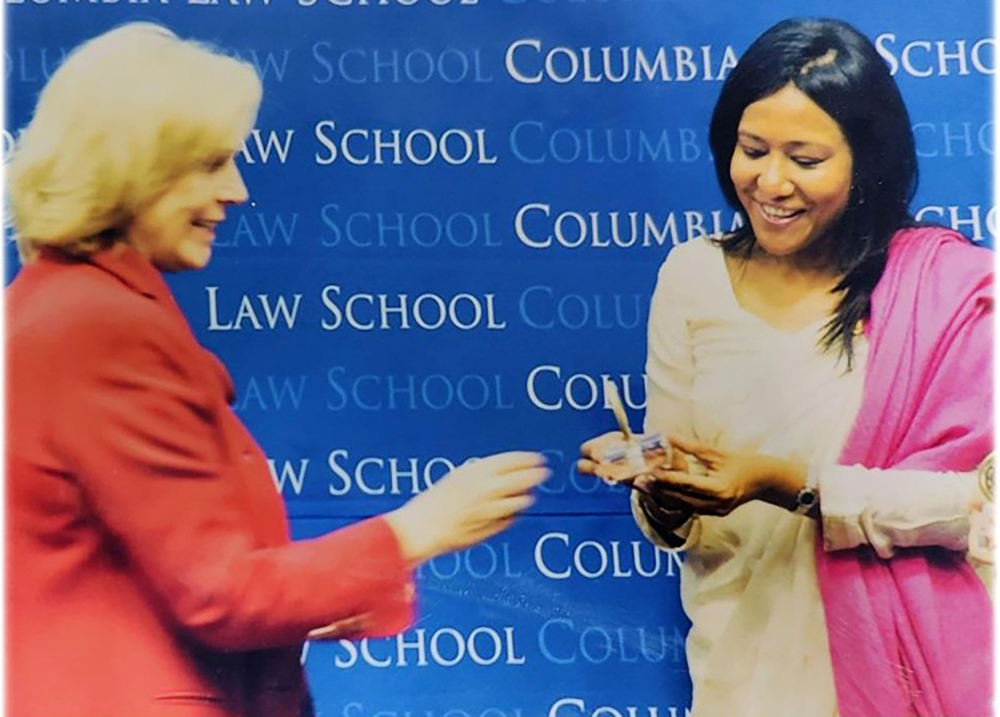
After completing her studies in Delhi, she returned to Kathmandu and gave birth to a son. Leaving her 18-month-old son behind, she went to Italy for a three-month training course on international development law. After returning from Italy, her first destination was the chambers of senior advocate Krishna Prasad Bhandari. Sapana and others call him ‘Gurudev.’
According to Bhandari, at that time, Sapana came with a characteristic that he had rarely seen. ‘She was very curious and had the courage to think that she could do anything,’ Bhandari told Kantipur, ‘The desire to create her own distinct identity was strong.’ Her knowledge of corporate law was profound. She must have learned a lot from Delhi University. I always found her to be someone who wanted to learn at a high level.'
Prakash Mani Sharma, who worked with her at the same time, also saw the same trait in Sapna. 'I had the opportunity to work with her from India to Nepal,' he said. 'I have always been impressed. I saw her as a lawyer full of energy and enthusiasm, and I have seen her excel even after becoming a judge.'
Sapna opened her own firm, 'Development Law Associates', and started arguing cases on joint ventures, labor law and industrial relations. 'I was a legal advisor to the Hotel Association of Nepal, a lawyer for many large hotels, a lawyer sought after by everyone for contract law,' Sapna recalls, 'I used to earn more than my contemporaries. My firm was among the successful ones.'
The income was good. Her reputation was growing. But that wasn't enough.
She faced a special kind of resistance as a woman to make an influential presence in a law that was considered a male-dominated field. She was mocked as an 'NGO worker', a term that at the time meant to belittle the seriousness of her work. But such criticism did not touch her.
Sapana, along with her colleague Meera Dhungana, began filing public interest litigation against laws that discriminated against women. Through systematic research, she found 118 laws that legally disadvantaged women in areas such as citizenship rights, equal pay, and foreign employment rights. She understood that law is not a neutral instrument. It is discriminatory because it is written by men for men. In 2052, she and Dhungana founded the Forum for Women, Law and Development (FWLD), which provided an institutional basis for future struggles.
Their collaboration began in 2050 with a writ petition that demanded equal rights for the daughter. Dhungana was the petitioner, and Sapna took it forward. Then they collaborated on additional cases. They came to the conclusion that working on a few such cases alone would not bring anything to fruition. ‘Initially, we were supporting each other’s cases,’ Dhungana told Kantipur. ‘Later, Sapna said that we should move forward in an organized manner, and FWLD was born.’ Looking back now, I feel that the dream of that time came true, and she played a major role in it.’
In the years that followed, Dhungana finds herself as a fellow traveler following Sapna. ‘Once she started a task, she would not stop until she brought it to a conclusion,’ she said.
Ruling on the writ petition regarding the share, the Supreme Court ruled that married daughters should also have equal rights to ancestral property, and also directed Parliament to enact a law within a year. Praise was less and opposition was louder. Advocate Sabin Shrestha, who worked with Sapna at FWLD, believes that his daughter's gradual acceptance of equal rights in property is a direct result of that decision. 'I will never forget her dedication to her work, her desire to teach others, her ability to encourage and build confidence,' he said. 'Perhaps that's why she became successful.' According to
Shrestha, the office often ran late into the night at that time. 'When she was there, we would sit until the night every day, discussing and debating. From cases to respect for work, she has always been my inspiration,' he said.
In the midst of the campaign to reform gender discrimination laws, the case of marital rape came up, with the argument that rape in a relationship between husband and wife is also rape. At that time, such a move was challenging. However, the Supreme Court agreed. The government enacted a law with a provision for imprisonment of three to six months. Sapna did not stop there. She constantly pressed for amendments and played a role in establishing a system to increase the sentence to five years.
According to Dhungana, Sapna was the source of strength to continue this campaign. They faced widespread hostility in both the marital rape and Ansh cases. ‘There was even a comment that Malla and Dhungana should be informed before entering the wife’s room,’ Dhungana said. ‘I also had to endure accusations of trying to break up the family, inciting the society, and spreading negativity.’
Looking back, it is not such criticism that still affects Dhungana today, but Sapna’s response to it or her nature to sometimes remain unresponsive. ‘I still admire her ability to be very firm and to bring others to her side,’ she said.
Her advocacy for abortion rights led her to be a candidate for the Committee on the Elimination of All Forms of Discrimination against Women (CEDAW), but she could not win. She also took the defeat as a natural choice. ‘There was not enough time to prepare at that time, we lost,’ Sapana told Kantipur, ‘but that defeat also benefited her. My candidacy later laid the foundation for Bandana Rana to win.’
Sapana continued her work by writing the shadow report of CEDAW and through other international networks. She participated in the Fourth World Conference on Women held in Beijing in September 1995. While representatives from developed countries were debating political representation and gay rights, Nepali women’s issues were about basic issues such as property, education, citizenship and the right to live in equal legal status.
In 2064, the UML made her a member of the Constituent Assembly through the proportional system, not as a party member but as an expert who could play a role in the constitution-making process. She accepted. She raised a strong voice in favor of gender equality, proportional representation, and formal inclusion of women, Dalits, indigenous peoples, and other marginalized communities in the state structure while sitting on the Constitutional Committee. The first Constituent Assembly was dissolved in 2069 without drafting a constitution. She returned to advocacy.
There was a wide debate at the time about her decision to join the Constituent Assembly, and such debate continues to this day over the judicial decisions she was involved in. The question of whether her judicial decisions are in accordance with the law or whether her political background has anything to do with her becoming a member of the Constituent Assembly continues to arise. Such questions have arisen even after she became the acting Chief Justice.
Sapana, who is aware of all this, told Kantipur, ‘I felt that politics was not my profession or passion. I felt that the work I was able to do as an expert in the first Constituent Assembly was sufficient. After that, I returned to law.’
When the constitution was promulgated in Asoj 2072, many of the issues she had been fighting for were included in it. Such as inclusion, women's rights, 33 percent representation of women in the state structure, etc. 'That made me very happy,' she said.
It was a while before the constitution was promulgated, a friend suggested Sapna to apply to Harvard University. She was worried that her command of English might not be enough. But she applied. Harvard offered a full international scholarship and in 2014, at the age of 50, she enrolled in the Masters in Public Administration. She says, 'There is no age limit for learning.'
Harvard taught Sapna two things - how to build a network and how to persuade people with different interests to agree through dialogue. She returned to Nepal and continued her work. From 2014 to 2016, she was elected a member of the United Nations Committee against Torture. The position was unpaid but not insignificant.
‘The lessons learned from being a member of the Committee against Torture were very important, it helped me a lot after becoming a judge,’ she told Kantipur, ‘I have been able to use many of the things I learned there in my decisions. I learned how crime progresses with development, not only in developing but also in developed countries, and how to address it.’
Sapana received the title of Senior Advocate in Falgun 2069. In Falgun 2073, her name was among the 11 people recommended for permanent judges of the Supreme Court. Her appointment was delayed by 6 months as a parliamentary hearing could not be held immediately. Finally, she took the oath on 17 Shrawan 2073 and took her seat in the same bench where she had been debating for years.
Even Sushila Karki had to face criticism for recommending Sapana in the parliamentary hearing before becoming the Chief Justice. She was asked whether making a former UML proportional representation MP a judge was an attempt to bring politics into the judiciary. ‘Sapna is a capable woman,’ Karki had said during the hearing, ‘I am ready to take whatever credit or blame comes to appointing her as a judge.’
Since then, Sapna has played a role in shaping jurisprudence on various issues as a judge. This comes as a surprise to those who consider her a judge focused only on gender issues. Judge Abdul Aziz Musalman, who has known Sapna since her days as a lawyer and currently shares the bench with her, says that she does not have a single case-oriented approach. According to him, Sapna has deep knowledge of international law, environmental law and human rights. He also says that her habit of writing the verdict herself, always looking for international context, and not leaving questions that can be answered unanswered is inspiring. ‘I have been impressed by many aspects of his work while sitting in the bench with me,’ said Musalman, ‘His ability to understand the case, his readiness to convince both sides of the argument, his habit of writing the verdict himself, all are motivating.’
Judge Shrikant Poudel considers Sapana to be a judge who understands the case quickly. ‘I found him to be a judge who sees the case clearly, reaches a decision after listening to all sides, and believes that justice should be served only after a full hearing,’ he said.
The order to protect Fewa Lake, the decision to grant voting rights to Nepalis living abroad, and the decision to annul the dissolution of the House of Representatives are among Sapana’s notable decisions.
In 2076, a bench of him and Justice Manoj Kumar Sharma ordered the release on bail of Prithvi Malla (who is not related to Judge Sapana), who is accused of killing Leela Devkota, who was walking on the sidewalk after being hit by a drunken car. The order to release Prithvi on bail of Rs 500,000 was strongly criticized on the grounds of mental health and the risk of COVID-19. Prithvi had gone to the US after his release.
‘There had been an agreement between the victim and the accused regarding compensation,’ Sapana told Kantipur about the decision, ‘At that time, widespread decisions were being made to release prisoners due to COVID.’ This was one such order. It was presented incorrectly. It was not a final decision, it was only an interim procedural order.’
After the dissolution of the House of Representatives, the KP Sharma Oli-led government amended the law through an ordinance and appointed 52 office bearers to various constitutional bodies without even going through parliamentary hearings. When the Constitutional Bench ruled on the writ filed against it, Sapana wrote a separate opinion, but she stood with the judges who upheld the appointments. Critics called it a bias towards the executive.
‘The court had an opportunity to stop the appointment made by bypassing parliamentary hearings and the misuse of the ordinance,’ says retired Supreme Court judge Balram KC, ‘the Supreme Court missed such an opportunity.’
Sapana rejects such an interpretation. ‘I have presented the argument I saw in accordance with the law,’ she said, ‘Every judge on the bench can freely express his opinion, that is what I did.’
The order to remove the conditions imposed on cricketer Sandeep Lamichhane, who is facing charges of rape of a minor, including the ban on traveling abroad, by a bench including him in Falgun 2079 also drew widespread opposition. Lamichhane was later acquitted by the High Court.
When asked how judges balance their beliefs and the cases before them, Sapana says, ‘There are two sides to any case. Both cannot win. The losing side is dissatisfied, criticism comes. I have taken it that way.'
Beyond the cases, campaigns and criticism, there is another quiet rhythm in her life.
Her office at the Supreme Court is filled with pots of flowers and small plants. She plays golf. She goes to the gym. She cooks at home when she has time. She returns to her village during Dashain and Tihar and stays with her family and relatives. Her colleagues especially praise her saree. She herself says, 'The saree gives a different kind of confidence.'
Even though she is a judge, she says that she is a member of this society. 'Someone's wife, someone's daughter, someone's daughter-in-law. I try to play those roles successfully,' she says.
Her name was given as a dream, which was actually someone else's disappointment. She spent her life making that distinction irrelevant. He is currently the Acting Chief Justice in the formal language of Nepali constitutional law. The word Acting means temporary. But Sapana knows that the responsibility he is carrying is not that.