Ajita Sharma in Mustang, Rekha Kandel in Khotang, Rudra Devi Sharma in Kaski, Sirjana Thapaliya in Sankhuwasabha, Bandana Rai in Tehrathum, Leela KC in Solukhumbu, Skim Shrestha in Sindhuli, Binu Bajracharya of Palpa, Junu Hamal Dhakal in Dolpa, Sita Pariyar in Rukum East, and Kalpana Nepal took over the administrative command in Doti district during the elections.
We use Google Cloud Translation Services. Google requires we provide the following disclaimer relating to use of this service:
This service may contain translations powered by Google. Google disclaims all warranties related to the translations, expressed or implied, including any warranties of accuracy, reliability, and any implied warranties of merchantability, fitness for a particular purpose, and noninfringement.
Conducting the 2082 general election amidst the mountainous environment was both a challenge and an experience for Mustang's Chief District Officer (CDO) Ajita Sharma. This was the first time for Tiwari, who took over as the Chief District Officer of Mustang last November. Earlier, she had held the responsibility of a polling officer in various places in the 2064, 2073 and 2079 elections. But conducting the election while leading the administration of the entire district was a different challenge for her. "Working as a polling officer, you are responsible for one polling station, but as a CDO, you have to look after the management of the entire district. Being a mountainous district, the challenges here are also different," she said. There were 40 polling stations in Mustang for the election. She said that since many of them are located in remote and difficult terrain, the administration had to make special preparations to provide the necessary materials, staff and security management. The geographical remoteness was a big challenge, especially in the polling stations in Upper Mustang. Limited transportation and infrastructure were another problem. But she said that the voting process was conducted by making necessary arrangements in coordination with the administration, security agencies and the local level. While the election preparations were underway, the snowfall on Magh 13 and 14 created additional challenges. After the heavy snowfall, movement was affected in some places. Especially at the Himalayan Basic School Sangta in Waragung Muktikshetra Rural Municipality, where problems were seen while going to the field after crossing an altitude of 4,400 meters.
She had already held the responsibility of a polling officer in various places. But leading the entire district administratively and conducting the election was a different challenge for her.
Recounting her experience of monitoring the polling stations, she said, "After the snowfall, the road was almost closed. The team had to return after reaching the Sangta polling station in Waragung Muktikshetra Rural Municipality halfway, but with the coordination of all the security agencies of the rural municipality, we were able to clear the snow and conduct the election." She said that even though a helicopter was arranged in coordination with the Ministry of Home Affairs when it became impossible to reach the polling station, it was not necessary later. She informed that although the election preparations were hampered for some time due to snowfall, efforts were made to resolve the problem by coordinating with the local level, security agencies and administration, and after efforts were made to clear the road, it was possible to conduct the election with the help of the local municipality.
Although there were some minor incidents of violation of the election code of conduct, she said that they were resolved with all-party consensus. "The atmosphere of dialogue between all parties here is good, and even if there is a problem, it is customary to resolve it through discussion, which is why the election was held peacefully," she said. In the hilly district of Khotang, the responsibility of election management was also led by women. For Khotang's Praja District Officer Rekha Kandel, the 2082 election was also a challenging and important experience. This was also the first election experience for Kandel, who took over as the Khotangmo Chief District Officer only last month. According to Sharma, the weather and geography were the biggest challenges while conducting the election in Mustang. Out of the 40 polling stations in the district, 10 centers were kept on the sensitive list. She informed that these centers were considered sensitive based on geographical remoteness, number of voters and access to information and communication. Additional security arrangements were made at those places. Tiwari's experience is that the overall situation of voter education in Mustang is good. She said, "Despite being a Himalayan district, the interest and participation of the voters here in the election was encouraging, with 56 percent of the votes cast in this district." It is considered normal for many locals to migrate to cities including Pokhara and Kathmandu to escape the winter. She said that many families temporarily migrated to the city after the onset of cold weather, but returned home during the election.
Being a hilly district, there were challenges related to geography, transportation and communication infrastructure. According to her, transportation of voting materials was a big challenge in Khotang. Since many places have unpaved roads, it was difficult to deliver the materials in time and management.
Being a hilly district, there were challenges related to geography, transportation and communication infrastructure. According to her, transportation of voting materials was a big challenge in Khotang. Since many places have unpaved roads, it was difficult to deliver the materials in time and management. ‘Since it is a hilly geography, transportation and communication problems were natural, but with the cooperation of all parties, the election could be conducted in an orderly manner,’ she said.
Although the voting in Khotang was conducted peacefully overall, she said that the state of voter education was relatively weak. Due to this, she said, many votes were invalidated. “The voting was conducted safely, but the number of invalid votes was high due to weak voter education,” she said. “Initially, due to the political situation in the country, holding the election was a challenge, and the question of how cooperation between parties would work was raised.” 197 polling stations were designated in Khotang. Of these, 195 were direct polling stations and two were proportional polling stations. She said that two deputy secretary-level employees were deployed as polling officers throughout the district. During the election, Kandel herself visited various polling stations in the district and monitored them. She said that despite the geographical remoteness, she had the opportunity to visit many centers and observe them firsthand.
During the preparation for the election, she said that the environment became comfortable after several all-party meetings were held and a clear understanding was reached about the election code of conduct. The polling stations in the district were classified based on security sensitivity. 21 polling stations were classified as highly sensitive, 64 as sensitive, and 53 as normal centers. The polling stations were classified based on transportation conditions, communication facilities, and past election incidents.
According to her, all the ballot boxes had reached the district headquarters by 8 am on February 22. Despite limited resources, Kandel said that the election was successful due to the coordination of the administration, police, employees and the local level. She said that the cooperation between the administration, police and the local level plays a very important role in conducting the election even with limited resources.
Kaski district, where Pokhara is a major tourist destination, is also considered sensitive from an administrative point of view. Conducting the election amidst tourism, large population, rapid movement and various activities was not easy for the administration. The responsibility of conducting the general election in such an environment fell on the shoulders of Kaski's Chief District Officer Rudra Devi Sharma.
This is her second experience of conducting the election as Chief District Officer. She had previously led the 2079 election in Bhaktapur district as Chief District Officer. Despite having experience in election management, Kaski's different social and geographical environment faced her with new challenges. According to Sharma, the overall political situation in the country was sensitive at the time of the election. Therefore, she said that the administration is very aware of the issue of security management.
‘After the Gen-G movement, there were some prisoners outside, and illegal weapons seemed to be a security threat. Keeping this possibility in mind, the administration had prepared a detailed security plan before the election,’ she said. ‘Working according to the schedule set by the Election Commission and continuously coordinating with security agencies, local levels and stakeholders, the election process was carried out in a systematic and smooth manner.’
The responsibility of the Chief District Officer is not limited to administrative service delivery. During elections, that responsibility increases and focuses on security management, coordination and leadership of election operations. According to Sharma, during elections, responsibilities such as continuing service delivery, minimizing crime incidents and organizing election activities have to be handled simultaneously.
Kaski district, which is home to Pokhara, a major tourist destination, is also considered sensitive from an administrative point of view. Conducting elections amidst tourism, large population, rapid movement and various activities was not easy for the administration. In such an environment, the responsibility of conducting the general election fell on the shoulders of Kaski’s Chief District Officer Rudra Devi Sharma.
There were 363 polling stations in Kaski district this time. The district administration was also responsible for inspecting all of them. She said that while inspecting the polling stations, the physical infrastructure, accessibility, security conditions and management preparations were evaluated. According to her, most plans are prepared sitting in the office, but the actual situation can only be understood by reaching the field.
Some villages in Kaski district are still considered geographically remote. Special plans had to be made to bring ballot boxes, especially from areas such as Chhungrung village in Annapurna rural municipality. Since there was no direct access to vehicles from such places, they had to walk for two hours to bring ballot boxes to the place where vehicles could reach them. Recounting her work experience, she said, ‘Plans are made sitting in the office, but when we reach the field, we see a different situation, so we used to reach the polling stations with the plan in hand and make necessary improvements accordingly.’ She said that there were situations where immediate decisions had to be taken depending on the situation of the polling stations. In some places, there was a situation where infrastructure needed to be improved, security added or management adjusted. After the voting was over, another important responsibility was to collect and transport the ballot boxes safely. ‘Earlier, it took till 2 am to bring the ballot boxes from some places, but this time due to good management, we were able to bring most of the ballot boxes to the district headquarters by 9 pm,’ she said.
There were also some challenges while managing the elections in the district. Pokhara is a major tourist destination and various cultural, religious and tourism-related programs are held daily, so managing such activities, especially during the silent period, has become a challenge for the administration, she said. She said, "Since Pokhara is a center of tourism, many programs are held here. Cultural programs, religious programs or tourism activities cannot be completely stopped, so there was some ambiguity in security management."
Keeping such conditions in mind, she said that the administration has adopted a strategy to organize programs, increase surveillance and control potential risks. There were some minor incidents during the election. But there were no major criminal incidents, she said. She informed that the administration has taken action against those who consumed alcohol and committed minor criminal incidents. According to him, coordination between the administration, police, security agencies, election offices and local levels played an important role in making the election successful.
11 district chiefs, including Mustang, Khotang and Kaski, led the election districts. Sirjana Thapaliya in Sankhuwasabha, Bandana Rai in Tehrathum, Leela KC in Solukhumbu, Skim Shrestha in Sindhuli, Binu Bajracharya from Palpa, Junu Hamal Dhakal in Dolpa, Sita Pariyar in Rukum East, and Kalpana Nepal in Doti were in charge.
Two women in command of district security
Jhapa-5 was considered the epicenter of the 2082 elections. Security was seen as a challenge. The competition between former mayor of Kathmandu Metropolitan City Balendra Shah and former Prime Minister KP Sharma Oli had fueled the election debate in this region. Superintendent of Police (SP) Basundhara Khadka arrived to take over the police leadership of Jhapa district in the final stages of the election.
She was previously working in the Human Resource Management Division of the Bagmati Province Police Office, Hetauda. While working in Kavre, she was honored by the Bagmati Province Police for her excellent work in disaster management. Under her leadership, the Nepal Police implemented a special security plan targeted at the election in Jhapa. Additional police were mobilized in high-risk areas after assessing the sensitivity of polling stations. In addition, continuous patrols, surveillance systems, emergency response teams (Quick Response Teams) and information collection systems were also strengthened.
Another interesting reference about Mustang also came into the news during the election. During the election campaign, Prime Minister Sushila Karki visited Mustang to observe it. While observing the administrative structure of Mustang, she commented that ‘this is a district run by women’. After that, Mustang became famous as a ‘district run by women’. Not only the Chief District Officer Ajita Tiwari, but also the leadership of the Mustang District Police Office was taken over by a woman Deputy Superintendent of Police (DSP) Tshiring Kippa Lama.
This constituency was also seen as a special interest due to the presence of women in both administration and security leadership. 200 police were mobilized under Lama's leadership. She took command of the first election as the Chief of the District Police Office, Mustang. This is her first experience of taking command of the election since she reached the district as Chief last Baisakh.
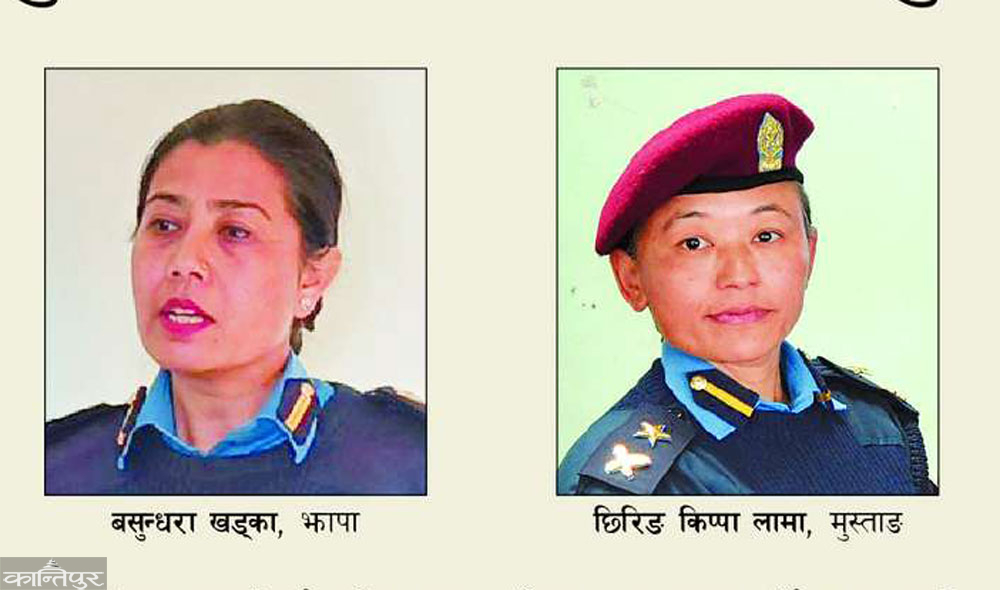
She said that despite being called the Himalayan region, it was easy because vehicles could reach all places. According to her, in the district, vehicles reached places where vehicles could not reach, and if not, bikes could. She said, "The transportation facilities are good. In places where vehicles could not reach, bikes could reach. Despite the road facilities, geographical remoteness is the main challenge, she said. Stating that the polling station is 5-6 hours away from the district headquarters, she said that she reached the polling station by shoveling snow. She said that she had reached the polling stations before the election and took charge of the responsibility sitting in the control room on the election day.

