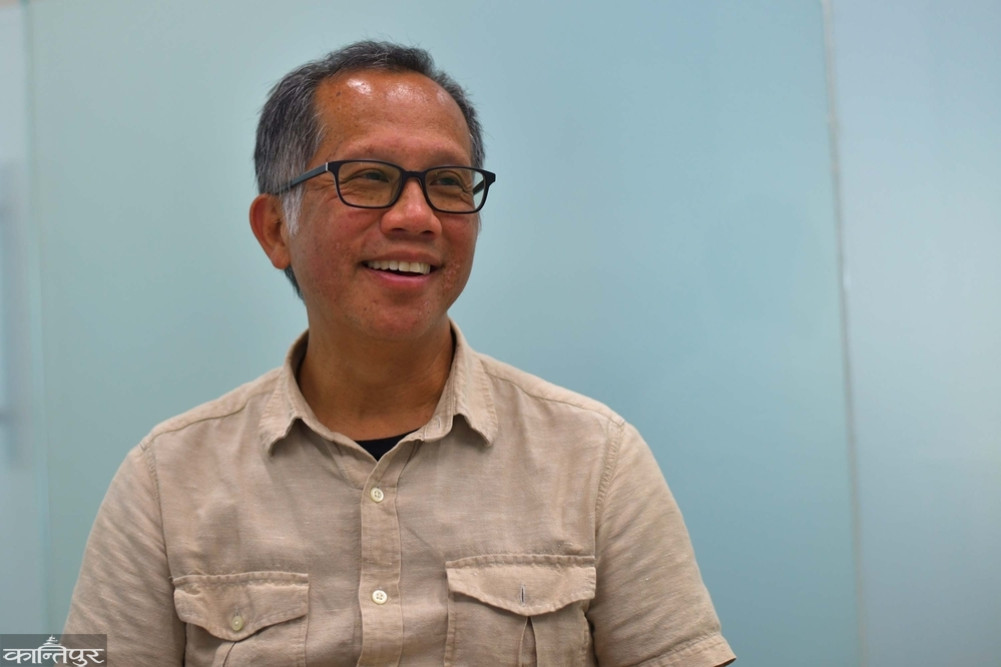
For Chan Chow, a photographer who teaches at George Washington University, the camera is not just a tool, but a bridge to reach the deepest feelings of people. He is preparing to show world interconnection through the stories of workers.
We use Google Cloud Translation Services. Google requires we provide the following disclaimer relating to use of this service:
This service may contain translations powered by Google. Google disclaims all warranties related to the translations, expressed or implied, including any warranties of accuracy, reliability, and any implied warranties of merchantability, fitness for a particular purpose, and noninfringement.
What is the means of knowing and understanding people from all over the world? Chan Chaw, a photographer who came to Nepal for the first time, has only one answer - photography. However, the key to the beginning of Chan's photography journey was getting to know people. Camera is not just a tool for him, who likes to meet people and communicate, but is a bridge to reach people's deepest feelings.
Chan, an international photographer, used to 'freelance' for a magazine during his student days. One day he went to the old age home due to special work. Confused about how to talk to people . But it was photography that helped him to communicate with the people in the old age home . "People came to me through photos," he felt.
From that moment, Chan took it as a deep means of expressing feelings, not just a profession.
That Chan has now arrived in Nepal.
Chan who wanted to come to Nepal a long time ago was unable to come or could not arrange the meeting to come. This time, Kamai led him to Nepal. Because, he decided to start his new project, 'Global Workforce' from Nepal.
What is Chan's Global Workforce Project?
Everyone says that the world is a small village, everything is interconnected. But I don't like the way people interpret it. Through the Global Workforce Project, I am trying to understand this interrelationship in a different way', Chan said about his project.
Chan is preparing to show global interconnectedness through the stories of migrant workers from around the world.
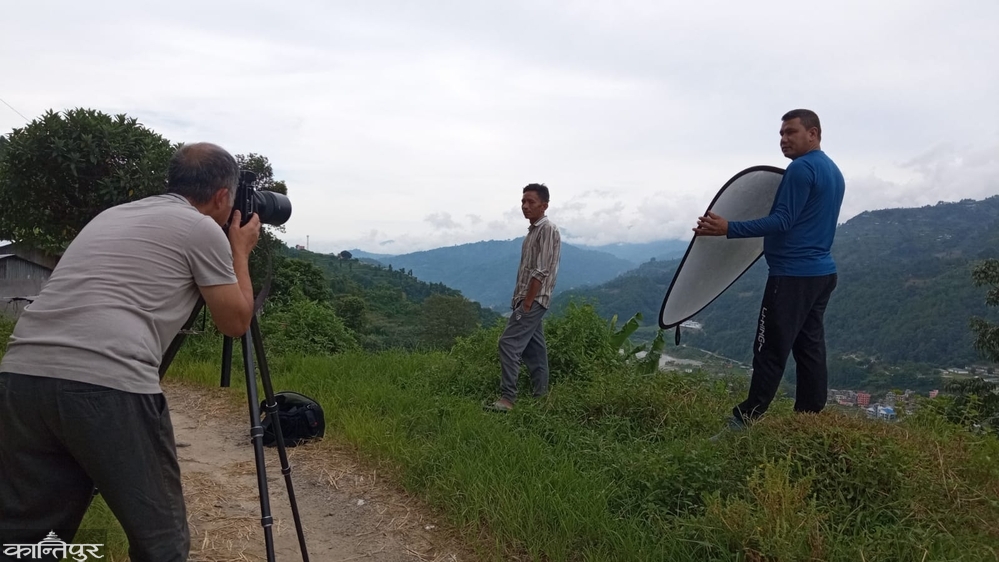
Chan believes that issues such as labor, religious beliefs, and immigration deeply bind the people of the world. And Chan says that the interest in those subjects is increasing, "People from every corner of the world are migrating for work". Even from a small country like Nepal, so many people go out to work. I found this interesting. So I thought why not start from Nepal and came to Nepal.'
In this connection, Chan's next trip will be to the Philippines.
000
Born in Kalemyo, Burma (now Myanmar) in 1966, Chan immigrated to the United States with his family in 1978. He feels that migration has also made a difference in the way he sees and understands the world. Says, "Each person's point of view creates his world view". Coming to America from Burma has helped to refine my perspective.'
Chan studied at the University of Maryland, College Park and currently teaches at George Washington University. But Chan is not interested in teaching the technical part. "I tell the experience of photography to the students, I teach them how to convey a message through photography." Eyes, skin tone, smile, sadness are all seen in photography, I teach them to understand,' says Chan, 'Young people have limited thinking about expression . But I want them to broaden their thinking . Understand the means of communication. I also teach the technical side, but that doesn't seem that important.'
Chan's photography has been covered by prestigious national level museums. National Gallery of Art in Washington DC and the Hershhorn Museum and Sculpture Garden, LA County Museum of Art, New York's Hrivatny Museum of American Art and San Francisco Museum of Modern Art have collections of Chan's photographs.
Chan's photography style is also interesting. He says that he is very formal in his photography. He says that although his style of photography is simple, it conveys a deep message. Chan usually takes photos above the thigh . In the photos taken by him, the gestures, emotions and many levels of emotions of people are evident.
'Human behavior is a universal language. If I take a picture of a person, no matter where I show it, people will understand . If I have a mother-daughter photo, I think that another mother and daughter looking at it, or any mother in any corner of the world, can relate to it,' says Chan, 'so I love photographing people . I usually draw people up close . From thigh to head . At that distance, the face is also clearly visible and what their hands and body are trying to convey is also understood .
During the of the conversation, we offered to take a photo with Chan . While we were taking photos with smiling faces, Chan recalled an interesting incident.
He has offered to photograph a Dutch female prisoner one day . The woman agreed to be photographed. After appearing in front of the camera, she also stood with a smiling face. But Chan didn't want anyone to laugh just for the photo. He requested the female prisoner not to laugh. The woman got angry after hearing his request. "You want to show that the prisoners are sad?" She also expressed her pain. Later, Chan recalled, 'I want to show what you are experiencing.'
The woman took the photo according to Chan. And after seeing the photo, she was really happy that her feelings were evident .
channel has published four books so far. His latest published book is 'Two Places on Earth' . Have you ever wondered what life would be like for people living in a completely different reality than yours? He says that Chan's photography book 'Two Places on Earth' gives a similar glimpse. Stories of UN peacekeepers in Cyprus and female prisoners in Peru are found in the book.
54 colorful pictures taken by him from the beginning of 2000 for five years are included in the book. Chan's attempt to bridge the gap between two different realities is in the book . Chan says that humanity is 'universal' despite the differences in circumstances.
Chan's work is known for presenting its subjects with respect and dignity. In Two Places on Earth, he has presented together the lives of multinational soldiers stationed in the 111-mile-long 'buffer zone' of Cyprus and the lives of women from different countries who are serving sentences in the Santa Monica Women's Prison in Peru.
He says, 'Whether it's war or prison, their story is a product of individual choices and shaped by global structures . This is where it can be shown how deeply we are connected to each other.' While talking about the 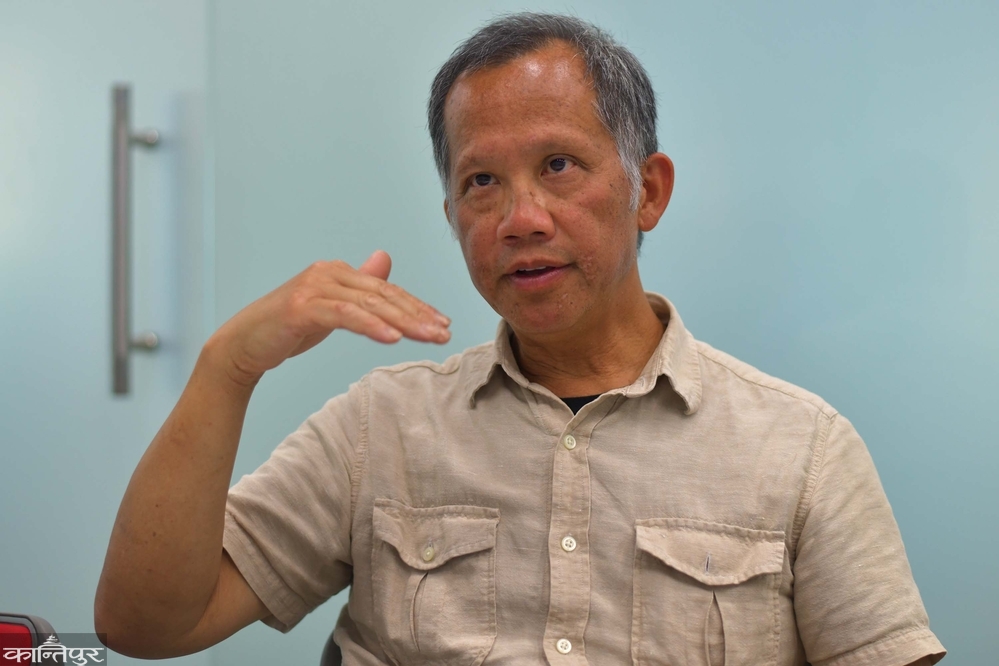
book, we also asked about one of his recent projects. The happiness of working on the project was reflected in his face. In fact, the positive impact he had on other people through his work also added energy to him.
The son of the director of the National Portrait Gallery in Washington DC was sick with cancer. He was treated at Children's Hospital. After her son's recovery, she wanted to do something special for the people who contributed a lot to the hospital . There were approximately 150 individuals and organizations who donated more than $1 million to the hospital. Usually such people were given some expensive items like: vases etc., the director wanted to give artwork. That's why she joined Chan . The
channel created a portfolio called Reflections for Children's Hospital which became very special . To thank the donors who gave great support to the hospital, he made a gift of art. "At that time I also had a small child, so the service of the hospital, the health of children was emotionally connected to me," he remembers.
He didn't earn money from this project . But emotionally it became his most satisfying and special project .
Chan, who wants to live a simple life, is not interested in buying many kinds of things, keeping the latest gadgets. Rather, they are interested in following the many expressions on people's faces and exploring their meaning through photographs. That's why he says, 'The camera is not just a tool, it is a bridge to the deepest emotions of people.'