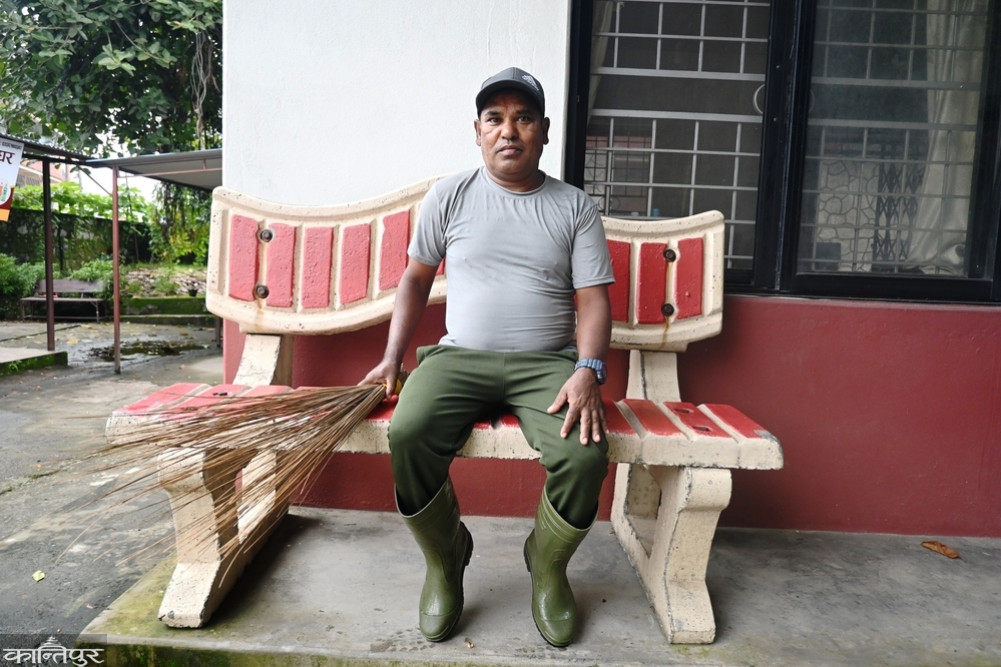
”Earlier there were one or two houses in the main market. Now 8-9 floors have been completed. Before there was a narrow road that could fit a bus, now look at the road! Isn't this a change?'
We use Google Cloud Translation Services. Google requires we provide the following disclaimer relating to use of this service:
This service may contain translations powered by Google. Google disclaims all warranties related to the translations, expressed or implied, including any warranties of accuracy, reliability, and any implied warranties of merchantability, fitness for a particular purpose, and noninfringement.
My father and grandfather used to go from village to village with sarangi. He used to mix his voice with the melody of the sarangi, and sometimes he spoke about grief, sometimes about life. The original profession of 'Gandharva' was singing and playing. The Belman singer of Pokhara Batulechaur did not want to walk with a sarangi. That's why he didn't learn the four-string sarangi. He decided to go abroad.
They crossed the border and went to Madras in India for a job. After 3 years of janitorship, I didn't want to stay there. He returned to Pokhara. This time was running around the age of 25 . In the year 055, the then Pokhara sub-metropolitan city asked for employees . After this he entered the service with the appointment of 'Kuchikar'.
There is a settlement of the Gandharva community in Batulechaur, the northern belt of Pokhara. From there, 53-year-old Belman leaves the house in a flash. 6 kms down the neurod. This daily has completed 27 years.
As he is from Pokhreli, he has closely observed the changes of Pokhara not only during his working life, but also from birth to yesterday and today. "When I started working, Pokhara was small," he says, "There was no place to dump the collected garbage." They used to chase us . Now there are many facilities.'
Pokhara, which was a sub-metropolitan city of 18 wards, has now become a metropolitan city of 33 wards. Lekhnath municipality and nearby Sarangkot, Pumdi-Bhumdi, Mauza, Chapakot, Purnchour, Bhadaure Tamagi, Majthana, Kalika were not included in Pokhara. All these villages and places were Pokhara in dialect, they had a separate existence on the map. Pokhara has not only become bigger in terms of geography, the city has also changed its appearance . "Earlier, the road was narrow in the market area. Now it has become wider,' he said.
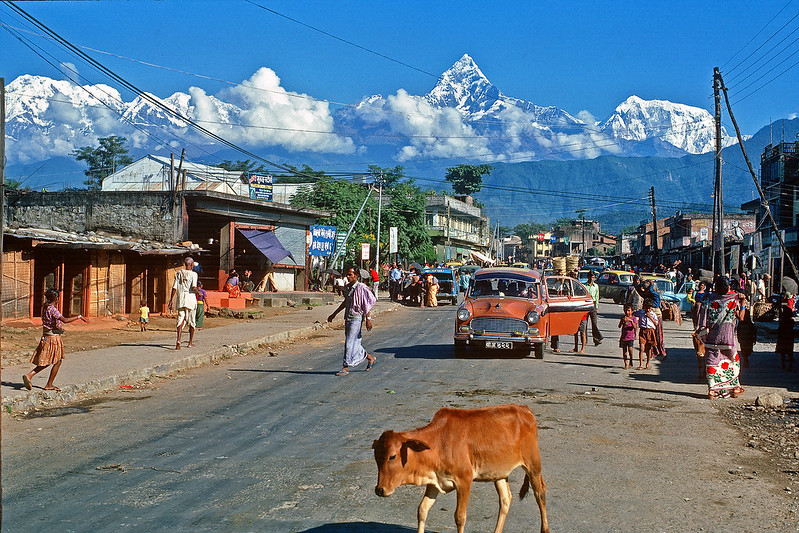
Around 2036 Mahendra Bridge in Pokhara. Photo: Thomas Jacob
Yesterday, when I was looking for the car, I couldn't find it . Nowadays, green color 'Pokhra Nagar Bus' is plying on the road in front of the house . When Belman remembers, there used to be a ``Dhwang bus'' that carried few people in Pokhara. At that time, it cost 4 rupees to get to New Road, a distance of 6 km. Now it costs 35 rupees . "When I searched, I couldn't find the car." Sometimes I had to walk,' he said. After coming to the
office, the garbage collection work started. The then Pokhara sub-metropolitan city had 8 tractors to collect garbage. Those tractors used to go around the market in turn. At that time, containers were kept at the toll booths of Pokhara. The cleaning staff used to put the garbage collected in the same container into the tractor. We had to lift the cement container and pour it on the tractor. When the tractor was filled with garbage, another concern was added - where to throw it!
There was no landfill in Pokhara when Belman was just employed. Landfill was found wherever there was an empty space. Prithvi Chowk's Sahara Club, Harichok, Shanti Van, Manipal Hospital, pits were dug on the banks of the Seti River and garbage was dumped. How many places have houses been built? If you look at the empty place, you will still find garbage,' he said, 'now people laugh if you say that garbage was thrown there before, does anyone believe it?' Landfill construction has started . The landfill, which was completed in 2006, was put into operation the following year. After this, the staff including Belman could breathe a sigh of relief. Even at that time, waste management was a very challenging issue for Pokhara, which is still the case today. People used to throw garbage on the road. If it rained, everything would be washed away," he said, "now it is very easy for those who work. At least there is a place to throw garbage.'
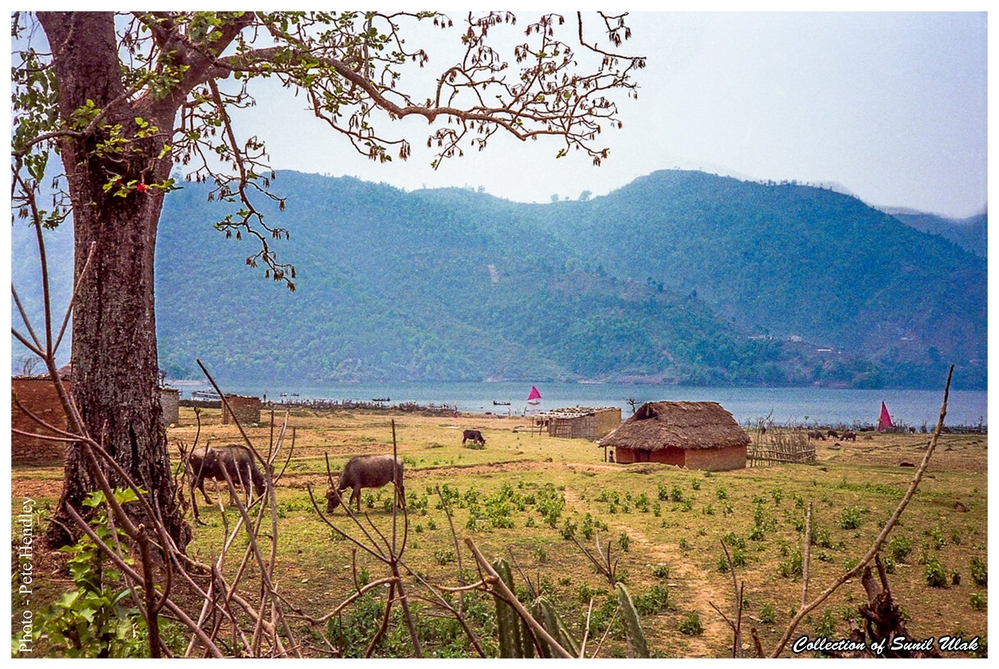
In the 25 years of his working life, the appearance of Pokhara changed dramatically as Belman Galli and Chowk dumbled. The narrow path became narrow. Most of the houses in the main bazaar, which were once only one-storeyed, have now become 'skyscrapers'. There were brick houses towards Nalamukh, Ganesh village. They are also disappearing every year these days . How many tourists used to come to see that house. Shouldn't such a thing be saved? "Khoi started disappearing today," he said.
Today the streets of the city are covered with black sheets. The geographical spread of the narrow Pokhara has reached Lekhnath, nearby villages and reached Tanahun, Syangja. There is a difference between the sky and the ground in Pokhara before and now. Main Bazar used to have one-two storied houses . Now that 8-9 storeys have been built,' he does not stop, 'first there was a narrow road where a bus could stop . Look at the road now! Isn't this a change?'
Nowadays, Pokhara is not just a city. It is the capital of the province where the number of people entering with many dreams is increasing every year. Due to the increase in geography and the attraction to Pokhara, the population here has reached around 6 lakh. These days, Pokhara has to cope with the traffic pressure here.
The traffic lights that were connected two years ago are still not fully operational. Out of the five, the traffic lights at Prithvi Chowk and Srijan Chowk direct the motorists . Belman goes back to two and a half decades ago when he sees the traffic lights on in Pokhara today. Traffic lights were connected to Prithvi Chowk, Mahendra Bridge and Chipledhunga in Pokhara around 056. Even then, it lasted for 2/3 months! At that time, the lights did not even come on,' he added, 'When the lights did not come on and broke down, they did not work anymore.'
Baidam (lakeside) used to be full of tourists. There were no large and many structures on the shores of Fewa Lake. The foot track along the lake was not organized as it is now . Dhulamme track was . Now, hotels and restaurants have been built right up to the lake shore. Due to the lack of hotel-restaurant facilities, tourists used to stay camping. Belman is very worried that the Fewatal, which he has seen since his childhood, is shrinking now. "Look, all the hotels and restaurants have been built next to Fewatal". As far as I can remember, there were not so many hotels below the road,'' he says. Why didn't you think of it?'
Today, Birouta, Chorepatan, Bagar, Lekhnath have developed as separate markets. Since Belman can remember, Pokhara's market was Mahendra Bridge. There used to be shops and footpaths. Ration items were available to us. Mahendra Pul should have come to buy clothes,' he said.
There was a cinema house on Tersapatti above Mahendra Bridge. There was a crowd of spectators. Kalpana, Vindhyavasini, Deepjyoti, Poornima, Barahi Hall are not like yesterday. Nowadays, the audience is packed in QFX and Auditorium Midtown in Chipledhunga . He remembers sometimes going to old cinemas to watch movies. It was difficult to get tickets. These days that hall is also closed . Some have collapsed,' he said .
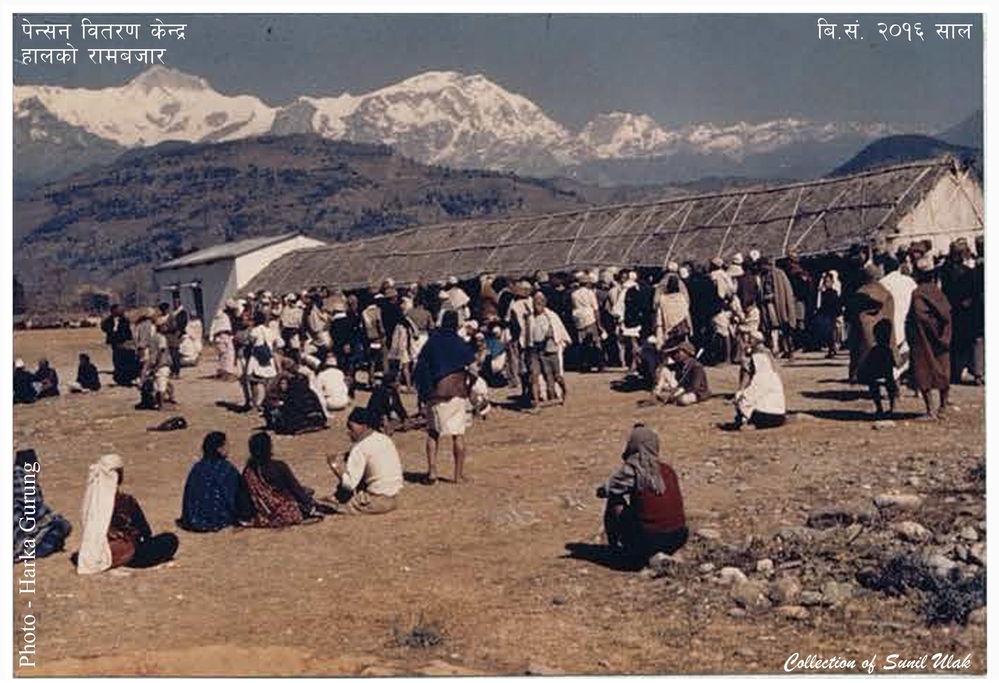
How were the roads of Pokhara? Belman remembers, "The main market was pitch". It was not as wide as it is now. The road we used to throw garbage in Bachchebadua was unpaved. When it rained, the feet were muddy and miserable.' Belman has closely observed the progress made by Pokhara in two and a half decades while the entire market was swaying. The city has changed over time . His daily life is the same. There are still 4 years left to travel from Batulechaur to New Road remembering old Pokhara.