The leading Buddhist guru Khinse's film has been screened at international film festivals, garnering a lot of buzz
We use Google Cloud Translation Services. Google requires we provide the following disclaimer relating to use of this service:
This service may contain translations powered by Google. Google disclaims all warranties related to the translations, expressed or implied, including any warranties of accuracy, reliability, and any implied warranties of merchantability, fitness for a particular purpose, and noninfringement.
"There are many original stories in Nepal that need to be heard at the international level," director Khinse Norbu Rimpoche said in a "masterclass" held in Kathmandu two years ago. At that time, his film 'Dakini', which was shot in the geography of Nepal, had just reached the Nepali audience. In 'Looking for a Lady with Fangs and Mustache' i.e. 'Dakini', his words were really endearing to the mesmerized audience.
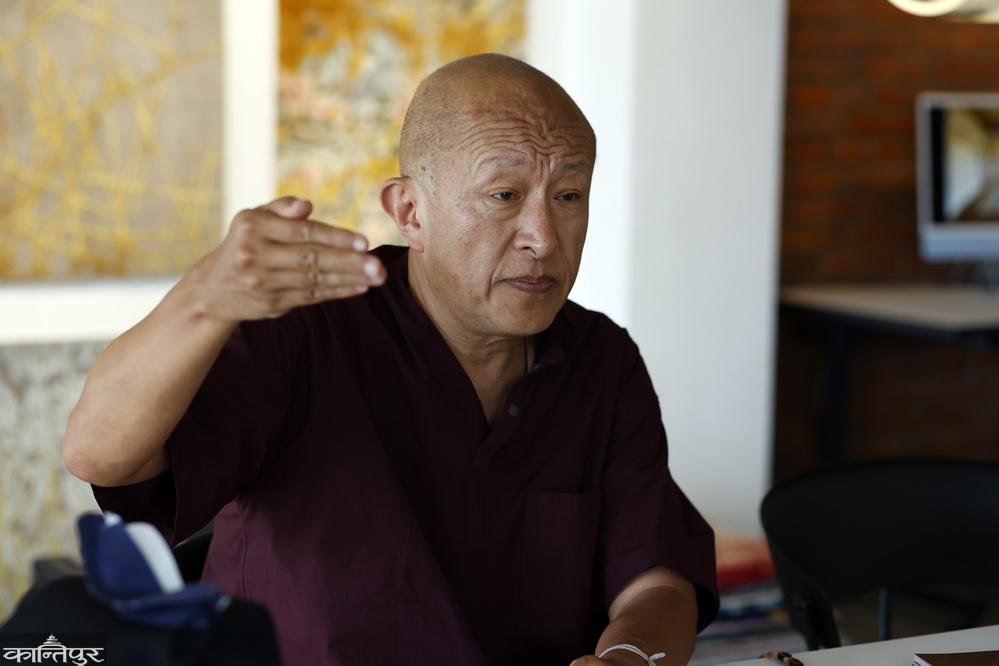
Khinse is currently painting the scene in that original story. He is working with Sutukk Nepali team and cast in his new film 'Bahurupiya'. During a conversation at Buddh in Kathmandu, he revealed, 'Now I am working with many Nepalese youth. This experience is very enjoyable. Those young people are very creative, professional and capable.'' Summarizing is also an art, isn't it?'
With a confession, he showed a familiar smile and told the story, 'The film is a story of such a rich man who dances and acts as a god. But he has to struggle to survive in the future world, where no one values his performance.'
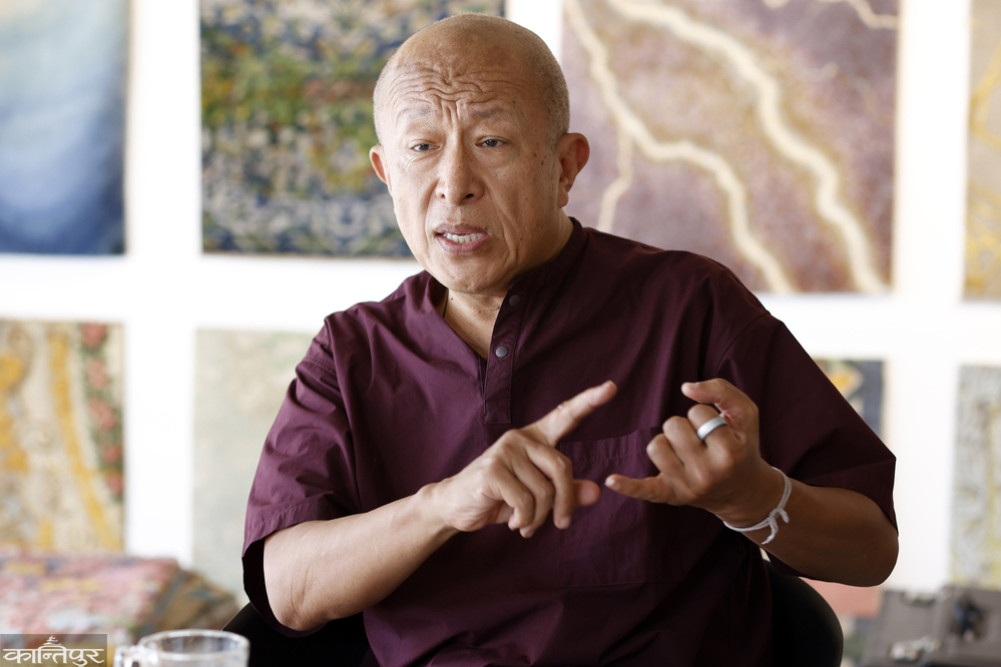
 While filming in the geography of the city, he is also looking at other stories. "There are so many stories in Nepal that I am confused as to where to start," says Khinse while wandering through history, memory and mythological times, "There is no need to dig up mythological stories." In particular, there are deep stories hidden in Nepal's daily life. He points out that it is necessary to show those important stories to the world. It is interesting, how is Rimpoche, who was born in Bhutan, familiar with Nepal's lifestyle and people's livelihood? At the age of 13, he came to Nepal for the first time. Then the sequence repeated itself. That's why he praises the Nepalese society unhesitatingly, 'Wow!' and adds further, 'Nepalese are really tolerant. I think that even if the whole world is destroyed, Nepal will continue on its way.'
Many times when he came to Nepal, he remembers the moment when Nepalis were dealing with load shedding. As he walked along the streets of Thamel, he could hear the hum of the generator. But people were not afraid of that either. Learned to live and move. Being able to deal with complexity like this is a very special thing. I respect this style very much,'' he said, citing the art traditions from the 13th century.
He also has some concerns about the art and originality of Nepal. He says, 'With the growth of platforms like Google, Wikipedia, social media, we have started consuming more external content. This kind of content can weaken the originality within us.' But recently, he says that he has started to understand the film practice here.
Photos : Suryams Upreti
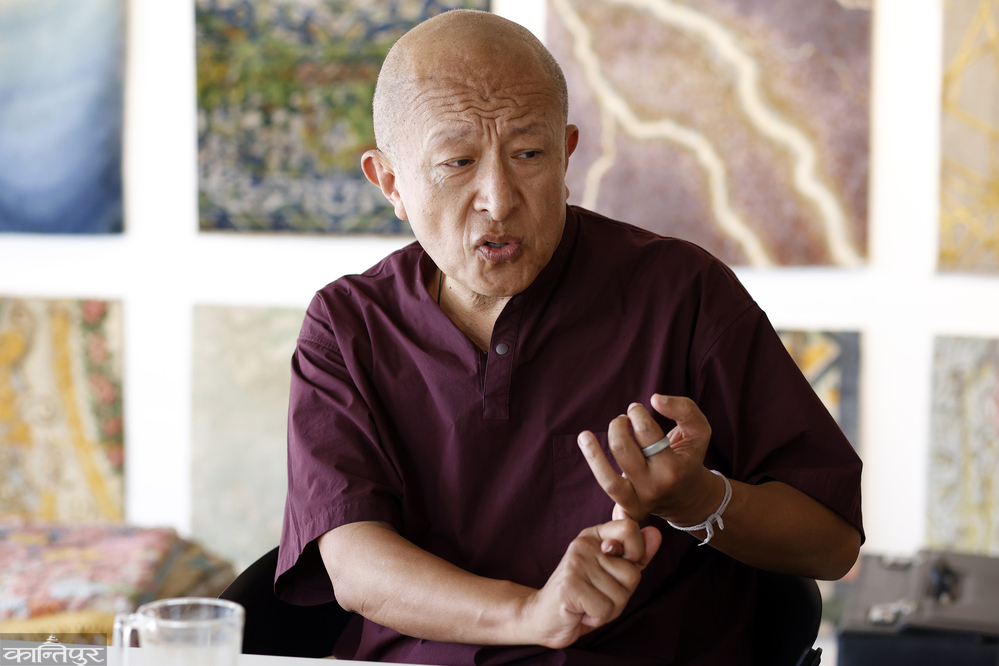 Leading Buddhist guru Khinse considers himself neither a guru nor a filmmaker. However, his films are scattered all over the world. In 1999, the first film 'The Cup' was screened at the world famous film festival Cannes. The film focused on a child monk in a Tibetan refugee camp in India. After that he made international films like 'Travellers', 'Magician', 'Bharaa'. His film 'Hima Hima: Sing Me A Song While I Wait' was screened at prestigious international film festivals like Toronto and Locarno in 2016. Not only the film, the famous book 'What Makes You Not a Buddhist' written by him about Buddhist philosophy is equally famous. He has published half a dozen books.
In the first film 'The Cup', Khinsey worked with a non-actor. As a result of the beautiful collaboration, their art was seen alive on the screen. “Your early films did not have professional actors. Ordinary people were artists. Did you feel more comfortable working with non-actors?'' To this question, he said, 'Initially I did not have professional actors, I worked with those who were available. Now I have a great team of trained and experienced artists. Perhaps this is the first time, where most of the characters seen on screen are professionals.'
Khinse does not have complete control over his team. Gives them creative freedom. He believes in his team. "If the actors are capable, the camera team is great, and the entire team is competent, I don't control them. If you control it, it will be an obstacle. I let them work freely.'
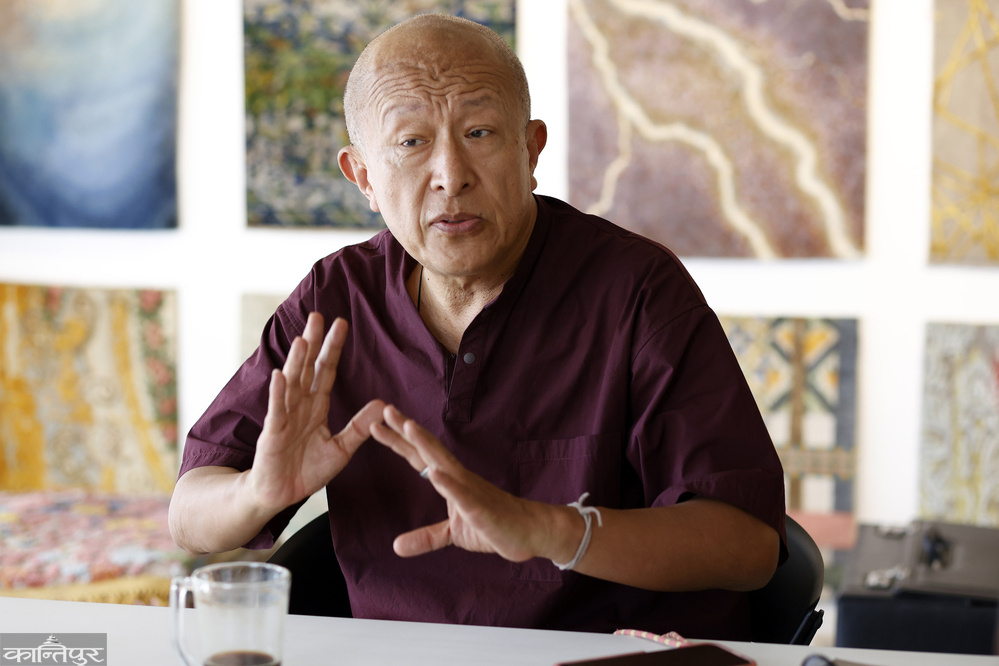
Khinse has his own style of filmmaking. He believes that the makers should find a common language to explain the film. Because the audience is from different backgrounds. "If I said the way I thought, you wouldn't be able to understand. The story should be recited by keeping a balance between what the director wants to say and what the audience understands," he says. "It is easy to make a film to satisfy the audience. I can give you what you want. That might be right if your goal is just money. But for me, storytelling should go beyond that.'' He considers scripts like 'RRR' to be 'bad scripts beautifully written'. Where one person kills a thousand. 'That sounds funny, but where's the truth?' he questions with a soft laugh.
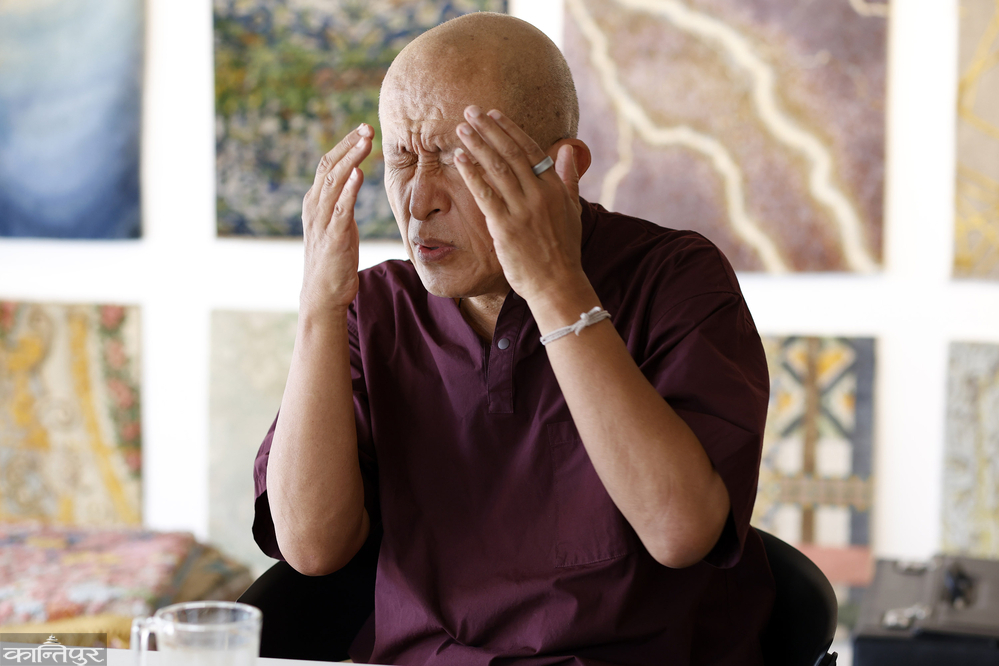 In his previous films, Khinse's self-confession is, "I made films without thinking much about the audience, only to show what is inside me." In his own experience, many people did not understand the film, some fell asleep while watching the film. One of my films was rejected by 38 festivals. Perhaps from the first scene itself, which was a long, steady wide shot. For me that scene was interesting, but for many it was hard to bear,” he recounts.
Although he is the leading guru of Buddhism, Khinseka's films have not featured stories of Buddha. Even the audience who watches him deeply thinks, 'Why are they making a worldly film without making a film about Buddha?' Khinse reveals something in response to this question. He has already prepared a script for a film on the life of Buddha 20 years ago. But why has it been so far? My main aim is to make a film on the life of Buddha. But this is not like other films. A big budget and a difficult story,' he explains, 'Buddha is loved by many. People's expectations are also high. It's not easy to make that.' Now is the time for AI. What he considered difficult in technology is slowly becoming easy. Now I can easily create Kapilvastu from 2000 years ago. Maybe now it will be possible," he sounds optimistic.
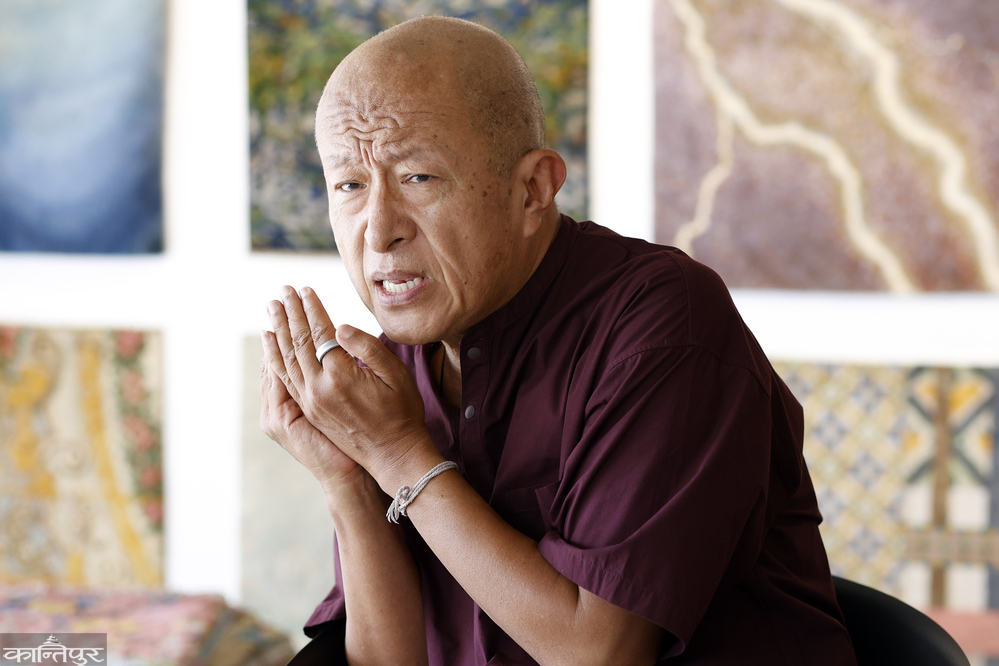 Khinse has some more ambitious plans. As if he is building a peaceful place in Kathmandu, where painting lovers can sit and fill the colors of their desires. Get lost in the gardens of art, music, film. International filmmakers, script writers and cameramen come and take classes. The project named 'Lichchavi House' was affected during the covid period. Now it won't stop. According to him, this project will be completed within a year. "I want the youth to be able to think, be creative, preserve culture and explore the future," he says happily.