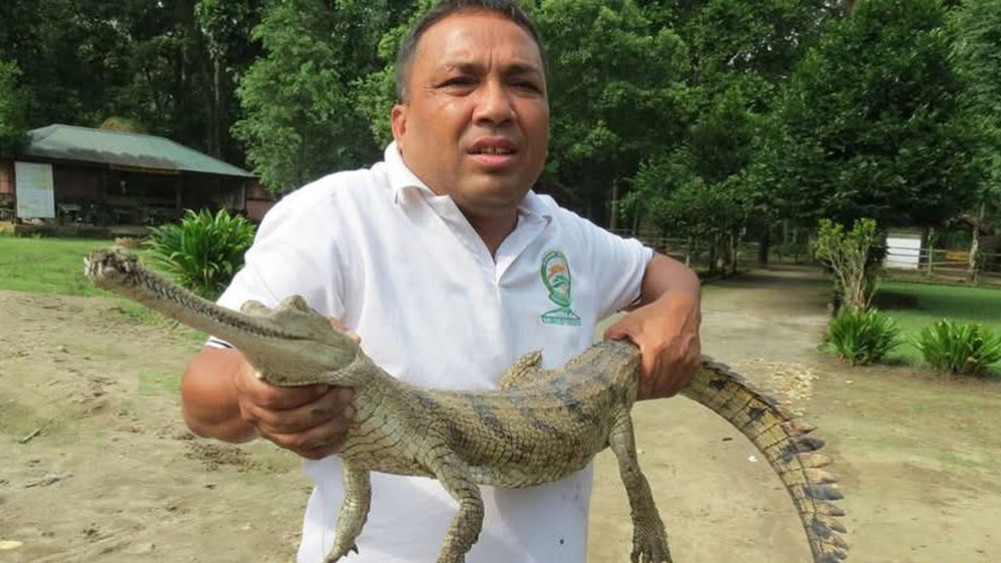
Ved Bahadur used to say - ”To protect the watch means to protect the environment, to protect the river and to protect people as a whole”.
We use Google Cloud Translation Services. Google requires we provide the following disclaimer relating to use of this service:
This service may contain translations powered by Google. Google disclaims all warranties related to the translations, expressed or implied, including any warranties of accuracy, reliability, and any implied warranties of merchantability, fitness for a particular purpose, and noninfringement.
Ved Bahadur Khadka spent almost two decades of his working life in Chitwan Park as an Assistant Conservation Officer. More Narayani and Rapti were seen in Khadka park office than in the office. The watch crocodile living in flowing clean water is a very rare creature in the world. Khadka was responsible for maintaining it.
Khadka, who worked as the head of Ghadial Crocodile Breeding Center in Chitwan Park's headquarters in Kasara, left this world on Monday, never to be seen or found again. Even though he is not physically present, no one will forget the name of Veda Khadka when there is a discussion about Ghadiyaal Gohi in Nepal .
Ghadiyal is a rare creature, so there are very few people who know about it in Nepal . Khadka was knowledgeable about every aspect of watchmaking and was keen to spread that knowledge. From spreading awareness about clocks at the community level to international platforms, Khadka told the world about the success achieved by Nepal in clock conservation.
Khadka, who had cancer, died at the age of 61. Khadka Ghadiyal, who retired four and a half years ago in Pus, stayed at the Kasara Breeding Center for some time even after his retirement. He said, "He stayed for a long time". Hard work done. I think that those who come here should do the same. He also had to stay here for some time to tell them about the importance and preservation of the watch.'
Crocodile is a creature that lives both on land and in water. There are two species of crocodiles in Nepal, Ghadiyaal and Magar crocodile. Living in clear flowing water, eating only fish, the crocodile is in danger. After the survival rate in the natural habitat was very low, the Ghadial Crocodile Breeding Center was opened in the year 2035 in Kasara, the headquarters of the Chitwan National Park, to protect the ghadial. According to Prem Sharma, who has been working at the breeding center since 2049, Khadka worked for 18 years as the head of the Kasara crocodile breeding center. After coming to Chitwan, he went to Lamtang Park for two years. Otherwise, he stayed in the breeding center of Chitwan and Kasara. The job of preserving the clock has been very challenging. If you are not dedicated to this work, effective results will not come .
By 1940, there were about 10,000 watches in the world. The number of clocks found in Pakistan, India, Nepal, Bhutan, Bangladesh and Myanmar has decreased drastically in the 1970s and reached a total of around 200 in the world. Hence the concept of protecting the watch has come. When the breeding center was opened in Chitwan in 2035, there were around 50 Ghadiyals in Nepal. The clock lives only in clean water. Rivers and streams are polluted and it has become difficult for crocodiles. Its main food is fish. People's hearts are also carved in fish.
To overcome these challenges, from the community to the policy makers, we need to be aware and aware. Eggs laid in the natural habitat are collected and kept in the breeding center for hatching. Go looking for a crocodile's nest in the sand at the time of laying eggs. The eggs in the nest should be taken out and brought to the breeding center. As the number of gadiyas in the natural habitat is continuously decreasing, the eggs have been brought to the breeding center to collect the babies.
After bringing the eggs from the nest made in the sand of the river to the breeding center, they should be well looked after and cared for. After the baby is 150 cm tall, it is released to its natural habitat. Five years after hatching, the length of the child is this . Even though the children who have grown up in this way are left in the river, they have not been able to thrive. Chitwan has the highest number of watch crocodiles in the Rapti river . According to the information received from the park, there are a total of 265 clocks in Chitwan's streams and rivers, including 152 in Rapti and 113 in Narayani. Kamaljung Kunwar, the former chief conservation officer of Chitwan Park, says that Khadka's contribution has been important in bringing the number of gadialis, which are difficult to preserve, to this number. He was a person with experience and knowledge and fulfilled his responsibilities with full diligence. The results have confirmed his attachment," Kunwar said.
Ashish Basyal, who worked with Khadka in writing investigative articles, Khadka's interest in birds was in his life. But after reaching Chitwan and staying at the Ghadial Breeding Center, Khadka began to think about the nature, condition and conservation challenges of the Ghadial seal. He could not give up his interest in birds. But Basyal says that he was mainly devoted to watch protection. He has published around 60 research articles in various international journals. Basyal says that more than 20 of them are about watches. He also participated in international conferences on crocodiles in India, Sri Lanka, and South Africa. Khadka, who writes in the journal, used to write down the minute details of the watch by hand at the beginning of his job . So Basyal says that the tradition of keeping records of clocks began.
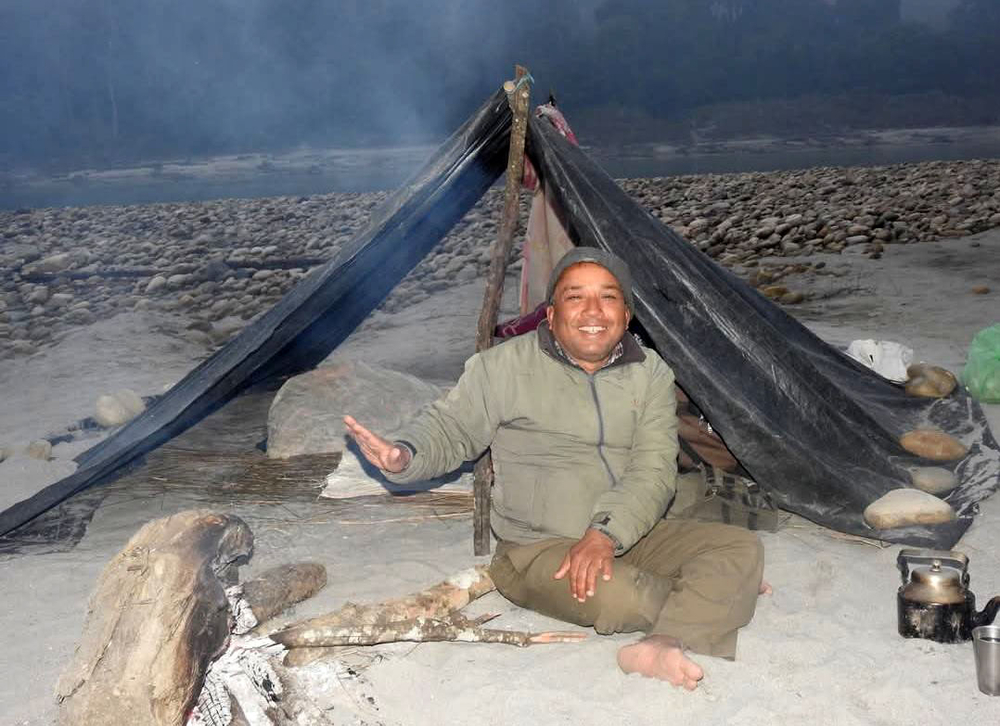
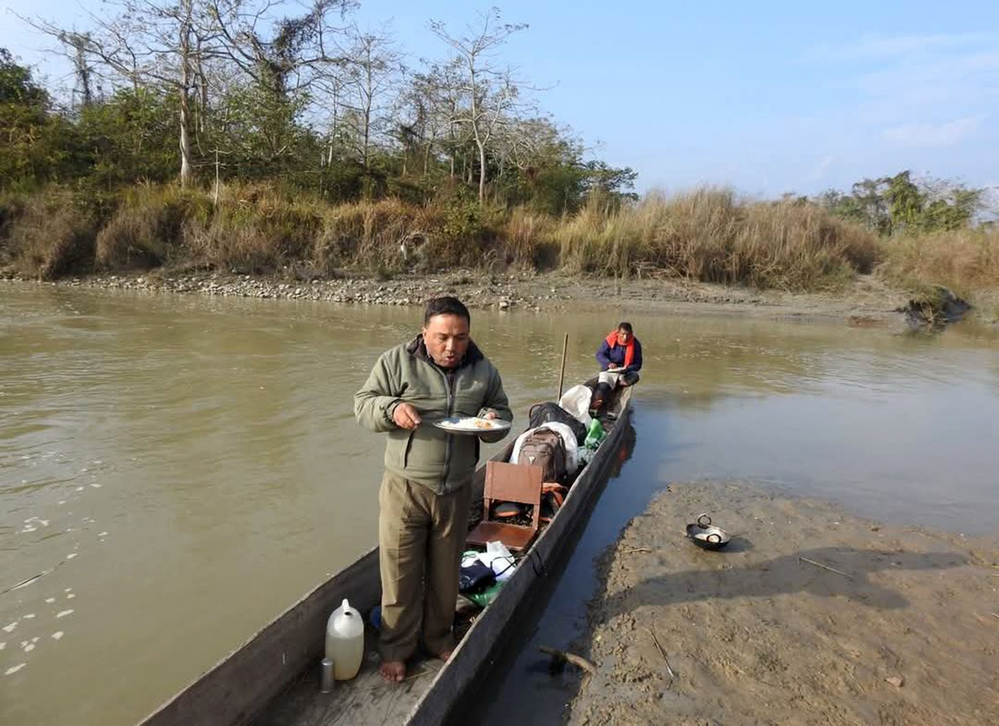
'There is a big donation from the former Chief Conservation Officer Rampreet Yadav sir to start the breeding center . Yadav sir's contribution cannot be forgotten . But Khadkaji's role is important to take the breeding center in the way Yadav sir thinks. It requires hard work and patience, which Khadkaji had,' recalled former chief conservation officer Kamaljung Kunwar. Khadka used to go to river and river every week to monitor the watch. He used to sleep in the bag and eat on the boat. In the same way, in egg collection, he forgot the world and wanted a river. In the rescue of the watch, Kudthe also stepped in the same way. He also used to run the office. He also used to investigate the case . But he had a clock in his mind. Even when friends met, they used to gossip a lot about the crocodile.
If there is no pollution in the rivers and streams, if there is no pesticide in the fields, the water is clean and pure . Fish live in such water . If you don't kill fish indiscriminately, you will get enough food. He used to inform the community that Ghadiyal only eats fish and does not harm humans. He used to convey the knowledge to the community that protecting the watch means protecting the environment, protecting the river and protecting the people as a whole. A person who takes care of the watch like this is rarely born . Contrary to the adage that the work of the government is sometimes cloudy, he fulfilled the responsibility assigned by the government day and night, sun and rain, winter and rain. He is no different from the shepherd of the clock. A close shepherd dedicated to protection .