We use Google Cloud Translation Services. Google requires we provide the following disclaimer relating to use of this service:
This service may contain translations powered by Google. Google disclaims all warranties related to the translations, expressed or implied, including any warranties of accuracy, reliability, and any implied warranties of merchantability, fitness for a particular purpose, and noninfringement.
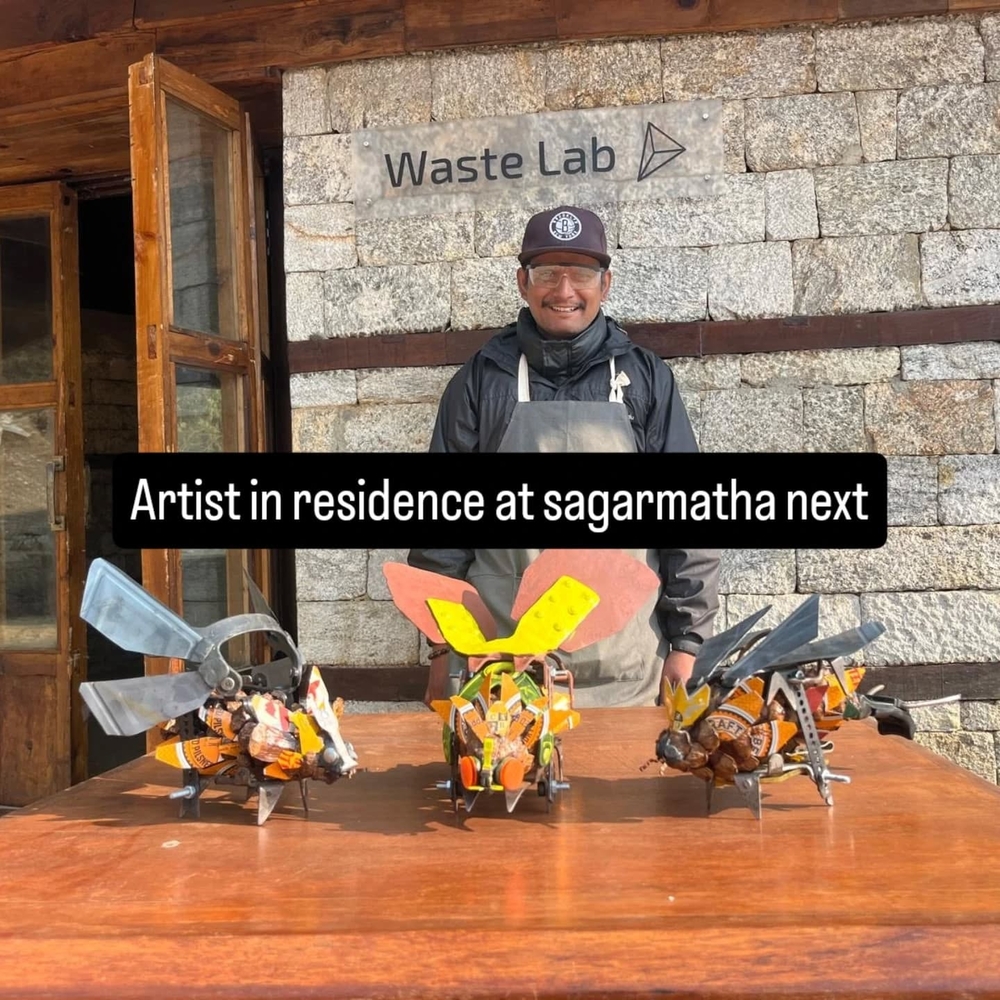
Artist Saurabh Koirala has created orange daffodils, bees and yaks using materials thrown away by climbers going to climb Mount Everest.
Not only that, Sauvar has made three mountain tars found in the Himalayas to show the increasing impact of human activities on nature.
He says, "I have made various animal shapes from the garbage they used to climb the mountains and make them". After being selected for the artistic residency, now Sourav has been making various artworks from the garbage thrown by mountaineers while staying at the Everest next in Syangboche at an altitude of 3775 meters for the past one month.
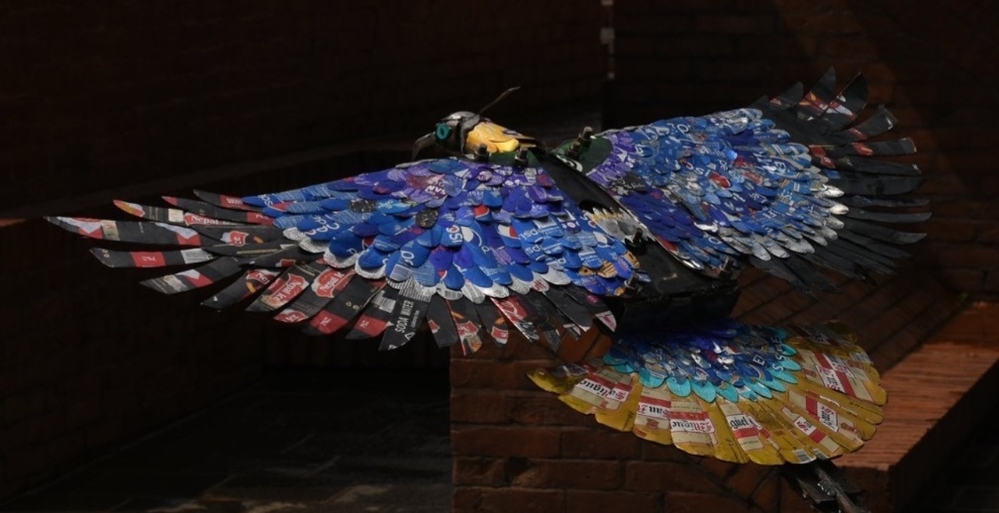
'The discarded goods used by tourists going to Everest, Namche, Khumjung and Three Passes are kept in the dumping pit in Syangboche,' he said, 'I am making various animal figures from the garbage brought by some porters and thrown in the dumping pit. are .
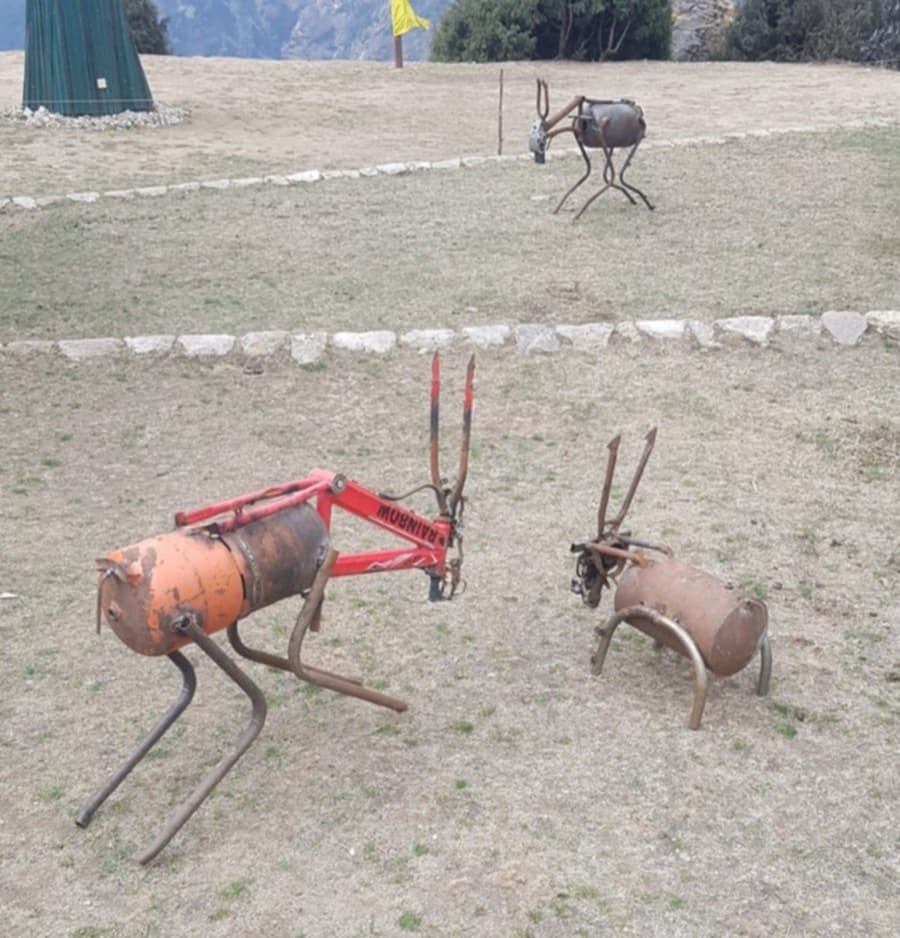
'I have made 5 types of bee valinta, dragon fly small using salla seeds and mountaineer's shoes with spikes, beer cans,' he said, 'Also, I have made two poles using yak bone, gas heater parts to straighten the wood used by masons.' Made . For this, Saurabh has used parts of gas stove, Cariphone stove and Burano bicycle.
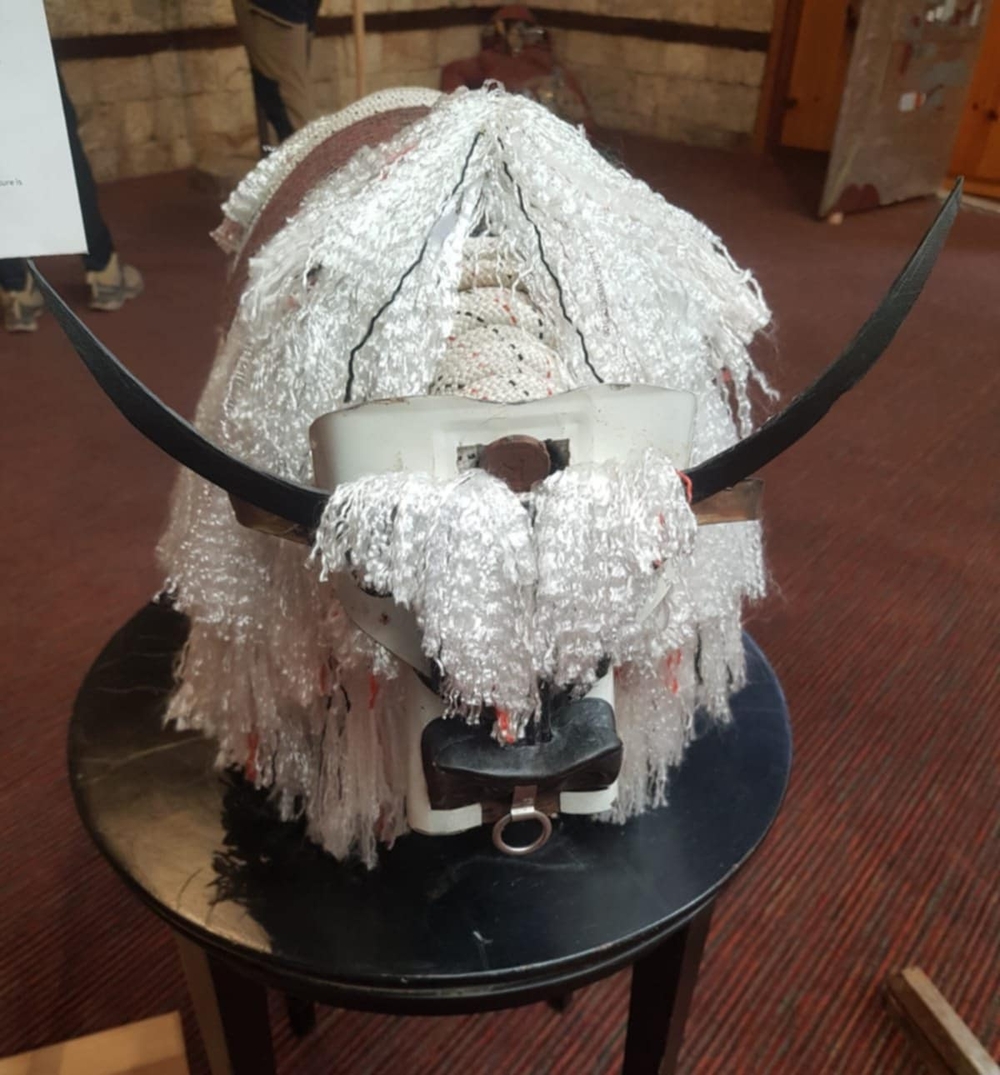
'I also made a yak . In this case, I have used the rope used by the mountaineer going to Amadablam for yak hair,' he said, ``whatever is thrown in the dumping pit will be collected and made.''
Saurabh says that although people see garbage when they look at it, an artist sees it with artistic eyes. ``People don't see anything in beer cans . But the artist used the color of the beer to make the color change,'' he says. In this way, the garbage also looks good.'
Sourav said that the purpose of making art from garbage is to help the SPCC (Sagarmatha Pollution Control Committee) of Everest Trekking Namche keep it clean. He said that as the human population increases, garbage will also increase, but it will not be solved by just piling up garbage.
It is necessary to draw everyone's attention to this. Garbage can also be used," he says, "managing it is very challenging. But waste should also be seen as a resource.' Sourav said that his art also tries to reflect the impact of human waste on nature. My art has badly mixed with nature due to human activities. On the other hand, pollution is everywhere,' he said, 'so I have made it so that even the mountain tar is not sweet.
Sourav used to work as a concept artist and cartoon character maker in an animation agency. He has been in this field for 10 years . For an artist, the medium can be anything. Did digital for a while . He also made a picture using canvas,'' he said, 'but now dirt has become my medium . Discarded tins and beer cans became my colors. It is also a kind of medium. The artist's art is in creation. He can show art by using whatever he gets.'
Saurabh is now sitting at the foot of Mount Everest and enjoying making various art items from garbage. "The mountains are also like a stick," he says, "It's a beautiful place." Now I want to join an organization like Sagarmatha Next and teach students for public awareness.
He said that due to covid-19, artistic residency was postponed. "At that time, a one-month workshop was held at the museum in Taragaon to make artwork from the waste taken from Mount Everest," Saurabh says, "two of us were selected for the artistic residency."
Saurabh's art will be exhibited at Everest Next. "One art should be given for Everest Next so that it is not sold forever," he said, "if other items in the exhibition are sold, 50 percent will go to the artist."