Elon Musk's Starlink, which has 2.7 million users in more than 60 countries of the world, has entered the neighboring country of India to provide satellite-based Internet services, while in Nepal it is also showing interest in expanding the market, but foreign telecommunications companies are not allowed to invest more than 80 percent in Nepal. Not growing
We use Google Cloud Translation Services. Google requires we provide the following disclaimer relating to use of this service:
This service may contain translations powered by Google. Google disclaims all warranties related to the translations, expressed or implied, including any warranties of accuracy, reliability, and any implied warranties of merchantability, fitness for a particular purpose, and noninfringement.
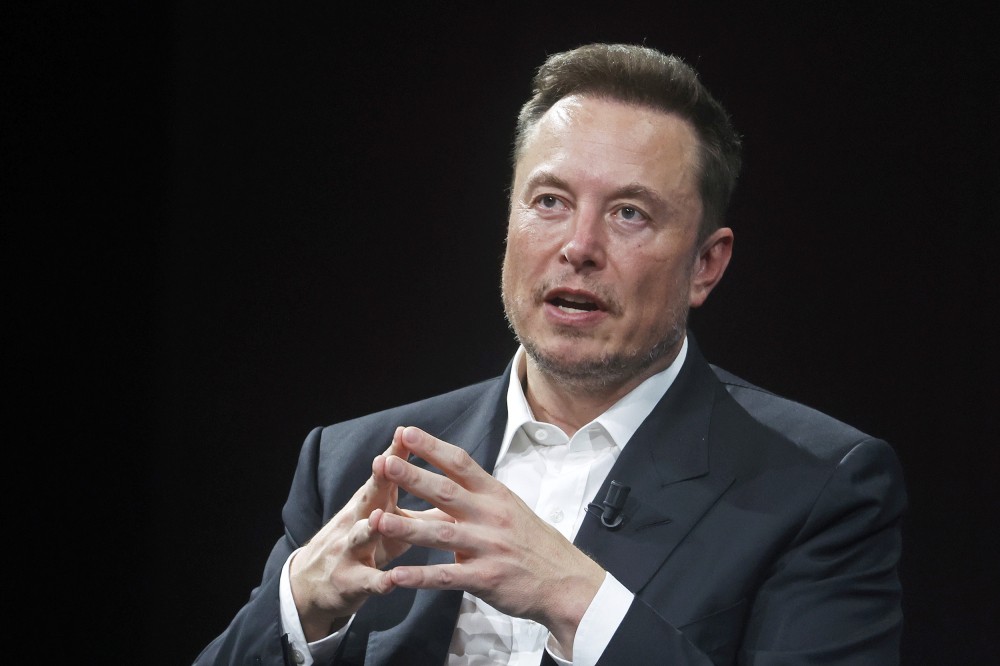
A major dispute has emerged in India this week over the allocation of spectrum needed for satellite-based Internet services. Reliance Jio's Mukesh Ambani and Starlink's Elon Musk have had a bit of a spat on the internet.
The main bone of contention was whether the satellite spectrum should be determined by the government or allocated through an auction-promoting method. The Indian government has decided to provide spectrum through the administrative allocation method according to Musk's wishes, but a fee will have to be paid to get the spectrum.
Mukesh of Reliance, Sunil Mittal of Bharti Airtel, local telecommunication service providers like Vodafone Idea had maintained the position that spectrum should be distributed through the auction promotion method. Musk said that in the satellite spectrum, different service providers can use the same frequency in the same area, that is, since it is a shared resource, it is of the opinion that resource allocation through the bidding method would be impractical and the implementation aspect would be complicated. "If it is distributed through an increased method, it will be unique like nowhere else in the world," he wrote in X, "Would it be too much of a problem to allow Starlink to compete for Internet services in India?"
Ambani and Mittal demanded an auction promotion method saying that all service providers should have equal opportunities in the satellite spectrum. Like telecommunication companies, companies providing Internet services through satellites also demanded that telecom operators should purchase spectrum. Telecom Authority of India, the telecom regulator of India, had already decided to adopt the method of administrative allocation (providing spectrum by making qualified service providers pay necessary fees) after studying and consulting on satellite spectrum allocation. On Tuesday, Communications Minister Jyotiraditya Scindia again clarified that telecom spectrum will be given through allocation and not through auction.
 This debate on satellite spectrum allocation has brought to the surface again the issue of how to distribute limited resources in the new technology of the telecommunication sector. Even in Nepal, if an operator claims to provide internet service through satellite in 'Lower Earth Orbit', there is no provision to give a license to it. Officials of Nepal Telecommunication Authority say that there is no clarity about the frequency and how it will be managed politically. Every time a new technology comes, it is clear that the satellite internet service also has to suffer due to Nepali policy, which is not very future-oriented.
However, the entry of Musk's Starlink and Amazon's Project Kuiper into the Indian telecom market is now almost certain. The Government of India's latest decisions on spectrum allocation and the Telecom Act 2023 are being analyzed as important decisions of Prime Minister Modi's third term. This also indicates how important satellite telecom (SATCOM) is emerging as a technology.
In India, currently only two operators, One Web and Jio-SES, have received permission for satcom services. Starlink and Amazon have applied for permission but have not received approval. Starlink is showing great desire to expand its services in Nepal as well. For this reason, for the last one year, the representatives of the company have been meeting with the leadership of Nepal Government and Nepal Telecommunication Authority several times, and have been interested in the provisions related to foreign investment in Nepal's telecommunication law. It is said that Starlink is demanding to remove this legal complication as foreign telecommunication companies cannot invest more than 80 percent in Nepal.
Starlink, which has expanded telecommunication services through satellite to more than 60 countries in the world, has made it clear that it will invest 100 percent in Nepal as well. The company does not want to have a local partner. The government had announced that the satellite-based internet service would be launched in the policy and program of the current financial year to pave the way for Starlink internet. "Geo-satellite-based internet service will be started in remote and difficult areas," President Ramchandra Paudel said while presenting the policy and program, "High-capacity optical fiber expansion will be accelerated for high-speed internet service."
Among the South Asian countries, Sri Lanka, just a few months ago, amended its nearly three-decade-old telecommunication law and arranged for a license for satellite internet services. Soon after, Starlink received permission to operate services in Sri Lanka. It is mentioned on the website of Starlink that it will be operating at full capacity from the year 2025. Starlink seems to be demanding proper arrangements with the head of government and the regulator for service expansion in South Asian countries.
Starlink, operated by Elon Musk's space company SpaceX, is a group of satellites designed for high-speed Internet (broadband) service. These satellites can provide high-speed internet services around the world by being in 'low earth orbit' 500 km above the earth's surface. These satellites constantly orbiting the Earth transmit internet signals to Starlink devices on the ground, and these devices help bring connectivity to areas where broadband or cellular internet is inaccessible.
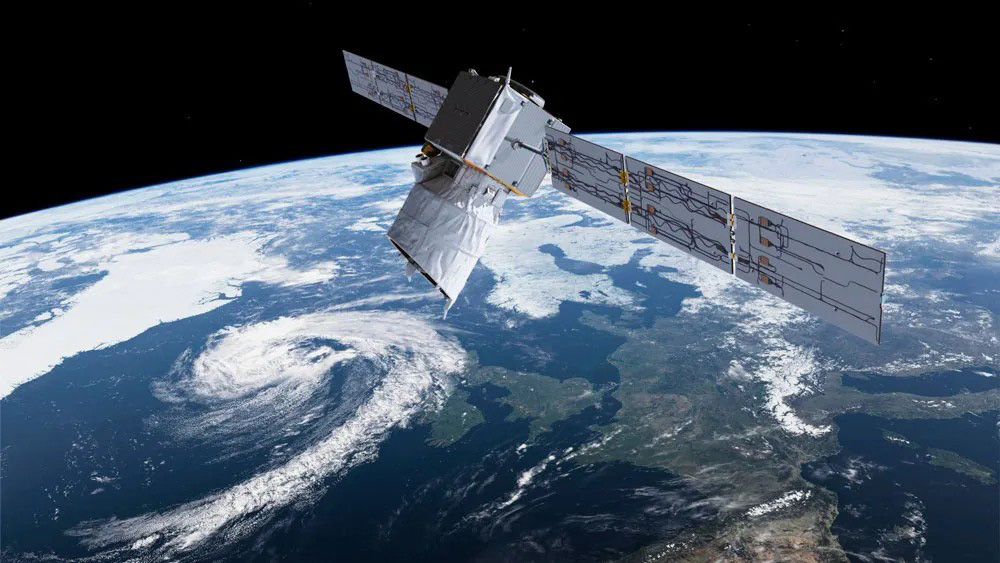 SpaceX's Falcon 9 rocket will launch Starlink satellites into space starting in 2019. SpaceX rockets, capable of sending up to 60 satellites at a time, have so far carried more than 4,000 satellites into space. Weighing around 118 kg, these satellites are made of aluminum and are equipped with various electronic devices, solar panels and antennas. At a glance, Starlink's satellites, which look like small cars, orbit the Earth at a speed of more than 27,000 kilometers per hour.
Although the main investor is Elon Musk, it is said that Starlink has also invested in Starlink from venture capital firms like Anderson Horowitz, Founders Fund, Google, technology companies like ByteDance, and organizations like NASA and the United State Space Force. Musk has been saying that Starlink will need to invest $20 billion to $30 billion before it can turn a profit. Along with Starlink, companies like Thales Group, SES, Viasat, Amazon Kuiper, Telesat, Intelsat are also trying to provide broadband internet, mobile communication and broadcasting services under satellite communication. Since the future technology of telecommunication services is mainly based on satellite, companies have increased investment and use in its development and use.
Those who are interested in technology are excited about the fact that satellite-based communication services will help in building a global communication network even in the most remote places in the world and where it is not easy to build a telecommunication structure. For example, along with mountain climbing, jungle safari, it will be possible to get communication facilities easily through satellite even in the most remote areas of countries like Nepal. Another strong point of a service provider like Starlink is that it can provide uninterrupted service even during calamities like war, natural calamities. In times like these, traditional telecommunication infrastructures may be damaged and communication services may be interrupted, but satellite communication is an alternative, and essential communication facilities can be continued.
Starlink is providing telecommunication services as an immediate relief to Ukrainian citizens and soldiers on the war front who are uncomfortable with communication after Russia's continuous attack. Internet service was provided as soon as the war started, but after a while Elon Musk warned that Starlink's expensive service could not be provided forever, but the service was resumed on the condition that the American government would cover its costs. Recently, Poland has also been helping Ukraine. Ukrainian Minister of Communications Mykhailo Fodorov has said that Starlink, which is being used by about 150,000 people, is also on the war front.
In recent days, major smartphone manufacturers have started incorporating satellite communication features into their devices. In 2022, Apple introduced the Emergency SOS feature on the iPhone 14. New versions of Google Pixel 9, Omi, Oppo, Vivo, Motorola, Nothing and Honor phones have an Emergency SOS feature that helps provide SMS and location sharing even from remote locations without cellular network coverage.
The price of Starlink's Internet service for household purposes is $120 (about Rs. 16,000) per month, while for packages of different categories ranging from 50 GB to 5 TB, it is $50 (about Rs. 6,700) to $5,000 (about 6,70,000). Priced up to Rs. The British company OneWeb Satellite provides Internet services only to businesses and government agencies, not for household use. Amazon is also trying to provide satellite-based Internet service at the lowest possible price through Project Kuiper.
According to the latest data, there are only 2.7 million users in Starlink worldwide. According to Space News, the company will generate $6.6 billion in revenue by 2024. The global satellite communication market size, which is $83.29 billion in 2023 data, is estimated to continue to grow by 10 percent annually until 2030. In 2031, the satellite communication market is estimated to reach about 70 billion dollars.
There is no doubt that satellite communication can be a dynamic option for a country like Nepal that lacks telecommunication infrastructure and suffers from constant disasters. For Western satellite telecommunication service providers such as Starlink, there are various obstacles, including geopolitics, consumer purchasing power, local policy ambiguity and potential challenges to existing telecommunications and Internet service providers. However, satellite communication companies that have expanded their influence globally can be expected to become more efficient and useful in the market.
(with agency help)