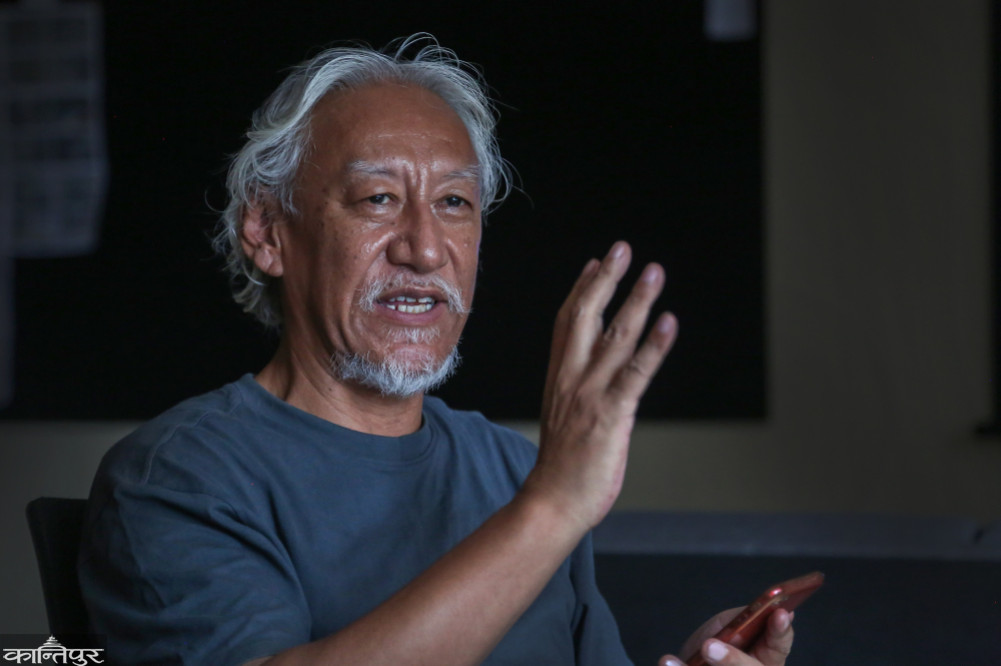
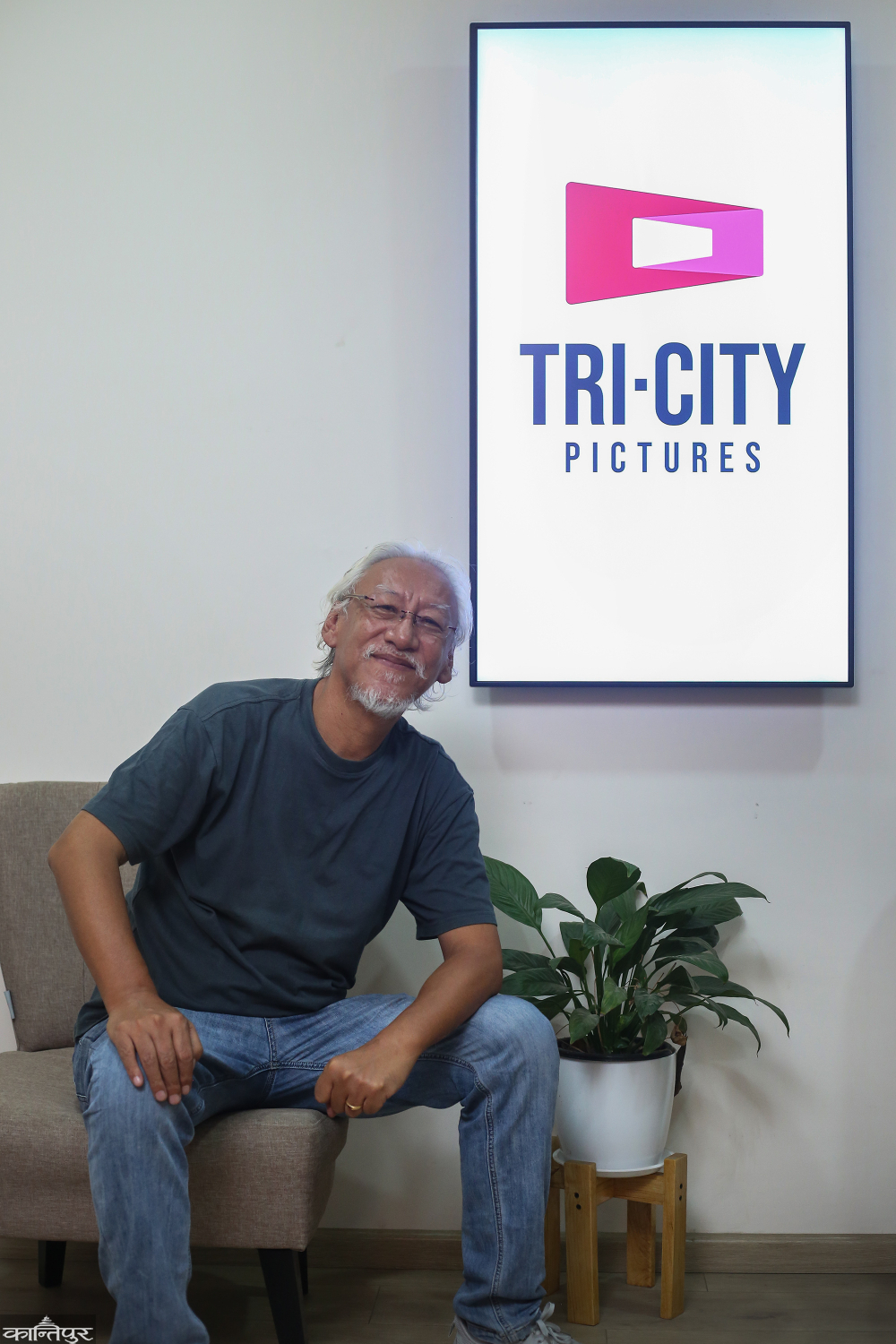
Dipendra, who returned to his country after 22 years of leaving Nepal, has returned with Koseli. That is - girl missing report. In the feature film 'Girl Missing Notice', he raised the distinction between Pahade and Madhesi. With this film, he is planning to make many projects through 'Tricity' focusing on Nepal.
We use Google Cloud Translation Services. Google requires we provide the following disclaimer relating to use of this service:
This service may contain translations powered by Google. Google disclaims all warranties related to the translations, expressed or implied, including any warranties of accuracy, reliability, and any implied warranties of merchantability, fitness for a particular purpose, and noninfringement.
Six years ago, the dialogues of the classic docu-drama 'Ujeli' went viral on social media in such a way that Cambodia-based director Dipendra Gauchan was stunned. However, he did not run many social networks. Had a Facebook 'Account', but was not active on it. UNICEF put 'Uzeli' on YouTube, parts of the telefilm and dialogue spread wildly on social networks.
Then the bell of Dipendra's 'Messenger' suddenly rang - Tung-Tung. Friends have been sending 'clips, YouTube links' of 'Uzeli'. Flood of people reacting on social media, saying, "You will make Ujeli po hoha hai".
'After becoming a bride, will Ujeli shake her feet?' Dipendra would be happy to see the dialogue mixed with original love after 27 years on social media. It made me happy that everyone is still liking it even after all these years. It is normal for an old work to come into the limelight, but I did not think that it would become so popular,' says Dipendra. Why did the village story attract the current young generation? When the youth who likes Dhumdhada movies liked the dialogues of 'Uzeli', Dipendra also started searching for the reason. He squeezed out, 'Nepalese have a habit of being proud of someone who has done something good. Maybe this is how they took Uzeli.'
Dipendra Thakali community, Mustang, he was born and raised in Kathmandu. How could Dipendra, who has been practicing Thakali culture in Kathmandu, have created 'Uzeli' on village stories? Many would ask. However, in this docu-drama of about an hour, Gauchan presented not only the village story, but also the culture of the Brahmin community and transformed the bitter reality of 'child marriage' into a story in such a way that this docu-drama became one of the classics in the history of Nepali film industry. People who do not belong to a community and are interested in that community and study and research it, it seems that the study is a bit deeper. They work hard to find the special niche of what they don't know.'
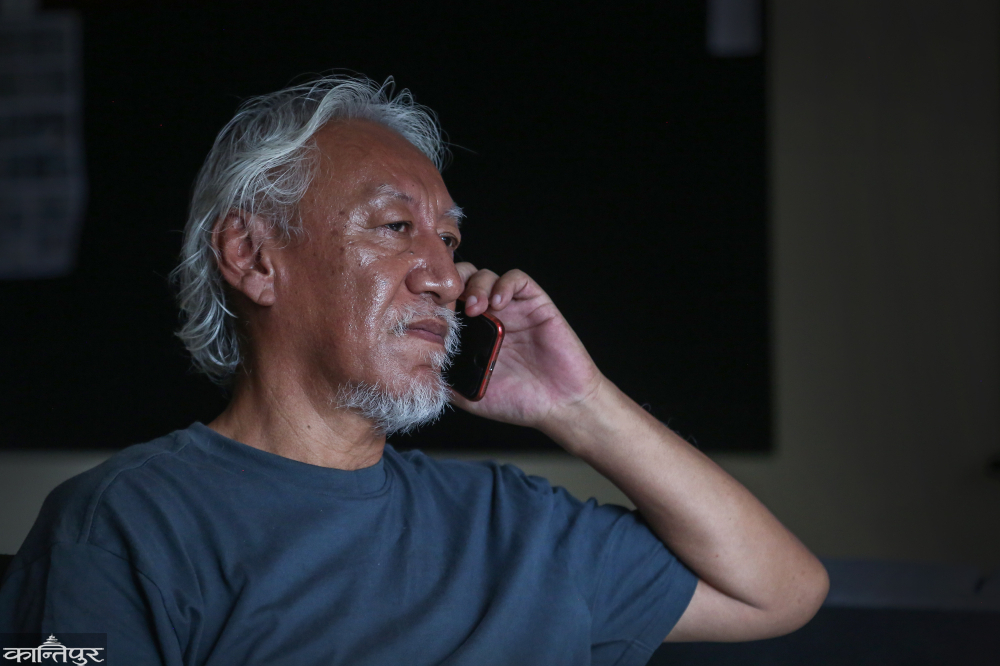 Around 1984, 'World View International Foundation' provided video training for the first time in Nepal. Gauri Kant from Mainali and journalist Durganath Sharma attended the training. There were 10 trainees, mostly government employees. After the training everyone went back to their work. At that time Dipendra was working at Lincoln School. He also used to publish 'Youth Newspaper'. At that time, Nepal Television had not yet opened. When the television was ready to open, he trained the first and second batch of Nepal Television from 'World View International Foundation'. By that time, he had already started filming the 'documentary'.
At the same time, I had to go to Gorkha and make a video report for my brother working in 'Save the Children'. While returning to the road after shooting that video, Dipendra's eyes reached a group of people walking along the road carrying a small girl in a doli and playing a musical instrument. Dipendra, who grew up in the city, was shocked to see that marriage and doli at a young age. The strange sight made Dipendra's team to spend a night in that village. He had already thought of making a 'documentary' on the strange scene before his eyes. Forgotten now, in which village they spent their time at that time. However, Dipendra remembers the first sight when he entered the village - all the little girls dressed in sarees, wearing vermilion. This scene is also included in 'Uzeli'. Dipendra chatted with the villagers with the idea of making a 'documentary'. Everyone openly told Dipendra the stories and customs of marriage.
After returning to Kathmandu, Dipendra wrote the script for the documentary. By that time, he had made advertisements for UNICEF saying ``Polio'' and ``Ae Khurmane Kalo Banabana'' saying ``Girls should be educated.'' Narrating the scene he saw to UNICEF's Reena Gill, he told the idea of a 'documentary' on 'child marriage'. He returned to the same village with the idea of making a 'documentary', showed the camera among the villagers. As soon as they knew that the video would be on television, the villagers panicked, and the team was almost kicked out of the village! Knowing that child marriage should not be done, those who are following it in terms of tradition refused to appear in the 'documentary'.
Then Dipendra returned to Kathmandu, turned that reality into a plot in one night. Reena fought on her own to get the proposal of 'documentary' approved by UNICEF. UNICEF, which has been working in the field of education, at that time did not need a field of work, and Dipendra was very disappointed. Even though the 'documentary' is about 'child marriage', showing the reason that it covers the message of the educational sector, finally Dipendra and Reena got the permission of 'Uzeli'. Then, at the age of 27, Dipendra went to Rasuwa and shot 'Uzeli'. Kuveer Gartaula, who has been producing radio dramas, collaborated in the direction. A good grip on the language of Gartaula! It is with his same grip that Dipendra recites the dialogues of 'Uzeli' which are original and sound.
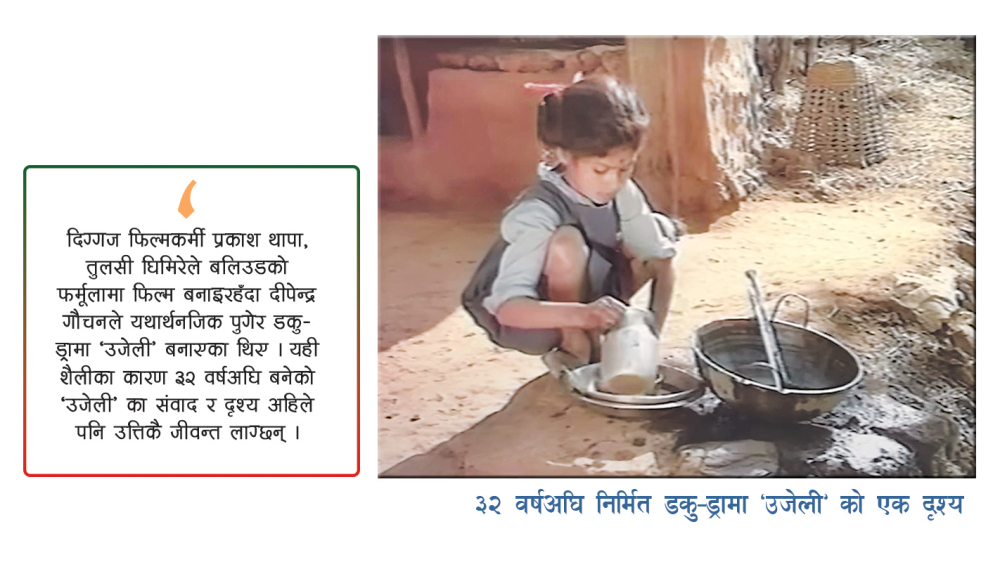 'Uzeli' aired on 26 television stations around the world. This 'documentary' of 'child marriage' made by UNICEF also made Rina known around the world as a producer. One of UNICEF's most popular and successful docu-drama, 'Uzeli', had to face many problems during filming. After filming was not possible in the village he had chosen, the writer reached the village of Rasuwa with the help of Kedar Sharma. Most of the actors were uneducated when shooting 'Uzeli', they were 'non-actors'. Those who do not know how to read/write should be made to memorize all the dialogues from the 'script' and the scenes should also be narrated. There was no time for rehearsals at that time. It took a long time for the
actor to get comfortable with the camera. How many scenes that were shot in the beginning had to be reshot. Thus, working with non-actors, it took 45 days to shoot 'Uzeli'. However, Dipendra liked this process of docu-drama very much. Dipendra did not even take them as an example that one can work with 'non-actors'. At that time, there was no access to artists, resources were not enough. He didn't read the film, he didn't even learn. This docu-drama, shot in an unknowing manner, has now become a source of study for students of film, 'documentary'. There was a problem with blocking. Dami would be a shot, after speaking the dialogue in a Dami way, the actor would spoil the shot many times by saying, 'Sir,' Dipendra remembered the time when he was working with 'non-actors', 'It took time even to get him to speak the dialogue. Whenever there was a technical problem with the camera or when it was difficult for me, I would try to walk away saying I can't go. They should have been tricked.'
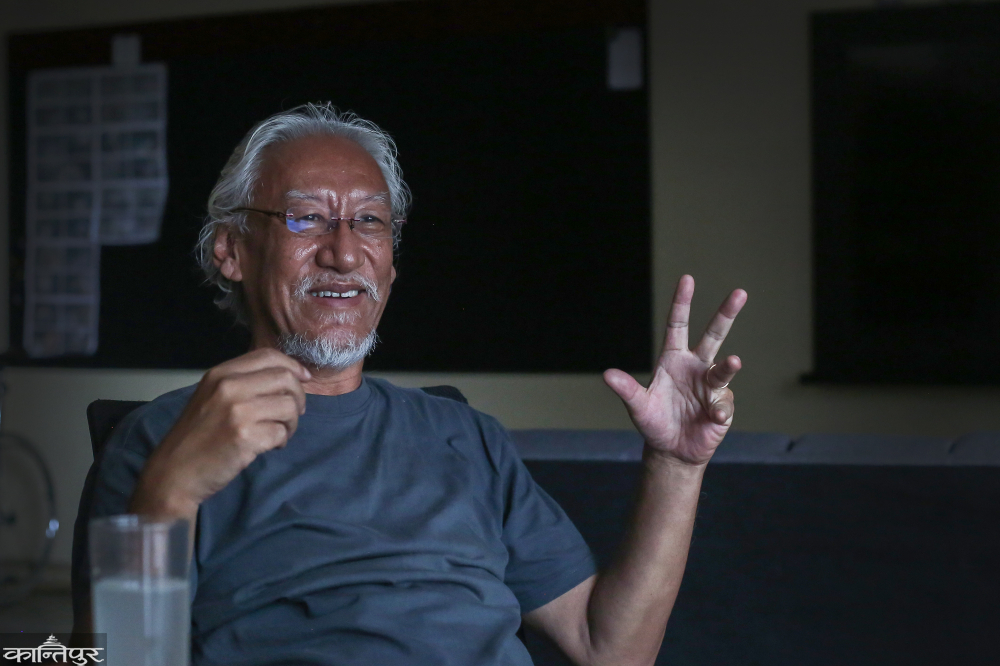 Veteran filmmakers Prakash Thapa, Tulsi Ghimire were making films in the formula of Bollywood, they made 'Ujeli' by getting close to the reality. Because of this style, even now, the dialogues and scenes of 'Uzeli' seem lively. After all, Dipendra himself was watching spicy Bollywood movies and dreamed of making a similar movie one day. But where did you get access to a film camera at that time? So he turned to the technique of filming for television. The glamor of the film was more. But even then, the power of television to reach mass audiences was the same. Big artists didn't have access then. We didn't know what the result would be, but we decided to film it with non-actors,' Dipendra says, 'I'm more of a moviegoer than others, so I didn't make it because I'm going to show it to everyone. But, at that time, I unknowingly made it in my passion, the result came out well.' Dipendra admits that 'Uzeli' became a strong product because of the atmosphere, directorial decisions and the work done by Hoothooti.
Ujeli (Vrinda Adhikari), the main character of 'Ujeli', was met by Dipendra's group while they were visiting the school. They went around the village school looking for the main character. They wanted to give a 'light' character to the poor and the talented, Vrinda used to stick to the characteristics they were looking for at that time. His eyes are bright, his speech is also sharp. Fearless by nature! Even though 'Ujeli' is from a poor family, it causes trouble in the wedding scene. Especially the child who will marry her is from an elite family. In the wedding scene of the two, the boy's family tried to stop the filming of the scene. The bridegroom was also real, he too hesitated to read the real mantra. The memory of Dipendra's team spoiling the mantra and shooting that scene is still fresh in Dipendra's mind. Dipendra did not believe that he would become 'Uzeli' when the filming was stopped due to various reasons.
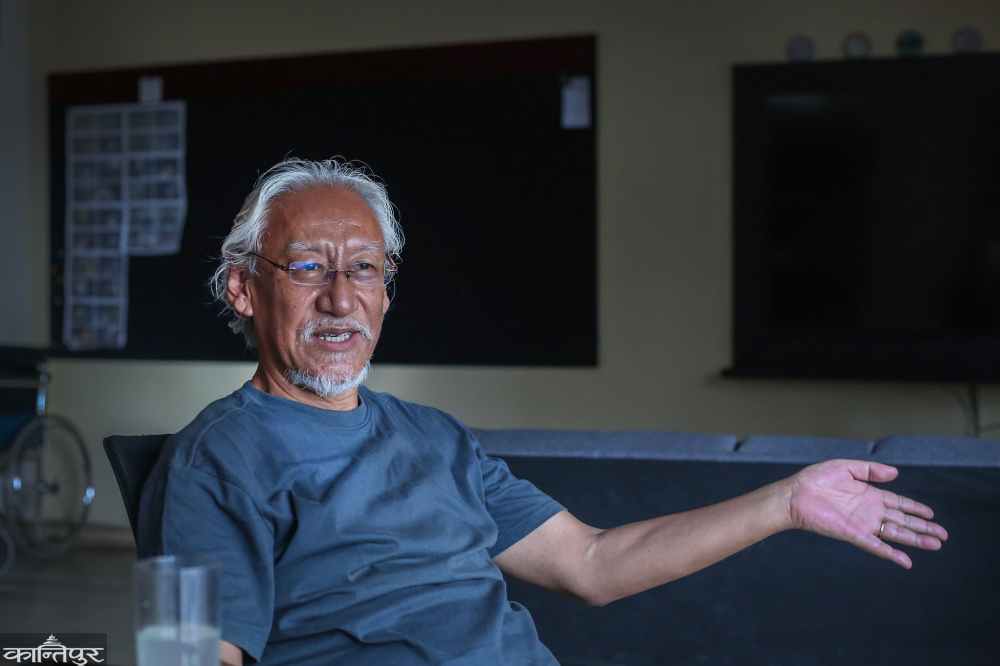 The name of the docu-drama 'Ujeli' is also taken from the popular name of the village. At that time, names such as Kamali, 'Ujeli' were popular in the village. Since the name 'Ujeli' is new, Dipendra named the docu-drama from the main character. This docu-drama toured in good festivals at that time. Dipendra, who made 'Ujeli' without knowing films, now teaches film. In 'Ujeli', the discrimination between sons and daughters, through the lives of two girls who were adopted by the patriarchy, how child marriage is being passed down from generation to generation is shown in a powerful way. Even in this story, the 'Uzeli' character is presented as a stubborn, independent, rebellious and vocal female character.
Just as 'Uzeli' increased the search for Dipendra 6 years ago, now he has become the character of the search due to the story of the cartoon 'Moomin'. A couple from Finland came to Nepal to teach 'advanced level' especially for Nepal Television's training. Together with this couple, Dipendra trained Nepali women to make videos. During the completion of that project, Dipendra became the father of his daughter. They always sent cartoon books from Finland for Dipendra's daughter. There were many interesting stories of 'Moomin' in the book. When Dipendra responded that the story was interesting, they sent two-four 'episodes' saying that a teleserial was made on it. When Dipendra showed the same cartoon to his daughter, he thought, 'This should be shown to everyone'. With this thought of his, 'Moomin' was dubbed in Nepali language.
had 52 'episodes' made at that time, they dubbed 26 'episodes' in Nepali. Moomin came on air in 2001, for the generation that grew up watching Moomin, their childhood is associated with this cartoon. Due to the fact that Moomin was dubbed in Nepali, Dipendra's experience was highly preferred at that time. This cartoon was in Nepali language. The
animation was awesome, the stories were good. It was convenient for Nepal. The subject of snow and cold was also associated with Nepal,' Dipendra tells, 'When the topic of Moomin came up, it was difficult for some to bring it to Nepal and dub it. says However, it was not difficult for us. Many things happen easily when you wish.'
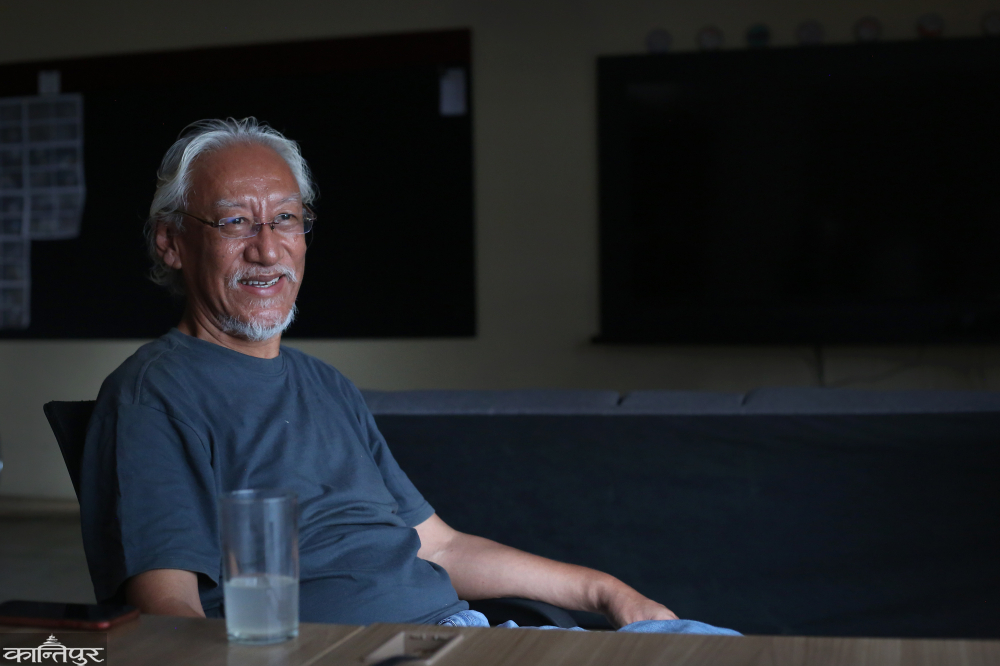 After 26 'episodes', the rest of the episodes were also ready to be brought to Nepal. However, Dipendra flew to Africa in 2002, then left Nepal with his family in 2003. And, 52 'episodes' of 'Moomin' were never aired in Nepal. Meanwhile, Nepal Television became 'digital from analog'. Meanwhile, the author of the book passed away. However, now he is preparing to bring the 'digital version' of Moomin to Nepal with the author and television rights. Dipendra Koseli, who returned to his country after 22 years of leaving Nepal, has returned with a missing girl report. In the feature film ``Keti Belobo Innoha'', he raised the distinction between Pahade and Madhesi. With this film, he has planned to make many projects through 'Tricity' focusing on Nepal.
He reached the peak of discussion after 'Uzeli' and reached many countries due to the works developed at that time. He raised the topic of sex trafficking through Nepal with the title of 'Guru Ji and Intere', 'Girls are crying, Dalal is laughing' about HIV disease. While making a docu-drama on the same subject, a BBC representative came to him with a project on 'Leprosy'. Seeing the lack of film schools at that time, he and his friends had already opened Avaas (Academy of Audio Visual Arts and Science) with a one-year training plan.
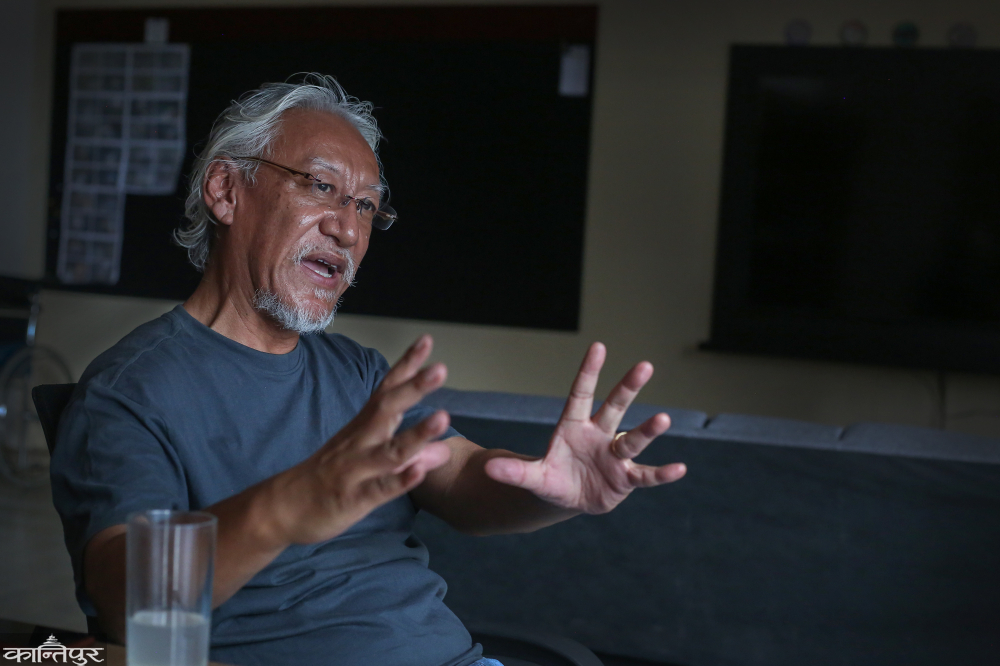 Together with his students, Dipendra built the project in two months. Made 'Okhho' with Madankrishna Shrestha and Harivansh Acharya. 60,000 people took leprosy medicine within a month of 'Okho' airing. Then Dipendra reached Cambodia through Tanzania, Ethiopia on various similar development projects of the BBC. Dipendra, who came to Cambodia for a three-year project, stayed there for 22 years. Meanwhile, he worked on many projects in Cambodia. When he arrived in Cambodia, there was only one television station. There was no film school, not even now. However, Dipendra has been teaching film for a long time. Upon leaving the BBC in 2015, he became an adviser to Cambodia's film department.
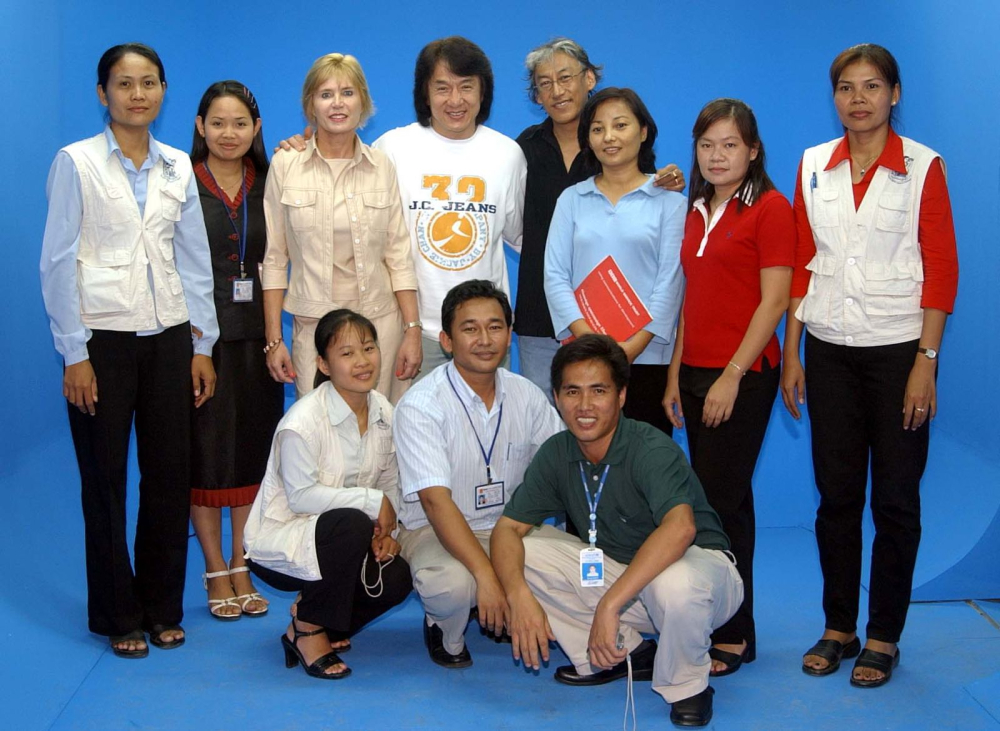
Meanwhile, he made an HIV ad featuring Jackie Chanel. He was tasked with reducing Cambodia's HIV infection through a three-year project. He made two commercials featuring Jackie. In both of them, he had to get Jackie to speak in English. It was very difficult for Jackie to advertise in English at that time. Jackie's ad was sent to many countries. The transition of HIV was successful in submission we were successful, 'Direndra precepts.
made Dipendra busy in the ads to give a message to fight the struggle with large diseases. Campedoy's leisure deperandra has deipendra, and Nbsp; 'When they were all, they said to where I met me, so I have come to do things. The plan to project 6 through Trissity, "Dipendra said, 'Now I am focusing a few years in Nepal for a few years," focus.'