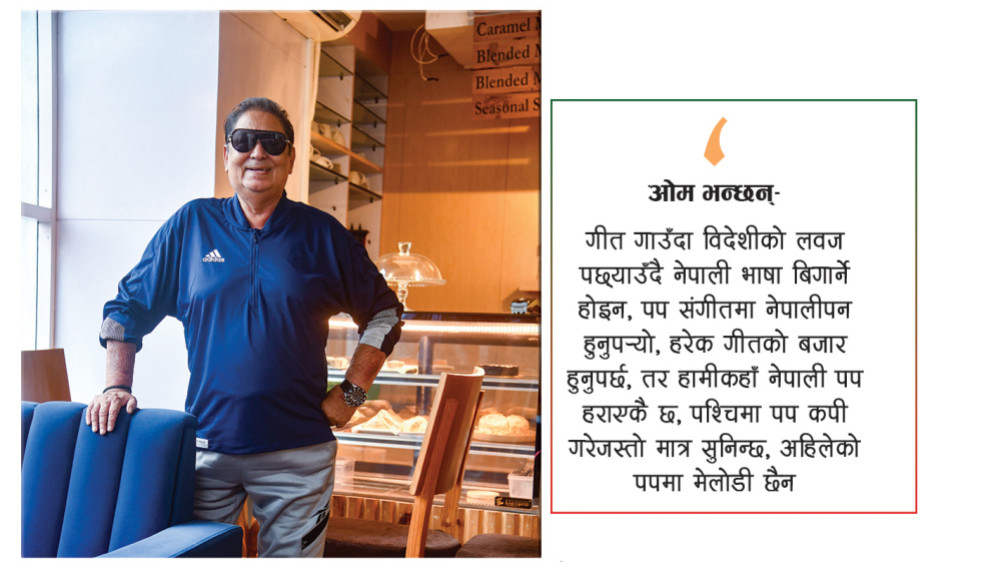
Om Vikram Bishta was struck by lightning 8 years ago, when Bishta, who was preparing to release an album, had a kidney problem while he was 'recording' a song, then Om Vikram, who was rushed to America for treatment, returned to Nepal after a kidney transplant, and is currently 'recording' the album.
We use Google Cloud Translation Services. Google requires we provide the following disclaimer relating to use of this service:
This service may contain translations powered by Google. Google disclaims all warranties related to the translations, expressed or implied, including any warranties of accuracy, reliability, and any implied warranties of merchantability, fitness for a particular purpose, and noninfringement.
Back then pop was called gossip. A song mixed with western instrumentation, either modern or cutting-edge. The wave of criticism was the same, pop singers were even insulted by saying they were singing. Omvikram Bishta is very fond of western instruments, equally interested in 'experiments' and 'experiences'. Pop music entered Nepal with Bisht's 'experiment' mixing western instruments. Later, he was called the Pop Emperor of Nepal.
Eight years ago, a thunderbolt fell on this Emperor Bista. At Nhoo Bajracharya's studio, while 'recording' 12 songs 'arranged' by Gopal Rasailly, a kidney problem occurred. Rushing for a treat, America, who are preparing to release an album. Diagnosed with kidney failure, the struggling years of dialysis began. Having to undergo dialysis twice a week, Bishta's voice slowly faded away. At that time, the memory of the 12 songs left to be 'recorded' was painful. Who will take care of the children? Worried about the family. Began to trust God.
He used to pour that worry, stress and sadness towards the church drum, he used to play the drum in a loud voice. The two daughters and son-in-law in America always encouraged me, hoping to get a kidney. After two and a half years of dialysis, one day a 'donor' was found, the hope of survival was fulfilled. Son-in-law rushed to the hospital as soon as he heard the news of getting a 'kidney'. There was a 6-hour long 'oppression'. A 'kidney' was given to me by a dead person. He died, but saved me. So sometimes I thank him,” said Bista, touching his stomach, “because of him I was able to live. All this is the blessing of God.'
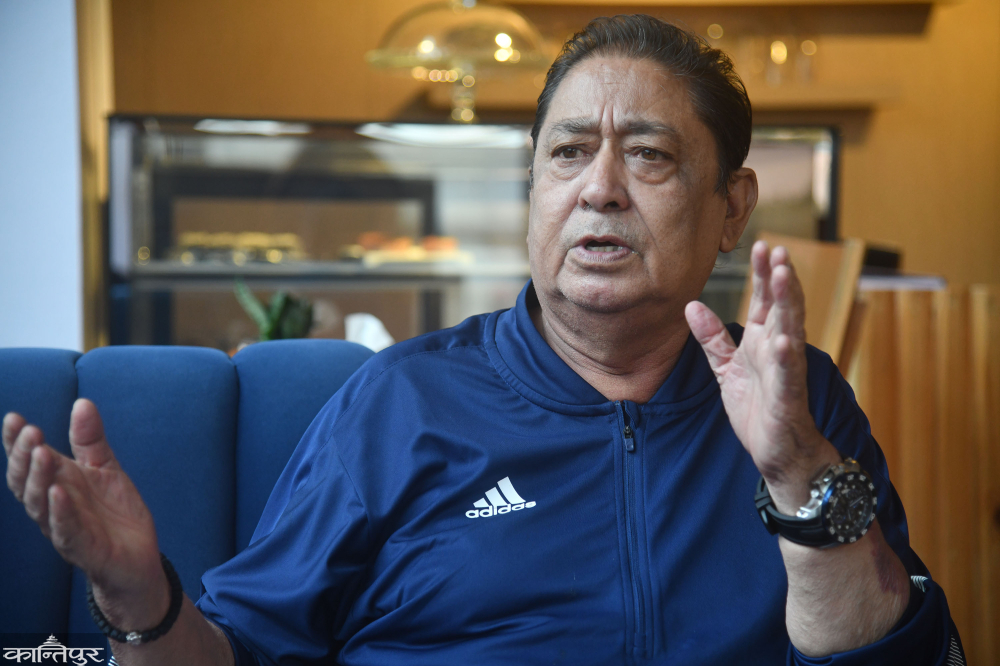 pop singer Omvikram Bista . Photos : Deepak KC/Kantipur
Bisht, who has played a game with life and death, has now arrived in Nepal. Bista, who returned home after a long stay in America, is 'recording' the album that was made eight years ago. With the addition of another 4 to the 12 songs, 16 songs are currently being 'recorded'. He is returning to the music market with a new zeal among the new generation. What response, 'views' did this song garner? It won't make much of a difference. The reason is the same. A decade ago, Bishta has already proved himself through two hundred songs including 'Ko Ho Tay', 'Ma Maunta'. There are new generations in pop music now. I am 'recording' a new song with new zeal before that new generation," Bisht shared the joy of "recording".
Even at the age of 68, he is as excited about recording a song as he was when he first touched an electric guitar as a child. Not only did he fall from one and a half floors because of his passion for music, the story of Om getting close to his favorite musicians by giving up Goji's money has become a thing of the past.
Born in New Road in 2012, Om. He used to listen to Beatles songs since childhood. Father brought a 'record player', on which he listened to Beatles songs. Father Daulatvikram Bista is a branch officer of His Majesty's government, so he keeps going to Malaysia, Singapore. He kept asking his father for a guitar, one day his father fulfilled the demand. He brought an acoustic guitar. In particular, it is the kind of guitar that hangs on the wall. When I played, I got sores all over my fingers,' recalls Om, recalling his first guitar. He bought another guitar at New Road for 65 rupees when he did not complete the task of playing that guitar. After learning three 'chords' on the same guitar, he sang Newari songs in Dubli at the age of 10.
 As the inclination towards music grew, one day the sound of someone playing an 'electric' guitar was heard in the village near the house. As soon as he heard that new sound of the guitar, Om was attracted. He climbed to the window to hear the sound, the door was all closed. The window was also closed, he was listening to the sound of the 'electric' guitar while hanging on the closed door. Robert Sharma, Kishore Thapa and others with long hair were swinging and playing 'instrumental'. At first glance, they looked like the Beatles.
Half an hour later, the brothers opened the window, he fell to the ground from one and a half floors. The injury was not big, he made friends with western music from that day. Understanding Om's passion, Roberts let Om play the 'electric' guitar. One of the 'strings' of the guitar was plucked with gusto, a strumming sound was heard. That's when the 'electric' guitar hit the heart. And played three 'chords' on the 'electric' guitar. They were all surprised. He slowly became closer to Robert's team. He used to accept all the work done by the members of the 'band'. They started a 'band' called 'The Pakhej'. Then Kamal Chitrakars opened the 'Second Package'.
A very famous 'band' of that time - 'Diamond'. Even close to the 'band' is the same papad belle omlay. Good family background, no problem in spending. He became everyone's favorite brother while taking cigarettes and snacks to Diamond's 'band' brothers. Together with Suvarna Limbu, Dumbar Rai, Pemba Lepcha, Dev Rana, Dumbar Subba, Vikram Subba, George Subba of 'Band' sang the first pop song 'Biteko Jeevan'.
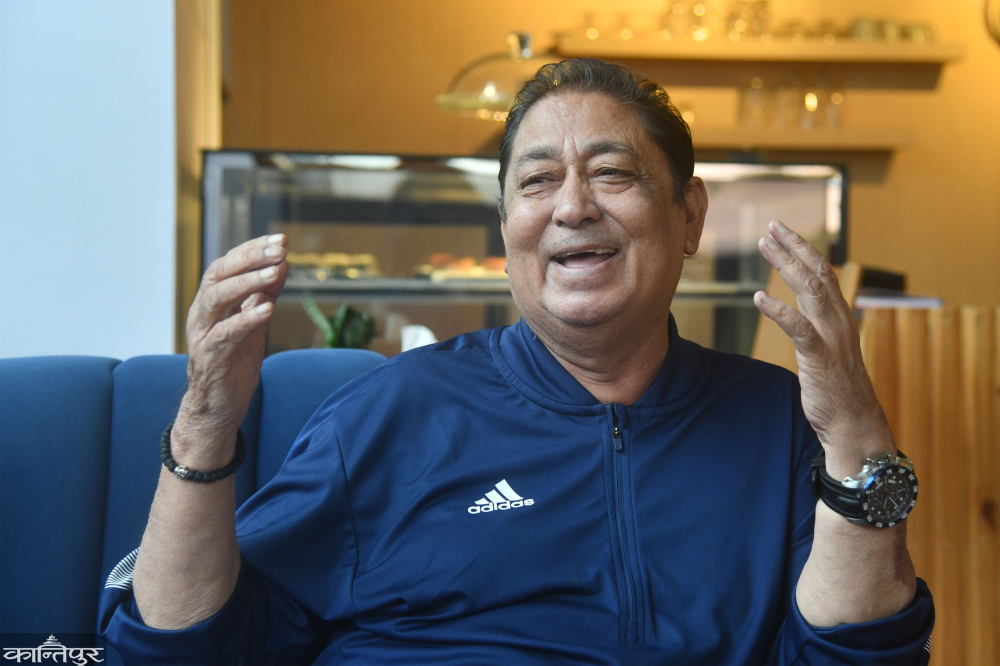 He was only 14 years old when he sang 'Ma Mauntama'. One day after getting closer to the 'band', Suvarna Limbu said 'There is a song that Dammi, Ambo that song should be sung by Om Bhai'. He 'improvised' the words 'Kaslai' in the song written by Robert Subba. They used to practice this song while having fun with their friends at night. Everyone was stunned to see Om's singing in practice. There was talk of 'recording' the song. At that time, father Daulat was the head of Radio Nepal. Dad doesn't like the song that Om sings. He used to say, 'You don't understand the song he is singing.'
But because of his father, Natikaji and Shivshankar gave a chance to the song 'recording'. For the first time, they reached the radio with instruments like drums, bass guitar, guitar and 'wawa'. Live recording of this song took place in 2033. When the instruments were played, the music sounded western, but the singing style was Nepali. The song became a huge 'hit', playing all the time on the radio. However, the first pop song 'Biteko Jeevan Mero' sung before that also went well. Then the song "Yaad gar ti din" was also a hit.
'Ma Mauntama' is a 'super-duper hit'. At the age of 14, when he sang the classical song 'Maya Ta Hola Ni, Tyo Soshitin' on Radio Nepal, no one thought that Om would one day be established as a pop singer. Om, who became the first in Radio Nepal in 2037 by singing cutting-edge songs, sang folk songs like 'Bahrbise Bazarima, Chura Laune Dhago', 'He Lailai Dudhkosi Tarnuchu, Chheu Kati Rumal Chattai'. "At that time, we introduced what is western music and what is pop through 'Diamond'," says Om. Later, they were attracted to the western market.'
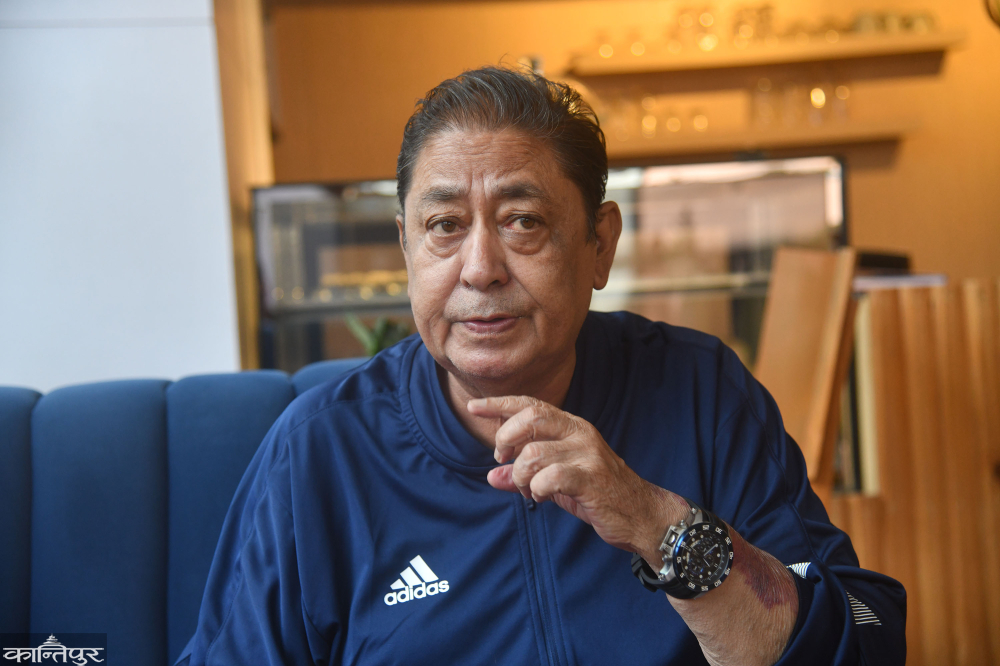 At that time, there was a ten-day 'concert' in Darjeeling. At the ticket price of Rs 20/25, an ocean of spectators used to descend. There was demand for 'concerts' in Darjeeling, Kalimpong, Sikkim, Assam, Siliguri. Once he went on an Eastern tour with Narayan Gopal, Kumar Basnet, Meera Rana, Madhu Chhetri. At that time, on a stage in Dharan, Narayan, who climbed the stage after drinking, got into trouble with the audience. Natikaji then called Om to the stage. At that time, he was surprised to have to sing in silence four times according to the demand of the audience.
'It was sung twice, but when the audience didn't stop saying 'once more', it was difficult and we had to sing it four times,' he said, 'The song I say in silence was different from others. Narayan Gopal, Premadhwaj Pradhan, was very different from what Bachu Kailash sang. The instrument was different, the style of singing was also different. That's why young people preferred this song wherever they went. The chords used in the song are also simple. That's why he enjoys watching a young teenager/teen learner sing this song. Even now, it is a pleasant experience to see everyone singing this song. There's no reason to blow your nose, what's the point of boasting?' Om said with a smile.
The context of the song 'Ko Ho Tya Jee Jee Malai' is also interesting. This is the song of 'Ke Ghar Ke Dera' produced by Shahi Film Institute. The two musicians in the film are Shambhujit Baskota and Shubh Bahadur Sunam. There has been a long debate between the two composers on whether or not to give the song to Om. Finally he got to sing. The song was 'recorded' in Calcutta. They reached Calcutta at their own expense. Tara Thapa had to sing the English line of the song 'Why Don't You Ask Your Love' as 'Why Don't You Ask Your Life' for 29 takes. "Such a song to shout, food was not given. It was sung in hunger. I felt like I was dying of hunger,' Om remembers the moment when he was 'recording' the song.
On 'stage', he started singing this song in 'rock' style. He used to dance and sing on the stage, while most of the people at the time would sing with great strain on the mic. He used to sing while carrying a mic. This song also heated up many 'stages'. The instruments used in the song are very interesting, as soon as the song is played, the audience is hooked. Shubha Bahadur Sunam's song 'Aau Aau Mero Dilma Tu' also became a hit. Songs such as 'Mero Rahar Buyunjier', 'Sunchandi', 'Nabanide Mero Otko Laali', 'Hararat Mitha Swapnama', 'Aau Aau Mero Dilma Tu', 'Futeko Bhagya Jodne', 'Mero Yaad Ajke' are very famous.
Om introduced Sukmeet Gurung to the music industry with the song 'Sunchandi'. At that time, he got four songs to 'record' at Ratna Recording Institute. Narayan Gopal got 12 songs at that time. A new song was needed to sing four songs. Prakash Gurung wanted a female voice while singing the songs. And, at that time, Sukmit Gurung came to meet him. 'Sunchandi' also became popular just like 'Ko Ho That'. He used to take Sukmeet to every 'concert'. From Kunti Moktan to Daisy Bareilly, he himself brought musicians Arun Thapa to the field. He says that he taught guitar to Ram Thapa himself. Narendra Bhatt one day gave him a song titled 'Futeke Bhagya'. At that time this song became popular in Darjeeling. Ram Thapa's 'Mero Yaad' also hit the market. His songs were so popular in Darjeeling that once he had to sing 28 songs at once.
 Om had to face many obstacles in Radio Nepal until he understood pop music. It was accused of spoiling the music. He used to come back with tears in his eyes when he didn't get time for 'recording' on the radio. As the 'recording' time was given, the date also kept changing. One day, when he went to ask for time for 'recording', he violently knocked over the table. After that, he got to record his first pop song with the lyrics of 'Biteko Jeevan'. Remembering that kind of passion for music, Om feels that a film can be made out of these anecdotes. From Natikaji to Shivashankar, Om's team used to go to Radio Nepal. Om has tried many times with people who don't understand the
 pop genre. Jori "recorded" 'Remember those days' while playing. After that, he easily got the time for 'recording'. It was Radio Nepal that introduced Om. Om, who faced such obstacles when starting pop music, advises young singers active in pop music to sing songs in Nepali language, with Nepali accent, even if the instrument is western. "We should not spoil the Nepali language by following foreigner's songs while singing, there should be Nepaliness in pop music. However, today's youth are singing songs in the style of Nepali spoken by foreigners calling it pop music, he says, "Every song should have a market, but we have lost Nepali pop." It just sounds like a western pop copy. There is no 'melody' in current pop.''