Raju wants to go to Lusukk village and hide in his mother's arms. A few memories are still alive with Raju – of the same slop where his mother used to drink salt and pepper, of the stale pile on top of Agena. They say, 'That Silato knows the taste of my mother's salty tears.'
We use Google Cloud Translation Services. Google requires we provide the following disclaimer relating to use of this service:
This service may contain translations powered by Google. Google disclaims all warranties related to the translations, expressed or implied, including any warranties of accuracy, reliability, and any implied warranties of merchantability, fitness for a particular purpose, and noninfringement.
A mother has kept the veil of sorrows of life with tears - Raju Pariyar. He realizes that my mother is not just spices and salt-pepper, it is the whipping cream of her deeds and sufferings. In the urban heat of mid-May, Raju recalls the village and the paths his mother walked, "May everything be lost from life but not that silato." Because it is not only a stone, but also a witness of my growth.'
In the urban life, Raju remembers his mother's many wishes and dreams and his whole life through that blanket. "My mother's life is the sad journey of an old woman walking on the river bank," Raju heard like a bell ringing in the solitude of the night. As if the melody of Brahma is the melody of his life. He is narrating his mother's grief. He says, 'My mother is a masterpiece in herself. People don't read the book of life, but my mother has read her own life.'
• • •
Which race is greater than man?
As much logic as you can love,
If you touch when I touch, then
Sunpani is lovingly sprinkled with water.
...
There is a place somewhere and is not touched by the untouchable caste,
Rumal dho'ko chu,
Yeo kholiki pani koi nakhanoo
Maine cho'ko chu...
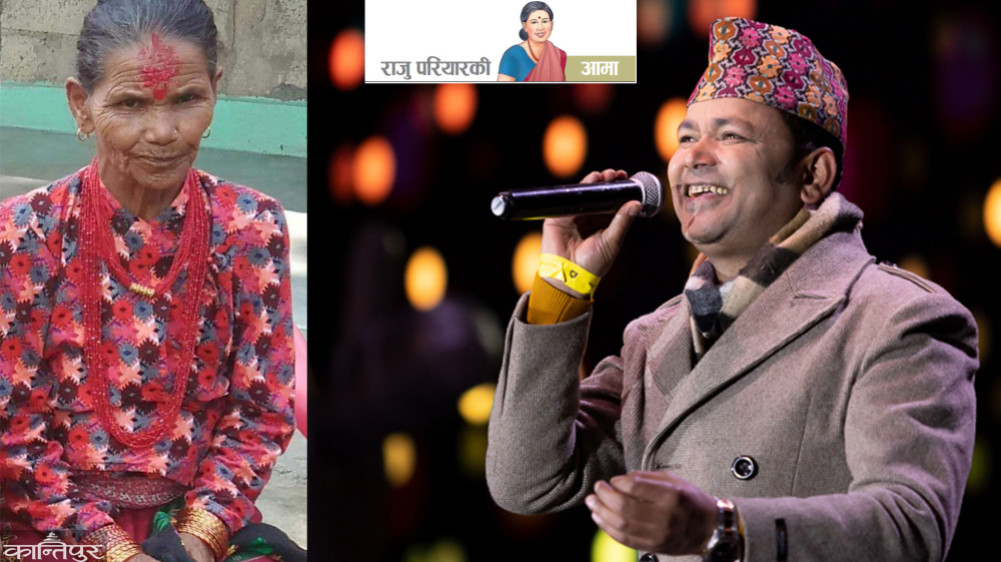
This is a branded song by singer Raju Periyar. Raju sees in these lines of the song - the mirror of his own life. He says, 'These songs are the mirror of my life.' These songs recite the story of his sad days. His song, which tells a long story of the survival of the Nepalese society and the ukusamukus, has a lot of questions - 'Which race is bigger than man? When I touch the water, does it become poison?' Mother Santamaya Pariyar (77). Her village nickname is Miley. It is said in citizenship - Sansari.
•
•
• Lamjung Bensisahar-2, Chisapani's Santamaya i.e. sang Sansari hymns, danced in Ratyauli. Raju's grandfather used to play naumati and sang ba songs. Raju Rodi used to live in the Gurung settlements of Lamjung. The old life of the village was entirely musical. Raju started singing from a very young age, not even 10 years old – at Vratbandhas, weddings. When he sang, the villagers used to dance in that lake, but they would say to Raju when he reached to draw water in the stream, 'The water you touch will not flow.' Raju, thus isolated in the society, listened to the songs sung by his mother, which she used to sing in Ratyauli-
I'll go to the lake, I'll kill a dove, I'll mix it in the same bean,
What do you say to me, Nani,
Dil Basyo in your generation...
Raju has not yet learned formal music. He considers the songs sung by the mothers in Ratyauli in the villages, while picking millet, in fairs and parms, the bhakas sung by the grass cutters in the hills while going to graze the goats, and the rostrums of Gurung Basti as his school of music. They think that Baama has folk songs! "I am not a singer in front of village mothers, we cannot sing at the same level as they sing," Raju Ama-Mahima sings, "Mothers' life is a folk song." I can't describe their thrilling-cut-throat movement, I can't even judge them. A great philosophy is hidden in that song. Where is the quality of those songs that make water and fire!'
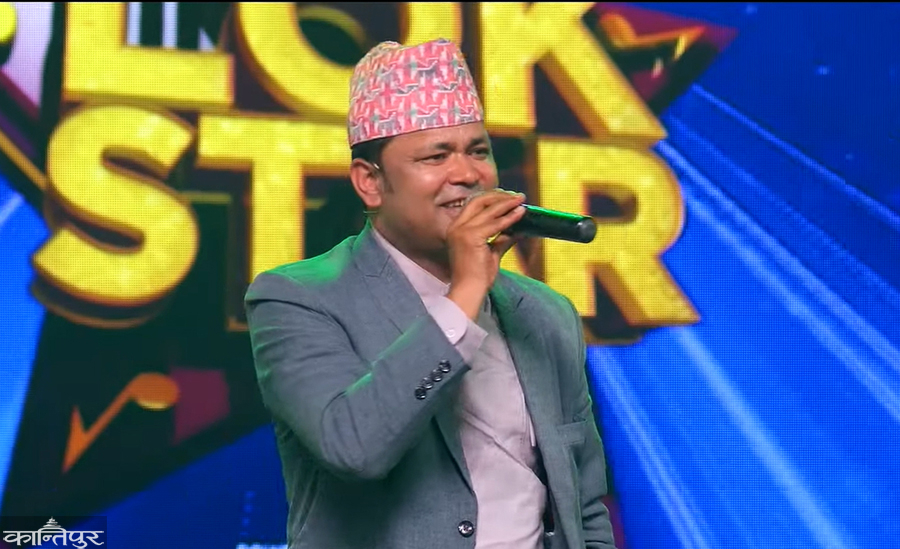
Raju thinks – No matter how much penance I do, I have barely reached the point of 'Ke Chha Saili, Ke Chha Miley' in the song. Raju once ruled, in Lokdohori. In those 'Rajumay' days, his name alone was enough to sell a song album. Be it a festival or a song program, he used to be the one who resonated. 'Lalupate Nugyo Bhuyantir', 'Rumal Dho' Ko Chhu, 'Sunpani Le Chark Myalu', 'Third in the Forest', 'Timi Gham ma Chhaya', 'Bumblebee in the Flower', 'What should I say to the cheater and lose', his famous are songs.
•
•
•
Raju's definition of mother Santamaya is - My mother rose up playing with her own life, she went to make her son a 'son'. They say, 'If you read the story of my mother's experience, many people will feel like reading their own story, some will think - Oh, does this happen? But, you cannot forget your mother's story.' Raju used to sing night and evening in the village streams, wells, ponds and shami squares - after eating the stale morning meal. His memory reaches far away villages - Sony Radio used to be playing in Chautara - Subedarni Didi and Laptan Bako used to listen to those songs played from the regional broadcast of Radio Nepal and get excited. However, at home, the mother's pain was like a mountain. is over, Raju's mother's story is really full of pain. When Raju was 2 years old, his father Mangalsingh Pariyar left home and went to Chitwan and got married again. Then Raju's mother's grief increased. Along with poverty, the sorrow of being a Dalit also affected Santamaya's life. Only after entering the lives of poor and Dalit women can we know the real life story of Nepali mothers. When he looks back on his childhood, he thinks - I am the son raised by my mother with Melapat, Lekbensi, Ainchopaincho-perm. After his father left the village and got another marriage, Raju's mother used to sit on the porch in the evening and sing: ``My love is gone, and the clouds are torn in my mind , Rasila used to say to Raju in the bright light with dewy eyes - Even if the old man leaves, I cannot leave my sons. Santamaya used to say - I'm going to go, I don't want to eat. It is enough to raise the golden eyes, if they are in karma, they will come back one day. There is no happiness without experiencing what is in karma. "Mom brought us up while she was hungry, I can't describe it in words. I still don't know what happiness is after seeing my mother's pain yesterday,' Raju remembers the past. Raju thinks that mother is like a bird. Santamaya gave birth to 2 sons. She used to carry the corn-peas that she got when going to the fair of the villagers and bring them home, thinking that 'sons will eat them'. Raju compares those days of mother to a bird. Just as a bird searches for fodder for its chicks, his mother used to go to the village to find fodder for her sons - to fairs and to moneylenders' houses. And she used to come home with a few handfuls of rice and corn. Raju remembers those days vividly - we could not celebrate any Dasain-Tihar as Dasain-Tihar while we were in the village.
When Raju was 5 years old, his father returned home, for a few days. He returned to the place where he became a younger wife. He longed for his father. He used to see other people's fathers on Dasain-Tihar, his child mind thought that his father would come back, but he never got to celebrate any festival with him. While growing up, Raju also started going to Ainchopaincho-Melaparm-following his mother-grandfather-grandmother. But, No! His mother's grief did not change.
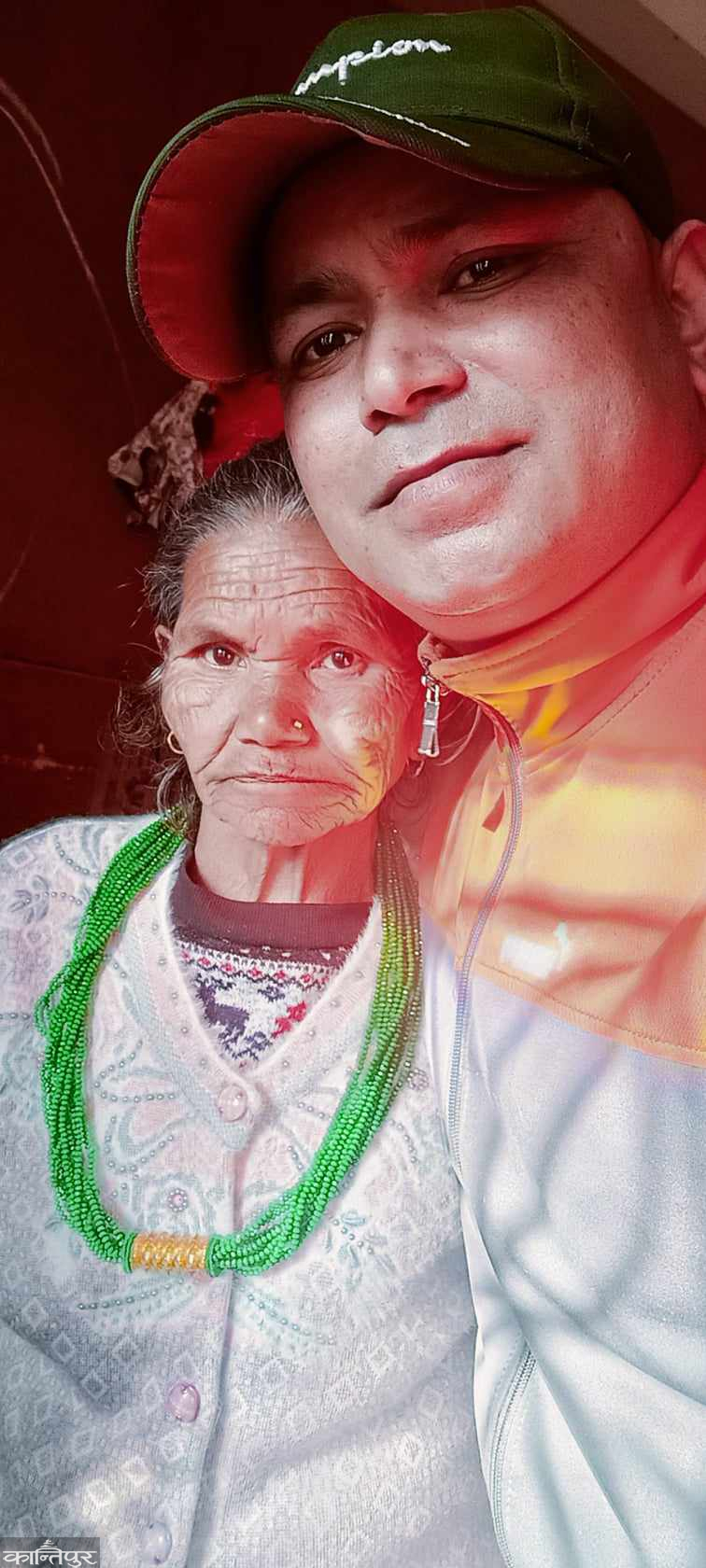
Raju only remembers his mother's tears in his childhood memories. There was no Christmas without the mother crying, the pain belonged to the father. However, she cried alone, and did not show her tears to her sons as much as possible. Raju is a son abandoned by his father, a Dalit and a character rejected by society. I always thought that there would be no festival. During the festival, there was joy in the houses of others in the village, only tears and pain in my house.'
Raju used to face discrimination even when he went to his mother's house. The uncles used to call only the mother. Even the uncles used to say 'a child abandoned by the father'. Remembering that incident, a thorn grows in the soul. I came here repulsed by everything, but every now and then I think – I am at that point and my mother is suffering the same,” says Raju. Santamaya was singled out even when she took part in the village festival. The villagers used to say - 'She has no husband, who will give her money!' But Raju loved to eat meat, there was no way. Then the mother would be wet with tears and the night would pass. In the memory of Raju, how many nights are there when Gundri's beggars ran out of food and slept hungry! However, there were no lines of worry on Santamaya's face. She used to say - Today we were told to starve, that's right.
•
•
•
Raju, in love with music, used to sing in school, participate in competitions, and was first in everything. Seeing her son's progress-graph, the mother's face was flushed red. However, she could not breathe a sigh of relief.
When Raju remembers his mother's pain, he still feels that 'the world is falling apart'. His mother taught him only one thing - the boy should be sad! A year was cut off by a single cloth. We had to wait for Dasain to buy new clothes, Santamaya used to give her sons one piece of cloth on Dasain. She is crying because she doesn't have money to buy hand-printed slippers for her sons. Santamaya also cried that day when Raju bought slippers for her mother after earning from singing, maybe she was surrounded by memories of old days. During Dasain, after Santamaya bought new clothes, Raju used to go to Chautara and stand there thinking 'someone would have looked'. When the poor-Dalits of the village wore new shoes, wore new clothes and ate sweets, it became a matter of interest to the society. The rich and wealthy used to ask - where did he get the money from? That society has changed. However, the discrimination is still visible in the eyes of the society," says Raju. As a child, Raju was not able to play and walk like other children - Ormaparm, Melapat and school - home was the daily routine. Santamaya, who had just left, returned home only after nightfall. Raju's chest was heaving with pain until his mother came, who was walking around in Barkhamas. Bhelbadhi - Landslide on one side, life's landslide on the other. Raju used to watch his mother's way until the night got dark, just like a baby bird stays in its nest and watches its mother's way. "After that, I can't even describe the joy I felt when my mother came home after getting soaked in water," says Raju.
Growing up, even at a teenage age, Raju is sad about not being able to have fun with his friends. "I fell into folk songs, how did youth come, how did it go?" I don't know," he says. Even now he does not think - I am happy. They say, 'What happiness is there in life? The same day, the same sorrow continues to shake. Even when you reach somewhere and eat something sweet, those days still haunt you - the days when you had to starve without being able to eat a single piece of bread or a piece of bread.'
•
•
•
Raju saw the life of other rural mothers and his mother completely different. He saw his mother's mischievousness creeping up on him. Soon it became like a culture. After understanding little by little, it became a habit - little by little. It did not seem like a new incident to him. His mother used to say, 'This is how life is, it goes on like this.' But the experience was painful. When I became first in the singing competition and people started to recognize me, then society's view of my mother changed,' says Raju.
The same 'thula' of the village started addressing Santamaya i.e. Sansari i.e. Maili - Raju's mother. The villagers used to say - 'Your son has become a good artist, you should raise him through suffering, now you will find happiness.' Those days are long gone. The pain in the heart is the same. He never got to touch the water jug like his friends sitting on the bench together in school wearing sky blue shirt and dark blue pants. If he wanted to drink water, he had to call another non-Dalit friend and tap his finger. The friend used to pour water on Raju's fingers from the bench. They were separated in the communal meals. The people of his community lived separately. Raju's question is, "The money has also fallen to me, the grain has also fallen to me." Why couldn't I grind the same money and grains in one place?' • •
•
There was a recruitment competition in the village. Boys used to leave the village every day to be recruited. Like the boys, Raju did not go to the Lahure selection but did not make the weight. Raju left the Lahure dream and entered Kathmandu in 056. In the same year he released his first album - 'Kisimkotma Chari Nacheko'. When the album came out and her songs played well on the radio, Santamaya was happy. There was no radio in the house, Santamaya used to go to the courtyard of those who had a radio and say, "Don't play my son's song." The villagers and 'Raju's mother' used to listen to Raju's songs in the fields while sowing millet and planting paddy. But, the villagers kept saying - 'A person who should be recruited, your son has chosen the profession of singing.'
The mother kept replying, 'He eats whatever God has given him for my son's deeds.' When Raju started sending money from the city, Santamaya was happy. She used to say 'the money sent by her son' with pride and kept it tied in a bag inside her purse, she would say to Raju - 'I have kept your property. I will go to the fair and earn what I need....'
• • •
These days Santamaya comes to Kathmandu and returns. She says - this city does not have the climate like a village. Santamaya advises Raju, "You don't get more than you write in karma, never expect more than you get." Happiness is not even in a golden palace. I brought Timur up in Lungi's tallow. Don't expect more than that.'
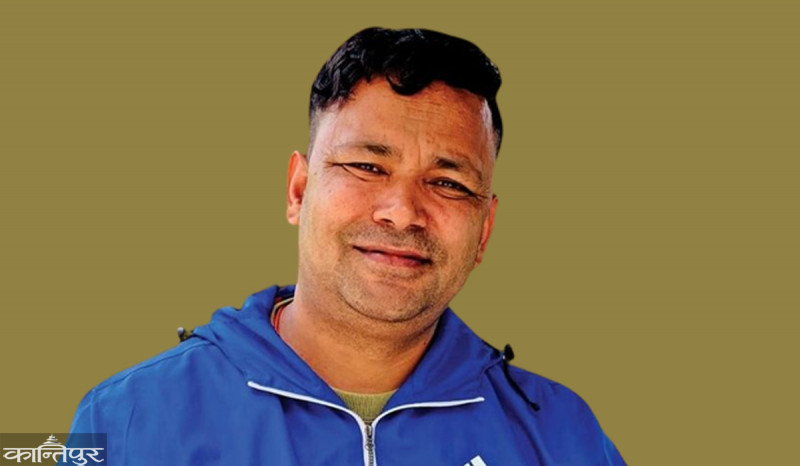
Raju sings a song in the city remembering his mother who lived in the village -
Mother with the weight of your milk, Do not curse with the stream of tears Crying yesterday is mother,
The pillow is wet with your memory
Raju reaches the village to find the experience of mothers and mothers, listens to the song of fathers with hair. "Those songs add another energy," says Raju. A few times in the conversation, Raju repeated the same line – one calls the goddess – my goddess is mother. There is no need to perform Aarti in the house where parents are present. When he remembers his rural mother, only one image comes to Raju's mind - a mother in a dirty dhoti-cholo, carrying a spade in one hand and a sack in the other. Santamaya lives in a village with another son. Raju is still struggling in Kathmandu. He still wants to go to Lusukk village and hide in his mother's arms. They say, 'I am the same old Raju Pariyar of yesterday, I am in the same pain.'
Some memories are alive in this city with Raju – of the same silato where mother used to drink salt and pepper, of the stale mound on Agena. He says, 'That Silato knows the taste of my mother's salty tears. That is the witness of my Dalit mother's sad days.'