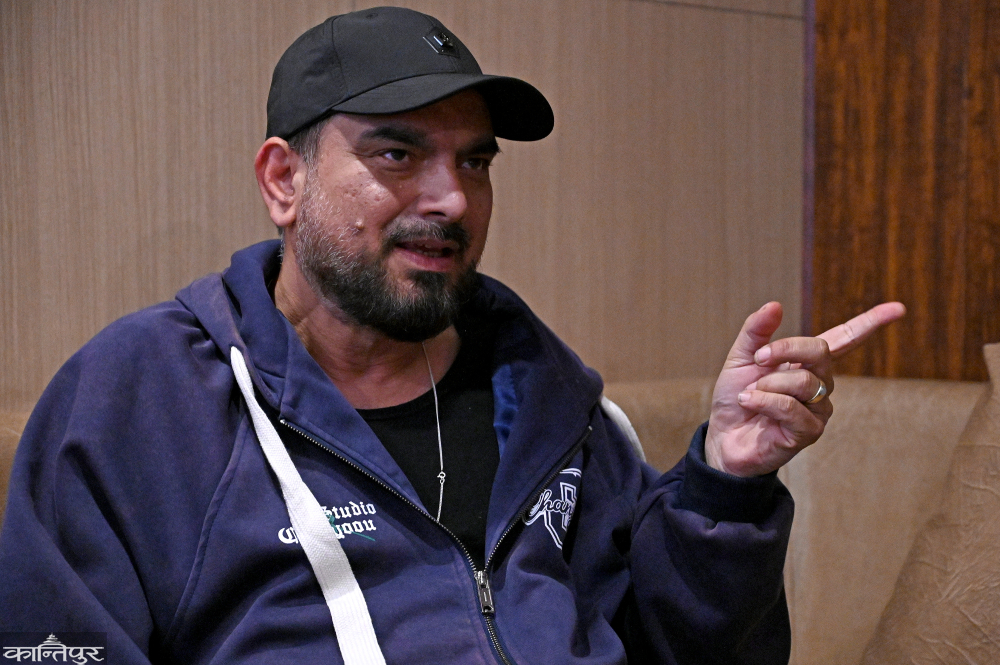
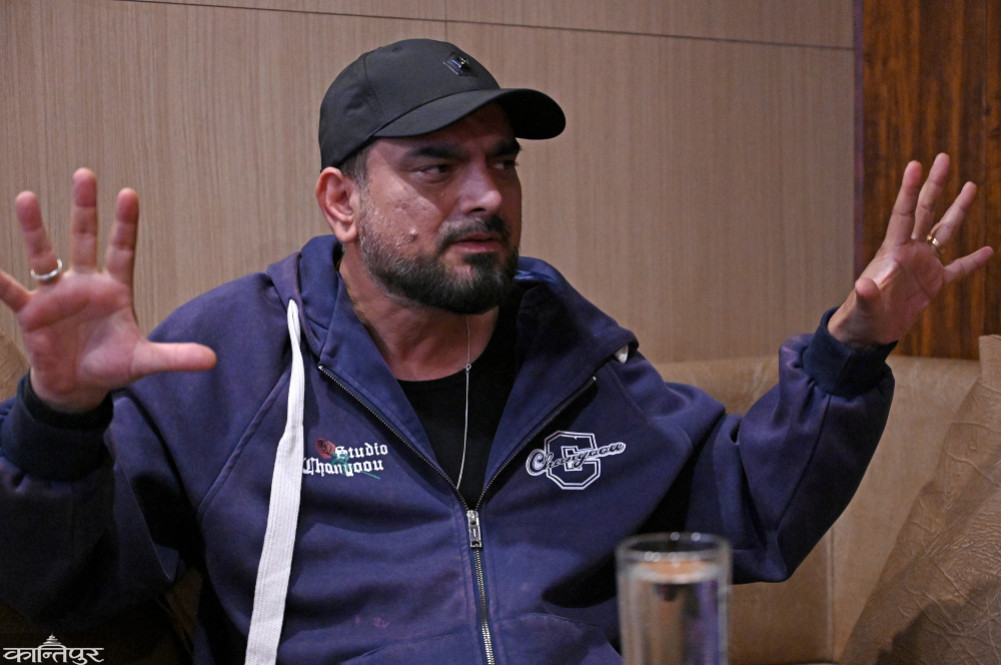
In the fifties, Naveen K Bhattarai made the hearts of millions of youth flutter by creating famous songs like Sanjnapakakh..., Yakkan Ture..., Anonma Toke....
We use Google Cloud Translation Services. Google requires we provide the following disclaimer relating to use of this service:
This service may contain translations powered by Google. Google disclaims all warranties related to the translations, expressed or implied, including any warranties of accuracy, reliability, and any implied warranties of merchantability, fitness for a particular purpose, and noninfringement.
Naveen K Bhattarai is a musical icon for the mid nineties and early twenties generation. He has composed hundreds of songs and sung dozens during this period. He always gets nostalgic in solitude when he listens to his first song 'Aankhama Teke...'.
Naveen's simple answer to the question that the beard has started to grow was, 'It has to grow. Today, March 14, I passed half a century of life. What did life teach him when he passed half a century? His short reply was, 'I learned to be happy with what I have.' Naveen, who studied at Budhanilkanth School, mostly stayed at his maternal uncle's house due to the frequent transfers of his father, who worked in a food institute. "Paras Shah, Swarnim Wagle are my classmates," he said, "I used to play a lot of football at that time." I was more interested in sports than music.
When he was studying in 10th grade, he started getting more interested in music. He cannot say why he became interested in music along with sports. He used to play a few chords on the guitar. It was Guns and Roses, Metallica era at that time," he said, "Well, from there slowly the interest in music grew. I don't know how this journey, which started as a hobby, got here.'' He is remembered. "The boys said you have a good voice, you should become a vocalist," he recalled, "at that time there was only imitation." But my first performance was in front of late King Birendra. There was an organization of former students of Budhanilkanth School. I performed on stage formally for the first time in the academy.' The story of how Naveen, who was preparing to go there after getting an I-20 from an American university, got stuck in Nepal is proof of that. There was a place called Dhap in Ghattekulo. We used to play cricket there. One day after playing cricket, I was lying there. From time to time, some things played in my mind. The letter came to say 'I see you very much'. I was too embarrassed to tell the boys. I let Sambit Bhattarai, my cousin's son, complete it. After that, I composed it and kept it like that," he said. "Later, when I went to my maternal grandmother's house, I narrated it to my sisters and uncle. Mama gave me money to record. And recorded it.'
According to him, it cost about 1500 rupees to record a song at that time. Mama Kishore Baskota gave him 2500 rupees. There was no digital system like now. It was recorded on tape from an analog system. After recording I gave it to FMs. But no one played it," he told about the difficulty of playing the song at that time, "Dinesh DC Dai played it for the first time on Kantipur FM. Then Pranil came looking for my house and asked me to play that song on Hits FM. After that, this song gradually became a hit.'
According to him, while listening to Pink Floyd and Shaboth, he was playing hard rock while wearing long hair, when a friend told him the song of Suresh Kumar Chhetri from Darjeeling, his path to singing and singing changed. Naveen's formal music journey began after the hit 'Aankhama Teja'. Although he doesn't think he is religious, that first song seems like a gift from God. I think Mother Nature told me to eat. Because it was a melody from the Spirit. He had no knowledge of music. Immediately the words came to mind, I hummed to the tune. Bhai finished the song. Harmonium Myla composed the music. And, the song was ready,' he said, 'after that I decided to study music and enrolled in Kathmandu University.'
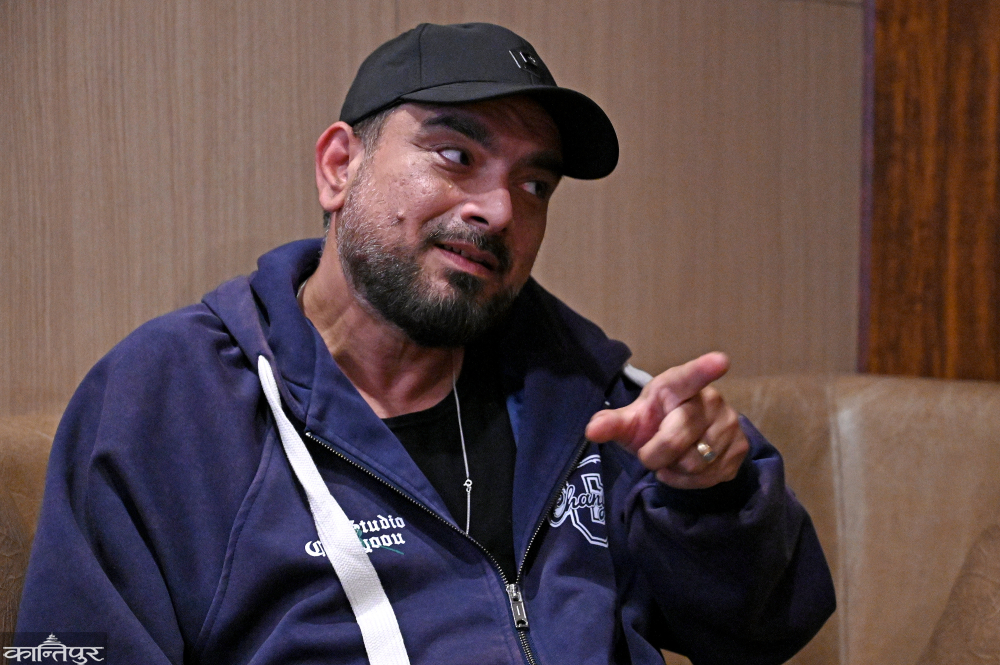
The second song 'Samjhna Tore' was made under pressure, he said. "After one song became a hit, everyone started asking when the next song will come. I also composed 'Samjhana Tore' by writing one letter. While it was being combined in the studio, I sat in another room and recorded the song throughout the day and gave the cassette to the FMs in the evening," he said.
Naveen's three songs became hits back to back. But till then he had no formal knowledge of music. Still, the music he created continues to make millions of hearts flutter. He prefers to call it natural art. "Seeing people relate to the songs I made while lying on the couch, on the couch, I feel alive even now," he said. According to Naveen, when he started studying music, he did not find any weakness in the theoretical analysis of the songs he composed. He understands it as evidence that nature created the medium by creating the melody. Theoretical knowledge helps to sharpen the melody that comes from the soul. I still feel the same way. Theoretically, a tune made by mixing is technically excellent. But, there is no soul in it," he said, "Music is the problem of the soul. That should be given by nature itself. There is no difference of opinion on that.''
says that the theory of new music, which holds the view that everyone must accept the principles of nature, can be used according to one's own calculations. 'In my 30 years of experience, the principles of nature are fixed, but the principles of music are multifaceted,' he said, 'how to use them depends on the inspiration, knowledge and experience of the creator.' He suggests that you should pay attention to 'Bhavel'. The last word of the letter should be remembered as male or female. "Accordingly, the melody is heard by thinking about which words to sing in which way," he narrated his experience. According to him, while studying at Kathmandu University, he learned classical music from Prabhuraj Dhakal, son of music master Narraj Dhakal. Dr. Learned Western music with the Great Mathews and studied guitar with Daniel Burge. I still do Riyaz every morning. I have digitized the recording of the Tanpura given by the Guru on cassette at that time. I do Riyaz on that," he said, "When you are young, you can sing with the energy you have. However, now that he is old, Riyaz will make it easier. So Riyaz should be done. Riyaz is needed to sing out the waves in the mind in a simple way.'' He says that he likes Raga Bhupali and Yaman.
Naveen argues that the reason Indian music is so popular around the world today is because of the raga they use in their music. Indians have learned how to use raga commercially. We don't have that. If they say raga, they sing only raga, and if they say modern, it is only Western," he said, "They have learned to use raga in rock-pop too." According to him, any type of music can be made on the basis of classical raga, it will survive for many eras. "My song 'Raat Bityo Her Tekeh Midayer' is based on Raga Bhupali," he said, "I find a different sweetness in it than other songs."
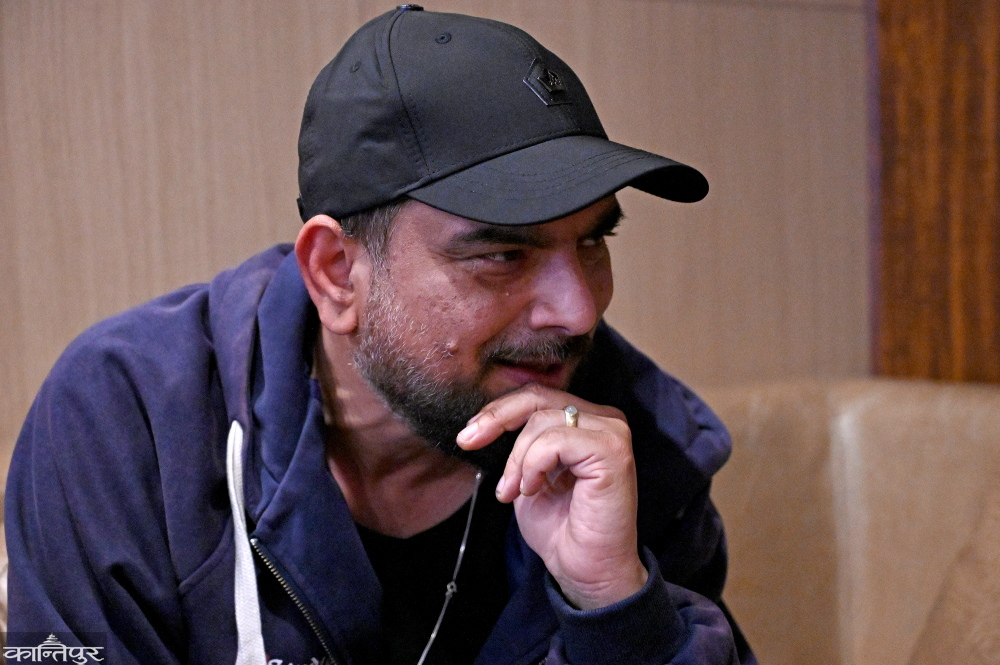
It's like that in the beginning. Looked, heard, noted from all sides. And he added a little bit of his own style to it,'' he said, 'but later, as the experience increases, he blames himself. I think so. Sarjak says Naveen should listen to all kinds of music from all places. According to him, listening to different types of music inspires the creator to create. It's not about imitating someone. But, the more one listens to music, the more the range becomes wider and the mind, brain and soul become easier to create tunes,” he said. According to him, any creator should create with the intention of dedicating his art to an era. "Be it music, painting, or poetry that you have created, you should question whether it is of a level that can be consumed for this age or for the age to come," he said. Art is not created by deceiving oneself. Art always talks, teaches patience. Those who can be patient, will move forward.
Even though art is a means of earning a living, Naveen says that the creator should not limit it to commercial goods only. "That art is immortal and eternal, which has a soul," he said, "otherwise there is so much music being made all over the world, it should be immortal." If an artist is satisfied with his art, he should never be sad. "I have no regrets about taking up music and I have no complaints about what I have done. That's why I am happy," he said. "Many of my colleagues at that time are no longer in this field. They have their own grievances and struggles. I am fine with what I am.'
Although technology has made music creation easier than before, it is not able to fill the feeling of intimacy. "Even now, the most expensive recording is done on a valve analog system. The sweetness is alive in that," Navi said, "When everything is digitized, even if it sounds good, it does not touch the heart."

Now it is easy to create music in a room and publish it from there. There is sweetness in that music, but it is literally dead. I didn't say everyone. But there should not be a situation where you have to sit with a dictionary in front of you while listening to a song,' he said, 'That song becomes a hit, whose words, music and singing are flowing like a river.' Naveen argues that art is never static. If the water stagnates for a long time, it starts to boil. Therefore no art should be static. But you have to keep an eye on where and when a decision is needed.
After 15 years, Naveen is preparing to travel to America again. Today's generation does not need to hire anyone to publish their creations. However, this situation should not be misused to spread pollution. "Social media is making creators independent. But at the same time, the creator is also lonely. You have to know how to balance it,' he said, 'I am also trying to find that balance.' However, songs often fade away as quickly as they come and go. In order to say that it was sung by a human being, there must be some weakness in it somewhere. Music is never completely perfect. Only a machine can make that,'' he said. That should be maintained.' According to
Naveen, that feeling has helped him to keep himself relevant even today and in today's age. "I have never used more technology than necessary in music. Even now, I need a band when I sing on stage," he said. "Singing without a band is not fun for the listeners, nor for the singer. Song - Music is also a means of happiness.
Photos: Angad Dhakal/Kantipur