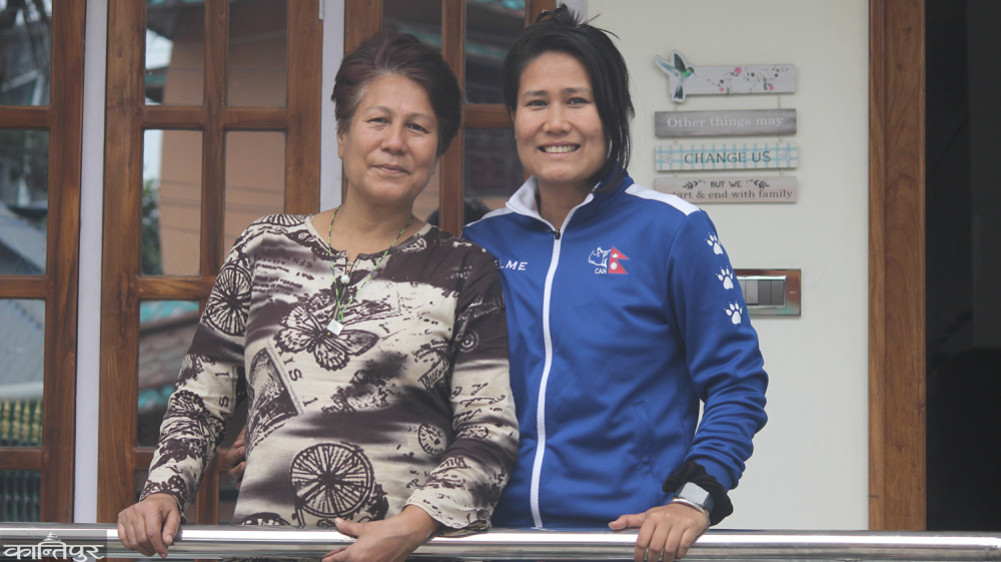
Muna hasn't seen a single game of her daughter yet. ”Mommy is very hurt by the sight of falling and getting injured while playing,” Ruveena said, ”that's why she hasn't dared to watch my game yet.”
We use Google Cloud Translation Services. Google requires we provide the following disclaimer relating to use of this service:
This service may contain translations powered by Google. Google disclaims all warranties related to the translations, expressed or implied, including any warranties of accuracy, reliability, and any implied warranties of merchantability, fitness for a particular purpose, and noninfringement.
So far, mother Muna Chhetri has not been able to gather the courage to watch the cricket played by her daughter Ruveena. Perhaps the sight of her daughter falling down and being injured hurts her. Therefore, mother Muna is often unaware of her daughter's sporting achievements.
However, after Ruvina played in Malaysia's ACC Women's Premier Cup (February 1), Muna herself gave a 'surprise'. Ruvina called Nepal that evening to ask about her mother's news as usual, thinking that her mother did not watch the game. 'What are you doing mommy?' Muna said, 'Congratulations daughter, congratulations.'
'Hundred hits re ni te!'
The news of Ruveena hitting a hundred in Malaysia has been told to mother Muna by the working brother Pawan who is sweating in Qatar. That day, her mother's 'congratulations' became a 'priceless gift' for Ruvina. Ruveena, who has been playing Nepali women's cricket for a decade and a half, held the captaincy for 12 years. However, Muna has not seen a single game of her daughter yet. "Mommy is very hurt by the sight of falling and getting injured while playing," Ruveena said, "so far, mom has not dared to watch my game."
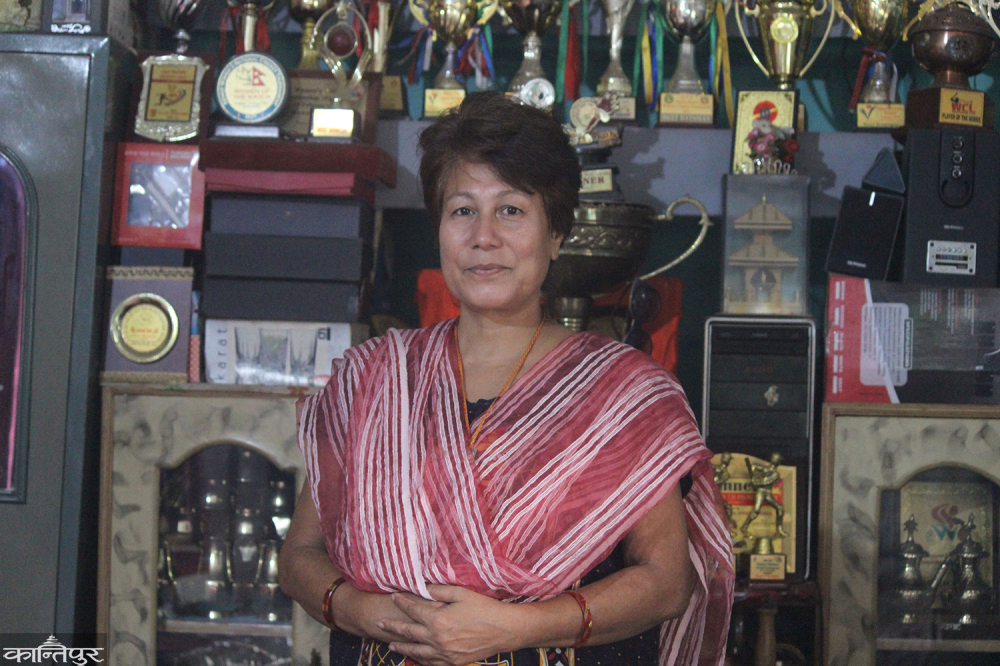 She never watched her daughter's game on TV, even when she played at the local ground, Muna never went to watch that game. Because, even watching it live on mobile, she gets jittery. However, there are also interesting stories about the mother-daughter relationship and the happy days gone by. As Ruvina is now at the height of her game, if her mother's inspiration, love and prayers are forgotten, this success story of her daughter will remain incomplete. How much did Muna help Ruveena to play cricket? There is no accounting for that. ``There was a lot of support, otherwise how could I have reached here,'' Ruveena said after looking at her mother who was wiping the window panes, ``Mother is my everything.''
***
The recently concluded ACC Women's Premier Cup in Malaysia. Ruvina went 'viral' all over the world in that game-festival after scoring a century against Maldives. After scoring a historic century in international women's cricket, she knelt on the ground in memory of her mother and remembered her mother Muna Chhetri in Nepal. Even when she took 5 wickets when she went to Hong Kong to play the franchise last year, she was still remembered as a mother.
Khas ex-captain Ruveena repeated the record after a decade in Malaysia. In 2009 Women's T20 Cricket, Ruveena set a historic record by taking 5 consecutive wickets in a single over in a match against Singapore. Even when she achieves national or international achievements, her first name is Aama Muna Chhetri.
***
Ruvina was only one year old when her father passed away. What was the father's face like? He doesn't know. While growing up, she saw a picture in a photo-frame hanging on the wall with a garland, then realized that it was her father's picture. In the 1990s, Muna Basnet from the marginal market Kakdbhita got married and moved to Manipur, a foreign city. The 17-year-old girl was studying in class 7. The family did not want to return empty-handed to the family who came to ask for their daughter's hand in marriage. And the daughter, who was studying, reached the house of Padam Bahadur Belbas, a Nepali speaker from Manipur.
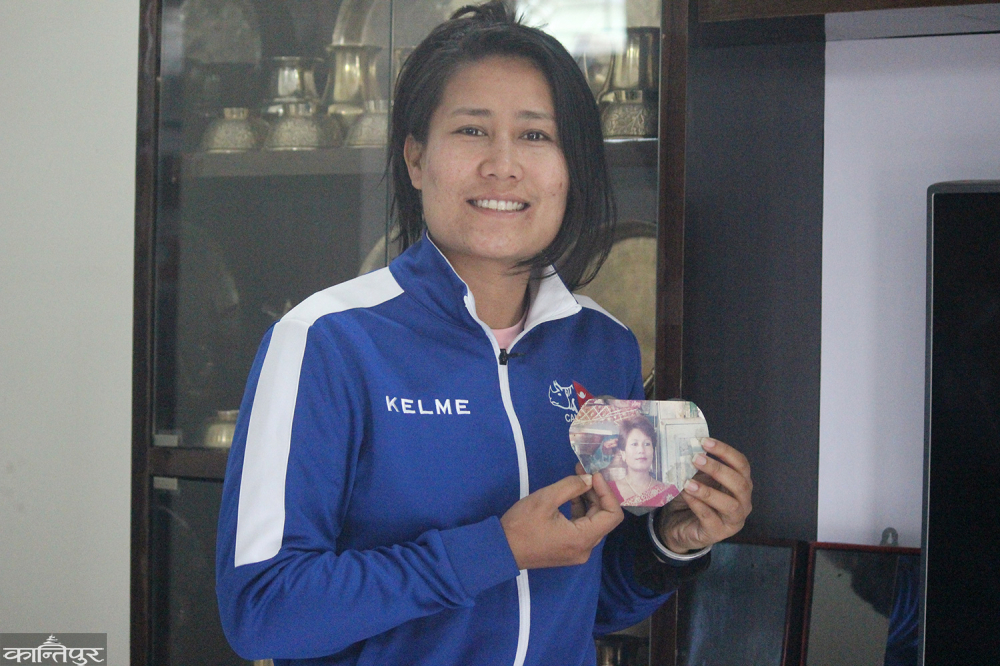 Life was going well. Banker husband passed away suddenly after 5 years of marriage. Kalili Muna, who was raising Dudhe Lalabala, was hit hard by the loss of her husband. She almost became mentally ill. But, she managed. How to handle it? It was the raising of little lalabalas. After losing her husband, Muna had a big burden on her shoulders - raising two children and taking care of her mother-in-law. She stayed at home until the year of separation. After that, the 'husband's city' started to feel really alien to her. She didn't stop there, after the break, she ran away and reached Maitighar.
***
Muna's struggle – the story just begins. Dera stay. Lack of adequate spending. The burden of raising children. Society's misogyny. Munale had to cope with many such tensions. It was a challenge to take care of two children with 3 thousand 200 bharu per month from her husband's pension, education and ration water. Despite having the umbrella of Maiti, life was difficult to sustain. Is it possible to do this? Is it possible to do that? She looked for all options, but the sun of success and happiness did not shine in her life.
Once there was a tendency to go abroad. However, the faces of ignorant children blocked the way. He had all the strength. Keeping her children's future at the center, she continued to walk the path of struggle. "The story of mommy's struggle to raise, raise, educate us and bring us to this state is no less than cinema," Ruveena said emotionally after looking at the wall of the house, "Mommy had to fight the biggest struggle with this society."
The patriarchal view of single women was even worse. Muna also had to face the 'vulture gaze' of men all the time. But, as they say, "Don't be afraid, don't be afraid". "I never failed, I always struggled alone," said Muna in a serious tone. Ruveena knows her mother's list of struggles. "My mother's struggle inspired us to be a struggler too," says Ruveena. She was running the house with the money coming from the pension. It was sad, but I didn't have to stay hungry. "That adversity has taught me to be hardworking and struggle," Ruvina remembers in the old days, "If I didn't suffer when I was young, what would I know to struggle for?"
***
is from childhood – Ruveena's passion for cricket. There was an old black and white TV in the house. She used to spend hours on the cricket between India, Pakistan, Australia etc. countries that come on the same TV.
Muna used to get angry when she saw her daughter only watching cricket. She used to say, 'Why didn't you read?' Sometimes she used to scold her daughter. However, Ruveena's studies were not affected even if she slept watching cricket on TV for half the night. Muna used to be surprised to see that Ruveena's results were good.
At the age of 5/6, Ruvina was introduced to cricket through a plastic (TT) ball. She learned cricket at home with her elder brother Pawan who was one and a half years old. After some time, together with the brothers of the village, she also added a new sign to the tennis ball. The Academy itself had to be admitted to watch Steeze Ball. "I was bowling well at that time," Ruveena remembered two decades ago, "my brothers always brought me to bowl, they did not allow me to bat because I would get hurt."
There was a field in front of the camp. The owner of a house near the field kept Ajang's dog. Sometimes the ball reached there during play. No one had the courage to go get the ball. That's why everyone called that ground - Dog Stadium. Ruvina started playing while practicing with her brothers. In the beginning, she used to bowl with her arms, and the boys were surprised to see that. Played from money bets to cock cups. She was the only girl, all the others were boys. The villagers watched in amazement. Some of them used to go to the field to watch the game without Rua. Because he had better bowling ability than boys. "At that time, I used to throw fast balls from tennis," said Ruvina, "my brothers were afraid to play my ball."
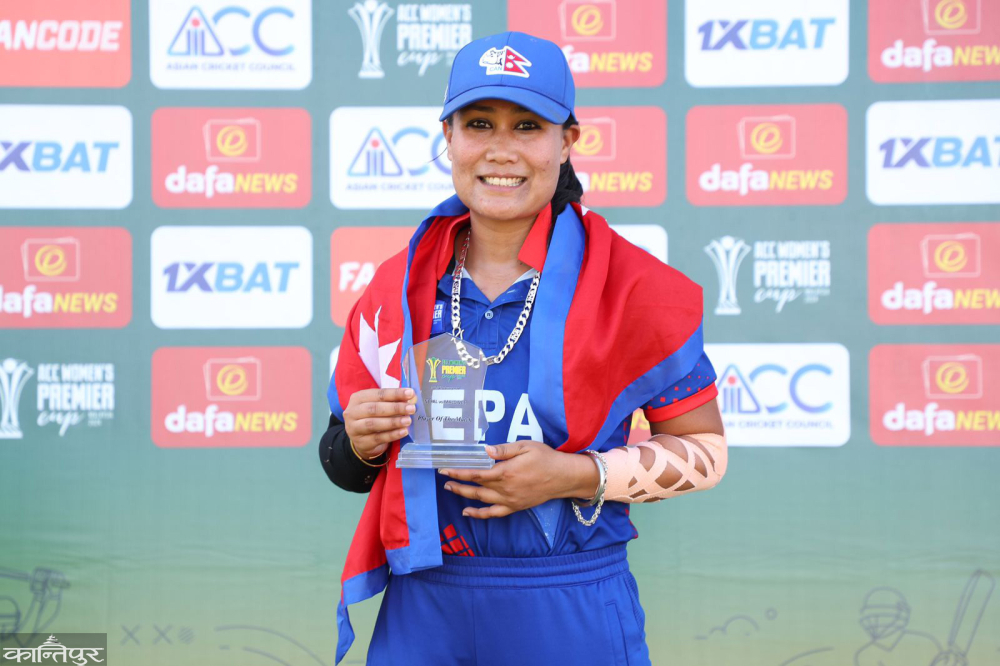 Ruvina's body language was like that of a boy. She didn't play with dolls and pottery that girls used to play with when they were younger. I didn't want to go to it! She immediately chose cricket. That cricket became the door of his life. Because her daughter played cricket with boys, Muna was brought to court several times by the 'society' - playing cricket with her son even though she is a daughter? Almost stopped Ruvina! Unable to bear the pressure of the society, Muna once asked Ruveena not to play cricket. However, the craze for cricket did not stop. Later, Muna stood up for her daughter. "I don't think what the society will say, what will be done," Muna said, "The society will do what it says. I encouraged my daughter by telling her not to stop playing."
Now Muna is happy that this society should 'become like Ruvina'. Ruvina thanks her mother. She says, "If my mother had not faced the challenges of society, where would I be today?" Where? If the community had listened, Ruvina's cricket dream would have been shattered. The decision taken by mother Muna after understanding Ruveena's interest rejuvenated her daughter's life. Toll had become 'viral' - Ruvina's game. She used to forget to eat after cricket. One day, Muna's younger brother Gopal Basnet said to his sister, 'Niece's cricket craze is strange, she should be started an academy immediately.' Muna didn't believe his brother's words at first. However, after being told by everyone in the village, Muna decided to enroll in the academy in the spirit of "Hola Ni Ta".
After spending a small amount, she bought a ball and a bat. Former cricketer Manoj Katuwal recently launched the Lord Buddha Cricket Academy. From there, Ruveena learned the basic knowledge and skills of cricket. She received further training from local Veeru Shrestha. "The person who taught me cricket is Veeru Shrestha," she says Sagaurav.
Until then, Ruveena had no idea that 'girls also have cricket'. She played for fun. Struggle and patience are important among the many things Ruveena learned from her mother. She always remembers her mother's mantra to be very honest and disciplined in what she does. Ruveena feels that there is no fun in life without struggle. He thinks that the more risk, the more fun. Ruvina's mother is 50 years old. "Mother sacrificed her own happiness for us," says Ruvina, "everyone's mother is like that!"
***
In Ruvina's understanding, 'mother is a happy friend'. She says, 'My idol is my mother. The credit goes to her mother for giving birth, raising her, and teaching her to be tough. She never let him down. Always giving courage. At one time when Ruvina was diving into the deep abyss of despair, her mother pulled her out of that abyss. Ruvina's mother, Okhti, is the mother who nearly fell into depression before Covid due to her worries about the future of Nepali women's cricket.
Ruveena, who was in the mood to quit cricket, was scolded by her mother. Ruveena said, "Mummy taught me to be patient by giving cricket all these years, now wait for one/two years," Ruveena said, "Mummy didn't let me quit cricket anymore." Ruveena thinks that every parent should be serious about their children's interests. Just as her mother understood her interests and today she has gained fame through cricket, similarly every child has their own interests, it is the responsibility of parents to address them, she says. "It is important for parents to understand the interests of their children," says Ruvina, "Study is not everything, there is a future in extracurricular activities such as sports." Making money is not everything. Social reputation is also important.'
Carrying the sumeru mountain of sorrow in Kalilai, Muna has not been touched by small sorrows. forced to become rigid. Ruvina's mother has no complaints about life. No habit of showing sadness. There is no time to cry and be disappointed by remembering the past. How tears flow from the mother's eyes? Ruvina doesn't have an answer for that. ``I have not seen my mother's tears yet,'' says Ruvina, looking at her mother's eyes, ``It must be a great devastation for my mother to cry.''
Muna is always cheerful, always positive. "All is well" is his motto. It's not the big things that make her happy, but the little things. She always shows service towards the downtrodden, oppressed and marginalized people in the society. Ruvina said, ``He sends food and naked people to the hungry people who come home,'' said Ruvina, ``maybe my mother taught me that I can't see hungry, naked and people in trouble. Ruveena is earning 'name and fame' from
cricket. She is making a new record. Ruveena, who recently stepped down from cricket captaincy, wants to play for the country for another 2/4 years. There is no immediate pressure from mother and brother to quit cricket.
Ruvina-Muna moved to a new house only a month ago after ending her camp life for about 29 years. There are many memories and stories of that long and terrible camp life. Until she lived in the camp, Ruvina's mother had only one question, when will she build a house? Now a new house has been built. Ruvina has fifty percent investment in the house, mother-son twenty-five/twenty-five. "Especially my mom is also a good manager," Ruveena said with a mixed expression of laughter.
Ruvina's series of questions are over after the house is built, but the mother has a new question, 'When will you get married, daughter?'