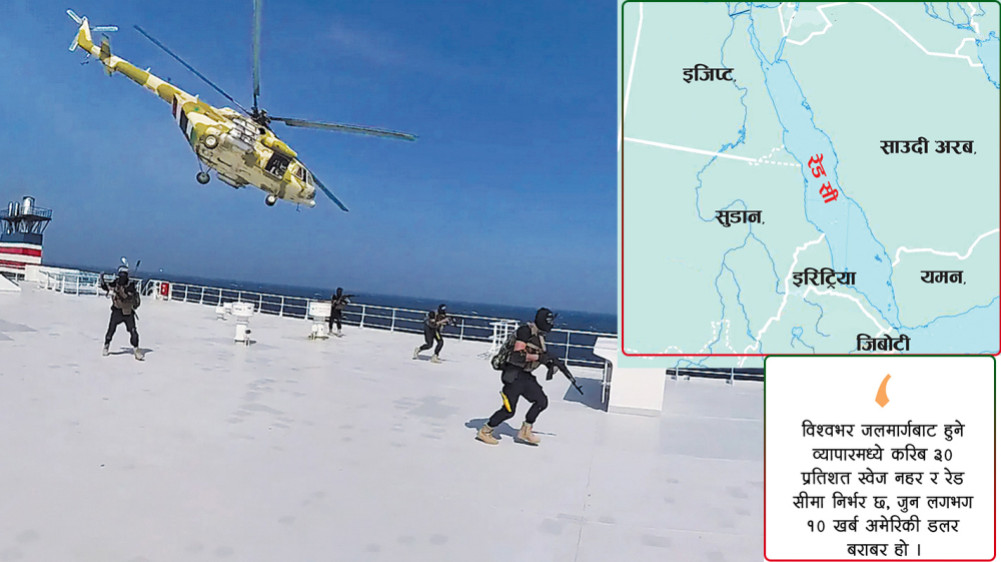
The Houthi rebels, who are aggressive towards Western countries including Israel and its close allies America and Britain, have been blocking cargo ships in the Red Sea since the start of the Israel-Hamas conflict.
We use Google Cloud Translation Services. Google requires we provide the following disclaimer relating to use of this service:
This service may contain translations powered by Google. Google disclaims all warranties related to the translations, expressed or implied, including any warranties of accuracy, reliability, and any implied warranties of merchantability, fitness for a particular purpose, and noninfringement.
Surrounded by the world's largest humanitarian crisis and considered the poorest country in the Arab region, Yemen is once again at the center of global discussions and multilateral regional conflicts. For nearly five months, Yemen's Houthi rebel group has repeatedly attacked cargo ships passing through the Red Sea, shaking global supply chains and economies.
The World Economic Forum has said that the outbreak of unrest in the Red Border, a major waterway used to transport goods between Europe and Asia, will have far-reaching effects on the economy along with inflation.
Stretching between Africa and the Middle East, the Red Sea connects the Indian Ocean with the Suez Canal and the Mediterranean Sea. The 2250 km long and 355 km wide Red Sea is bounded by the Indian Ocean to the south and the Suez Canal and the Mediterranean Sea to the north. It is also the shortest sea route between Asia and Europe. The Red Sea is bordered by Egypt, Saudi Arabia, Yemen, Sudan, Eritrea and Djibouti and has an area of 438,000 square kilometers.
Analysts report that the Suez Canal and the Red Border depend on nearly 30 percent of the world's trade by waterways, which equates to about $10 trillion. How big this number is, only about 19 countries in the world have a gross domestic product that is around or more than that number. According to Forbes data as of February 15, 2024, the world's seven largest companies, Microsoft, Apple, Saudi Aramco, Alphabet (Google), Amazon, Nvidia, and Meta Platform alone have a total market value of more than $10 trillion. About 12 percent of the world's trade by waterway is carried by cargo ships through the Red Sea and the Gulf of Aden. Among them, the share of cargo carrying fuel including oil is large.
 Currently, the ships have started to cross the longest route around Africa as the road is blocked after the attack of the Houthi group. Due to this, the delivery time and fees have increased. Due to delays in supply and high shipping charges, the consumer ultimately has to bear the price hike. It is estimated that this crisis will further complicate the existing economic pressure due to the Russia-Ukraine war.
The study of the think tank institutions has shown that this problem of red border has the most impact on India's capital goods and fertilizer supply. Crude oil, pharmaceuticals and shipping sectors will be moderately affected, according to Indian media. The report of Economic Times mentions that although the freight rate and insurance cost have increased, the supply chain has not been affected. Since Nepal's important supplies are dependent on India, it is seen that Nepal also has to bear the impact of the financial burden borne by India.
Nepalese exporters may have to pay high fares, Paras Kharel, Executive Director of South Asia Watch on Trade, Economics and Environment, told Kantipur. "A quarter of Nepal's exports go through the Suez Canal to Europe and America, including Turkey," he said. Due to this, the price of sunflower oil, which is one of the imports from Ukraine, may be expensive. According to reports, it is estimated that the price of Vasmati rice exported by India and leather, plastic and marmalade imported there may increase.
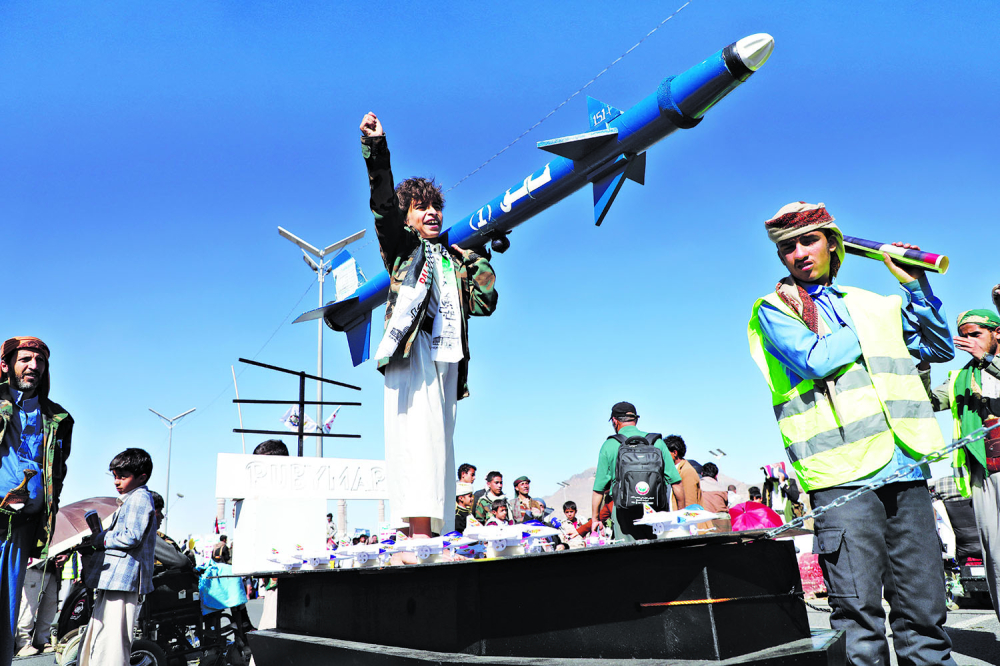 About 20 percent of India's trade goes through the Suez Canal. Trade experts have pointed out that India, Nepal's main trading partner, may face challenges in imports from West Asia and Russia due to the tension in the Red Sea. Shipping charges are estimated to increase by up to 40 percent as the Red Sea tensions continue. The Houthi rebels have said they will continue to attack ships transiting the Red Sea until Israel calls for a cease-fire with Hamas. The Houthis, who have been blocking the important waterways of the Red Sea, continue to try to stop international trade.
Hussein al-Houthi, a minority Zaidi (under Shia Muslim) sect in the north-western part of Yemen, founded 'Ansar Allah' in the 1990s. Ansar Allah, a Yemeni armed political and rebel group, fought for the independence of its region in northern Yemen under the leadership of Hussein. After Hussain was killed during the war in 2004, Ansar Allah was renamed 'Houthi'. The current leader of this group is Abdul Malik al-Houthi, the brother of Hussain.
The Houthi group, which views Israel as an enemy, calls itself an important part of the Iran-led 'Axis of Resistance'. The Axis of Resistance includes Syria, the Lebanese Shia rebel group Hezbollah, and various Palestinian rebel groups. The Houthi group currently controls the Yemeni capital Sana'a and the north-western territory. The internationally recognized government of Yemen is limited to the southern port city of Aden.
Since the start of the Israel-Hamas conflict last October, Yemen's Houthi rebels have been aggressive towards Israel and its close allies, including the United States and the UK. 1,200 people were killed in an attack on Israel by the Palestinian rebel group Hamas on October 7. In addition, Hamas took more than 250 hostages from Israeli territory after the attack.
In response, Israel launched a fierce attack against Hamas, and tension continues in the Gaza Strip. So far, 29,700 Palestinians have been killed in Israeli attacks. The Islamic extremist organization Hamas has ruled the Gaza Strip since 2007. The Gaza Strip has been blockaded by Israel and Egypt since 2007. Hamas aims to remove Israel from Palestine and establish an independent Islamic state.
 As the situation worsens, even the US administration continues to push for a ceasefire in the Gaza Strip. US President Joe Biden said on Tuesday that he was hopeful of a ceasefire in Gaza by the end of this week. However, for the ceasefire, it is said that Hamas has set some conditions, including the release of prisoners and the withdrawal of Israeli forces. The Israeli side has not mentioned anything about the ceasefire.
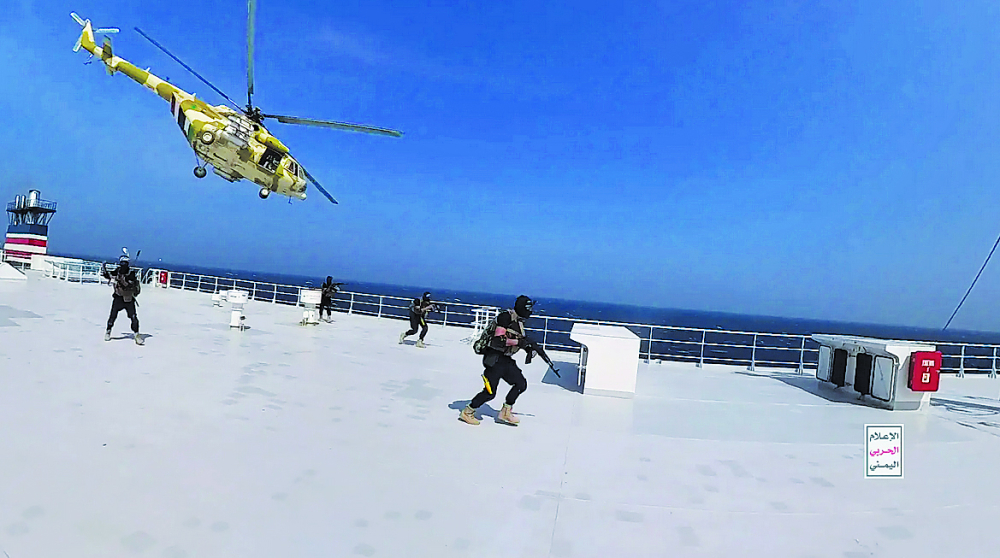
Since the October 7 attack, the Houthi rebels have been launching sporadic missile attacks on cargo ships passing through the Suez Canal. On November 14, for the first time, the leader of the Houthi group, Abdul, announced that Israeli ships passing through the Red Sea would be stopped. After that, on November 19, the Houthis captured the Israeli-owned cargo ship Galaxy Leader in the Red Sea using military helicopters. At that time, 22 people were also taken hostage.
After that, the Houthis began to launch continuous drone and missile attacks on ships sailing to American and Israeli destinations in particular. The Houthis say that if Israel stops humanitarian supplies such as food and medicine to Gaza, they will also stop all Israeli ships passing through the Red Sea. In response to a Houthi missile attack on a Norwegian ship on December 12, Israel announced that it would deploy its most powerful warship to the area.
The Houthi rebels, who have increased their attacks on commercial ships since the second week of December, attacked the Swiss-owned Mediterranean Shipping Company (MSC) and the Norwegian-owned Swan Atlantic on December 18. At the same time, drone attacks on American warships have also continued. The Houthis attempted to attack a Norwegian oil tanker on December 23 and another MSC cargo ship on December 26. As of December 28, Yemeni rebels have attempted to attack international ships passing through the Red Sea 22 times, according to the Reuters news agency.
After the US forces killed 10 Houthi rebels who tried to seize three boats on December 31, on January 3, the US, Britain and others issued a final warning to the Houthis not to attack international ships. "The Houthis will bear the responsibility for the attacks and the problems they have caused in the important waterways of the Arab region, which have seriously affected human lives, the world economy and uninterrupted trade," the warning said.
In response to the warning, the Houthis attacked US naval ships and commercial vessels on January 4, and carried out their largest attack yet on January 9. They attacked the Red Border with 21 drones and surface-to-sea missiles. The attack was the 26th attack on a commercial vessel, according to the US Department of Defense. After the Houthis launched a ballistic missile in the Gulf of Aden on January 11, the US and the UK launched a counter-attack on nearly 60 positions under the control of the Houthis.
According to international media, 33 international merchant ships have been attacked by the Houthis so far. 16 of them have been directly damaged. The Houthi leadership claimed that 48 ships from pro-Israel countries were attacked. Al Jazeera recently reported that almost half of the UK's shipping and trading companies expect the attacks to disrupt regular supplies and increase supply charges. British businessmen have the experience of shipping companies charging almost three times more when that route is broken and they have to go around the whole of Africa i.e. 'Cape of Good Hope'.
Importers, wholesalers and small entrepreneurs have also felt the vibration of the Red Sea problem in the UK and have gradually responded that this pressure cannot be sustained, according to the BBC news. Analysts say that although the Red Sea problem has only affected a part of the world's waterway trade, its ripple effect will gradually affect other parts of the world.