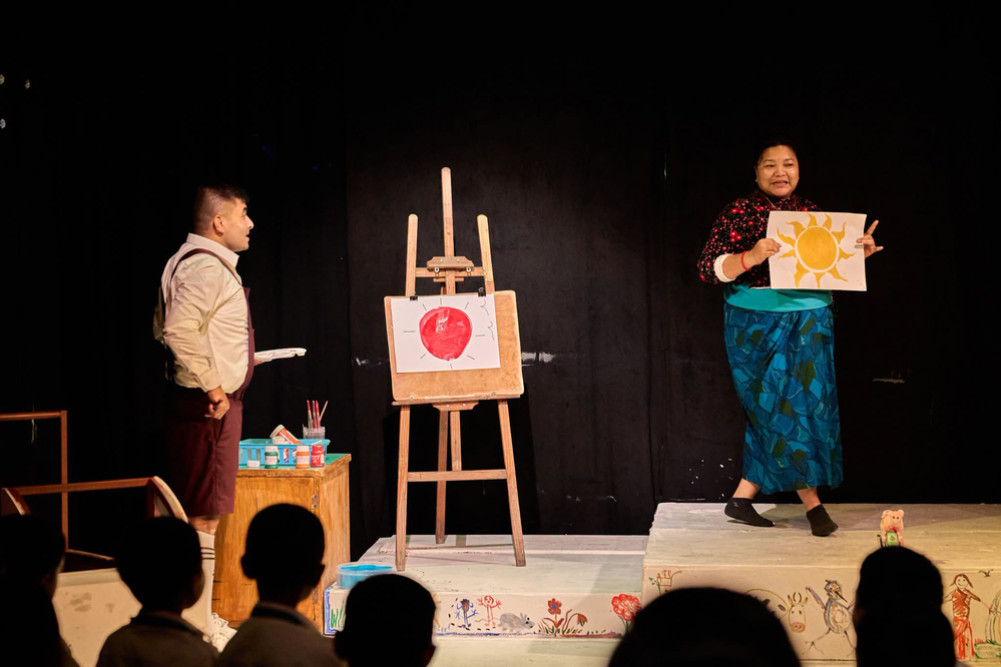
Amidst the dearth of children's plays, the play 'Gulio Sya' provides a beautiful but rare theatrical experience. The play inspires children to look at various aspects of learning, understanding, and overall parenting from a new perspective.
We use Google Cloud Translation Services. Google requires we provide the following disclaimer relating to use of this service:
This service may contain translations powered by Google. Google disclaims all warranties related to the translations, expressed or implied, including any warranties of accuracy, reliability, and any implied warranties of merchantability, fitness for a particular purpose, and noninfringement.
In Nepal, new plays are being staged in theaters every month. Due to the wide range of plays, the audience is treated to one or two new plays every week or fortnight. There are enough shows available for adults and older audiences to watch a variety of plays.
But in this situation, the state of children's drama is almost zero. Let's not even talk about professional children's drama. With annual children's drama festivals being held, school children are getting a chance to interact with the stage to some extent. But it is almost as if there are no professional children's dramas to watch independently. Amidst such a shortage, a beautiful but rare theatrical experience is provided by the play - 'Gulio Syaou'.
Children's drama - 'Gulio Syaou' is currently being staged at the Mandala Theater in Thapagaun, Kathmandu. This children's drama by children's literature creator and playwright Kedar Shrestha has returned home after a world tour of Mongolia. The play had its world premiere at the Wonderlust Festival in Mongolia.
The play Sweet Apple has presented the idea that children are thoughtful, they think differently, they are creative, curious and imaginative in a new way. That is through pictures, colors and interaction.
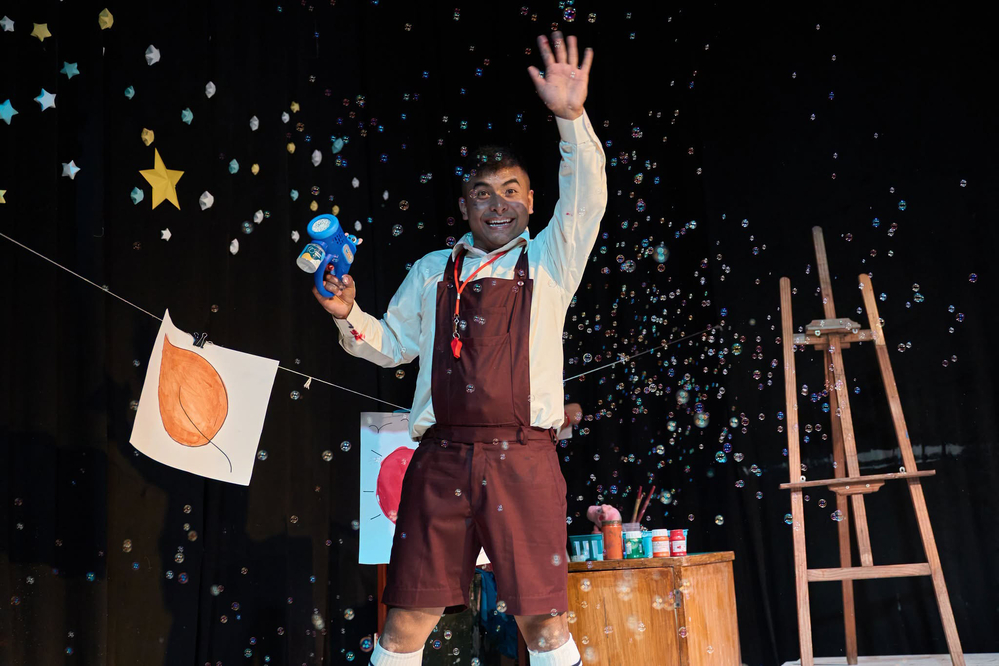
This is a play made not only for children but also for parents. The play emphasizes the need to assimilate their thoughts before imposing any burden on children. Nothing should be viewed and thought of in the same way. There are different, different aspects to everything. The central idea of the play is that everything can be viewed in a multidimensional way. The play inspires children to look at various aspects of learning, understanding and overall parenting from a new perspective.
‘A Sweet Apple’, which came out as a picture story a decade ago, has been adapted as a play by artist Shrestha. The play has chosen children and parents aged 3 and above as the central audience. There are no complex dialogues in this visual children’s play. The story of the play is told through visual communication and interaction, which is rarely found in Nepali children’s plays.
The play presents the relationship between children and parents from a child’s perspective. This interactive play clearly highlights the fact that children all over the world understand and accept the essence of small things and simple stories.
The play has been made interactive by connecting the home with the child audience. Before the play enters the house, red balloons are shaped like apples and decorated on the branches of trees in the outer courtyard. Children's books are displayed in the alley leading to the theater. Colorful paper stars are hung outside the theater. There is a gate with an apple cutout at the entrance to the theater. From the same gate, the audience embarks on a journey of sweet apples.
The decoration inside the theater is also similar. Colorful stars all over the walls. Soft yellow lighting that attracts children. Small chairs to sit in the hall.
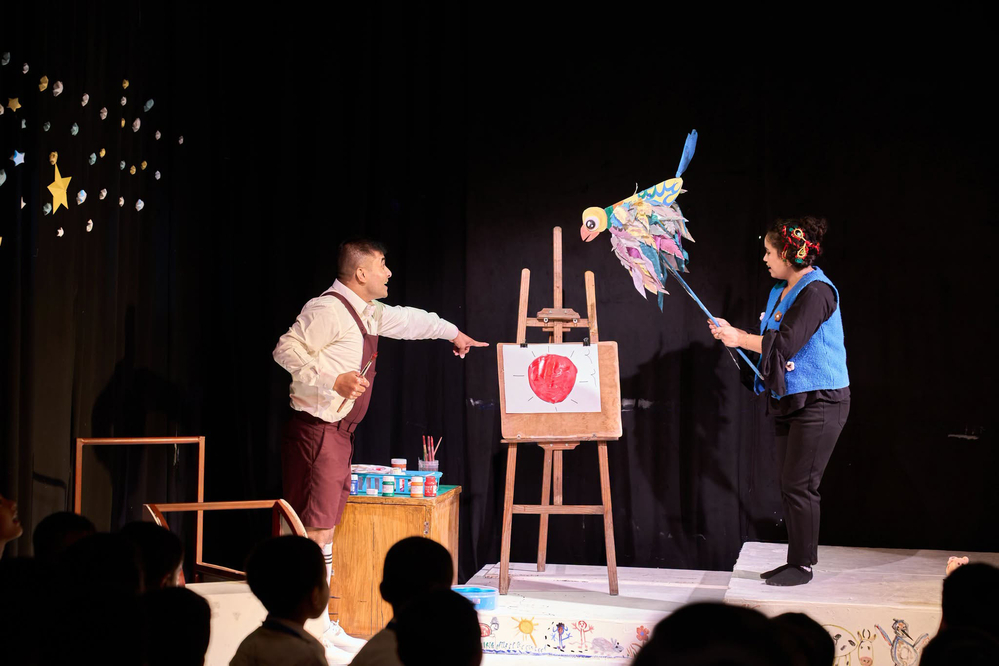
At the beginning of the play, the main character comes carrying a trolley with paint and brushes on it to paint the picture. He cannot lift the easel (canvas stand) and asks the child audience for help. To make the play more interactive, the main character talks to the audience about brushes, paints and other things throughout the play.
In order to make the conversation between the mother and son characters child-friendly and interactive, dialogues have been repeated and repeated in some cases. It is not complicated and boring. The child audience finds it very interesting and spontaneous. From the time the character feeds the child audience the food they eat, to the end, the pictures made by the main character are also handed over to the audience.
The story of the play
The story of the play is very simple. The time from sunrise in the morning to dinner at night has been taken as the timeline of the play.
The child who is coloring the picture puts red color on the picture of the sun.
The mother says that the sun is yellow.
He says that it was the morning sun and the first sun is red.
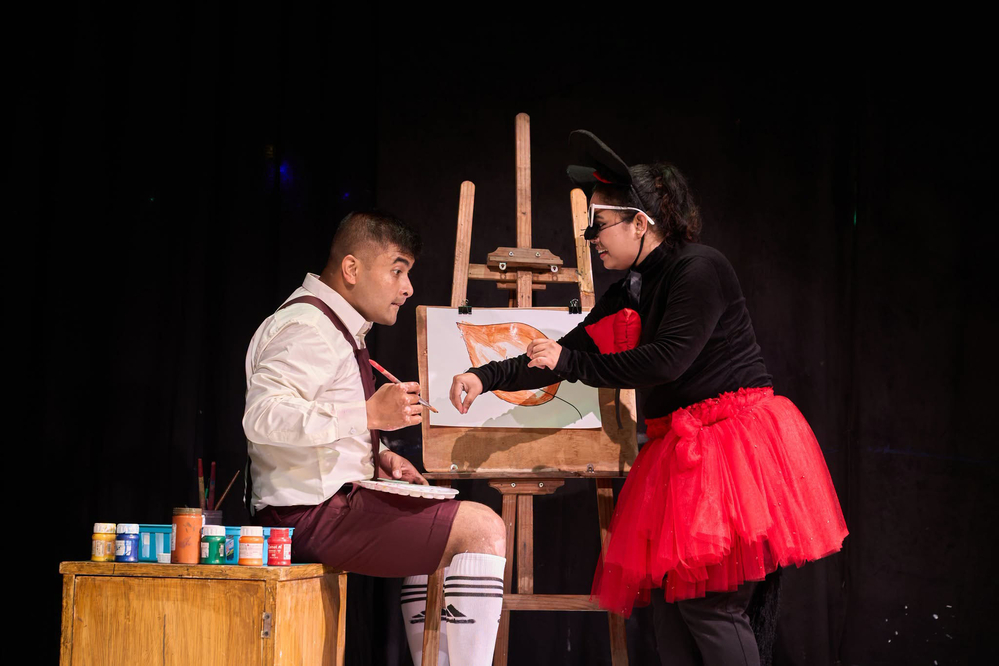
The child puts brown color on the leaf.
The mother says that the leaf is green.
He says that it is a dry leaf.
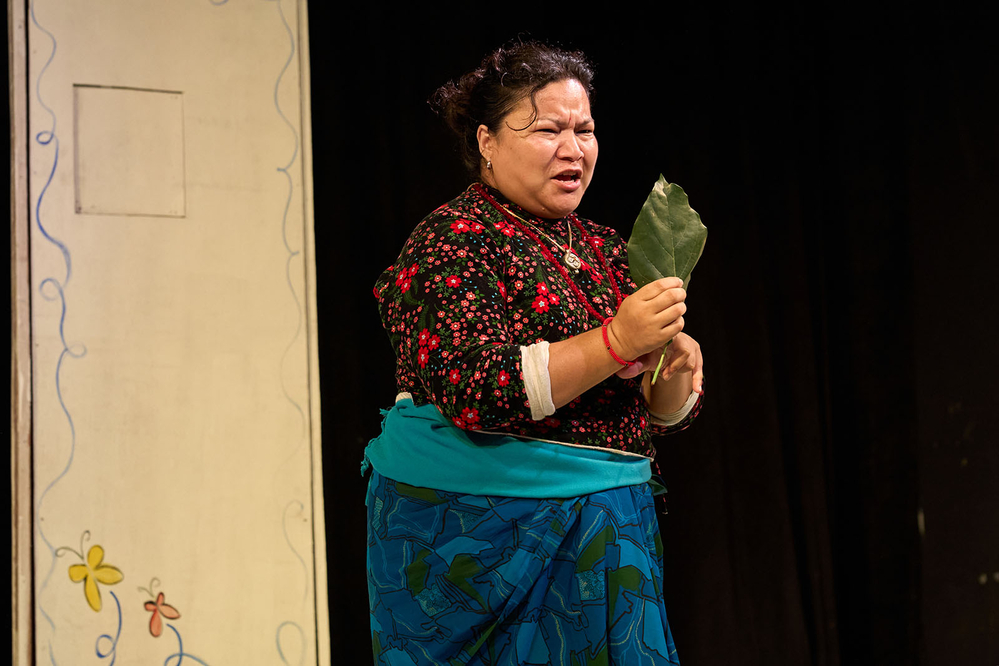
Similarly, the child paints the sky black.
The mother says that the sky will be blue.
He says that the black sky is the night sky.
After a while, the light in the auditorium starts to disappear and the light starts to shine on the picture he has made. The child audience starts singing Twinkle Twinkle Little Star... along with the music.
Finally, the child paints the apple green.
The mother says that the apple will be red.
He says that it is a raw apple.
The mother and son even have a conversation about the taste of raw and ripe apples.
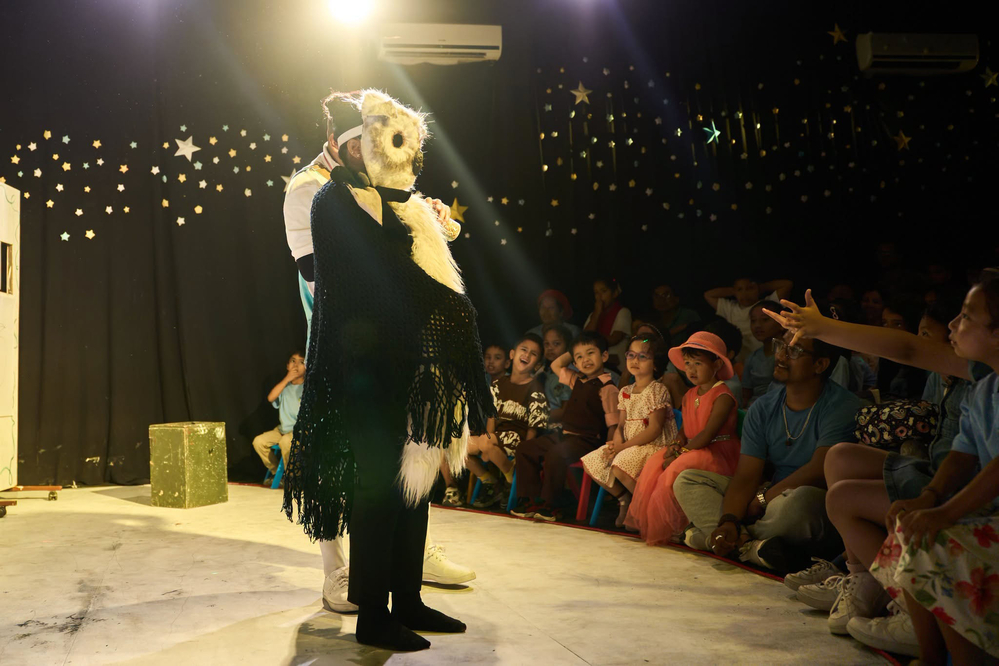
In the middle of the play, the characters of bees, birds, mice and owls come and add sweetness to the acting between the mother and son. The
play is simple, but it has been made very interactive by using pictures, colors, and a two-way dialogue with the child audience. The child audience is immersed in the play and interacts. Although the
play is short for the child audience, it seems to be very profound in terms of learning. The parents of the children seem to find the things shown in the play thought-provoking and memorable. What does the director say about the
play?
It is true that plays are not being staged for children above the age of 10-12 in Nepal. Director Kedar Shrestha wanted to make a play that could be shown to children in early childhood or pre-primary level. That is why he said that he has adapted the story he wrote into a play for children above the age of 3.
'Gulio Syawu' was first published by Room to Read as a picture book a decade ago. He claims that the book has been printed in Nepal alone in three hundred thousand copies. The Curriculum Development Center has also selected it as a companion book. It has also reached child readers in different countries of the world through Room to Read.
He said that child-friendly things have been kept in mind in the decoration and management of the playhouse from the outer courtyard to the interior, thinking that the children will feel like they have come home to a play made for them. He said, 'We have managed it in a child-friendly way to make it effective so that when children go to the playhouse, it is my zone, my space.'
At other times, there is no two-way conversation between the actors and the audience in the playhouse. It is dark in the auditorium, except for the stage, there is only darkness everywhere else. But the lights in the auditorium do not go out for the entire duration of the play, except for a few moments. Shrestha said that this was managed keeping in mind that there should be no fear or panic for children while sitting in the theater. He said that the play was designed keeping the child audience in mind.
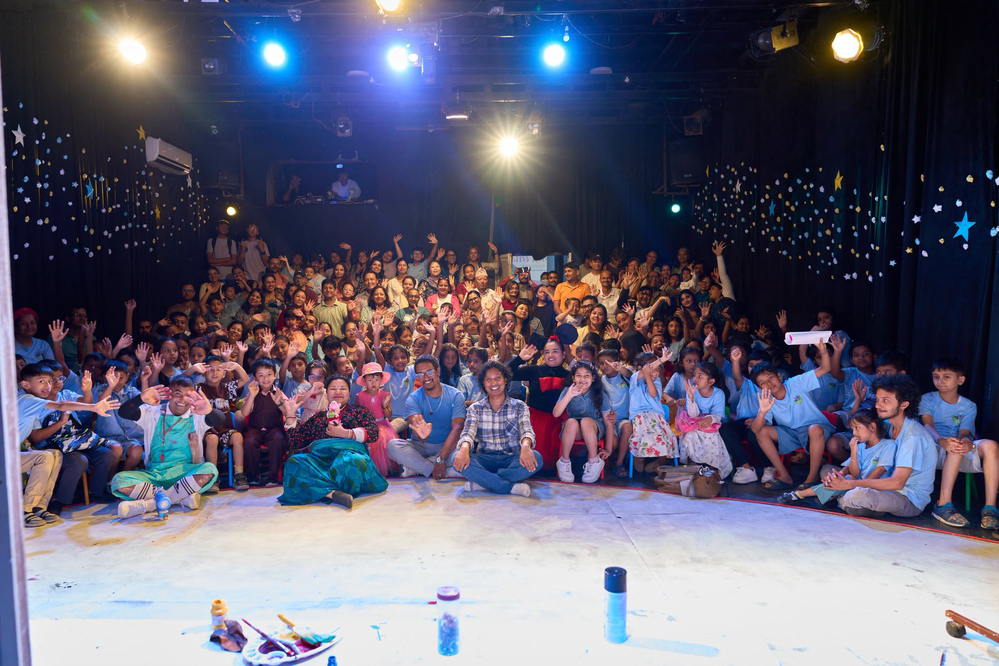
Children think differently. It is not parents and adults who live in stereotypes. Shrestha says, 'Children can also think, see and feel on their own. It is adults who create boundaries.' He said that this play will work in the 'Beyond the Box' style to assimilate different ideas and break stereotypes.
Children are emotional and their accessibility is deep and different. He said that there is a tendency for parents to prevent children from seeing, exploring, observing, etc. in the play. The child character has played a role in convincing the mother character in the play and that reaches the child audience through dialogue and convinces them too. Shrestha argues that our learning process is of a monitoring nature, but learning should be allowed to flourish freely like flowers in a garden. He says, 'Parents are the ones who make laws and rules. A child has his own logic in the learning process. A child should not prevent a child from discovering on his own.'
Drama He said that even at home, small children cannot and should not be bound by the rules like adults when it comes to showing plays to small children. He further said that there is no 'fourth wall' in this play. He said that this was done to make the play participatory. Even though the play is tied to its own script, the actors immediately adjust the dialogue of the play based on the immediate reaction of the child audience and give the play momentum. He said that this was done to make the play more engaging. A
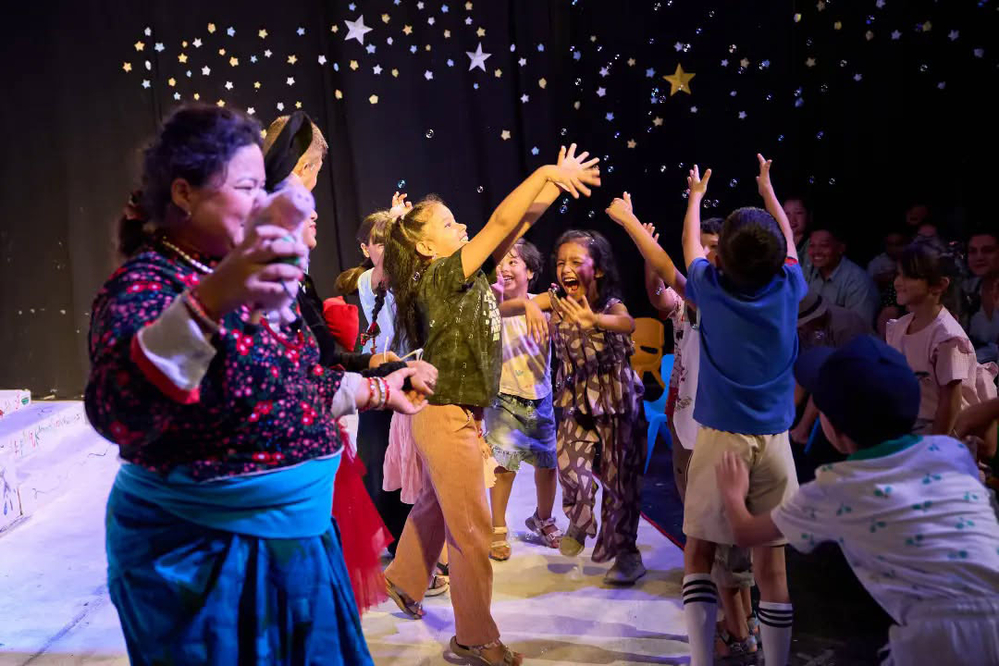
play should not be just a play. Shrestha said that the play was planned to be child-friendly from the writing stage with the intention of linking the play with education and learning. He said, 'I had written the play by imbibing the psychology and thoughts of children. When I wrote the play, I had written it as a child myself and had instructed the artists playing the play to go back to their childhood and become children.' He had given written instructions to the artists in the script of the play to inspire the child audience for dialogue and interaction.
Where did he get the idea to make the play interactive? When he saw parents bringing one-and-a-half-year-old children to the theater on trolleys at children's theater festivals in Europe, he wondered what it would be like to be able to do the same in Nepal. Keeping that lack in mind here, he created this play.
In fact, he said that the idea of showing a child-centered play that he had been active in theater for 18/20 years has now come true. He was very surprised by the overwhelming response of children and parents from the first show on the first day.
Children respond while the play is being staged, while parents respond after the play is over. One parent came to him to tell him about his childhood. 'When I was in school, I was punished by the teacher for making apples green!' He got emotional.
He also said that in the future, sweet apples will go on a long journey. He said, 'There are plans to take it to many schools and outside Kathmandu. And if it is successful, there is a plan to make a calendar and show it annually.'
This play is traveling to Indonesia this year and Korea next year.
He said that the story he showed in the play is a universal story. He claims that if we work by connecting the universal things that children accept with our aesthetics, good results will be achieved with little effort. 'Its presentation, style and language are unique. This is a play made in a visual language,' he said. He said that the play was made by carefully considering small but important things, understanding that children have their own logic. He added, 'The logic of children is freedom. If you watch the play as a child, you can find logic in even ordinary things.'
He also said that a small hall was chosen to make the play interactive.
Manish Byanju, Ilina Nakarmi and Sanjita Parajuli have acted in the play. Dev Neupane is the music director, while Jenny Sunuwar and Ilina Nakarmi are the prop makers. Sushila Laxmi Maharjan is the stage manager, while Bal Bahadur Rai is the lighting director.
The play, which will be staged at Mandala Theater from 25th Asad, is a joint production of Theater Center for Children (TCC Nepal), Theater Mall and Assetz Nepal. The play will run until 2nd Shrawan.