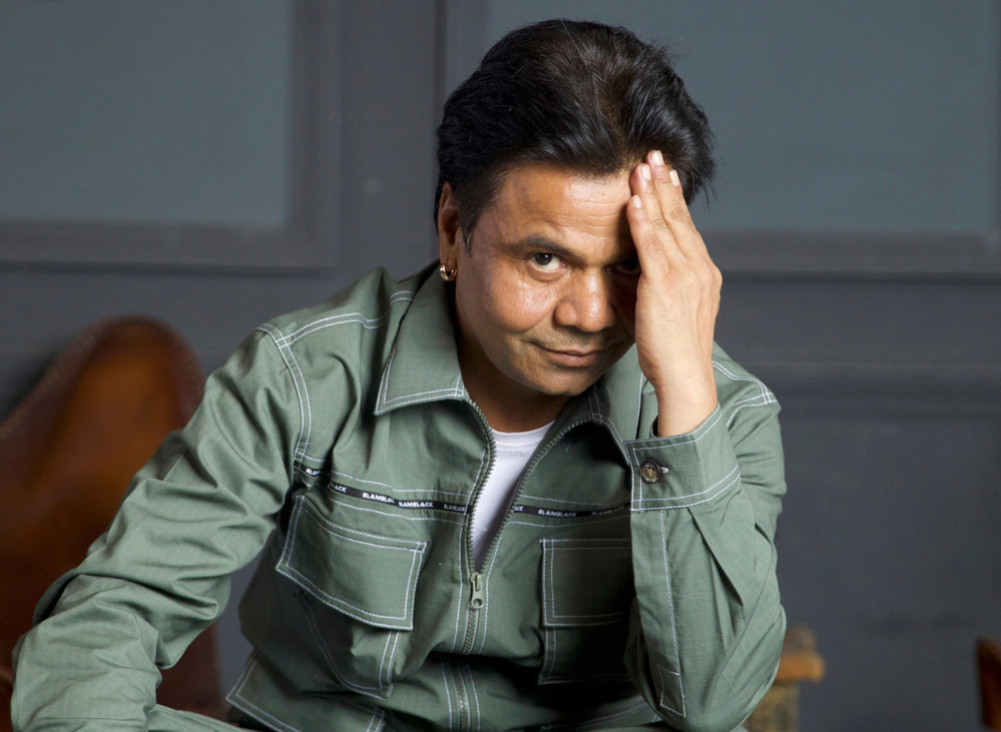
After being found guilty in seven different cases filed on charges of bounced checks issued after taking a loan of fifty million, actor Yadav has been sentenced by the Delhi High Court to three months in jail and ordered to pay a fine of seventy-three point five million.
We use Google Cloud Translation Services. Google requires we provide the following disclaimer relating to use of this service:
This service may contain translations powered by Google. Google disclaims all warranties related to the translations, expressed or implied, including any warranties of accuracy, reliability, and any implied warranties of merchantability, fitness for a particular purpose, and noninfringement.
The Delhi High Court has sentenced Indian actor Rajpal Yadav to three months in jail. The verdict was delivered by Justice Swarnakanta Sharma’s bench on Friday after he was found guilty in a check bounce case.
The Delhi High Court upheld the decision previously made by the lower court. Justice Sharma also ordered Yadav to pay the amount of the check. In this case, the court has also considered his wife Radha Yadav as a co-accused and ordered her to settle the amount as well.
In its verdict on seven different check bounce cases, the Delhi High Court found actor Rajpal guilty and sentenced him to three months of simple imprisonment and ordered him to pay a fine of INR 10.5 million in each case. Since there are seven cases, the total fine amounts to INR 73.5 million. If he fails to pay this fine, he will have to serve an additional six months in jail.
As the sentences for all cases will run concurrently, he will have to serve a total of three months in jail. The High Court reduced the six-month sentence previously handed down by the lower court to three months.
Additionally, the court has ordered his wife Radha Yadav to pay a fine of INR 5.51 million in each case. However, the High Court has given her two months to appeal this verdict to a higher court (Supreme Court) and has stayed the execution of the sentence during this period.
In 2010, Rajpal Yadav had taken a loan of about INR 50 million from Murli Projects Pvt. Ltd. for the film ‘Ata, Pata, Lapata’. However, after the film flopped at the box office, Yadav faced financial difficulties, which prevented him from repaying the company’s loan on time. Although Yadav repeatedly assured repayment, he was unable to do so. Even after the lower court ordered him to settle the amount on time, he failed to comply.
In 2018, a Delhi court had also found Rajpal guilty in the same matter and sentenced him to six months in jail. Rajpal then appealed to the Delhi High Court. The High Court stayed the Delhi court’s verdict and proceeded with further action. Rajpal also repeatedly stated before the court that he would repay the amount, but he was unable to do so. Subsequently, the court ordered him to surrender to jail authorities this past February.
After hiding for some time, Rajpal finally surrendered in February and spent a few days in jail. Later, after posting bail of INR 15 million, he was released on interim bail. Even during this period, he was unable to repay the loan. The Delhi High Court has ordered him to pay the petitioner INR 10.5 million in each case. In addition, the court has ordered Rajpal to pay the petitioner INR 10.475 million and INR 25,000 to the state. The court has also ordered Rajpal’s wife Radha to pay the petitioner as well.
During the hearing, Justice Sharma noted that INR 22.5 million had already been paid to the petitioner and ordered that this amount be adjusted after determining the final fine and compensation.
If actor Rajpal is dissatisfied with the Delhi High Court’s verdict, he will have two months to appeal against it. After the Delhi High Court’s decision, Avinash Sikka, the lawyer representing Murli Projects, the company that filed the case against actor Yadav, said that before the final verdict, Yadav had stated he would rather go to jail five times than pay even a single rupee.
On the other hand, Bhaskar Upadhyay, the lawyer representing actor Yadav, alleged that his client had been punished repeatedly for the same offense. “Even before the case reached the High Court, we had already paid INR 45 million,” lawyer Upadhyay told journalists, “but so many cases have been filed that in some, the fine has been set as high as INR 115 million. However, even in civil judgments, the fine in such cases does not exceed INR 105 million.”
Yadav’s lawyer Upadhyay argued that the High Court only considered the INR 22.5 million paid to the petitioner after the case reached the High Court, and that the verdict made no mention of the amount paid before that. He said, “The INR 45 million we paid before the case reached the High Court has been rendered null and void.” Bhaskar Upadhyay also stated that he had not yet received the full text of the verdict and would proceed after evaluating everything. He said, “We have two months to appeal this verdict, and we will definitely appeal against it.”