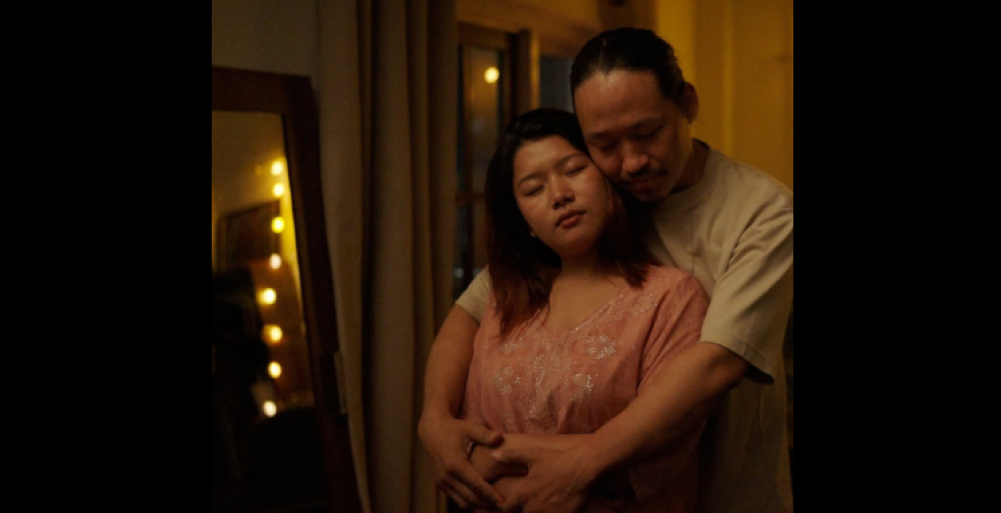
The play 'The Taste of Saleroti', which is being staged at Kausi, will run until Asad 28.
We use Google Cloud Translation Services. Google requires we provide the following disclaimer relating to use of this service:
This service may contain translations powered by Google. Google disclaims all warranties related to the translations, expressed or implied, including any warranties of accuracy, reliability, and any implied warranties of merchantability, fitness for a particular purpose, and noninfringement.
The 'Kind Tree' is standing right in the middle of the stage. Where does that tree always come to ask for something? Sometimes it comes to play, sometimes to eat the fruit that grows there. Sometimes to find coolness in the shade, and sometimes to make a boat from that tree. The boy always asks the tree for something. The tree never tires of giving, it keeps giving happily. Then the tree also has that amazing power, it can fulfill the desires of the unfulfilled by giving its parts (fruits, branches...)!
Exactly 8 years ago, Akanksha Karki also handed over the Kausi Theater (Katha Ghera) to Nepali theater lovers, telling the story of this same tree. As it enters its 9th year, what has this theater not given to the stage like the Kind Tree? Sometimes it continued to create a continuous debate on women's issues, sometimes it gave a platform to experimental voices. It not only showed new talents the path to acting, it also spread its branches in the film industry - sometimes as an artist, sometimes as a casting director.
The circle of stories opened at Kausi in Teku kept telling new stories, and also increased its own audience on the stage. Akanksha stood strong like a tree standing in the male-dominated theater. Whether it was a group of theater artists who went viral when she reached Karnali or 'Elephants in the Fog' that reached Cannes, Kausi has been seen somewhere or the other. Growing like a green tree. Kausi's steps, which continue to spread greenery in this journey of theater that is not yet strong professionally, are truly a 'case study' for those who survive in such a field.
This time, Kausi has given a new director along with a new story. The play 'The Taste of Cellaroti', selected under the 'Production Grant' announced when Kausi turned 9, has been on stage since Asad 7. This play is the debut direction of poet and artist Milson D. Chamling. The center of the play is the story of a couple who are suffering because of their children. Chamling has shown the complexity of human relationships through the play. In this story told in 3 parts, the same couple appears as a couple. However, the pain of having a child and losing it emerges as the main theme. The actors are Vedang Rai and Prayas Bantawa Rai.
The first story begins with the Gen-G movement. Before the story begins on stage, scenes of the demonstration are shown on a white screen. That too of the incident that took place in front of Singha Durbar during the Gen-G movement. Amidst the loud noise of the protesters, children's laughter is heard in the background. Then Mhisamma (Pain) and Somyok (Effort) appear on stage. They are standing in what looks like a kitchen to the left of the stage, accidentally making a cell. On the other hand, Mhisamma is silent, standing next to an empty chair, as if lost in thought. On the pretext of a cell, Somo wants to get involved there, Somyok also wants to stop Somo. Even a cell takes time to cook. Suddenly, the two start talking to each other. Slowly, the tension between the two comes out, when Mhisamma asks Somyok, 'Why didn't you go to school to pick up our child during the Gen-ji movement? Where were you that day?' Somyok starts panicking, Mhisamma asks questions after questions. Unable to resist the onslaught of questions, Somyok tells the reason why he did not reach school that day.
Then the complex relationship between the two is revealed! What did Mhisamma want to hear from her ex-husband after waiting for her current husband downstairs? The story of this first part of the play ‘The Test of Cellaroti’ is very heartbreaking. Director Milson has beautifully portrayed the complexity of married life and the pain of losing a child through this story. However, some scenes in this part are very weak. For example, in the scene where she is telling the reason for not reaching school, whether it is a conversation or a confession, there is no credibility in it. When that topic suddenly enters the story, the scene does not seem realistic.
Next, director Milson has added a very large period in this play to convey the pain of the couple who lost their child. Gen-G movement along with the People's War. The third story also includes the story of creation that the Kiranti believe in. In the third part, the couple who have lost their child are seen at the center. However, the current situation is somewhat different. The pain and effort of the husband and wife who have lost their child during this time, showing the time of the People's War, are represented in this part. More than losing their child, this part encompasses the pain of waiting. Be it the mother who is waiting for her child by lighting a lamp at the door of the house or the father who has given up hope. The third story shows the pain of the family waiting for their child who was lost in the People's War. Although this couple lost their son in the midst of the war. However, they cannot accept that truth. They keep on hoping that the son they ran away to save from the Maoists will return home one day. That is why the mother character keeps looking at the road with the help of the light of a lantern. That wait is visible in her eyes. However, this couple knows that their son has walked the path of never returning. But the swollen eyes and the limp body do not accept this truth. The mentality of the family who lost their children in the war, their waiting and the turmoil are shown through them.
In this play, the director has not known how to relate big events to tell such a delicate story. The director has captured big events but cannot reach the depth of the subject matter. He tells the story sitting on the surface. The myth of 'Selroti' is really mixed into the story and characters in a sweet way like Selroti. The director tries to convey the same sweetness of Selroti through big events, but it does not flow in a simple way.
Finally, the story of Kausi. While giving everything the little boy asks for, one day the 'kind tree' turns into a stump. But still, the tree happily gives everything. Kausi is also happy that the theater has once again given a new director. Trusting the director who wants to tell the story of such a large canvas, giving this stage is the form of Kausi's 'kind tree'. Kausi never seems to get tired of giving the stage, talent and new stories in this way. But it seems that it has become a tree by spreading its branches and becoming more and more slender.