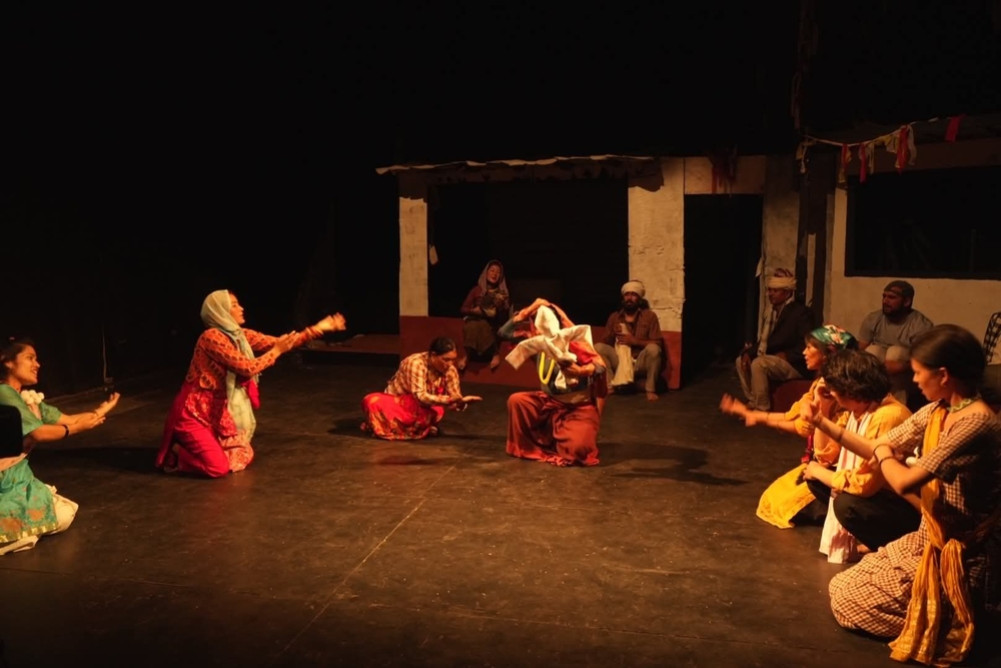
The play 'Achheta', which focuses on the lives and problems of the Dalit community, has exposed the suffering, social discrimination, and lack of health services in remote villages of Karnali.
We use Google Cloud Translation Services. Google requires we provide the following disclaimer relating to use of this service:
This service may contain translations powered by Google. Google disclaims all warranties related to the translations, expressed or implied, including any warranties of accuracy, reliability, and any implied warranties of merchantability, fitness for a particular purpose, and noninfringement.
Karnali's story, Karnali's artist. The same language, the same love. Superstition and hospital. And the caste system. The play 'Achheta', directed by playwright Govinda Sunar, has arrived in 'Kathmandu' carrying such a strong issue of Karnali.
This play, staged at Shilpi Theater in Battisputali, depicts the issues and pains of a couple living in a remote village of Karnali. This play brings the problems faced by the people of Karnali to the center and creates a debate. Why is Kathmandu still far away for Dal Kami and Geeta, who live in a remote village?
Dal Kami (Jhaken Bisi) is a Dhami. The people of the village worship him. He is a sculptor by profession. He makes gods by jumping. That is why they believe in God separately. His wife Geeta (Susmita Kunwar) is pregnant. Geeta is worried about one thing, won't something happen to the baby growing in her womb? Why is she always in this same room? This hour-long play reveals its secret. What kind of problems will this couple face with the birth of a newborn baby? The story of Dal Kami and Geeta keeps the audience hooked to the play.
'Achheta' has raised questions about the 'hypocritical society' that still believes in the caste system. Dal Kami belongs to the Dalit community. He is a god to the people of the village. The god who makes the deity has great faith in Dal God. How can it not happen? The deities he makes are decorated in their homes by ordinary citizens of the village to leaders of big parties. Those same deities listen to their wishes. But the image of the deity is the beautiful aspect of this play. The deity made by Dal Kami is decorated in the house and courtyard of the village leader. However, when it reaches the so-called upper caste community, the class of the deity also rises. Dal is not even allowed to sprinkle Aksheta on the deity he made himself, let alone touch and bow down to it! There is a powerful scene in the
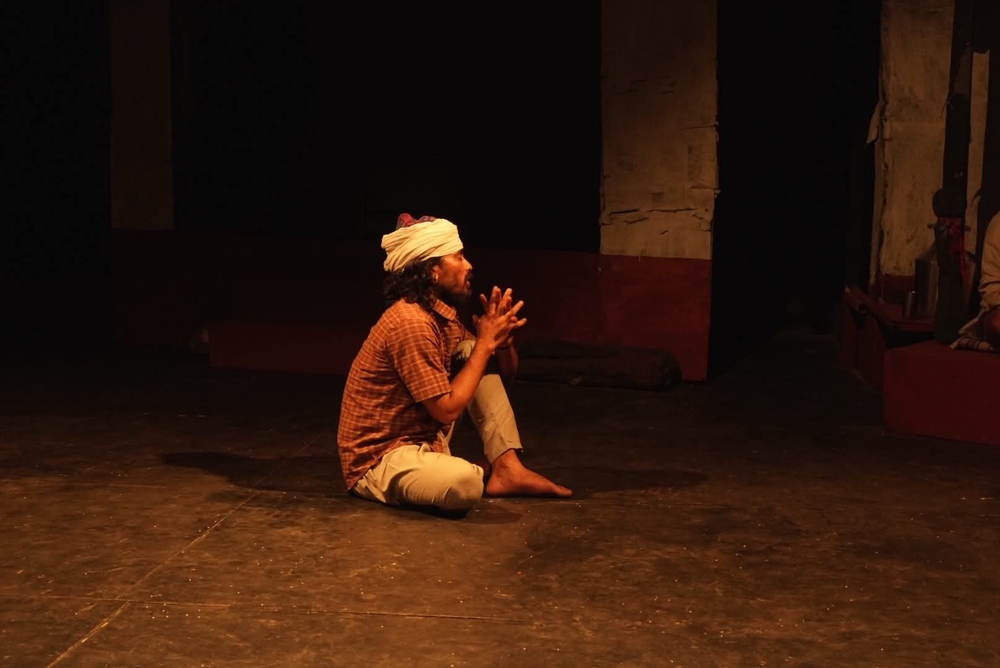
play where Dal goes to the deity he made to sprinkle Aksheta. However, he is killed in the courtyard of the temple. The Aksheta in his hand is scattered. At that moment, the ward chairman of the village who is worshipping comes to him and says, 'Don't tell anyone about this incident that happened here.' The ward chairman says that Dal will offer the Aksheta to the deity, but sends him back from the courtyard.
As soon as Dal disappears from the courtyard, he suddenly tells the priest to purify himself. This scene is an attack on the caste system entrenched in Nepali society and the hypocritical society like the ward chairman. This quagmire of the caste system is shown through the Dal. As soon as Dal reaches the temple, he sits at the door most of the time. He is not allowed to enter the temple. He does not directly hand over the deity he has made to the ward chairman. The idol is first placed on the ground, and only then is the ward chairman held. The temple's offerings are also distributed outside. Whenever the deity ascends above Dal, people of all castes start worshipping him, and everyone forgets his surname. As soon as he returns to normal life, he is subjected to untouchability.
Superstition and access to hospitals are strong issues raised by the play. In particular, this play has also questioned the superstition of people who believe in God for everything. For example, every time in the play, Dal Kami goes to God to bow his head. His wife Geeta keeps asking him to go to the hospital, but he goes to the temple to bow his head. This not only reflects the superstition within him, but also shows the health problems existing in a province like Karnali.
In particular, there is a big building in the name of the hospital in the district headquarters, but the doctors do not live there. The doctors live in the city. This system of having to go to the city for treatment also raises questions about access to city-centered hospitals. Dal Kami and Geeta do not have the financial status to reach the city. However, people from the so-called upper caste have the financial status to go to Lucknow for treatment. But, poor Geeta cannot even dare to go to Kathmandu for her baby's treatment.
Geeta keeps requesting her husband to take her child to the hospital. Throughout the play, wife Geeta keeps questioning her husband about his superstitions - neither the gods you have created will work, nor the people you have earned will work!
Khas language has added sweetness to this play. This Khas language also transports the audience to Karnali. The set design made on the stage by Shilpi looks no less than any house in Karnali. A house with a roof, and dadya (wooden idol) installed in the houses. The audience easily reaches Karnali with the clothes worn by the women and the love. The language and theme used in this play have added a new dimension to the diversity of the stage.
There are gaps in the sound that could be made better. The sound used to make some scenes serious does not connect with the characters and the situation . However, whether it is the Asare Bhaka sung in Asar, or the songs sung during the funeral rites, the songs sung by the actors across the stage in unison connect the audience directly to Karnali .
Play: Achheta
Location: Shilpi Theater, Battisputali, Kathmandu
Time: 5:15 PM
Additional shows every Saturday: 1 PM
From Jestha 1 to 25