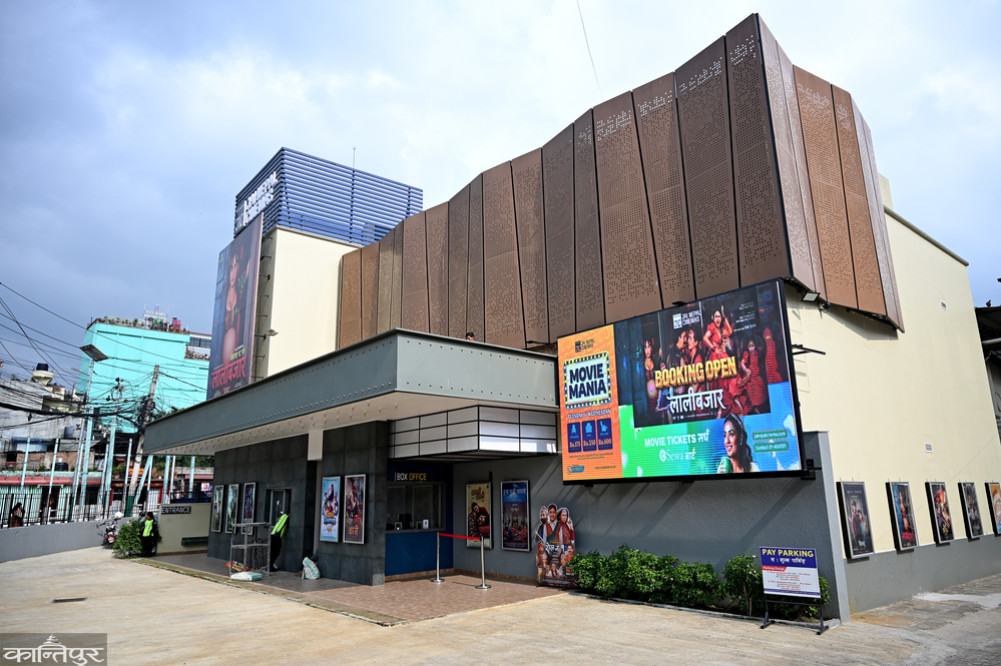
'Jai Nepal', which was closed for 55 months due to the Corona pandemic, has been reopened since last April. From the then King Mahendra to Birendra and members of the royal family used to come to watch the film.
We use Google Cloud Translation Services. Google requires we provide the following disclaimer relating to use of this service:
This service may contain translations powered by Google. Google disclaims all warranties related to the translations, expressed or implied, including any warranties of accuracy, reliability, and any implied warranties of merchantability, fitness for a particular purpose, and noninfringement.
Neer Shah lived in Dnyaneshwor. At that time, there was a Jai Nepal Hall in Hattisar nearby. He used to regularly visit the same hall to watch movies. In 2022, Nepal's first film 'Aama' was also shown in this hall. After that, Neer would run away from school and go to Jai Nepal to watch the same movie. He had made a friend of the 'Guje Dai' who lived at the gate, and he could enter without buying a ticket. Sitting in the 'Fourth Class', Neer watched 'Aama' in Jai Nepal for a month. 'Jai Nepal Hall played a major role in awakening my love for films,' adds director Neer Shah, reminiscing about six decades ago, 'After watching it for a month, I had memorized everything from the dialogues of the film Aama in my childhood mind. Perhaps my love for films began from that time.' After
, Neer entered Nepali films as an actor. His career, which started with the film 'Parivartan' directed by Hira Singh Khatri, progressed through 'Sindoor' and 'Badlindo Akash'. His film 'Kusume Rumal' celebrated its 51st day of screening at Jai Nepal Hall. That is why Jai Nepal has a special significance for Neer. 'A young boy who was attracted to this area after watching a film because his uncle let him in, was able to celebrate the 51st day of the film he acted in here,' says Neer, 'This place is truly a source of inspiration for me.'
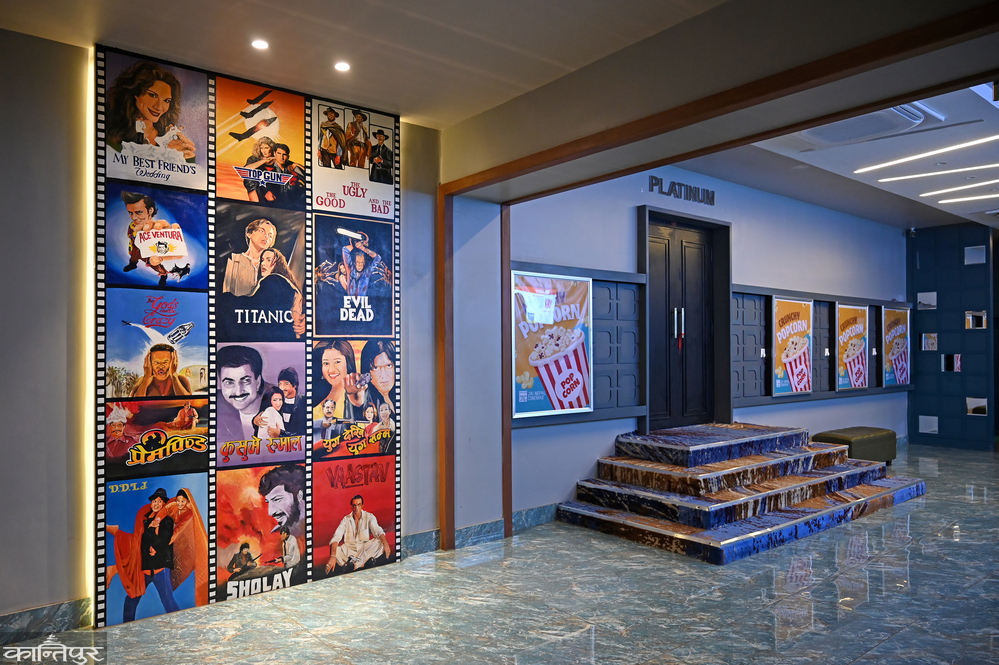
But on 4 Asho 2078, Neer heard the unpleasant news that Jai Nepal Hall had closed. The closure of Jai Nepal Hall, which had been operating since 2009 by showing the Hindi film 'Shri Ganesh Mahima', was not just a matter of a hall for him; Jai Nepal, which was connected to his childhood memories, also carried the history of the Nepali film industry. ‘It was very painful when such a wonderful cinema hall that was in my heart collapsed and became a ruin,’ he said in a recent meeting.
Jai Nepal has finally reopened after being closed for 55 months since 18 Baisakh 2083. This news is the most heartwarming for Neer. The group of Sanjay Vastav Shrestha (Chairman), Rupesh Shrestha (Managing Director) and Harikrishna Lohala (Board Director) have brought Jai Nepal Cinemas into operation in a new style. ‘We have brought it into operation to preserve the history of this hall. For today’s 18-30 year old audience, this hall is a piece of history,’ said Chairman Shrestha, ‘We have to do business while preserving history. This hall is a museum for Nepali films.’
Jai Nepal was initially opened by Ashok Rana. He ran it for a long time. In the meantime, businessman Nirmal Pradhan took over. After him, Team Quest ran this hall under ‘QFX’ for almost 20 years. At that time, QFX had brought this hall back into operation in partnership with Nirmal. It is still owned by Rana’s three brothers.
In fact, initially, Hari had started repairing the hall. The old structure, which had reached a dilapidated state, would have cost a lot. Then Hari sought help. On Rupesh’s advice, Sanjay joined. He felt responsible for preserving the hall near the house where he grew up watching films. Businessman Sanjay believes that another reason for investing in the hall in this way is his memories with Jay Nepal. Sanjay also watched many films in this hall during his childhood.
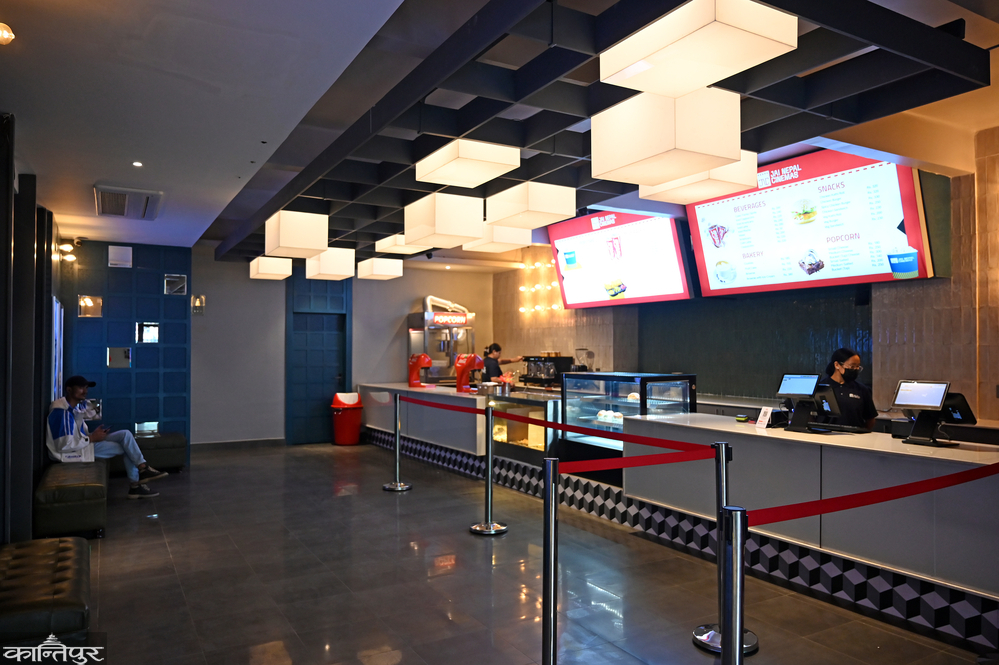
Sanjay said that they have taken over the operation not only to preserve the old structure and these memories, but also to preserve the cultural history of watching films preserved by this hall. Sanjay's group knows that multiplex halls are now dominating the market. This was also the main reason why QFX closed single-screen halls like Jai Nepal. However, the operator claims that they have built Jai Nepal with the services and facilities of a multiplex hall, with a Mac sound system and modern seats, to meet the same challenge.
Sanjay says that it cost two halls to rebuild this hall, which can accommodate 306 spectators. In 2001, QFX spent 28.5 million when it rebuilt this hall. QFX director Nakim Uddin said that they took over this hall in 2001 and renovated it in 1 year. ‘At that time, this was the oldest hall in Nepal,’ said Nakim. They renovated the old structure with the latest sound and projection and put it into operation in 2002. After running well for about 10 years, Nakim says that business was declining.
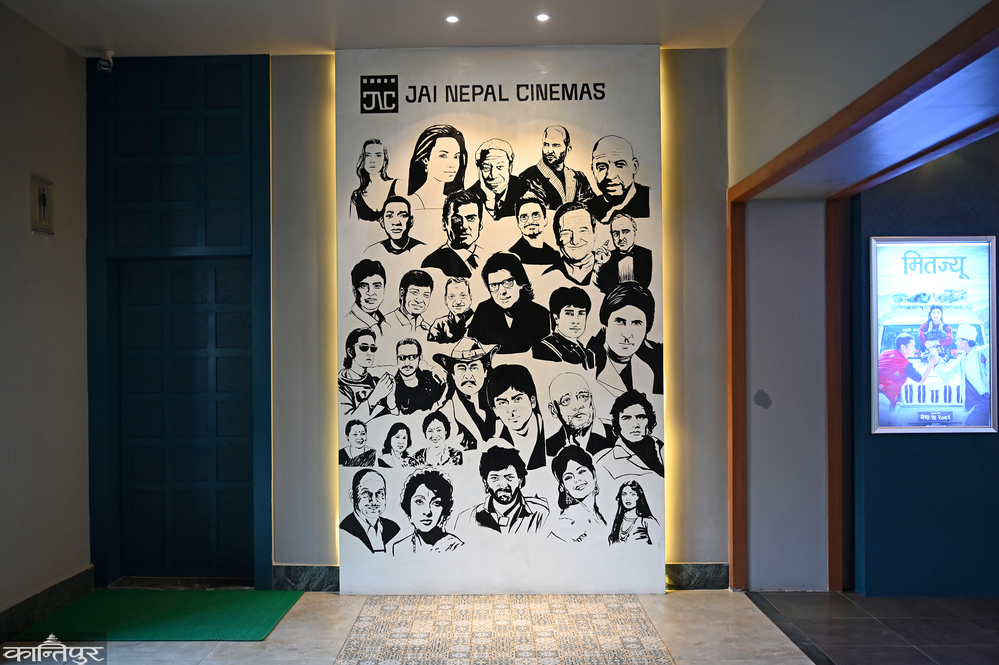
‘Since the year before Covid, it was seen that the audience preferred to watch movies in multiplexes.’ We saw that they chose single-screen theaters only when they could not get tickets,’ said Nakim. ‘After the business gradually declined, there was no option but to close it.’ Then QFX left ‘Jai Nepal Hall’. While the Nakims of QFX, which has become the country’s largest film exhibition chain, learned the cinema business from Jai Nepal Hall. The QFX brand started from this hall. ‘We did not know the cinema business at all, we learned the business from here. We were able to take the QFX brand to the whole country.’ We became bigger from here. That's why Jai Nepal is a learning project for us,' said Nakim.
The Nakims later also took over Kumari Cinema. After opening a hall in Civil Mall in 2010, they brought all the halls under QFX. At that time, Nirmal Pradhan also took a 10 percent share. According to Nakim, Nirmal Pradhan ran the old Jai Nepal before them.
When the hall was closed, many people asked Ashok for rent. They wanted to demolish the hall and build another commercial structure. However, Ashok did not want to demolish this hall, which is associated with the history of Nepali film, and rent out the land. Ashok had seen that the then King Mahendra, Birendra and members of the royal family used to come to watch films in this hall. 'Even to protect a hall with such historical memories, he did not want to allow another structure to be built in this place,' he says.
Photos: Angad Dhakal/Kantipur