In a genre, with the audience's fear, producers are creating a wave of similar films. A new trend has started since the film 'Purna Bahadur's Sarangi', which was released in 2081. The idea that 'crying films attract the audience' is having an impact on recent films. After the hit 'Paraan' released in 2082, this trend is increasing.
We use Google Cloud Translation Services. Google requires we provide the following disclaimer relating to use of this service:
This service may contain translations powered by Google. Google disclaims all warranties related to the translations, expressed or implied, including any warranties of accuracy, reliability, and any implied warranties of merchantability, fitness for a particular purpose, and noninfringement.
The Nepali film industry, which has been stuck in the same formula for a long time, has been presenting different and new stories for the past decade and a half. Then, the stories of different communities and geographies started to be shown on the screen. Despite the diversity in the stories, the Nepali film industry has not been able to abandon the traditional trend.
With the audience in one genre getting bored, the producers are making a wave of similar films. A new trend has started since the film 'Purna Bahadur's Sarangi', which was released in 2081. The idea that 'crying films attract the audience' is having an impact on recent films. Since the release of 'Purna Bahadur's Sarangi', filmmakers are seen trying to make films that make the audience cry in the theater. After the hit 'Paran' released in 2082, this trend is increasing.
The action genre, which had been dormant for many years, was revived with remarkable business by the film '12 Villages', which was released in 081 Dashain. After ‘12 Villages’, action film production started to increase rapidly. But the ‘larger than life’ films made since then like ‘Balidan’, ‘Narasimha Avtar’, ‘Ram Naam Satya’ could not do significant business. While films of different genres are being made every year in the neighboring Indian film industry, in Nepal, makers are not able to get used to different genres except family and social genres.
Looking at the trend in India in the last two years, ‘dystropian sci-fi’ films are being made by fusing mythological stories and cutting-edge technology like ‘Kalki 2898 AD’. ‘Mystical Fantasy’ genre ‘Kantara: Chapter 1’ is also being made at the same time by weaving local folklore and divine power. ‘Horror-comedies’ like ‘Stree 2’, ‘Munjya’ and ‘Bhoot Bangala’ are continuing their commercial success. Social satire films like 'Lapta Ladies' are also being made in India, while 'courtroom dramas' like 'Jolly LLB 3' have already created a commercial brand.
is not without attempts in new genres in Nepal recently. Sci-fi films like 'Farki Farki' were made in 081 and 'Eklo' in 082. Both films were not commercially successful. The crime thriller social drama 'Abhimanyu' was released in 082. This too was not commercially successful. The film 'Angela', based on the story of footballer Angela Tumbapo in 081, filled the gap in biopics in Nepal. This film did business of over 80 million.
The romantic adventure-drama 'Jerry on Top' released in 082 also did business of over 120 million. The magical realism 'The Red Suitcase' released in 080 was also a new film in Nepal in terms of genre. Although the film received positive reviews, the business at the box office was not pleasant. The social psychological thriller 'Boksi Ko Ghar' released in 081 not only received positive reviews, but also did good business. The film did business of over 100 million.
Horror films are also being made in Nepal from time to time. 'Kagbeni' in the 'supernatural thriller/horror' genre released in 064 is the first film to introduce digital technology in Nepali films. Horror films like ‘Sunkesari’ (075), ‘Ghar’ (076), ‘Kathputali: The Puppet’, ‘Mummy’ (081) are being made, but they are not achieving commercial success like Indian films made in the same genre.
Naveen Subba, director of the film ‘Numaphung’, ‘Gaun Wae Bato’, says that although there is work in genres like ‘horror’ and ‘action’ in the Nepali film industry, they are currently limited to the old format by mixing love and humor in them. Subba believes that the main reason for the lack of new experiments is the lack of courage among filmmakers to experiment and the tendency to make sequels to successful films.
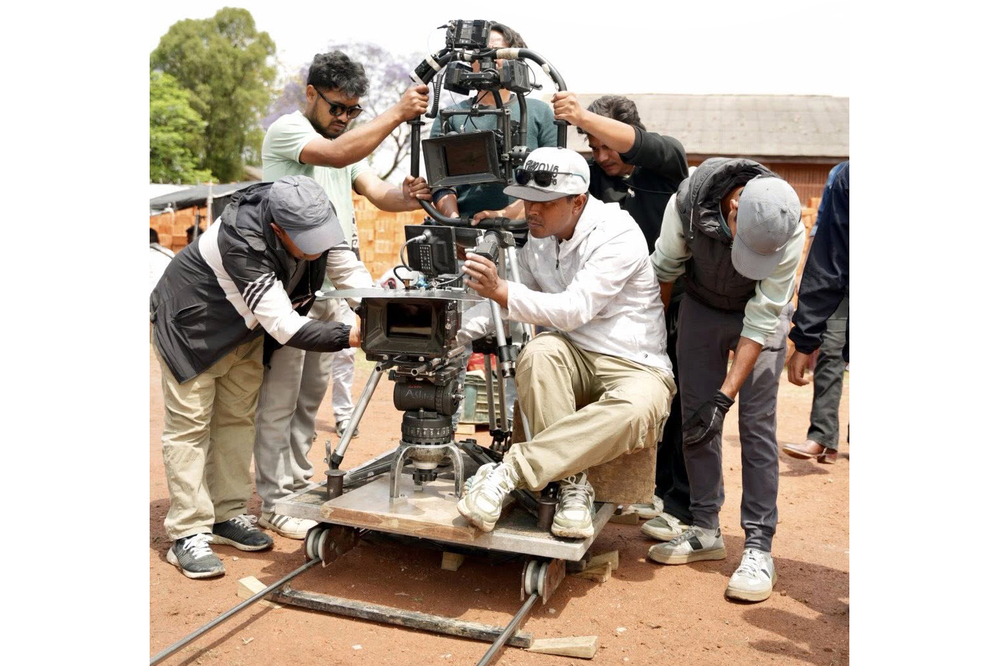
The market for Nepali films is small. Due to this, producers set limits on the investment and budget of the film. ‘Due to the lack of sufficient budget, filmmakers are forced to limit themselves to social or family themes. If the market were bigger, the possibilities of new experiments would also increase,' says Subba. In his opinion, the aspect of film writing is also a reason. Expertise in that field is indispensable to write a film based on any genre. 'Just like writing science fiction requires deep knowledge of science and writing courtroom drama requires deep knowledge of law, which is currently lacking among Nepali writers. Due to this lack of technical knowledge and expertise, most people choose social drama as the easiest genre,' he points out the weakness. Despite the business risk of using
differences, Sulakshan Bharti, the director of 'Boksi Ko Ghar', was confident in his choice. He is currently making a crime suspense thriller film 'Station'. Although Keki Adhikari, the film's producer, liked the story of 'Station', she was in dilemma about the business at the time of the film's release. ‘I had clearly said – if you trust me, then you will invest money only, because this is the film I will make,’ Sulakshan remembers telling the producer.
Even while making ‘Boksi Ko Ghar’, Sulakshan had only one goal – how to bring his story? Ultimately, the film was liked by many viewers. But in the recent experimental films ‘Bato’ and ‘Mami’, in which Sulakshan acted, the audience went to the theater in negligible numbers. ‘To be honest, our audience is not accepting new things easily. Maybe they don’t trust us cinematically because they watch Netflix and world cinema. The total budget of one of our films is equivalent to the cost of one or two days of shooting of a foreign film. "We are not able to reach that quality even if we want to," he says, digging into the reasons for the lagging behind of Nepali films. "We do not have sufficient and proper technical equipment." Village stories do not require much technicality, but when it comes to new genres, VFX and more are required, so he believes that Nepali filmmakers are lagging behind due to budget.
Nischal Basnet, director of films like 'Loot', 'Talkjung vs Tulke', and 'Dimag Kharab', is a director who likes to experiment with different genres like crime thrillers, war and political drama. He keeps coming up with new stories in different genres. They sound good when he hears them. "But now I feel like we are not at the right time for it, and we will not move forward," says Nischal. He had been offered to invest in an animated project. Although it sounded very interesting, he asked himself, ‘How can we make it?’ He said. ‘We have not been able to explore many things properly and technically yet due to the budget,’ he says.
Nischal was keen to make a travel journey film. Even though the script was finalized, the VFX work was very expensive, so he was forced to put the project on hold. Many courtroom dramas like Bollywood’s ‘Drishyam’ and ‘Jolly LLB’ are also favorite films of Nepali audiences. But courtroom dramas have not been made in Nepal. Films like ‘Peepli Live’ on the subject of journalism have been excellent films in India and in various countries of the world. But in Nepal, the story on journalism is not in the film.
One or two people had approached director Basnet with the story of a courtroom drama. Even though he liked the story, Nischal could not prepare for it. ‘I am afraid of how the institutions here will take it when I work with creative freedom as a filmmaker in something like court. No matter how much fictional film we make, it is always compared to reality here and there is a belief that ‘this is allowed to be shown, this is not allowed’. This prevents us from telling stories,’ he says.
The market for Nepali films is narrow. Therefore, filmmakers do not know what kind of impact a film will have. Since it is not certain that only investment will be secured, producers look for a safe path. The safe path is to make a film that is a mixture of everything.
Author Bina Thing regularly watches Nepali and foreign films. Compared to foreign films, she has not been able to find the taste and serious content she is looking for in Nepali films. ‘Here, either films with excessive noise and crowd-pleasing are made, or the same traditional ‘chokleti’ and fabricated stories are being repeated. While world cinema is currently gaining ground in different genres like science fiction, courtroom drama and psychological thriller, our cinema has not been able to move beyond the confines of village and cheap comedy,' she analyzes.
She believes that producers are also afraid to take risks in new genres due to the small market and the fear of losing investment. 'There is a situation here where our native audience does not like to watch or is not able to watch even our original films that have shocked the world by reaching international festivals like Cannes. That is probably why fewer films are made in different genres,' she believes. Actor Khagendra Lamichhane, who has experience in writing, directing and producing films, feels that 'the Nepali film market is very risky financially.' In such a situation, filmmakers follow the trend of what kind of cinema is going on in the market, he says. He analyzes that if a film of a certain genre is successful, then for some time there has been a trend of making only the same kind of films continuously. Based on his experience as an actor, director and producer, he says, ‘As an actor, I really enjoy working on different characters and themes.’ However, from the experience of a director and producer, there is a dilemma whether it is safe to experiment here or follow the current trend. Most people follow the trend because they see less financial risk.’
He gives an example of how he tried to break this trend. In fact, about a decade ago, the Khagendras dared to ‘break’ the trend and experiment with ‘Pashupati Prasad’ and ‘Talkjung Versus Tulke’. ‘But, we are not in a position to keep taking so many risks over and over again. For someone with limited financial resources like us, once a big loss occurs, it is very difficult to get back up,’ says Khagendra.
Madan Thapa, director of the road thriller film ‘Bato’, says the main reason for the film’s failure to be made in the unique genre is the lack of strong faith among the makers. ‘To make a different kind of film, the story and concept should be strong enough at the beginning to attract investors in the first bite,’ he says.
Since the Nepali market is small, Madan believes that collaboration with filmmakers from foreign countries or India could be an alternative solution.

