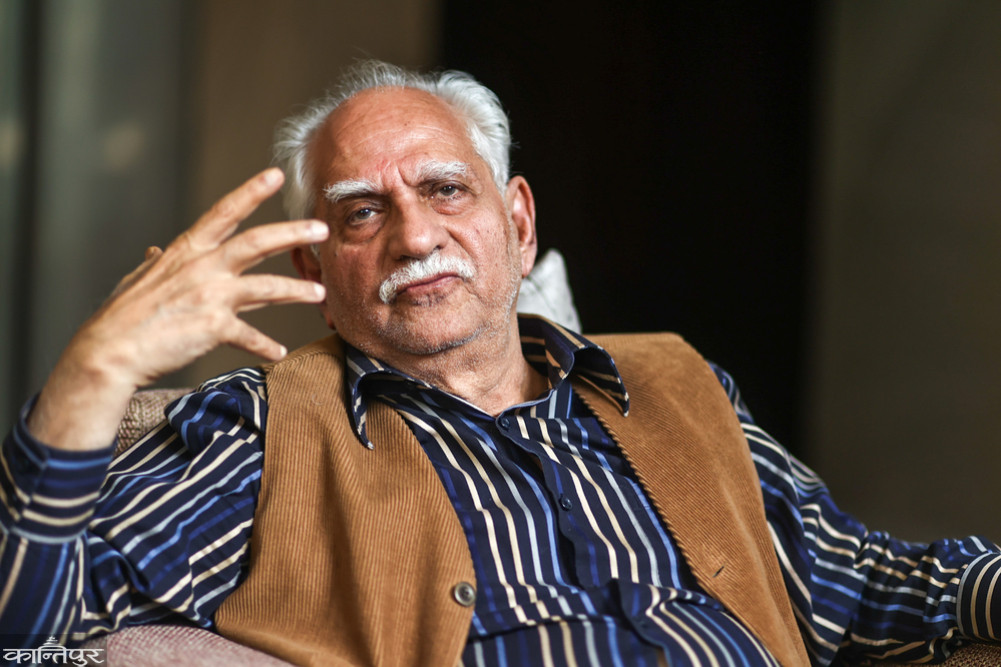
Indian director Ramesh Sippy has arrived in Nepal to participate in the Nepal International Film Festival. This is his third visit to Nepal.
We use Google Cloud Translation Services. Google requires we provide the following disclaimer relating to use of this service:
This service may contain translations powered by Google. Google disclaims all warranties related to the translations, expressed or implied, including any warranties of accuracy, reliability, and any implied warranties of merchantability, fitness for a particular purpose, and noninfringement.
The era has come. The film is sure to be a hit-sequel! Preparations are already underway to make 2 and 3 before the release of part 1. Now is the time to make films in series. Be it the Nepali film 'Kabaddi' or the Bollywood 'Dhurandhar' currently showing in theaters. If a film becomes a superhit, it is customary to make not only sequels but also prequels. However, Indian director Ramesh Sippy never thought of making a 'remake' of 'Sholay'. 'Sholay' is celebrating its 50th anniversary. Many people asked Sippy, who arrived in Kathmandu from India to participate in the Nepal International Film Festival (NIF), - aren't you going to make Sholay 2?
Before Sippy could answer, he said, 'No, I never thought of making a remake'. However, Sippy has accepted the changes that have come to the film industry in these 50 years. Nowadays, filmmakers can easily know what kind of films previous filmmakers made. The reason is that the speed of information and communication is so fast that it instantly makes everyone aware. Should we go to the theater and watch the film or wait at home? The situation has reached a point where we have to decide.
That is why Sippy sees the challenge of attracting the audience waiting for the film on OTT to the hall. ‘Nowadays, the audience has the facility to watch which film while sitting at home . Those viewers are sitting around saying they will watch this film when it comes out on OTT,' Sippy told Kantipur, 'That's why the challenge of taking those viewers to the theater is now apparent.'
However, Sippy has experienced that technology has taken a leap forward with time and that films are becoming stronger due to its impact. 'Nowadays, the sound work in films is amazing. That makes the experience of watching a film in a theater different. That's why the audience goes to the theater to feel that,' Sippy told about the usefulness of the theater.
Sippy feels that filmmaking is a learning process. In directing, he does not find any difference between yesterday and today. The director always sits behind the scenes and tries to tell the story behind the scenes. Sometimes, the cinematography does not work out as written in the script. But that too can be adjusted in post-production. ‘Nowadays, many things are involved in filmmaking, starting from special effects. Technology also supports you in this. But, all this is already written in the script,’ says Sippy, ‘You go to shoot according to the script. But, during the shooting, sometimes there are other challenges, it is not as expected. That is why it brings good results.’
Not all films can achieve the success of Sholay. If I also want to make that kind of successful film, it won't happen now- Sippy Sippy feels that the success/failure of the film guides the director in filmmaking. Sippy did not think that ‘Sholay’ would be such a hit. He just wanted to make a good film. But, when ‘Sholay’ was running in the theater, the audience would repeat every dialogue in the film. Then, Sippy thought – who would memorize the dialogues in one go?
Sippy now knows-not all films get the success like Sholay . His other films also didn't measure that height . He has come to terms with the truth that he wants to make the same kind of film again or not . 'Not all films can get the success of Sholay . If I also want to make that kind of successful film, it won't happen now,' says Sippy. He says that a director should do his best in every film . 'Your job is to give your best . I did that in all my films . And filmmaking was what I loved, I gave my best in it,' he said .
Looking back on his film career, Sippy seems satisfied with all his work . Maybe, not all his films achieved the success of 'Sholay' . However, he said that he felt as much satisfaction in all the other films he did, including 'Shaan', 'Shakti', 'Geeta Aur Sita', as he did in 'Sholay'. He says, 'The films I did were different. But, there is the same satisfaction in all of them. I had to do something new and different in all the films.'
Some consider 'Sholay' as a focal point from which Indian filmmaking is analyzed as before and after Sholay. However, Sippy does not want to draw this line for 'Sholay'. 'The film won the hearts of the audience. That is why they watched the film and kept watching it, perhaps this film should be analyzed in this way,' he said, 'I did not think that the film would be such a hit. I wanted to make a good film. But, the audience liked it a lot. The audience never got tired of this film.'
Sippy wanted to make a film that every audience would like. That's why he always started thinking about the film with the idea of 'two lines'. He turned it into a script, there were some changes in the cinematography. But, overall, the film was made as he wanted it to be. For Sippy, every one of his films was challenging. 'Sholay' has become a challenge not only for him, but also for most filmmakers. This film became a standard in Indian history, which Sippy, let alone any other Sippy, could not break. Sippy never felt the pressure to 'break' the record of 'Sholay'. 'Why do you stress yourself thinking about that?' Sippy said with a smile. 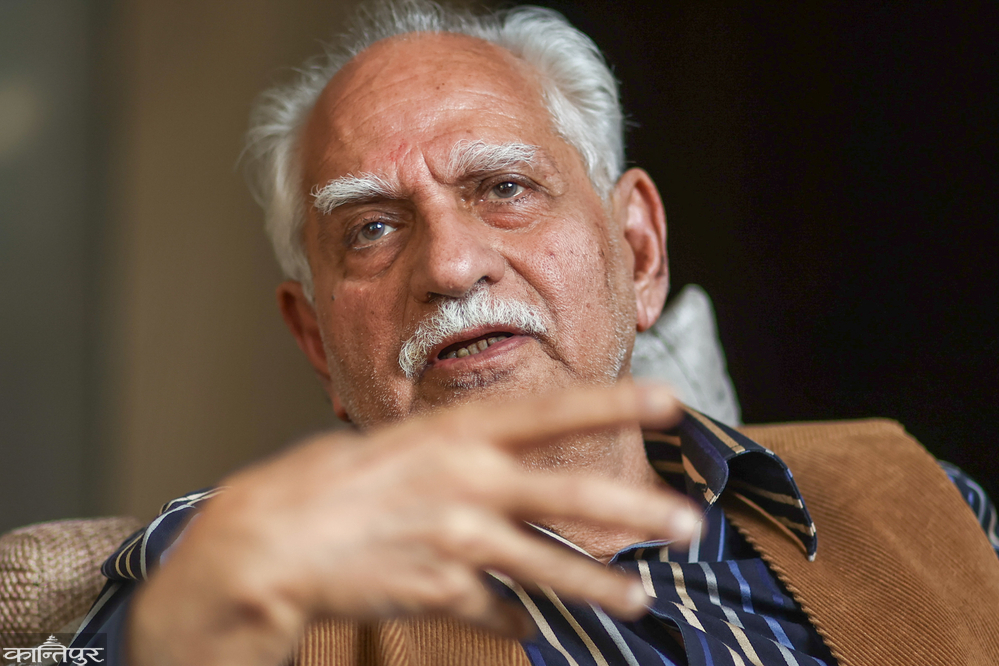
Sippy still does not forget the audience support the film received in its initial days. Stories are still being heard that the film did not perform well at the box office in its opening week. There is also talk that Sippy called a meeting with the production team to consult after the film did not do well in the first week. However, Sippy urges not to believe these fabricated stories. What actually happened? According to Sippy, at that time, some newspapers wrote news saying that it did not do well at the theater. That news worked in such a way that even today some people believe it to be true. However, he says that the film started creating havoc at the box office from the first week itself. ‘The world still believes that this film did not start well in the first week.’ But, that is not true,’ he said, ‘The film opened well. In the second and third weeks, the audience in the theaters would be found repeating the film’s dialogues. Who repeats lines like this? Of course, those who have watched the film repeatedly . At that time, it was not like now to say, "I watch it on television, I watch it on OTT."
Sippy sees everyone's equal presence in the success of 'Sholay'. Be it Amitabh Bachchan who became Jai, or his friend Veeru (Dharmendra Deol). Amjad Khan who became Gabbar or Hema Malini who became Basanti. He gives credit for the success of this film to each of the characters who were seen in small roles in the film. 'Sholay, Sholay has their hand in being, who were associated with this film in different roles . The acting of Amitabh, Dharmendra and Hema Malini has also made the film strong,' Sippy said, 'When people remember Sholay, they remember it not only through the scenes of the water tank, but also through the subtle characters. The water tank scene was amazing.'
Be it the scene where Dharmendra rides a water tank or Amitabh's 'Yeh Dosti' song. Sippy says that the audience now remembers the separate world created by each character in the film. As Sippy says, be it the scene between Jaya and Hema Malini lighting the lantern or the scene with Gabbar, this film is not just for the audience. It has become a sweet memory and is etched in the heart. That is why even in its 50th year, the audience is re-watching the film to relive each of these memories. On the occasion of the film's 50th anniversary, this film was also re-released in India. The audience again reached the theaters to watch the film. However, this time some new scenes were added to the film. 
In the 'original' version of the film, Thakur (Sanjeev Kapoor) is shown killing Gabbar with his spiked shoes. However, after the Indian censor board objected at the time, a new ending was reshot and Gabbar was arrested. Only then did the film pass the censors. In 2022, director Sippy's son Shahzad Sippy, in collaboration with the Film Heritage Foundation, found the 'original' version of the film.
When the 'original' version was released in theaters, the film received mixed reactions from the audience. Director Sippy himself is now surprised to see the original version. 'In the original, Sanjeev Kapoor kills Gabbar.' However, at that time, the version in which Gabbar is not killed was released. In fact, the scene in which he is killed is the original. I am happy that that version has come out now. But, the version without Gabbar was very popular,' Sippy said, 'Even now, the audience likes the same old show. They are liking it.'