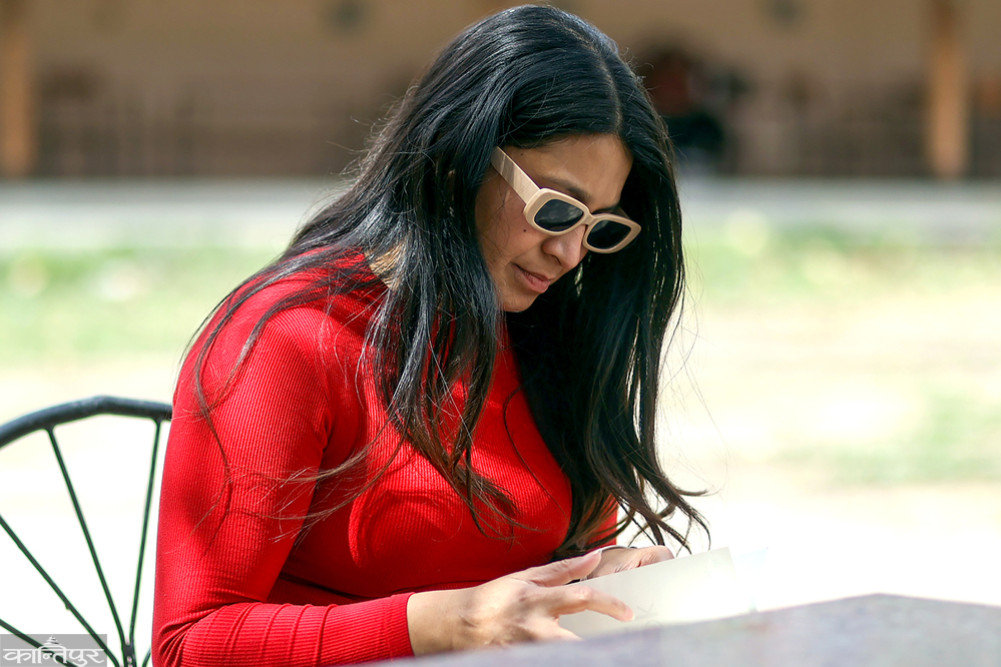
Sudipta has established herself as a star through 'Ramita Ko Pirati', which is made with the delicate feelings of women in mind. She is yet to work on a film that addresses women's issues.
We use Google Cloud Translation Services. Google requires we provide the following disclaimer relating to use of this service:
This service may contain translations powered by Google. Google disclaims all warranties related to the translations, expressed or implied, including any warranties of accuracy, reliability, and any implied warranties of merchantability, fitness for a particular purpose, and noninfringement.
Sometimes it happens, which film is released in the theaters and then removed? I don't know! This is what happened during the elections to the House of Representatives.
A film carrying hope was released in the theaters. The story of a young woman's broken love relationship. The story of finding herself through that relationship. The story of the journey of loving herself. Where the tender relationship between mother and daughter is shown. The importance of friendship is explained. In the crowd of social, action and comedy films, 'Ramita Ko Pirati' is truly a film with a new flavor.
Not only the story of an independent woman growing up in the city, but also Ana Sharma's improved acting made 'Ramita Ko Pirati' worth watching. But, under the shadow of the elections, film connoisseurs did not get to taste the taste of this film.
Now, what did this film give to the production team? That would be another topic for discussion. But, the answer to the question of what 'Ramita's Pleasure' has given to the Nepali film industry is Sudipta.
Sudipta has established herself as a force to be reckoned with through 'Ramita's Pleasure', which is made by capturing the delicate feelings of women. The film was not without its weaknesses. But Sudipta's narration covers it up. The only formula Sudipta has mastered to tell the story of a woman's love relationship, family strife, ups and downs of friendship and finding herself within herself is honesty. Now she is tasting the same reward.
'It was her first feature, but I was very praised. I am getting a very good response because I made it honestly,' Sudipta, who met us in Boudha, told us.
Samipyaraj Timalsina, president of the Film Critics Society, says that Sudipta has introduced a new flavor among the monotonous films of the village. 'The story that Sudipta has raised on the relationship between the city has shown that a film can also be made on the story of the city. She has woven a plot in the film that connects the audience by showing that the lives of the poor women in the city are not easy, that they also have struggles in their lives,' says Timalsina, 'She has also shown the story of the city in a realistic way. The characters speak realistic dialogues.'
OTT's Sahara
Sudipta was writing a new film when we met at the quiet cafe of Bouddha. The response to the first film added more enthusiasm to make the next film. She is currently writing the plot for the story titled 'Bad Girl Goes to Bangkok'. Before making 'Ramita's Pirati', Sudipta had reached Thailand with two of her friends. She is writing a new film capturing the essence of that experience and friendship.
Sudipta has the experience that every film writing is different. She did not have this zeal when writing 'Ramita Ko Pirati'. Sudipta had originally planned to send 'Ramita Ko Pirati' to an international film festival. She invested in the film herself. Gradually, other investors joined. Sagar Lamsal joined as a producer. The cost of the film increased.
Sudipta's group was encouraged by the business of 'Jerry on Top'. It was hoped that the audience would also like a different genre film, which is said to be a story of youth. That is why they spent a lot of time promoting the film. However, the time to screen the film and the elections coincided. The audience went to the election venue instead of the hall. Now Sudipta feels that the 'marketing' of the film and the 'timing' of the screening did not match.
Now 'Ramita's Pleasure' is on OTT. International audiences are also watching the film on OTT. Sudipta is amazed by their response. 'Not only Nepalis but also international audiences are watching it on OTT. Now our expenses are being recovered from here. Our Nepali audiences have also been able to watch the film here. OTT is also a good platform to raise investment,' she said.
Sudipta is not an extrovert by nature. But, film screening? Meeting the audience after reaching the hall? What is it? All these things did not suit her. Again, it is difficult to move forward by getting everyone together. What new things should be done in marketing to bring the audience to the hall? 'Ramita's Pleasure' reached the hall amidst many new experiences, rush and laughter. After watching the film, many people told Sudipta - thank you, you made such a good film.
Amidst the arduous journey of production and screening, Sudipta was given a long breath by such a response. 'When they said that, I felt like I had done something good for them.' It made me want to keep making films,' she said with a smile.

She had already directed a few short films before 'Ramita's Passion'. She studied film at the College of Film Studies 'Oscar' and made many advertisements. She worked on video documentaries for a while in the European Union (EU) in Nepal. However, Sudipta did not find her taste in documentaries. She thought of making a feature film and left that responsibility. But, where could she make a film as soon as she thought about it?
Sudipta reached a turning point in her life, where she felt her own existence was in danger. She could not give importance to herself. She struggled with the identity crisis that comes with advancing age. She discovered the risks within herself and had to find her own existence. She would pour out all those experiences in a 'journal'. While she was writing the journal, one day she thought - what if it were turned into a film? What if a woman breaks up in love, and how will she live her life ahead? What if she cannot decide? And so it was born - 'Ramita's Pirati'.
The writing of this film began during the Covid period. She wrote the story of the film many times, deleted it. Corrected it. She kept taking advice from mentors, and wrote it again. And in 2025, the film was made based on the final draft. As soon as Sudipta wrote the story, she showed her writing to director Avinash Bikram Shah and filmmaker Keshav Pandey. The writing of 'Ramita's Pleasure' was completed on their advice.
'There was a time when, my friend, we were on different journeys in life. But, another time came when everyone was searching for themselves. The situation of Nepal's youth is depressing. Everyone has gone abroad. It seems that those who are here have also reached a stage where they want to be validated. At that time, I felt that we should learn to love ourselves,' Sudipta recalled the initial moment of writing the film, 'Before jumping into something, before starting something, we young people were being told that we should love ourselves. I made the film with that message.'
It is not that the idea of making a series based on the theme of 'one should love oneself' did not come to mind at first. She thought of releasing it on YouTube through her own company, Siro Films. However, the series also cost money. She then says that she decided to make a film.
'I wanted the world to see such a film, so we made the film targeting the festival,' Sudipta said. In particular, she wanted to break the stereotype that only 'poor' and 'village' stories could be brought to the festival. However, as producers got involved, their decision prioritized the theatrical release. That is why Sudipta's dream of reaching the festival with her first feature was dashed this time.
'The festival prioritizes the emotion and style of the film rather than the joy and sorrow. She was also making the film to establish that fact. After the addition of producers, the main focus was on the theater performance rather than the festival. Later, I also decided that it was a good decision to screen the film in the theater,' she said.
The patriarchy in the film!
'Ramita Ko Pirati' is strong in its casting. Ana, who is seen in the lead role, has presented the character of 'Rami' brilliantly. Sameer Shrestha's acting, who shines with his singing, is no less than any actor. From Binay Shrestha, who appears in short roles, to Renunath Yogi and Dheeraj Magar, the acting is also suitable for the character.
While writing the character 'Rami' played by Ana, Sudipta had long remembered her teenage years. Sudipta chose Ana for the character 'Rami' due to the choice of films that Ana has done.
However, it was a struggle to give Aana the lead role in the film. Spending a budget of around Rs 20 million on Aana in an industry where only male stars can make a film work was a challenge. However, taking Aana while taking risks is Sudipta's strong stance.
'The Nepali film industry is dominated by men. Men do a lot of work in lead roles. In such a situation, it is rare for a woman to accept being a supporting actress in a story where a woman leads,' she said. Because Aana was in the lead role in the film, many investors were not ready to invest. 'How many producers rejected the film?' They didn't like the fact that Aana hadn't done many films and she was in the lead,' Sudipta said, 'How many didn't even listen to the story. Some would say they need a face that works.' But Ana is very sad about this film. We did a workshop for 6 months.'
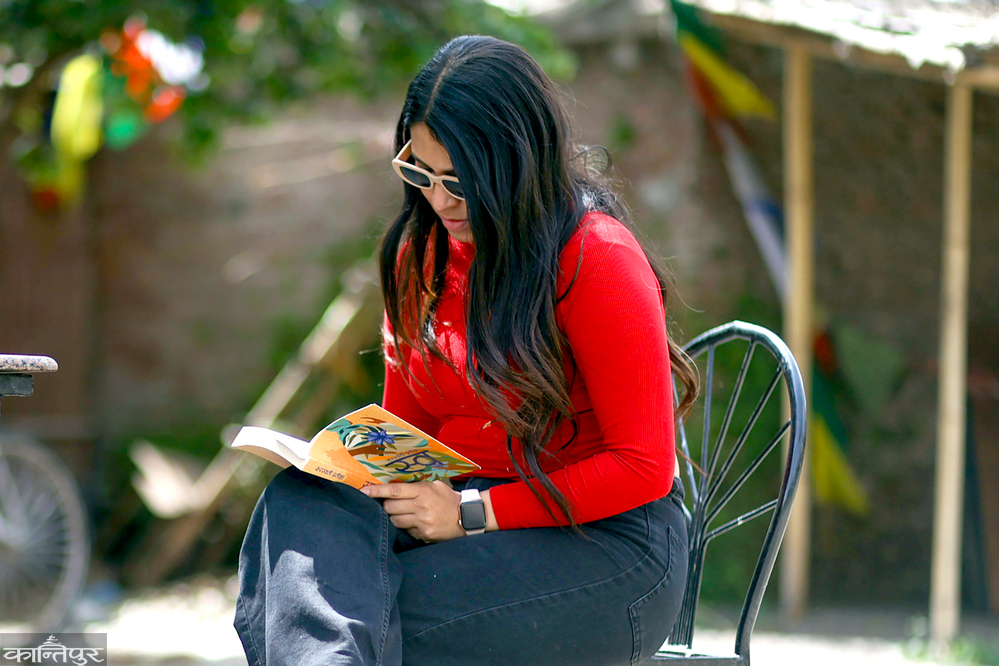
Sudipta initially offered the male characters to the stars who were working there. Some did not want to be Ana's assistant, while others pointed out flaws in the script. Dheeraj is the first actor who believed in the script from the beginning. As soon as he read the script, he started preparing for the character. Dheeraj's behavior made Sudipta feel that this field had 'welcomed' her for the first time.
Initially, Ashirman Deshraj Joshi was thinking about the character played by singer Sameer. However, since Ashirman was in Mumbai, there was no environment for him to come here. Then she offered it to Sameer, who was working on the music for the film. Sameer also auditioned. Vinay has also acted very well in the film. Vinay had also said 'yes' to the film in the beginning.
The patriarchal thinking also clashed with Sudipta during the filmmaking process. Some did not believe her during the filming. Some acted as if they did not listen to her instructions. However, she showed her powerful presence in such a situation. She did not hesitate to 'fire' those who did not believe her. In this way, she gradually gained trust from everyone. 'They tried to dominate a little during the filming, but even there I stood confidently. And they could not do anything,' Sudipta sounded strong.
'A film to express feelings'
Sudipta has been rebellious since childhood. She has been fighting against conventional thinking since childhood. She wore the same dress in places where it was said 'You can't wear a skirt'. Always ahead in extracurricular activities. Equally interested in running. Black belt in taekwondo. But what to do in life? She grew up confused.
What didn't Sudipta do? She learned photography. After graduating in 'Social Work', she studied filmmaking. Growing up in Vanasthali, she did her schooling from Shubhtara. Even after completing 12th from White House and studying 'Social Work', she was confused about her future.
With the support of her family, she turned to films. Her mother runs a boutique. Her father is inclined towards politics. Around 2017/018, when the 'Ekadeshma Film Festival' was going on, Sudipta's attention was suddenly caught by a scene from a shooting there. Some people were filming something with a camera. She started learning photography. ‘At that time, there was some shooting going on at the festival with a camera. As soon as I saw that, I went to learn photography. And then I gradually started looking for a film college and studying at Oscar,’ she said.
In the meantime, she had also started preparing to study film in New York. Nepal could afford the expenses, so she studied directing at Oscar. Sudipta, who made her directorial debut with a short film titled ‘296’ while she was a student, made her last short film ‘Summers’.

After Oscar, she met film director Avinash Bikram Shah and producer Anup Poudel. They started directing Sudipta. After seeing her short film selected at KIMFF, the EU gave her the task of making a documentary. That’s when she became eager to make a feature film. ‘I think filmmaking is the way to express my feelings. The things inside me come out in the film. That is how Ramita's happiness came,' she said.
Now some producers are coming to meet Sudipta. She said she wants to work on a film that deals with women's issues. 'Especially the films I have made so far have my own stories and experiences. The stories that come from myself are especially interesting. Perhaps it would be easier to tell your own story,' Sudipta said, 'After getting a tattoo, it is said that you want to keep getting tattoos. In fact, films are also an addiction. Now when will I do my next film? It's over.'
Samipyaraj Timalsina, president of the Nepali Film Critics Association, discusses Sudipta as a director with a strong grasp on writing and directing. 'After watching his directorial work, I think Sudipta is the best director of this year. Sometimes the writing is good, but the direction is flawed. Sometimes the writing is not good, but the direction is good. But, Sudipta is a director who is good in both writing and direction,' he praised.