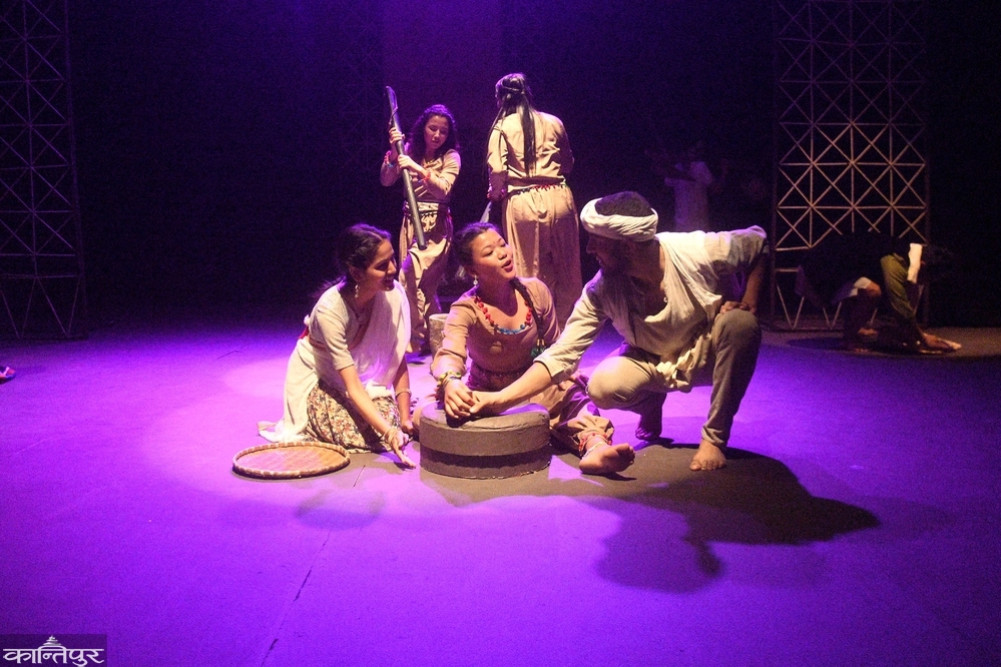
This play will be staged until March 11.
We use Google Cloud Translation Services. Google requires we provide the following disclaimer relating to use of this service:
This service may contain translations powered by Google. Google disclaims all warranties related to the translations, expressed or implied, including any warranties of accuracy, reliability, and any implied warranties of merchantability, fitness for a particular purpose, and noninfringement.
The wind of the forest blows, over the head of the forest
The truth of life, love and sacrifice
Enjoying the pain
Did you know? Music also plays a major role in the play ? Like the characters, music speaks - tells the story . In the play 'Charandas Chor' staged at Mandala Theater, music has also narrated the story in a powerful style . The song Bane Hawa is sung at the beginning of the play…. While the music group is singing this song, the atmosphere of Madhes is shown on the stage . Some walk here carrying things on their heads, while others arrive rolling bicycles . A milk jug is hung on the bicycle . In the first scene, director Milan Karki has shown Madhes here and presented the life of the people there . Then, as mentioned in the song, the story of love and sacrifice begins!
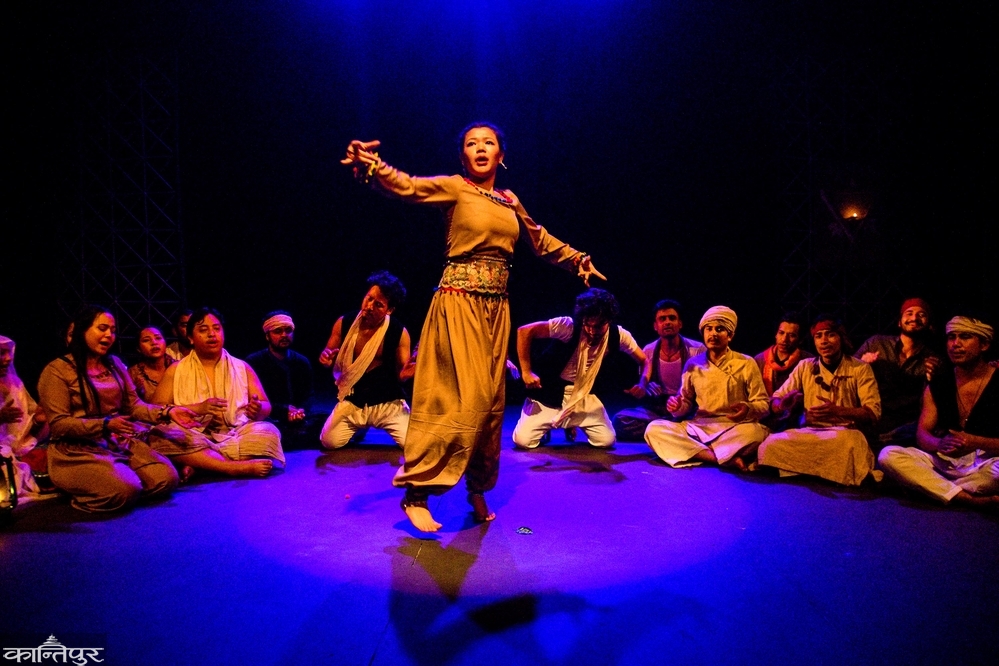 The main character of the play, Charandas (Vishwa Vijay Bik), steals. Stealing is his job. Or rather, Charandas has an immense passion for stealing. He does not leave anyone from selling paan to selling bangles. That is why Havaldar Jange keeps chasing him. He steals while running away from Jange. But, Charan does everything he does honestly. 'I also steal honestly. Because stealing is my job,' Charan confidently tells others. He never falls into the trap of Havaldar Jange (Vinaya Pant). Just as he steals by tricking others, Charan is an expert in putting a bullet in Jange's eye and running away in a blink of an eye. He is sincere in mind and has a soft heart. While stealing, one day he bumps into him, a pretender Baba. After meeting Baba, Charan lives a life of renunciation. How? For that, watch the play. Let's talk about Baba first. Baba's entry into the play is accompanied by music.
Rahu of the mind, Sahu of the mind
King of my own mind
Habit, past, world, intention
I am the Baba who sees everything
Alok Niranjan, Alok Niranjan
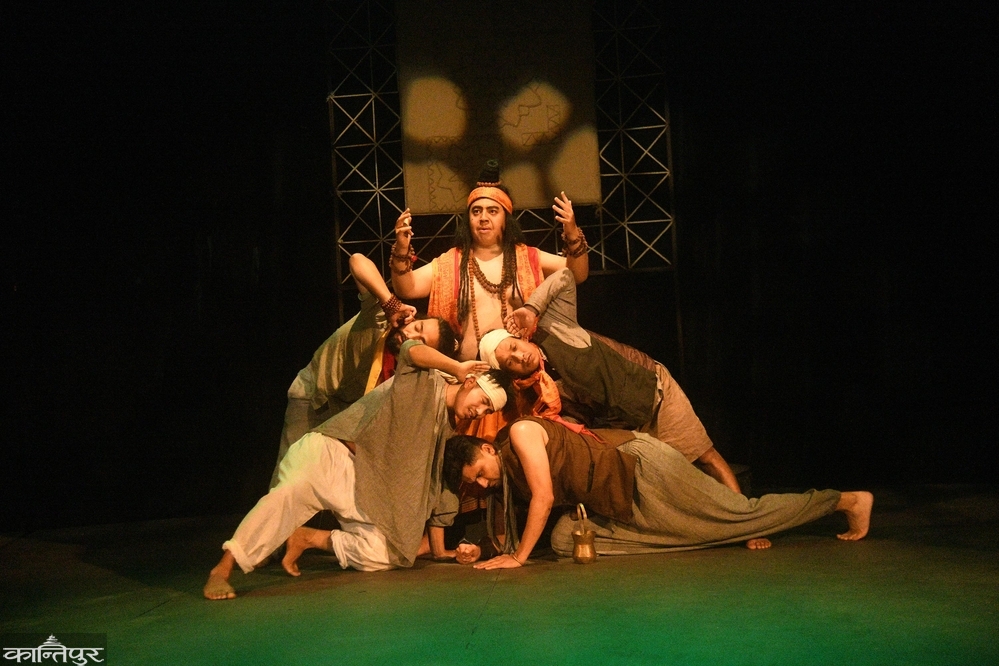
The scene of Baba dancing on stage with one follower is interesting. Baba's costume, dance and on top of that, this song with the followers' voices in one voice attracts attention with fun. The actor who becomes Baba, his physical gestures, and the expression on his face look fun. This character keeps the audience laughing throughout the play. The way he speaks is laughable in itself. He sounds more like he is speaking in a film style than usual. Moreover, the play is also satirical because of the actions he takes in the guise of Baba. Baba keeps asking for Guru Dakshina from each of his followers. His intention is to ask for Guru Dakshina in every word. As mentioned in Baba's introduction song, he is the Rahu of the mind who tries to become a moneylender by asking for money. Through this character, the play not only satirizes the hypocritical Babas, but also questions the hypocritical nature - the thief changed his path after meeting Baba, when will you take the right path? Through this character, this play has inspired the hypocrites to change their path by showing them. Also, it makes them stick to their responsibilities, take the path of truth and live their life authentically.
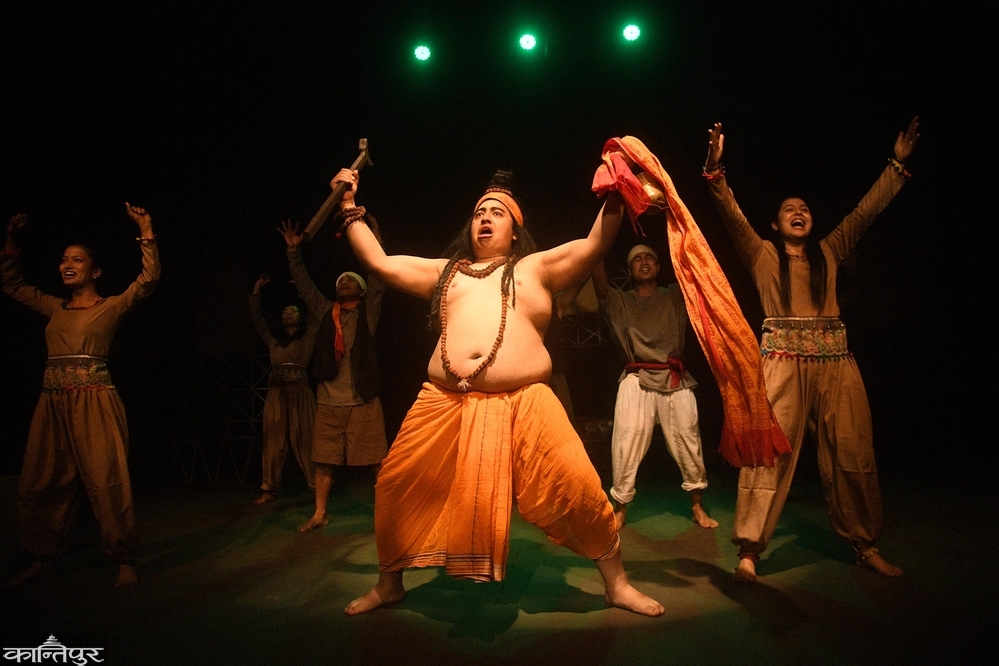 The acting of actor Rijan Singh Lama in this character keeps the audience engaged. In some scenes, the dialogue is poor, and the weight carried by this character is also superficial. For example, in one scene, Charan comes to Baba and pleads - Guru, make me your disciple. At that time, he falls at the Guru's feet, holds his knee. At that time, Baba says - Leave the dhoti, whoever comes, wants to have darshan. The double-meaning dialogue used in this scene hinders the feelings expressed by the character here and the message the play is trying to give. The same is true in another scene of the play. The scene of the newly appointed minister inaugurating various places satirizes the weak presence of those in power. The people garland the minister in such a way that they cannot see what he is inaugurating. After the inauguration of a meat shop, the minister asks, 'What is there such a smell there?' Then someone says - Goat!
Director Karki's creative choice to set this play, written by Habib Tanvir 51 years ago, to music is a creative choice. Moreover, the effort put into showing it in the Terai setting looks tempting on stage. However, if director Karki had paid more attention to the dialogues that seem inferior while presenting this kind of political satire, the sharp blow of satire would have been directed at the abuse of power and negligent leadership.
There are also scenes in the play where the audience laughs at the dialogues along with the character's gestures. After the minister falls, the impostor says - I almost fell, Minister! Anyway, this play, which has been staged twice before under the direction of Rajan Khatiwada and Vikas Joshi, keeps asking the same question over and over again. Charan fulfilled its promise - are you also committed to your promise? The play keeps questioning the leadership by showing the suffering of the poor people.
 Lakhandas, who has been supporting his family by selling paan, is scared of the rising inflation in the country. But, he has no other way to earn money except selling paan. Charan steals that paan too. But, the village landlord does not help poor people like him, he only oppresses them. He has no other option than to suffer. As the tune of the play sings, this play shows the condition of the lower class people through the poor, miserable characters who rejoice in suffering. The landlords, the powerful havaldars, and the hypocrites live their lives here by cheating. They rule over the poor. But, is the life of the poor in poverty? The landlords keep dancing here saying, 'If you want to go, let's go to the fair of Jhijhiya'. Such music according to the setting adds a special energy to the play. It takes the audience directly to the Terai. It connects them with the character's feelings. Navraj Sapkota, Saurabh Chalise, Ojas Lama are the characters who are grateful for the beautiful music. The last song of the play is even sweeter. The story flows through the story. The world is deceitful, the story is stained. Life carries the frustration of truth. Why does truth seek sacrifice?