Does our spiritual energy help lead us to the path of justice? This is the question the film asks.
We use Google Cloud Translation Services. Google requires we provide the following disclaimer relating to use of this service:
This service may contain translations powered by Google. Google disclaims all warranties related to the translations, expressed or implied, including any warranties of accuracy, reliability, and any implied warranties of merchantability, fitness for a particular purpose, and noninfringement.
Nani Walker is a Nepali-American filmmaker. Born in Thapathali, Kathmandu and raised in Soltimode, she completed her studies in the US and Japan.
As a former senior commissioning producer at the famous LA Times Short Docs in America, she has produced many short films. Among them, ‘The Repair Shop’ won the Oscar for Best Short Film in 2024.
She has recently directed the film ‘Shakti’. This film highlights the discrimination faced by the common people of Kathmandu by setting the spiritual environment in the background. Does the spiritual energy and power we have help us lead us on the path of justice? This is the question the film asks.
An interview with Walker, who came to Kathmandu to participate in the 13th Nepal Human Rights Film Festival for the Nepal premiere of the film, by the Investigation Officer:
‘Shakti’ is receiving good praise at international festivals? Where did the idea of making this story come from?
‘Other Nature’, which I directed earlier It was about transgender identity, same-sex marriage, and the rights of people with different identities in Nepal. While making the film, I considered Nepal's constitution and political system to be progressive.
I think Nepal's constitution is progressive compared to other countries in South Asia. But when I learned that the law has a 35-day deadline for filing a complaint in cases of sexual harassment, I felt a little uncomfortable. I was shocked to remember the faces of the victims. After I started making the film, I learned more about it. It made me restless. I expressed this restlessness through the film. It is an uncomfortable subject. I think a debate on this topic is necessary. The story of two Dalit sisters is told in this film. The struggle of a mother raising her daughter alone is shown. It also shows the spiritual life of Nepal.
The current Penal Code in Nepal has increased the time limit for filing a complaint in rape cases from 35 days to two years. The time limit for filing a complaint in other cases of abuse has also been increased. But activists have been demanding that it be removed. What is your reaction to this?
The time limit for filing a complaint should be completely removed. The current system is ruining our society and state system. Justice cannot be established in such a situation. It is the right of a person to go to a judicial trial after feeling that he or she has been victimized. The current law has deprived the victims of that. We have shown this in the film as well.
The audience has liked our advocacy for a just, inclusive and responsible society, and we have taken this positively. Every person has a role to play in establishing a just society. Let us hope that we will all take the initiative for this and with common efforts, such complications will be removed.
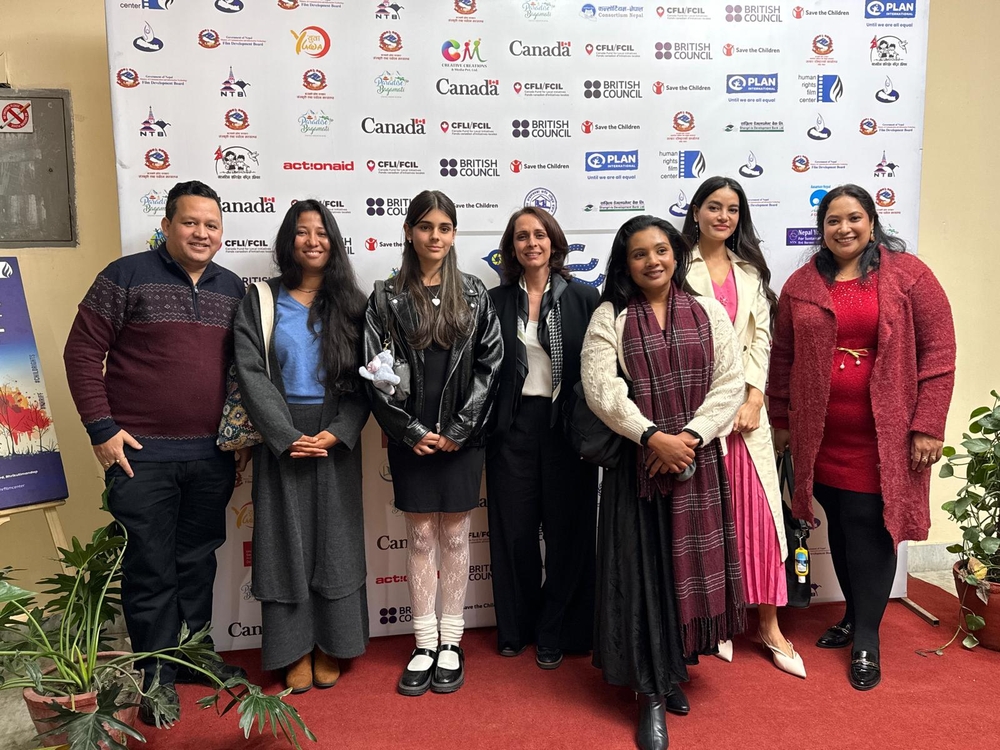
What is the international response to the film ?
It has been selected in 13 festivals so far. Especially in Nepal, it received good support in its initial screening. We feel special for the support here because it is a story from Nepal. We are excited.
When we were releasing Shakti, there was a big movement in Nepal. Youth are advocating for a corruption-free and just society. We also want change. The film has exposed the problems faced by ordinary people. We should work to build a just and safe society for all.
How do you feel about the acting of Nepali actors?
I see great potential in Nepali actors. I have been close to Nepali actors since I worked as a casting director in the Spanish film Kathmandu Lulabai in 2011. They never disappoint the audience. They have acted very well in this one too.
Especially Menuka Pradhan and Laxmi Bardeba are at the center of the film in the role of sisters. Child artist Polina Oli's acting has also been liked by many. The acting of all the actors including Srushti Shrestha, Mao Tse Gurung, Prakash Ghimire is very good. In my experience, Nepali actors have the potential to do world-class acting.

