We use Google Cloud Translation Services. Google requires we provide the following disclaimer relating to use of this service:
This service may contain translations powered by Google. Google disclaims all warranties related to the translations, expressed or implied, including any warranties of accuracy, reliability, and any implied warranties of merchantability, fitness for a particular purpose, and noninfringement.
On May 5, the one-month long shooting of the Israeli film "When Clouds Fall" was completed in Nepal. The production team returned to Israel after the final shooting in Kathmandu via Manang, Pokhara. Based on the story of Israeli and Nepali characters, most of the scenes of the film were shot in Nepal. Interestingly, Nepali actress Menuka Pradhan and debut actor Ricken Pariyar shared the screen with famous Israeli actor Alon Abutbul in the film.
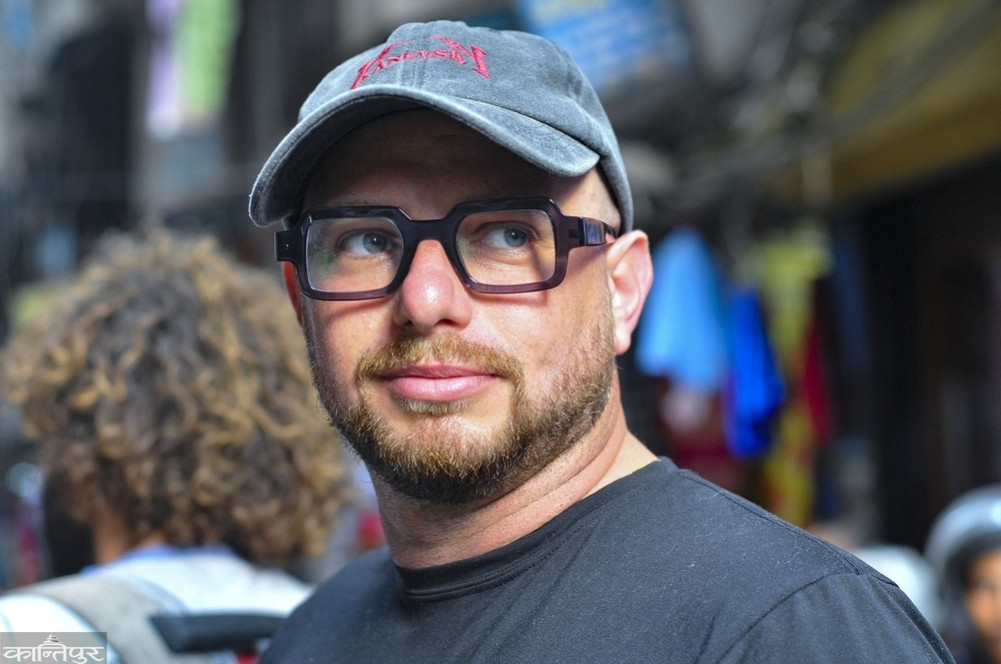
The film was co-directed by Kehat Finkel and Matan Portnoy. In the course of filming, the film's producer Alex Osmolovsky was asked about the collaboration between Nepal and the Israeli team. Alex is an Israeli actor, director and filmmaker . He has worked as a producer and director in films including 'Indigo', 'Pour Cocaine', 'Last Aid', Silent Game, Make Love and Ocean on Fire. Here is an edited part of Mr. 's conversation with Alex for E-Kantipur: The film 'When Clouds Fall' is a story based on a Nepali story ? How did the idea come about?
The most important thing is the story. When a story is good, every effort is made to bring it to life . This story was also very important. An avalanche occurred in the Annapurna region of Nepal in 2014. Israeli citizens also died in that avalanche.
When this story is discussed . We were excited . I thought, ``I have to make a film about this .'' It was an emotional story . I wanted to tell this true story to the Israeli audience. Another important thing is that I think Nepal is one of the most beautiful countries in the world. Nature itself teaches many things here .
Good story, beautiful locations . A combination of all these things can make a great film . Our strong premise is that the film is based on true events. During the
shooting, you reached Manang and Pokhara, which are considered beautiful places in Nepal. How suitable is Nepal for telling stories?
I came to Nepal for the second time this year. I came for the first time in November. I watched some videos . I knew that Nepal is a very beautiful country. But after coming here, this place made me feel different .
I thought Nepal would be like India, but it is not at all. Nepal is a very peaceful, safe and modern country. In Nepal, there is no rush, hustle and bustle like in India. The atmosphere here was very comfortable.
I have shot in many countries in Europe. In some places, if you go two hours away from the big city, it is a bit scary to go to the village - also in terms of security . But no matter what village you go to in Nepal, you don't feel that fear. Wherever he went, he felt safe. In that sense, I think Nepal is a really amazing country. I think the world should know that Nepal is a really good country, and the people here are just as good.
The relationship between the people here is also very good . It seems like a small but important thing . I used to think, maybe the internet or phone connection is not good here, but everything is working well .
The spiritual power here is also good, the food is also very tasty. Even from the point of view of film making, Nepal surprised me . Tom here is very professional. You can feel the old tradition of film making here. It was great working with the team.
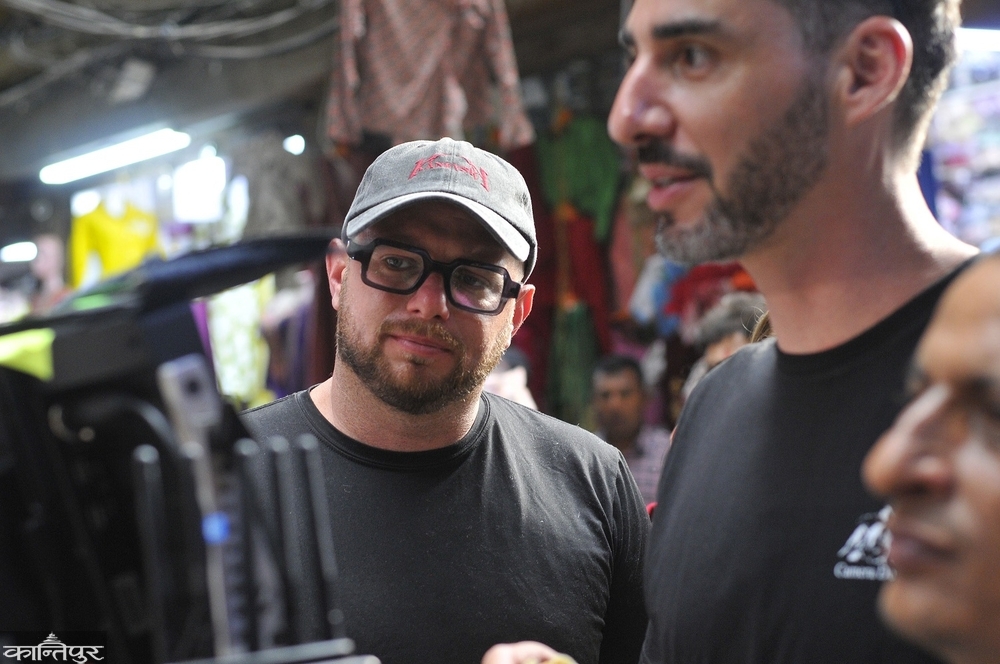
It used to be like this in many countries - in some places the film industry is still starting, and in some places there is experience from generations. In Nepal, the deep roots of that experience were seen. The team here can work at the same professional level as our team. The Nepali team connected well with our working style. Sometimes things don't go well when teams from different countries work together, but here everything seems to come together beautifully . To put it in one line, Nepal surprised me . And I am very happy with this experience .
You are from different countries to make this film . We think about films from different societies, different geographies . What will be the same feeling towards the film when thinking and working for the same film from different countries? Or let's say what will connect each other ?
I think making a film is a wonderful thing . It seemed that everyone on the set was speaking the language of filmmaking. All together, it felt like worshiping the gods of film . We tried to make something very beautiful .
The story itself is quite interesting. Because many Nepalis lost their lives in that terrible avalanche. There is also a scene in the film, where two characters, one Israeli and one Nepali, are sitting. Everyone there is only talking about the foreigners who died in the storm . No one is talking about the Nepalese people.
In this case, the script is very sensitive . This story is not only about that one person who died. This story is the story of father and son. The son who dies in Nepal, and the father comes to Nepal to complete his son's funeral journey from Israel.
Here who played the role of a Nepali teenager, whose father used to work as a cleaner (porter) . The grief of an Israeli father who lost his son and a Nepali teenager who lost his father can be seen on the screen. I think all Nepalis can feel this incident. I love every part, every emotion of this story . I think it was really important to tell this story.
That's why everything seems to be coming together well . And I would also like to say that the Indian guys who worked on it were also really professional . They had a passion for telling stories. Friends from Israel, friends from Nepal were all trying to make this work successful. We were very lucky. Because we had a very good team. Really great team .
Nepal's established actress Menuka Pradhan and Ricken Periyar, who debuted in this film, also star in this film. How much cooperation with these Nepali artists has been established?
Even before the casting started, we had already started thinking about who to cast. At the beginning, we thought that maybe we should take the Nepalis living in Europe . That was our first idea. Then we started casting in Nepal, once again we were very surprised . We didn't come expecting much . We thought that we should look for it in Europe. But the audition of the actors who came in the first stage was very amazing . We chose some artists just like that .
We came to Nepal for location scouting at the end of November. We had some meetings. The audition was also held. And that's when I thought - yes, this is what we want. Both Menuka and Riken grabbed our attention from the very beginning. We thought they were truly incredible. While returning from looking at the location, I felt that we have found the required artist.
Their acting sense and ability was very strong . This was Ricken's first film in his life. But the level at which he worked was equal to the actor Alon who played the main character of our film .
Alon has been acting for 40 years, Israel's superstar, Dark Knight He is full of experience as he has worked in big productions like. But the skill that both of them showed in the same frame was quite spectacular . The camera seemed to love them.
is not a newcomer to the menu . He is an established artist of Nepal. He is a really talented artist. From the very first audition, we knew he was our character. We had a lot of fun shooting every day. Menuka did a great job on every take . The whole process has been so much fun . The actors really brought the magic to the screen .
Since you have been living in Nepal for some time, surely you have become close to the stories here. So what similarities did you feel in the stories of Israel and the stories of Nepal?
I think every place has its own story. Every person has his own story. In the end, it's always about the story. What I think is the most profound thing in this film is the similarity of the characters in the story. Towards the end of the film, we have an Israeli father who has lost his son in a cyclone in Nepal. On the other hand, there is also a Nepali boy who lost his father in the same storm.
Then that relationship becomes deeper and more special. What could be a stronger relationship than that? At one point, the relationship between Mukesh and Noha's characters is like a father-son relationship. A love that begins between people from two different countries turns into friendship—and becomes closer like family. I think this is the main relationship that I experienced. And I felt this during the production .
While shooting here as a producer, I really became friends with the team members. They are no longer just a team, but also my best friends . The vibe here, the energy is very positive. After all, we are all human.
Whether Nepali or Israeli, the biggest thing is - we are human beings . If we treat each other as human beings, I think - everything will be fine . The similarity of the story is the same humanity. To break the story, recently you have a good relationship with the Nepali team and some filmmakers. Some Nepali films have also created a good image in international festivals recently. Have you had the opportunity to watch any Nepali films? And how much do you know about the Nepali film sector?
I was already familiar with some Nepali films and some Nepali directors and actors. Now Nepali film industry is making a very good image in international film festivals. This film production also started through the festival. The person who brought me here is Ramakrishna Pokharel .
I came to Nepal because of his relationship. I think this is a very good time for the Nepali film industry. If producers like me come here, the experience I get from Nepal is really incredible . When I return home, I will return with a very positive feeling towards this country . I will come back with a very good experience towards the film industry here .
If someone asks me after a year – what is it like to shoot in Nepal? I say - go, definitely do it . I have connections, I have worked with good people here . So in my opinion, now Nepali film industry can go higher . You must fight the government—for government support. This industry can only really grow if the government supports independent filmmakers .
Making a story is not easy, making a film is even more difficult. If the government supports youth film projects with importance, it can make a big difference . I am optimistic about the Nepali film industry. For that, all filmmakers and producers should raise their voice – for support, for system improvement.
After coming back from here, do you want to work with Nepali makers or connect with Nepali story again ?
For the last few years, I have been thinking of making another film in Nepal. Because I see potential here . In general, making a film is not that complicated. You look at the monitor, you look at the frames that you've captured, and the cost of making it .
The frames captured here look absolutely beautiful on the screen . Finally, the budget for filming in Nepal is also quite comfortable. I will definitely come back to Nepal and make films again . Because there's something in the air here that makes you want to come back again .
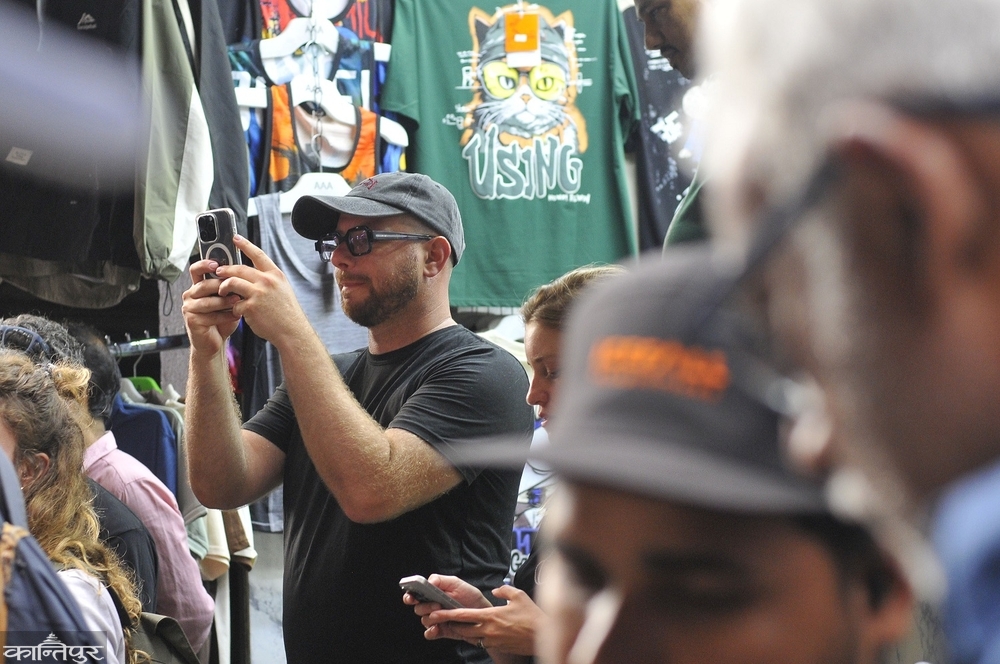
So I'm sure I'll be back . I will also recommend to my friends to come to Nepal and shoot here. This place is very nice . To make a film, everything needs to be right - the place should make you feel comfortable, the team around you should feel fun, the budget should also be right . All these things together make a good movie. I think the combination of these things is very good in Nepal.
You have a great potential to become a big film industry . Now that's what you need, with the government. Government supports young filmmakers
This will also benefit foreign productions. Big countries have tax funds for film shootings, which help local teams and bring films to the country .
That's why I suggest - make a film fund in Nepal too, make a film community . It will bring many international projects here . And ultimately it is good for the country. Because when people watch wonderful movies shot in Nepal, beautiful places are seen. I want to come as a tourist to see that place . This is a win for both sides. I am optimistic about Nepali cinema. Because I saw, the filmmaker and artists here confidently from the heart and nbsp;. So I believe in the future of Nepali Cinema and nbsp;.