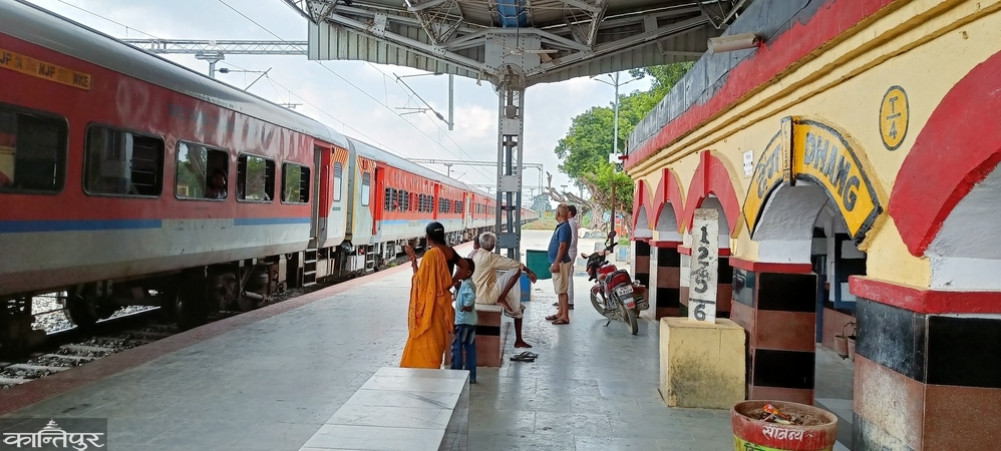
The Dheng Railway Station at Sitamarhi in Bharat Vihar has contributed greatly to the access to education, employment, trade and kinship of the people of the border areas.
We use Google Cloud Translation Services. Google requires we provide the following disclaimer relating to use of this service:
This service may contain translations powered by Google. Google disclaims all warranties related to the translations, expressed or implied, including any warranties of accuracy, reliability, and any implied warranties of merchantability, fitness for a particular purpose, and noninfringement.
Madhav Mishra is 86 years old from Balra, Lakshmipur, south west of Sarlahi. He is known as the oldest person in his village in terms of age. The relationship of Seemapari Dheng station is connected with every ups and downs of his life. For more than 6 decades of his age, he has been going back and forth from the village through Dheng station.
He remembers the days when he walked from the village to Dheng station early in the morning to catch the train. Now the roads have been made to reach the station which is 8 km away from the village. There are paved roads.
Tempu and other vehicles are found here and there. However, two decades ago there were no such facilities as now. It was not an easy way. Since there was no road, there was no question of hitting vehicles. At that time Goretto was on the way. In the local dialect, the station had to be reached through Khurpairiya Bato, which means Khetka Ali. Byalgada also reached the station by crossing the dirt and muddy road.
'After reaching the station, it was a feeling of being in contact with the outside world,' says Mishra, 'The atmosphere of the station was different with the crowd of passengers getting on and off the train . People from 10 villages used to meet . The station was also a means of knowing the news of other places. Indian newspapers, novels, comics, history and literature books found in the
station were a means of knowledge and entertainment. The tintin bell of the station, which indicates that the train is coming soon, and the notification that the signal has dropped, the passengers waiting for the train to prepare to board the train, increase the speed of the station even more . With the arrival of the train, the crowd of passengers getting on and off made the station, which was resting, suddenly seemed to be active at full capacity .
Remembering those days, Mishra says-'Now that it is easy to reach the railway station, we have stopped going to the station . Now the contribution made by Dheng for communication with the outside world has been reduced to memory.
The Dheng station was the means of contact with the outside world for a dozen villages of Sarlahi Patti in the former Rautahat, which was connected to the civilization of the Bagmati River. For more than a hundred years, this station connected millions of people across the border with the outside world .
The immediate British government that was operating in India started the expansion of the Darbhanga-Raxaul railway line in 1875. By the year 1890, railway stations were established and railway lines were built.
Sarlahi's Balra, Hathiaul, Sudama, Chatauna, Arnaha, Mirzapur, Achalgarh, Khairwa, Bahuarwa, Gadhaia, Dumaria, Sisaut, Madhuwani, Manpur and other villages are connected with the Dheng station of Simapari.
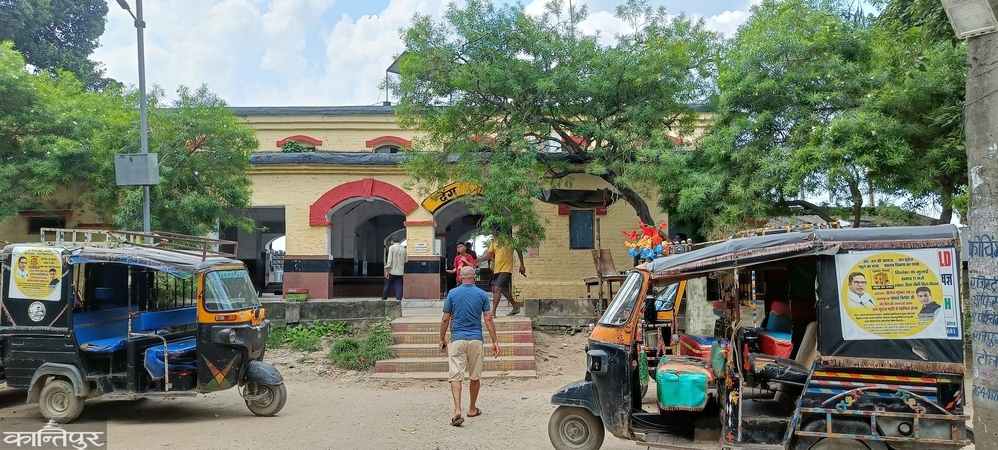
Indian citizens as well as Nepali citizens benefited from the rail link and Dheng station built one and a half hundred years ago. Able to travel without stopping . What is development? How does it help the life of the common people . Many people used to feel it when they reached the station.
Madhav Mishra from Balra, Lakshmipur, who got his first appointment in the forest department in 2018, is remembered to have reached Jhapa by train. He said that after reaching the station, it is separated from there to go east-west. He is remembered to have traveled a lot by taking trains going east when he was posted to Jhapa and west when he was posted to Mahendranagar.
'To go to Kathmandu, we used to take a train going west from Dheng,' he said, 'From Dheng, we took the Raxaul train and then took the Nepali train to Amlekhganj, from there we took a bus to Bhimphedi and walked to Kathmandu from Bhimphedi.' He remembers traveling to Kathmandu that way for many years.
He told that people from East Jhapa used to come to Raxaul by cross-border train and also go to Kathmandu. Until the 1930s, people from east to west used to travel to Birgunj and from there to Kathmandu by Indian train to reach Kathmandu.
Only after the East-West Mahendra Highway was built, that sequence was stopped . Until the construction of the highway, Dheng station was the means of external communication for the people of Sarlahi's Barhathwa, Hazria, Rajghat and Karmaiya.
Dheng is a rural and small railway station between Darbhanga-Raxaul. Located near the Bagmati river in Sitamarhi district of Bihar state, this station has greatly contributed to the access to education, employment, trade and kinship of the people of the border areas.
There was no alternative to reach any city in Nepal or India. "After reaching Dheng, it seemed that now we are in contact with the outside world," Mishra said. Stopped for 1-2 minutes . Let's not talk about the crowd. In the same 2 minutes, the work of getting off and boarding the train would be completed . After boarding the train, there was a chance to hear and talk to people from many different places. It would have known what was happening in the outside world.
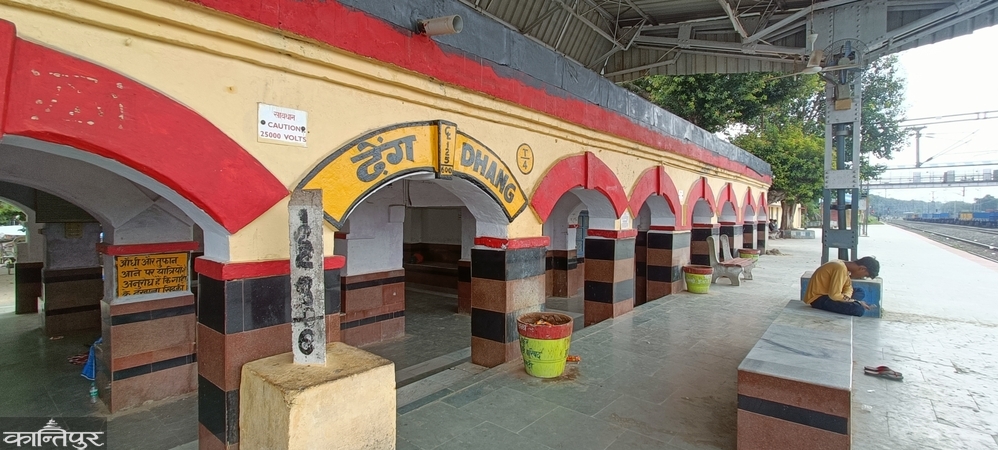
Even though there was a situation of casteism and discrimination in the village, the train brought everyone to the same level. From the so-called upper castes and the rich, from the landlords to the Dalits and the poor, all people traveled together in the train . In weddings, the groom, the bride and the bride and groom used to travel by train.
From the year 2028, travel from Mahendra Highway to Hetauda and from there via Tribhuvan Rajpath to Kathmandu became easier. Although Tribhuvanrajpath was already built, it happened only after the construction of Mahendra Highway . The construction of these two highways made it easy for people from the east and the west to reach Kathmandu from within Nepal and to travel elsewhere. Before that there was dependence on cross-border rail travel to travel from one place to another even within Nepal.
Only the construction of the Mahendra Highway did not remove the dependence on the railways of the villages in the far west of Sarlahi. The construction of the highway was 35-40 km north of his village. Highway Due to the lack of connecting roads and public transport, the only way for the people of the border villages to go out or come to the village from other places was to get on and off the train at Dheng station.
Even to reach Malangwa, the headquarters which is an average distance of 25-30 kilometers from various villages in the west, the situation remained that they had to use the train until later. The postal highway was unpaved and dilapidated. There was no bridge over Manushmara and Lakhandehi rivers. The vehicle was not moving. People used to walk or cycle to the capital. It was also difficult during the rainy season.
In the dry season, they used to travel to the headquarter by riding a Byalcar and later a tire car. Even across the border, the condition of the road was not good. There was no bridge over the river. However, public transport including buses started running only after a long time . There was no other option but the
train . People used to reach Dheng station by walking early. It was a one and a half to two hour walk. There was no rickshaw in the village. Bagyalgada was often driven at home. By using wood and bamboo, the masons in the village would build the Byalgarada, so its availability was easy .
Byalgada was the main vehicle for agriculture, farming, business and travel. With the help of two big wheels made of wood, two bullocks (byal) used to pull it and take it to its destination. Its movement is called Bahlman in the local language . At the 'command' of his voice, the speed of the car was less slow. Two oxen (bayal) used to transport goods or people on the road that was dusty in the dry season and muddy in the rainy season.
Byalgada was decorated in a special way on the day when the women of the house, including the daughter-in-law, had to travel. Cloth was used to cover the top and front and back. Throughout the journey, the sound of the wheels of the Byalgada could be heard. Even from Byalgada, one and a half to two hours journey would reach Dheng station . The station was full of women, men and children waiting for the train.
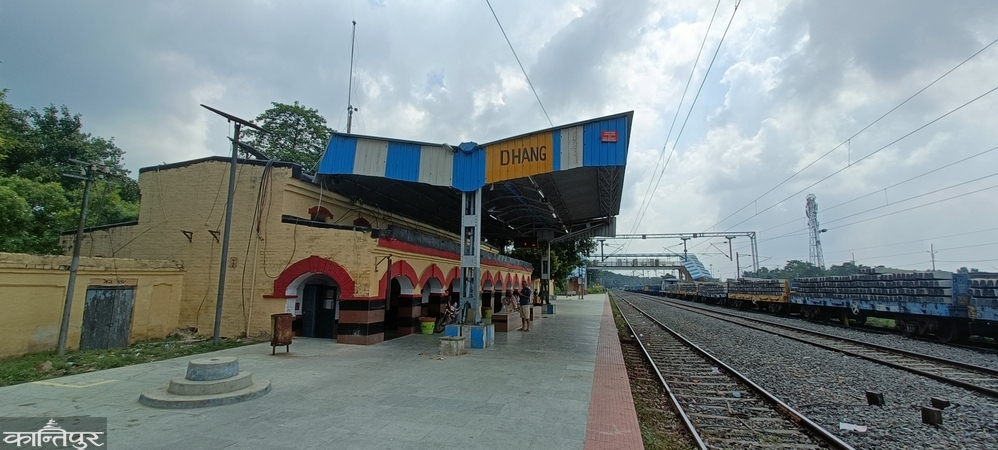
Those going to Gaur, Birgunj or even further west used to board trains coming from Darbhanga to go west. Those who wanted to go to the headquarters Malangwa or further east would take the train from Narkatiyaganj-Raxaul to go to Darbhanga . Trains arrive at a fixed time.
According to that, the journey started from home to reach the station by taking the necessary time . Citizenship, Property, Adda court work For those going to Malangwa, the headquarters, half the day was spent in travel. If the train did not come on time, they would spend the whole day on the journey.
Had to go to court to get the job done the next day. After taking the train from Dheng station, after a 45-minute journey, the people of the villages around Balra were forced to travel to Sitamarhi and from there by bus to Sonwarsa and from there by foot or rickshaw to Malangwa. Sitamarhi Sonwarsa 25 km road was very bad .
Sitamarhi-Sonwarasa highway has been upgraded and made into four lanes. Buses used to complete the 25 km route in more than 2 hours. It was not possible for the women who went from the village to Malangwa for special work to return in one day. Had to live in relatives, hospices or hotels . A lot has changed between that day and today.
Jitendra Prasad Singh, a former teacher resident of Arnaha, says - 'It has been more than two decades since our relationship with Dheng Station was broken.' The development infrastructure has been prepared on the Nepal side. Improvements have already been made to the cross-border roads. Bridges were built across rivers. It stopped Indian buses, jeeps and tempos from coming near Nepal-India border .
"That is what broke the practice of taking the train to Dheng," said Singh. But, it was too late. The Hulaki road has also been paved since last year. This has increased the confidence of people.'
Those who have their vehicles can travel at any time. The number of motorcycles in the village has increased. Some have four-wheeled vehicles. With the construction of Peach Road, electric rickshaws have been added. Buses have been started from the village for Kathmandu, Pokhara, Birganj, Gaur, Janakpur and Malangwa. Small EV microbuses have been operated from Kathmandu.
Until a few years ago, to go to Kathmandu, people from the western part of Sarlahi had to reach Malangwa or Gaur and take a night bus. India had to go to reach Gaur and Malangwa . For education, health, employment and transportation, people here used to travel from their homes to Dakshinpatti (India). Now that has changed .
Now the journey of the border village people has started north for all the work. Due to the construction of bridges on rivers, the construction of postal roads, the construction of roads in villages and villages, the villages including Balra, which were considered far away in the past, have become closer to the headquarters and the East-West Highway.
The subject of reaching the station and boarding the train is now limited to memory. The current Genji generation does not have that experience . Since their birth in 1997, the relationship with Dheng Station seems to be gradually breaking.
Darbhanga-Raxaul narrow gauge (small line) extended towards the end of the 19th century and millions of Nepalis in the border areas benefited until the 20th century. That is why Dheng station has remained an integral part of the life journey of the people of the western region of Sarlahi till the 20th century, says Balra-based journalist Chandrakishore.
He is remembered for traveling by train until the 50s. If you had to go somewhere outside the village, there was no alternative to the train . And, to board the train, one had to reach Dheng station, that's why the contribution of Dheng station to the education, employment and treatment received by the people here in the past is unforgettable, he said. Although the new generation does not know the experience and the importance of the station, until the year 2000, the share of those who have used the station a lot is large in the society.
First coal-powered trains ran. Later came the Kudne train from diesel . Now the electric train runs smoothly . Meter gauge rail line has changed to broad gauge rail line . Trains connecting various major cities of India are running through Dheng. However, there is no significant change in the shape of the station. The structure of the station built during the British period is the same.
All round and express trains do not stop here as they are counted in small stations . There is less traffic in the station than before. Tempus are found parked outside the Byalgada stop. The Goreto path used to reach the station on foot seems to be struggling for its existence . Hanumanji's temple was built there after the efforts of the people who came to catch the train at 'Chandal Chowk', which is on the pedestrian path, and there were frequent incidents of robbery.
Journalist Chandrakishore becomes 'nostalgic' by remembering Dheng station and the memories of traveling from there. He has many experiences of traveling through the station alone, with family and friends. 'Every trip was more new and lesson to build up to the construction of the postal link and the NBSP;.' Explains & nbsp; 5 However, he said that the contribution of the scattered stations are not forgotted for a multileism side with a multi-midignic, cultural, cultural;. & Nbsp;