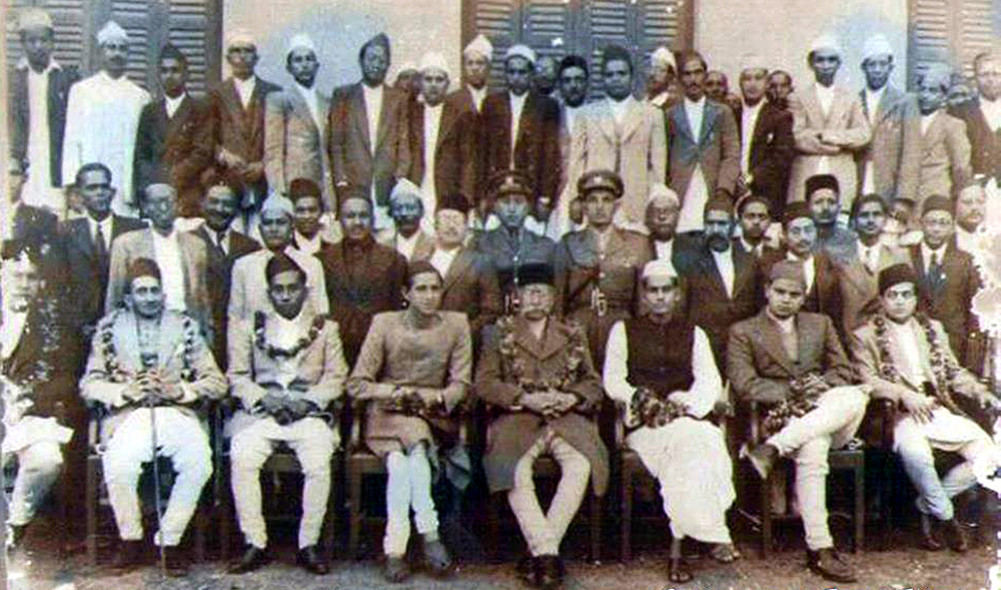
In Nepal, authoritarian regimes have fallen in various periods, arbitrary governments have collapsed. The first public movement to open the door to democracy was in 2007. Those who led that movement were young people.
We use Google Cloud Translation Services. Google requires we provide the following disclaimer relating to use of this service:
This service may contain translations powered by Google. Google disclaims all warranties related to the translations, expressed or implied, including any warranties of accuracy, reliability, and any implied warranties of merchantability, fitness for a particular purpose, and noninfringement.
If the government is a dictatorship, there will be no shortage of patriots to fight for democracy. ...The colony becomes independent through sacrifice and austerity of the revolutionaries who do Kurwani even for life. Arbitrary government collapses, authoritarian system is overturned.- Bhuvanlal Pradhan, People's Revolution of Nepal - 2007.
As said by Bhuvanlal Pradhan, who himself was burned in the revolution of 2007, authoritarian regimes have been overthrown in various periods in Nepal, and arbitrary governments have fallen . The revolution of 2007 contributed to bring Nepal into a new era. Those who drove that revolution were the youth.
Under the British imperialist regime, our plight was no less than that of the people of any colonial country: Bhuvanlal Pradhan, Nepal's Janakranti, 2007 Royal rule is the dark age in the history of Nepal . The Rana, who stuck to the ancient feudal thinking and beliefs, separated the society and the state from the world and ruled the country as their private property for more than a century. Janakranti did the job of bringing it out of this dark tunnel . From this revolution, democracy was established in Nepal for the first time and the country entered the modern era. This first mass movement that opened the door to democracy in Nepal was not just a political change – it was an epochal turning point, which pushed the Nepali society from traditional feudal darkness to modernity .
Ranashasan was established by trickery and taxes. was autocratic . People from the Rana family used to be appointed to high positions in the military and civil service. There was no power in the hands of the king, nor authority in the hands of the people. Mr. 3's bid was legal. There was discrimination on the basis of caste. In the same punishment, some were punished, some were exempted . There was no case against the Ranas.
Jang Bahadur, who was called Rana from Kunwar and Ranaji from Rana, and his followers created a stir not only in the country but also in the family. Examples of them are - Kot Parva, Bhandarkhaal Parva, Library Parva, Makai Parva etc. "Ranajis became the government, others became worldly". Pradhan writes that there were limits, deadlines and restrictions on the positions that other people could get. So much so that no one but them could keep the furko 'Shamsher' added to their name by the Ranas.
They were oppressing the Nepalese people by fighting with the British. It is said that Nepal has always been independent, but Pradhan says, "We often sing the story of our country being independent even during the period when the British imperialist power was growing. But we rarely look back at our internal situation.'' According to Pradhan, our plight is no less than that of the people of any colonial country.
The Ranas were afraid that if the people became aware, the government would be overthrown. That's why they didn't allow schools to open, banned books and jailed writers. In 1977, Nasu Krishnalal Adhikari, who wrote 'Maikako Kheti', was sentenced to 9 years in prison . 1000 copies of the book were printed in Pashupati Press. Rana government seized 999 copies . A copy was not found . The author was sentenced to 6 years for writing the book and 3 more years for not delivering a copy. The Ranas understood the contents of the book in their own way. It was said that the context of 'red-spotted and black-spotted insects on maize plants' refers to Prime Minister Chandrashamsher, who wears a red hat, and Commander-in-Chief Bhimshamsher, who wears a black hat.
The contribution of Praja Parishad in the revolution of 2007 cannot be forgotten. On May 20, 1993, Tank Prasad Acharya (then 24 years old), Dasharath Chand (33), Dharmabhakta Mathema (27), Ramhari Sharma (21), Jeevraj Sharma and others formed an underground political organization Nepal Praja Parishad. The aim of the organization was to end the monarchy and establish a democratic government.
In the dark days of Ranashasan, Nepalis went to study in different places in India. Some of them even became active participants in the Indian freedom struggle and went to jail. Indian politicians and writers/journalists have also played a significant role in blowing the trumpet of revolution among the Nepalese people after listening to the French revolution story and determined that a revolution can and should be made in Nepal. Janata Weekly, published from Patna, published the activities of Nepali organizations. The editor of the newspaper was Ramvriksha Benipuri. After reaching Patna, Keshar Shamsher offered Benipuri 1 lakh rupees to not print material that would cause trouble for them. But Benipuri's answer was, 'We are people of principles, we are not bought by money.' (Nepal's Janakranti, 2007) The Rana government was angry that the activities of the Praja Parishad had threatened their rule. So Tankprasad, Dharmabhakt, Dashrath Chand, Gangalal Shrestha, Ganeshman Singh, Siddhicharan Shrestha and others were arrested. Shukraraj Shastri was caught for speaking at Indra Chowk even though he was not in Praja Parishad. Juddhashamsher used to scold the prisoners saying that they were against them - traitors, traitors, do you understand that insects cannot damage diamonds? Against the tyranny of the Ranas, Shukraraj sacrificed on January 10, 1997, Dharmabhakt on January 12, Dasharath Chand and Gangalal sacrificed on January 15.
Nepalis went to study in different places in India. Some of them even became active participants in the Indian freedom struggle and went to jail. He heard the story of the French Revolution and decided that a revolution can and should be made in Nepal as well. Leaders of Indian Congress and other parties also wanted change in Nepal. Juddhashamsher resigned in November 2002 after being disturbed by the conscious public. The rule was handed over to his nephew Padmashamsher . Padmashamsher showed himself to be generous and said, 'I consider myself a servant of the nation.' In the year 2003, the Nepali Students Association was opened in Banaras Hindu University with the activism of Krishna Prasad Bhattarai (21 years old). The Nepali National Congress was duly established in Banaras on October 15 of the same year under the chairmanship of Devi Prasad Sapkota. Revolutionary poet Gopal Prasad Rimal (28) formed 'Nepal National League' together.
On February 21, 2003, thousands of workers went on general strike in the mills of Biratnagar. The strike took place with the readiness of the factory employees Manmohan Adhikari (26), Girijaprasad Koirala (22), Tariniprasad Koirala (24). Satyagraha started nationwide in 2004. Along with the placards of the Nepali National Congress, slogans began to echo - 'Inclab Zindavad . Long live the Nepali National Congress. We did not take the secret . We didn't take the crown....Civil rights must be given. We're ready to get married. Let's not be afraid of bullets.'
The Nepal Women's Association was opened under the strict supervision of the Ranas. Shrimaya, Sadhana Pradhan, Sahana Pradhan, Snehalata, Mitthudevi Rana and others opened the Nepal Women's Association on the pretext of having a forest feast in Kathmandu's Mhepi.
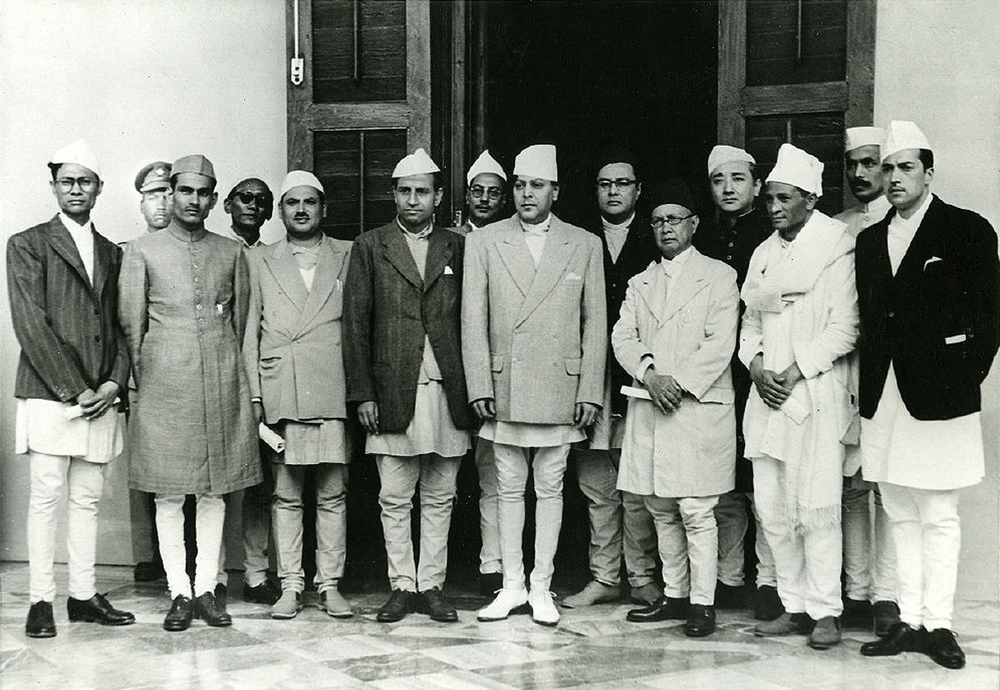
The movement intensified after Indian independence
After India became independent from the British colony, the movement also intensified in Nepal. India became independent on 15 August 1947 (31 July 2004). Not only in India, but also in Nepal, a procession took place on that occasion. A procession took place in three cities of Kathmandu Valley. In Patan, Tulsimehar Shrestha, who is known as Gandhi's fourth son, was preparing to take out a big rally. But the police said that there is an order not to go out in groups of more than ten people. You will go in groups of 9/9. Mangalbazar side was packed by the group of 9/9 people. Arrests were made in the processions.
Padmasamsher announced the Statutory Law-2004 to reform governance. But after handing over power to Commander-in-Chief Mohanshamsher in February 2004, he went to Delhi. Mohan Shamsher banned the Nepali National Congress in the country on March 31 of the same year. They tried to oppress Nepali political parties and organizations in India as well.
The Ranas were devotees of the British government in India. As long as the British government was in India, the Ranas of Nepal were also powerful. After the departure of the British from India, it became very easy for the Nepalese from the Nepali Congress and other organizations to stay in India and engage in anti-Rana activities. On 26 March 2006, a large conference was held in Calcutta with the leaders and activists of the Nepali National Congress and the Nepal Democracy Congress. From the conference, the two parties united and became the Nepali Congress. In the conference, Matrikaprasad Koirala (38) was elected president, Mahendra Vikram Shah as general minister. Krishna Prasad Bhattarai (25) Assistant General Minister, Vishweshwar Prasad Koirala (35), Ganeshman Singh (36) and Dayashankar Munsi were elected as members. In the meantime, the Ranas are only giving assurances of governance reform, citizen participation in the government and the release of captives.
Nepali Congress convened a conference on October 10-11, 2007 at Bairagania in Bihar bordering Rautahat. The conference decided to start a nationwide movement immediately. If necessary, armed struggle was the essence of the conference. The conference gave the entire responsibility of the revolution to Matrikaprasad Koirala . Vishweshwar Prasad Koirala was given the responsibility of the eastern command of Sangharsh, and Mahendra Vikram Shah was made the commander of the western side. Suvarna Shamsher was the coordinating commander who coordinated the coordination between the eastern and western fronts.
After the rapid tyranny of the Ranas increased and he had no rights, Tribhuvan asked for India's help . As a result of this effort, on 21 October 2007, he reached the shelter of the Indian Embassy. On October 25, the Nepali Congress spread leaflets in the Kathmandu Valley from an airplane. Pamphlets were scattered in Nepali in the mountains and in Hindi in the Terai. About this incident, Gorkhapatra also printed a news on 1st November that "an airplane dropped seditious leaflets inside Nepal Char Bhanjang". The day after Tribhuvan took refuge in the Indian embassy, the Ranas made the 3-year-old prince Gyanendra ascend the throne. On October 26, Tribhuvan and his family left for Delhi. That same night, the Nepali Congress called upon the common people to resist as much as possible for armed and unarmed struggle against the military regime.
As soon as Tribhuvan reached Delhi, Kathmandu became agitated. Demonstrations, processions, strikes started happening day by day. The people were not ready to accept Gyanendra as the king, instead, slogans echoed in the demonstration - Long live Sri 5 Tribhuvan Zindabad . The Rana government put Prince Gyanendra on the throne and tried hard to get international support but was unsuccessful. The British wanted to show Gyanendra because of the rift with the Rana government. But when the British representative came, they were shocked by their protest at the airport and the wave of people in favor of King Tribhuvan.
The then Prime Minister of India, Jawaharlal Nehru, issued an official statement on 12 December 2007. It had a clear message that Gyanendra cannot be considered as the king of Nepal. Krishna Prasad Bhattarai says in 'Mero Me' - the time when the Nepali people's movement was getting stronger, i.e., the British government in 1947 AD was also taking leave after making India independent . The Nepali leaders understood that the new ruler of India, Jawaharlal Nehru, etc., had full sympathy for the Nepali movement and that they did not have the same policy as the British towards the Rana. This also gave great enthusiasm to the Nepalese people's movement. The Ranas were apprehensive and discouraged by this .
The influential people of the Rana family started supporting and leaning towards the movement. A group of 20/30 Ranas of C category raised slogans in favor of Tribhuvan . Balkrishnashamsher, Diamondshamsher, Pawanshamsher and others were in this group . After the rally of the Ranas, the dictatorial rule of the Ranas of the A category was stripped . Common people also joined in their procession. The police lashed the people to death. Bhotahitiner 63-year-old Nhucheratna Tuladhar died of blood. He died there. Bhuvanlal Pradhan writes, 'Nhucheratan was the first to be martyred in the unarmed people's movement in 2007.' Balkrishna Shamsher went to Asan to pay tribute to Nhucheratan. Paying tribute, he said, "From today, I and my family have removed the words 'Sher Jung Bahadur Rana' from our names and put them on the martyrdom, and instead of 'Sham', we will use 'Sum'." Seeing the conscious people and organized manpower, Rana's rule had started to become a religion. Here, Bhuvanlal Pradhan's statement seems reasonable - organized people are stronger than any military power of the reactionary rulers.
Capture of the main cities including Birganj and Biratnagar. With the support of the local people, the liberation army achieved success in many places. Jhapa, Ilam, Birgun, Bhiharuwa, Bhiharuwa, Bhirama, Gorkha, Gorkha, Gorkha, Gorkha, Rugged; The governor of Rudrusham and Pokhara, Palpa, was involved in the movement, and Nbsp;. After later in Palpa, the protesters made Rudrusham's leader's head of popced by public dictation.
was first occupied Birgunj & NBSP;. News to Western Front came to Transimator - Birgunj Liberate, Capcradddd & Nbsp ;. The Piralm Malla's salvation was attacked at Birgunj at 12 o'clock and nbsp;. The Rana tablers could not last long and NBSP;. But the Theraming seriously injured and nbsp; 5 He got Donation Hospital in Rockol & Nbsp ;..
is the nephew of the king's son and Sungarshmamsheras and nbsp;. Trained military officer received from the Indian National Association College. The Indian soldier's job was locked in Nepal's historical essence and nbsp;. 33.3 million rupees from Birgunj (different lessons of Selfs, was seized, and Nbsp ;. Girija Prasad Koirala, mentioned after the amount later, refer to "his own thing '. BP even if the amount was safe, then, was safe through Himalayan Airways by the Himalayan Airways and Nbsp ;. Also caught the Indian police in Delhi & Nbsp ;. Matrikar Nazaraj, a mother in Delhi, and Nbsp with BP in Delhi. Curbs, 'Why did you get rid of my robbself and Nbsp;?'
Rev. 3 and Nbsp ;. Saltana seized all the terms of Madhes Eastern Madhes from Janakpur for Ear Jhapa and Nbsp ;. The population was raised in many places & Nbsp;. Congress, Bardiya and Kailali-Kanchanpur were not only for emerges in Banke, Bardiya and Kailali-Kanchanpur. Jhapa Capectered, Painly Capecard ... & Nbsp ;. Now the turn of herdin and nbsp;. Biratnagar is urged to surrender to 22 in dice, and Nbsp ;. But he didn't terrain & nbsp;. The next day, the Lord's running in herdagar and nbsp;. But Immediately not seen the seizure of Biratnagar & NBSP;. Shortly afterward after direct participation in direct participation of BPISM, Redempted Biratnagar and Nbsp ;. The tractor was fought to the tanker and nbspsp;. The 400 soldiers occupied about 300 soldiers of the liberal senity and nbsp. The author United State University, Nepal, mentioned in BiP, BP Himself, said, "Badhitim has reached with Medhadiman, and NBSP;. Surrender & nbsp;. If you don't, you can enter the home anywhere at home and nbsp; 5 The damage arising from it will not be a responsible Nepali Congress and Nbsp; 'Looking a white flagged from the house within the moment's microng, that is, surrendering & nbsp. In that battle, the commander of the Salvation Arion was a special role of GB Yakthuumba (30) & Nbsp ;. He was Joda who was fighting Berma's battle in World War II and NBSP;. Even the son of the Badhakim is killed & nbsp;. Indian Dr. in Biratnagar's struggle. The clanippe of Kamidiip Jha had also reached and nbsp;..
Leader Politarian party-party leaders of various political parties were seen in the foreign political party, but the People's Liberation Army was due to the army and NBSP;. Major Purna Prescent Hids, Magazine Dilman Burung, Captain Budidyhirha Gurung, Manmandu Bud Singh Burung, Manmart Burung, Manmart and Ram Prasad Rairs cannot be forgotten, and Nbsp ;.. Story Kumar Tamang (who was himself in a Savior): 'Samely, who was defeated by a manneclane army:' Speaking in the country, "says NNSP;. The campaign was successful by the warriors of the People's Liberation Army, the Liberal of Freedom of Freedom of Freedom of Rana rule rule and Nbsp;. Despite this, there were the people of the People's Liberation of the People's Liberation of the People's Liberation Army, who began his life during the revolution, and Nbsp ;. Therefore, the People's Liberation Army is a major and decisive power of the revolution in 2007, the Rana was hugged by the Story-BREA Movement and the Armed Confustions, and Nbsp;. Trossed from the people, Prime Minister Mohan Symphian proposed to Delhi in 11 puspi-improved, etc. as an angel of victory and nostrils. In those points, Baal's obligation was to form a Constituent Assembly within 3 years and making the Constituent Auppy, a 9-member cabinet formation of the 9-member cabinet. On that of the side of 6 and the people's side, 3 people were said to work on the basis of joint responsibilities and nbsp; 5 Until the new constitution was drafted, the Government of Nepal was another point to reign on the basis of legal laws and nbsp;. It was also mentioned to all the rights of the political party, and all others except treasonal crime was allowed to return to all Nepalis and remembered the rebuction and Nbsp;. Mohanshemarsheer's proposal was agreed to Indian Prime Minister Jahalal Nations and NBSP;.
in beds, Delhi was called Tripartite even if the tripgar was called Tripartai, Rana and NBSP;. Congress was forced to Assimilate Nehs to the consent of the Nepalese & Nbsp ;. In this context, Mathbar Prasad Koirala said, "The revolution of Revolution has not arrived before Delhi, the Rana is the royal cloud, and nbsp;. And, after almost everything else we end, we have reached Delhi & NBSP;. Sunday is not announced immediately and Nbsp ;. It has been done only 2 days and Nbsp; 'in Story Defense and NBSP;'. ' Others were ordered to gradually gradually, and NBSP;. In Febh, Tribhuan's ship in Febh, two ships flew Kathmandu to Kathmandu and NBSP;. The main command of Nepali Congress leader Sabbad Koirala, Dennind Girijana, Shyam Kumar Koirala, Surendra Marka, Surendra Marka, Surendra Marka, Surendra Mushala, Surendra Mushala, Surendra Municipal Subba, Surendra Malaway, Surendra Mass. The three ships were landed after a year after seven and nbsp;.
Municipal 2007, Trumoan announced that democracy was restrolled democracy and Nbsp ;. He declared the Interim Regional constitution, 2007 and Nbsp;. The legislation was the first constitution provided by the king for the people in the history of Nepal and the first constitution is applied to the law and nbsp ;. The Interim Constitution was a achievement of Ranashastas and Nbsp;. Tuldawan proclaimed the living for a group of Assembly elections in the name of the nation, the election of the legal meeting of the legal meeting of the legal meeting. If the legislation is ready, if the legislast was still in the form of the then Sri 3 Mohansheer primary and Nbsp;.. Similarly, Defense Minister Bibhshshham Jhsharaj, Baghwaraprap, Minister Singh, Minister Singh November, Kudarajang Rana, Kudarajang Rana, Khadarajang Rana, Khadarajang Rana, Khadarajang Rana, Khadarakuli Mixed Municipal Minister for transportation and Nbsp; This Rana and Representative was insertion government insertion of the rule and nbsp; 5 Interim Registration Strategy, 2007, but also the election of the Constituent Assembly would not be for a long time for a long time for a long time, and Nbsp ;.. Only after the implementation of the Kingdom of Nepal, Parliament elected a parliamentary and parliament with the Parliament of Nepal's history and Nbsp for the first time in Nepal's history and NBSP;. Different Force and Serory Singh-Breakan Singh Singh Singh Singh-Breakan Singh Singh Singhgunj-Stri Krishna Sharrgunj-Stri Krishna Sharigunj-Storm Krishna Brema Tilli-
Bhvym Mammasharsher Story Rajhhani-BREAK GrealSham's-
-
Dr. KI Singh
-Break Mall Sharma-Break-Breakpur-Breakpur-Storm Prasad Giri Santar-Break Saptari-
Krishna Prasad Bhattarai-Break Bhattarai- Story Prasad Bhattarai-BREAK Jhapa-
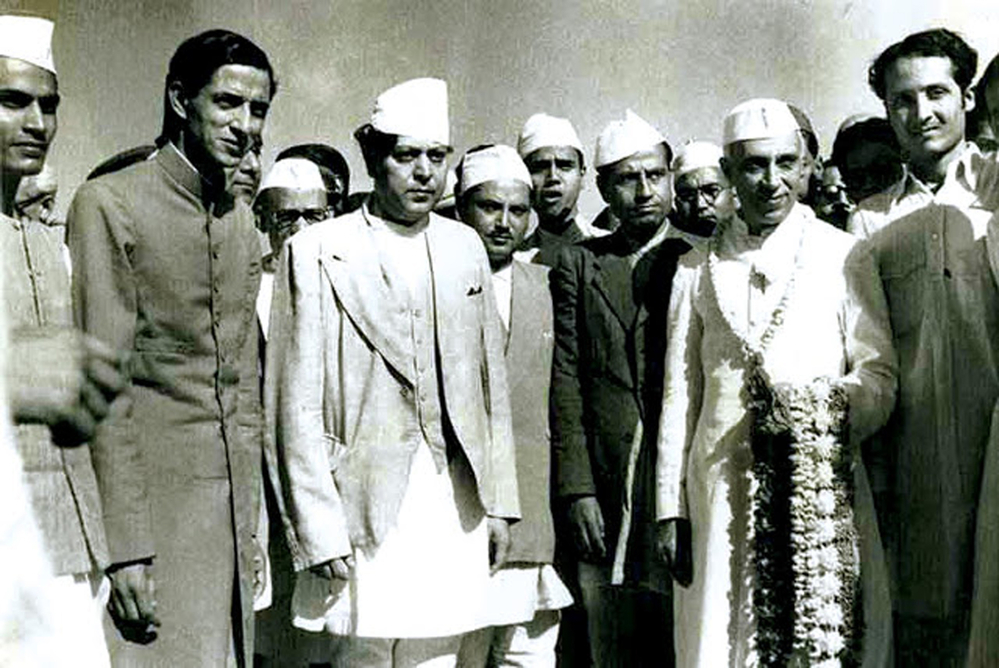
Bhankh Prasad Achary-Break