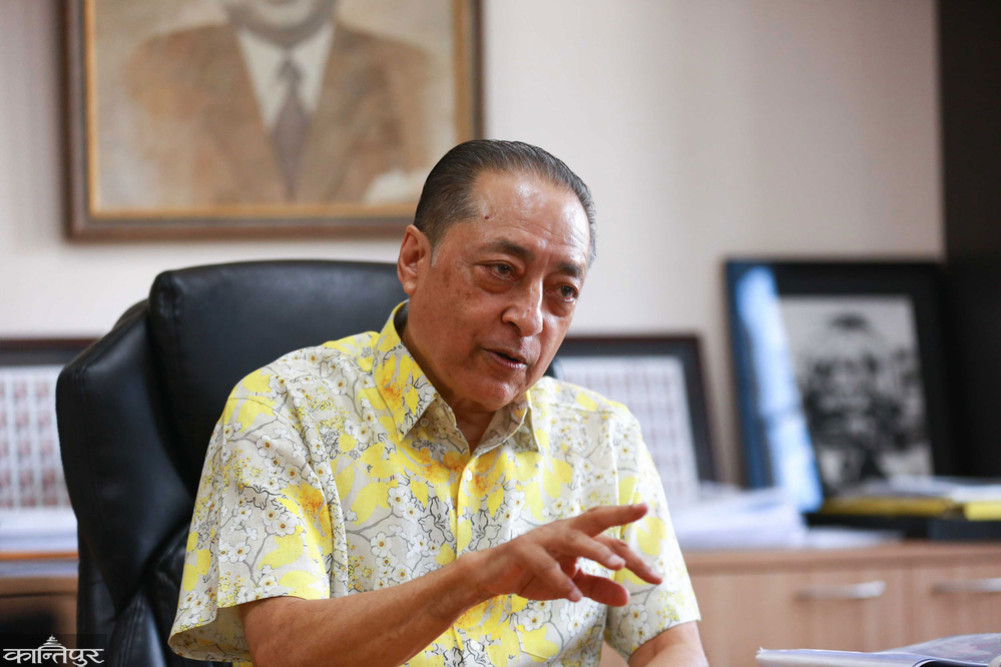
Although he was not interested, Prithvi took a government job in honor of his father, his father's opinion was that we are not sad to eat/live, so we should work to have a name and reputation rather than earning money.
We use Google Cloud Translation Services. Google requires we provide the following disclaimer relating to use of this service:
This service may contain translations powered by Google. Google disclaims all warranties related to the translations, expressed or implied, including any warranties of accuracy, reliability, and any implied warranties of merchantability, fitness for a particular purpose, and noninfringement.
The memory of that day is very vivid - Prithvi Bahadur Pandey, Chairman of Nepal Investment-Mega Bank. Prithvi, the seventh generation of Kazi Kalu Pandey, remembers that day, 'I was sitting at home, suddenly I got the news that my father was ill. As he hurriedly approached, the brightness of his face had faded. We hurriedly took him to the army hospital but could not save him.'
Every day after returning home from the office, he met his father - Prithvi. Father namely Sardar Bhim Bahadur Pandey, famous in administration, diplomacy, writing, social service. After the death of his father, he felt a deep emptiness for a long time - Prithvi. Even the memory of his father lights him up.
Prithvi's father-remembering and respect is reflected in his office, where a large painting of his father is hung. When he stares at the painting, he is surrounded by memories of his father. The father hanging in the painting looks like he is smiling – Haranimesh. Revealing the details of this painting, he said, "A thanka artist spent 2 years preparing this painting from a photo taken when my father was ambassador to Germany." Prithvi, who is very interested in painting, says.
The earth occasionally falls into the past. He reminisces about his childhood with his father. At that time his father was a strict disciplinarian. "My father was strict in terms of discipline," says Prithvi, reminiscing about his father. "My father used to always read and write." Waking up early in the morning, taking an hour's morning walk, always being active and thinking about new things. All these habits of the father continued till the advanced point of age. Even on the last day, father used to walk for an hour in the morning.'
Father's aim was to give good education to all children and keep them in the country. "Due to this thought of my father, four of us out of 5 sons entered the government service," he said.
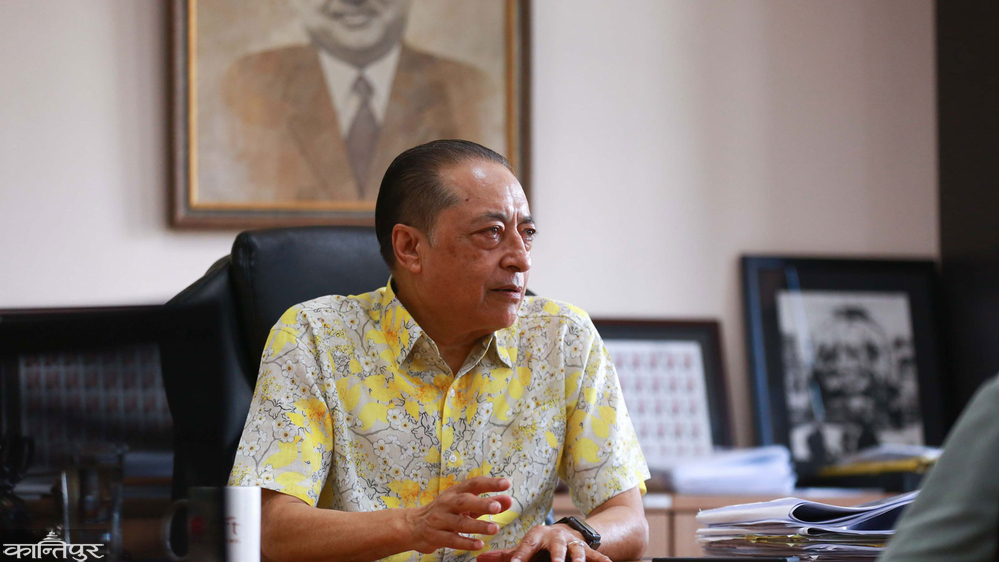
Prithvi's father Bhim Bahadur Pandey spent a long time in administration and diplomacy. Earth's adolescence was sometimes spent in then West Germany, sometimes in Britain and sometimes in India. With his father, he saw many languages, cultures and traditions in many countries. He recalled going to Germany with his father when he was 10 years old, "We had to go to Germany via Delhi. That's when I tasted Coke for the first time in Delhi.'
Even when he was German, father always went for morning walks. Prithvi used to walk with his father. His father used to take him around many European cities during his holidays. "No matter which city we reached, my father used to walk us for hours. He used to say - you can't understand the city without riding a motorbike, without walking,' said Prithvi.
Bhim Bahadur, the first Nepali to graduate from India with a master's degree in commerce, wanted his sons to be sharp in studies. He wanted 'sons to earn more prestige than wealth'. When Prithvi returned to Nepal in 1978 after passing the Chartered Accountant from India, he did not think of getting a government job. On the day the news of his passing came, a small gathering was going on at his house. There were - from the then governor of Rashtra Bank Kulshekhar Sharma to Bhesh Bahadur Thapa.
The father was happy to tell his friends that his son had passed. After telling that the governor was looking for a chartered accountant in the National Bank but could not find one, his father suggested him to take that job. Prithvi says, "I was not particularly interested in taking a government job." I didn't even mind the salary of 1275 rupees.' Although not his interest, he respected his father's interest. He narrates, 'Father's idea was that we don't have to worry about eating/bringing. Therefore, rather than earning money, you should work to maintain your name and reputation.'
Prithvi took a government job to honor his father's wishes, while he was at the National Bank, he went to America to work at the International Monetary Fund. There he also got some attractive jobs, but he did not forget his father's wish that his sons should stay in the country. Bhim Bahadur also returned his eldest son Sagar, a mechanical engineer working in Germany, to Nepal after 12 years.
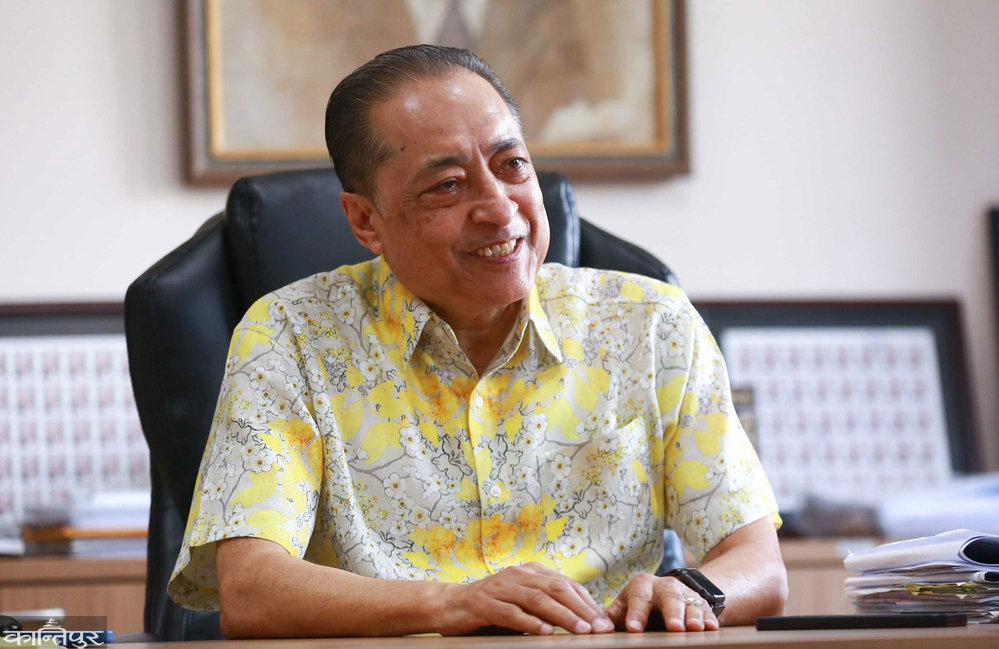
Bhim Bahadur, who was born in Syangja in 1970 and entered the civil service during the Rana period, welcomed everyone from Syangja to his home, listened to their complaints or problems and memories of the village. Even today many people meet the earth. Many people list the work done by their father at that time. Remembering all that, Prithvi feels - how many people father has earned. "I am eating the fruits of his good deeds," he says.
According to Prithvi, the father had a close association – with Father Stellar. He was the father who inspired his father to write something every day. Prithvi still remembers his father's habit of writing something in his diary every day. The result of that beautiful habit is Bhim Bahadur Pande's 'Tyas Bakhatko Nepal', which seriously discusses society, economy and administration at that time.
From 'Times' to 'Newsweek' magazine, Prithvi remembers his father's habit of reading Khatai-Khatai every day. After reading those newspapers, he would underline the important articles and let us read them. Perhaps he used to do that so that we could connect with the world,' said Prithvi.
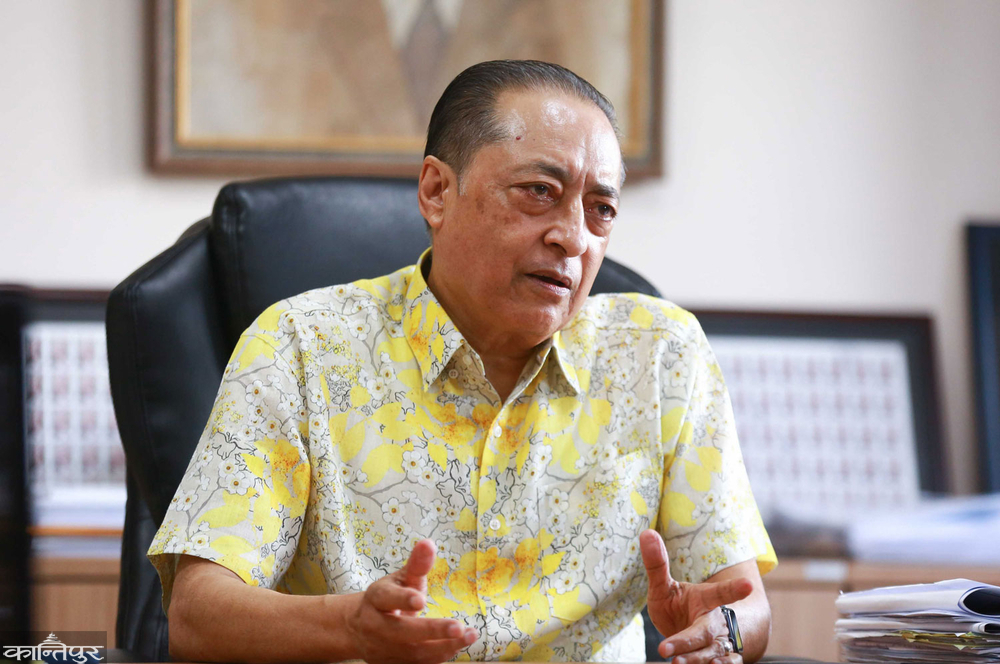
Prithvi was able to meet and interact with influential people from an early age due to his father's influence, which spread from Nepal to foreign countries. From Madhav Rao to Karan Singh, who made an influential position in Indian politics, his father knew him. Due to his father's association, he got to meet many influential diplomats from home and abroad. He still recounts the experience that he got to know-understand-learn many subjects from his father's broad influence and diligent nature. Says, "Father's influence continues in many situations of life."
There is still a pain in Prithvi's mind-brain- Father did many things for us throughout his life but we could not do anything for him. "Dad took us around the world. Did everything for us. But we couldn't get him to do anything. When we were able to do something, he was not among us,” Prithvi is emotional.