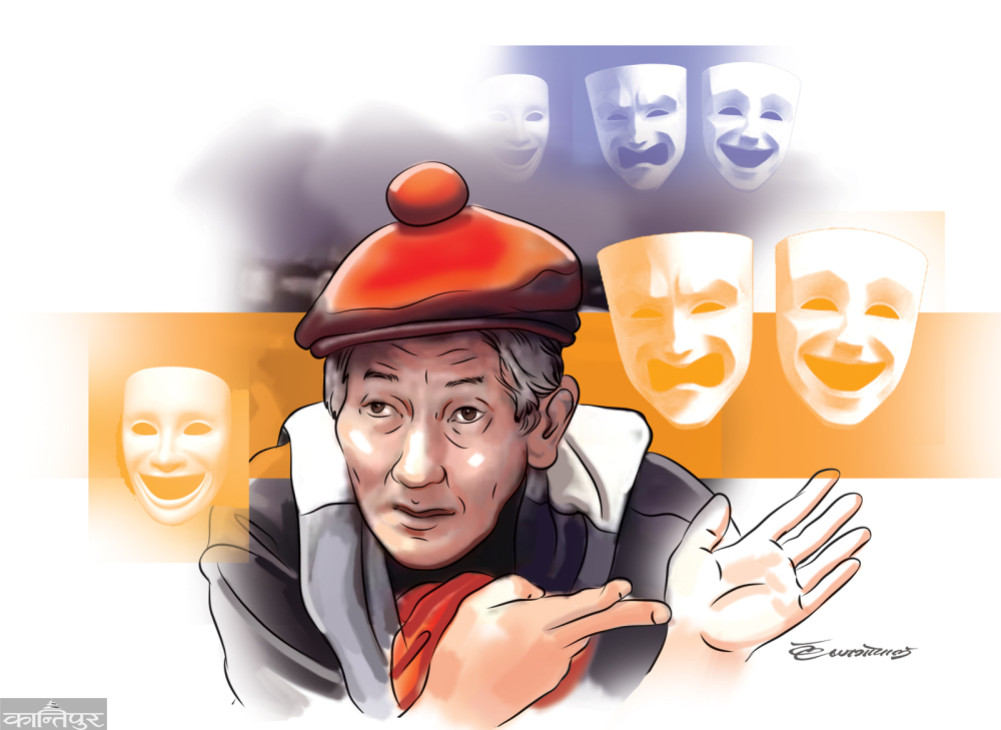
The name of Hum Yagaka is a smile from the old generation to the new generation, which makes the new generation laugh for a while
We use Google Cloud Translation Services. Google requires we provide the following disclaimer relating to use of this service:
This service may contain translations powered by Google. Google disclaims all warranties related to the translations, expressed or implied, including any warranties of accuracy, reliability, and any implied warranties of merchantability, fitness for a particular purpose, and noninfringement.
It was a different era, when there was no TV in every house, but the mind of a person made a map of where we would go. And, people used to smile at themselves. There were no phones in hand, yet everyone started gossiping about each other's names. And, he laughed again. Because that was the era of telling and listening to jokes. There was an era when the market was beaten by the name of Hum Jagaka.
When did I first hear the name Hum Jayaga?
I still don't know that. Because, without knowing this name, my father's generation kept giving it to his generation. Your generation passed it on to our generation. That's why, at home, it seems to me that the name of Hum Yagaka is a smile that the old generation is giving to the new generation. Hearing which the new generation can laugh for a while. They can forget a thousand sorrows and rejoice for a while. I was very young when I first heard the jokes of
Hum Jayagaka. Namsung of the Lepchas started every year in the cold month. It was a winter break at school, so we had a lot of fun at that time. So we all used to sit around the fire for half of the night. The elders were pulling the stone of the millet and telling the jokes that we will die.
Yes, from that time Ho Hum Jagaga seemed like a joke character to me. It never occurred to me that he is a real person. Until years later, Hum Jagaga seemed to me to be a mere 'myth', who would visit the tea gardens of Darjeeling at every spare moment as a joke. They roam around the villages. And, even for a moment, people forget their sorrows and return home to laugh.
but, no.
This is the year 1948.
was the winter season. There was a little sunshine in the middle of the harsh winter. So the city of Darjeeling was bustling. Near the club side some drivers were standing basking in the sun. Two/four old jeeps were kept right on top of it. A couple of kuires came to a stop where the jeep was parked. Look at the motorstand below for a while. And, blowing smoke like hot steam from his mouth, he asked, 'Who will go to Tiger Hill?'
At that time, no driver was going to Tiger Hill. Because the road was very bad. No driver was allowed to walk on the roads that were excavated by force. So no driver paid any attention to the kuires. But, when the same question was asked again.
Dal Bahadur Gurung, who was repairing the broken old jeep, came out. Turning to the kuires, they laughed and shouted, 'Hum jagaka.' And started looking at each other's face.
Dal Bahadur came close to the sheer Kuires. Wipe the stains of mobile on the face with hands. And, started digging the bag in the car. He was mesmerized by his own tune. He was just trying to make the people laugh. He had no idea how bad the road to Tiger Hill was. Because, it was not long before he started driving.
'Teske bauko hum yagaka, ab yo murch', all the other drivers started gossiping and laughing. However, Dal Bahadur did not spare anyone. Started the jeep. And, went to Tiger Hill.
That was the first incident, the day someone reached Tiger Hill with a jeep. And he came back safely. When Dal Bahadur came back to the club side with a little jeep telling jokes, then all the drivers were shocked and started talking to Ekarka, 'he will come back alive.' was Dal Bahadur Gurung became 'Hum jagaka' in Railraila.
Hum jagaka ie Dal Bahadur Gurung was born in 1921. His son-in-law Dhojvir Gurung Panchthar Maku Makluwa was from Nepal. In 1914, father Man Bahadur Gurung came to Darjeeling from Nepal with Baje, exactly seven years after that, Hum Jaga was born in Chungthung tea plantation.
That was Darjeeling in the black and white era. At that time those studying 6th class were called 'Middle Pass'. Those who read so much could get a government job, but he did not read much. Studied only three classes. Then left school.
Anyway, his way of teaching at school was amazing. The masters used to teach the alphabet by acting, 'Kukur munte a. Hare Mukhe with a mouth like a rabbit, b. Cows with cow-like hooves c. Like home.'
While learning this letter, Hum Yagaka also learned to act a little. A few people even went to laugh. It seems that the humor in Dal Bahadur's life is from the same 'Kur Munte Ka'.
When Dal Bahadur was fifteen years old, he was fed up with the condition of the house. Mother was a tea worker. There was nothing but misery in the house. He left home. He left Darjeeling and went to Calcutta. That was around 1936. After reaching the metropolis where he got lost by train, he began to meet Hemkem with the British. He got an opportunity to study mechanical engineering in Calcutta. World War II was going on at that time. The British needed an army to fight the war. He also joined the British Army. Then he started kicking the army vehicle.
When the World War ended, he felt at home again. In 1948 he returned to Darjeeling. After that, his career also became this. He was in the club side stands all day. They used to wait for the travelers by keeping a few jeeps. When a new tourist came and asked, ``Where are you going?'', he used to be the first to leave with a smile.
and, he used to reply, 'Hum jagaka'. As I said before
, Darjeeling lived by Hum Jagaka was different. People had no means of entertainment. Whatever it was, everyone had that one joke to laugh at and laugh at. At that time in every village there was some one or the other prankster, who used to tell jokes to those sitting around Angena every evening. And, he used to make me belly laugh. Hum Jayaga would do the same as soon as he saw the gathering of people.
We used to live in the main town of Darjeeling. However, that city was quiet like a village. People from Ghum to Lebong knew Ekarka by name. People died in Kagzhoda and even those from Chandmari came to cry. If there was a wedding in Singmari, people from Jorbangla would come to have a feast. People's lives were very easy. He would get a government job after studying a little. There was no need to pretend to be someone like now. It was not meant to be eaten in the name of politics.
Darjeeling stood in the corner of the city and the mountains were visible. Because the British left a rule in Darjeeling, no one could build a house above the level of the main road. People lived by that rule. Even those who have money could not build a building at will.
The roads of Darjeeling were also very open. There was no traffic jam like it is now. Every now and then a car drove by like a postman brought a letter to a village. That is why the main road was empty most of the time. Children were playing plastic football by making a post on the main road. We used to walk on such a road in Darjeeling in a jeep numbered WB 1265. He used to gossip and tell jokes to every traveler, forgetting his own sorrow. However, Hum Jayaga, who makes people laugh, also had his own sorrow. He used to drink a little in the evening to get rid of that sorrow. And, he used to make jokes about his own life and return home.
But, no matter what, Jokes did not leave Hum Yagaka. Maybe that's why the car he was driving just kept going around the city of Darjeeling, what happened? The jokes he was telling me mixed with the cold wind coming from the mountains. And, Chia entered Kaman. Entered the villages. It kept reaching the country where every Nepali lives. After the
, this happened, Hum Jagaka himself didn't know, how he got mixed up in the jokes that everyone told without knowing his name. Because, when any person started telling jokes, he would gossip in the first line, 'Ek din hum jagaga gadi lee telo re!' Jokes used to become 'hit' after adding the name of Josuka Kathe Ni Hum Jayaga. Maybe that's why so many jokes were made in his name, which are not accounted for.
It seemed that 70 percent of the jokes made about him were not even heard by us. Because, people should have thought of crying as sorrow, pain, torture, but laughing did not have to do anything. We would have missed Jagaka.
It was the year 1982, writer Vijay Kumar Rai was studying at Darjeeling Government College. Before the evening bookstore was a tea shop. He used to go there whenever he got free time and chat while drinking tea. One day an acquaintance driver came to the tea shop and asked Vijay, 'Do you know Hum Jayaga?' . Do you really know a person?' Because, he also felt, we are just characters of jokes, not people.
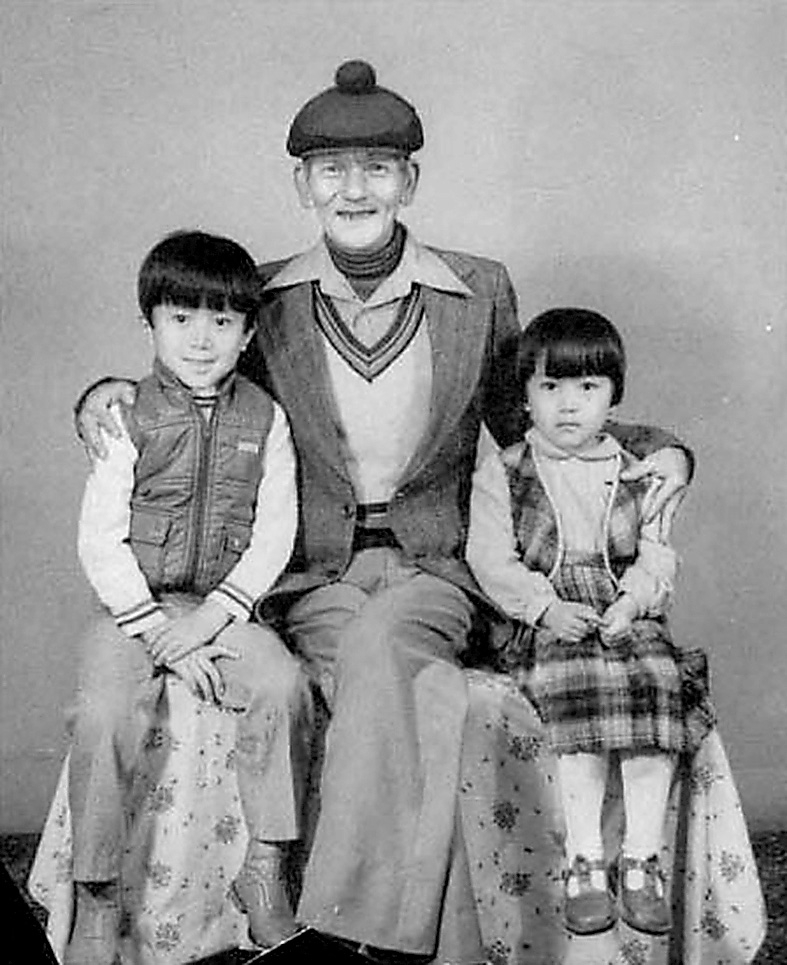
So he pushed and asked, 'Hum Jayaaga is a man, right?' Vijay was surprised. Looking at the face of a man wearing a Scottish hat, he toiled for a while.
'Really?', Vijay suddenly became excited again. And asked, 'Where is your house? May I come to visit?'
Hum Jagaka allowed. Vijay reached Kagjoda the very next day. And requested, 'I want to make a collection of your jokes. Don't tell jokes!'
However, Hum Jaga was different from the jokes in the market. He took out the poem from the notebook and started reading. Well done to Vijay. He kept talking. Hum Jagaka became more serious.
However, Vijay did not give up. Keep in touch. We kept meeting with Jagaga frequently. And finally collected some jokes. For the first time, he prepared 'Hum Jayako Diary'. However, while making the book, a new thing came to my mind, how can I make jokes while writing serious literature? He met Indra Bahadur Rai one evening when he was under stress. Rai himself asked him, 'What are you doing, Vijay?' Will be,' Ibara's eyes sparkled with joy, 'I'll see. Come with the manuscript.'
Vijay reached Tungsung the very next day. Ibarra corrected the language of Hum Jaya's jokes. The lines were drawn back and forth. And asked, 'How much are you printing?'
'Had a talk with the publisher. Five thousand copies will be printed,'' said Vijay, holding the manuscript. Ibarra smiled. Vijay then went to Hemu Rai, the sheer painter. He was a famous painter. He used to charge between 150 and 300 rupees for one painting. Vijay asked him for the cover of the book.
Who in Darjeeling did not hear the jokes about Hum Jayaga? He was also a fan of jokes. So he said, 'This is my contribution. I'll make the best map for free.' "Hum Jayako Diary" came to the market. The book is lost. Another edition was printed within a month.
Hum Jayaga became a superhit. He was interviewed on the radio. Called for programs. However, making people laugh while sitting and gossiping and making the crowd laugh from the stage was a different thing. His jokes did not go well on stage. There was a crowd of people, but when he started reading the notebook, everyone turned away disappointed.
``I conducted a program of Kalebung,'' theater worker Arun Prakash Rai continues to tell old stories from house to house, ``There was a crowd of people because of the name of Hum Jagaka. However, he went to the stage and started reading the notebook. People started hooting. That's why I quietly went home.'
However, the name of Hum Yagaka, who did not play on the stage, was never left out of jokes. In the Kaman, slums of Darjeeling, children would cry out, 'U hum jagaka ayo,' even after seeing anyone wearing a Scottish hat. Hum Jayaga.'
It is three years after the publication of Hum Jayaga's diary. A new Nepali film came 'Kusume Rumal.' In this film starring Bhuvan KC, Hum Yaga got the opportunity to act for the first time. In the film, there is a scene where he takes actress Tripti Nadakar to college while narrating jokes. That scene made Hum Jagaka even more popular. Then the world came to know that a person who seems like a myth is still living in the world.
Especially the director of the film Tulsi Ghimire himself grew up listening to the jokes of Hum Jagaka. When he became a hit in Nepali film direction, he felt that it is necessary to bring Hum Yagaka to the screen. With that in mind, he wrote the film and urged Hum Jagaka. In one word, we are getting ready to play the film. In the
film, Hum Jagaka is shown in the same way as the story of his life began. He gets out from under the jeep and says to the heroine of the film, "Hum jagaka". Then they start the car and go to college telling jokes.
'Before the shooting of the film, I told Hum Jagaka - there is no need to do anything new. Do what you do every day. Let us plant the same thing. In fact, I wanted him to do so, 'I did this to strengthen. It has been years. Still, those who imitate him remain even today. But, that's character of lateness was separate. I am then the fan of weaga. 'You will not go in 1992 in 1992. She had changed the form of Darjeeling. Politics had changed. The rites had changed. The rules had changed. Darjeeling was now shorter. Subash Ghising's rule had begun in Darjeeling after a long movement of the Gorkhaland. & NBSP;
but, hurriedly and NBSP; was a growing man. So he made a heartache to remember weaaga. We have to race a horse in the name of us. & Nbsp;
became a helped under the zone after Runpoil. That helped in Halipad would be razoes in the name of us world. That is about 1998. Horse Race preparations began in
Darjeeling. Race worms gathered on Halipad. A total of 23 horses racked in that race. The same race, Arjun Rai, still recalls, "he killed that race. I used the horse of the tea company. I asked for the master and took the good news. She was a very good horse. I walked for 160 kg in that time. I wanted Sahab Sait for the rest and so did the horse. But he said to an ax. Then I brought my own Ridus, "I have been working in Chibgan for today," the horse died, I would have to pay for a lifetime slavery. But that didn't do it. Horses won the race. After winning the voice, Sahete changed voice. I began to say that we should leave the Hamga cup in factory. I didn't agree, I brought home home. That cup of Mera still is in me. Five thousand five thousands of victory is over there. Then that race never again. 'Even if you do not have stories-braak race, we will be that name, which no one should be remembered nothing. No one should do anything to remember him. Only just the old days and old kecels remembered. Because that is, weaja is the names associated with the population. The characters with Nepali literature and society are attached to the society. Khesa is also a charic that matures with Darjilong politics. & Nbsp;
is that Kissa is in 2015. Subash Ghising was finished, the Vimal Gurung was found to power of Darjeeling. However, Vimal Gurung's political trembling also began to change. Because, the legislative resurrected from his party. Harka Baha Bahadur Thami was reached the roof of his own party. In this time the new event happened. Harkha Bahadur Teaks, who was disappointed with politics, saying, "He addressed the man directly Darjeeling man, and how much the people of Darjeeling are said, political parties & nbsp; And even a leading speech also became like the joke of weaga now. Anyway, however, you need to understand. '
was an old jog of the search, which was very' hit in Darjebing.
was going to take the weaga whites white trits. The trists began to walk in the middle of the vehicle. But, when the road saw a hot and slip, we said, 'Sprius, the end.'
, the white tourist are not understood. Roughly whites were asking, Engraving was coming to Either Sham Bega's English. So let's do what was going to do her. In addition, we will get up and stuck it in smaller. ' Hark hit the jokes - The people of Darjeeling has been "likes show 'for many years.
was her ISara vimal hrungry. However, the same zeal of this zeal was Ruiled Darjeelio, the mine was changed. The 'Hark was detraved intohala, "and gradually traumatized. The party of Vimal Gurung began this issue to take the case. & Nbsp; When we were
, we began to speak in the family of the family, "Let us not be humiliated us. Harks are given forgiveness. '
is the political pressure. Came to the green backfoot. I apologized. If I did not joke stoe-Break, I did not read the diary of Let us, I 'until I had spoken. I have seen nor 'Kusuwa Rumal.' That is, Dr. Only I was able to apologize, just the day of her apologies, was the people in the world that I would go away. She was not a character of the input zox.