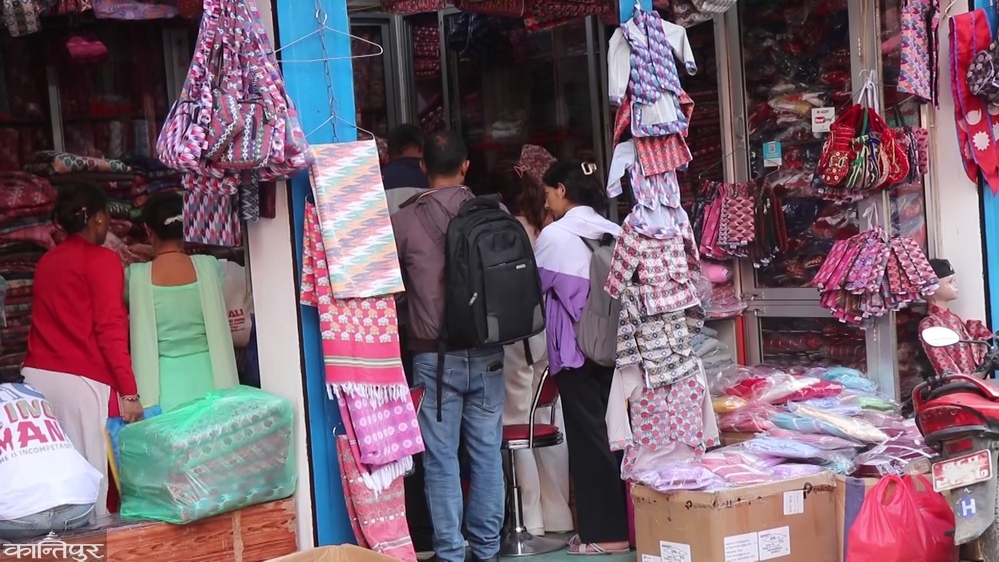
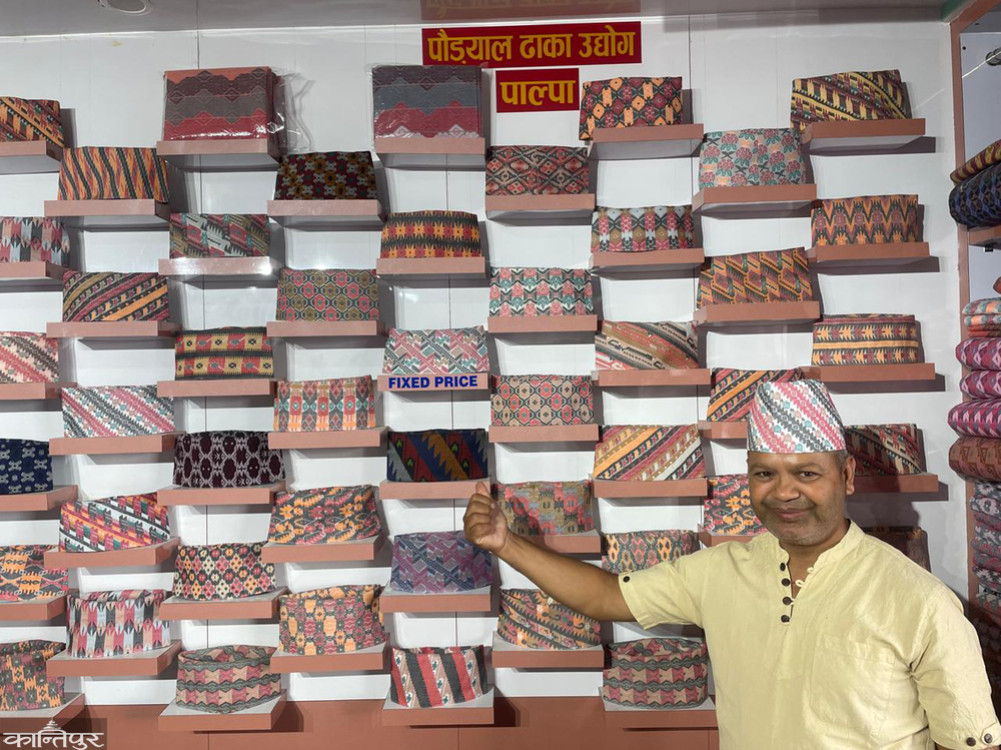
Palpali Dhaka industry, which has an annual turnover of 100 million, currently has 350 looms. After Lumbini Province, Tansen Nagar and UKAD Skill Development Project provided assistance in Dhaka weaving training and loom addition, the Palpali Dhaka industry has started to flourish again.
We use Google Cloud Translation Services. Google requires we provide the following disclaimer relating to use of this service:
This service may contain translations powered by Google. Google disclaims all warranties related to the translations, expressed or implied, including any warranties of accuracy, reliability, and any implied warranties of merchantability, fitness for a particular purpose, and noninfringement.
The very popular songs in the popular tongue, 'Choli Toli Palpali Dhakako...', 'Dhaka Topi Shiraiima Dhalak Dhalkio...', 'Palpali Dhaka Topi Toli...' have given great importance to Palpa's Dhaka. But Palpa's Dhaka textile industry is running hard at the moment.
On the one hand, although the government has declared Tehrathum and Palpa as the capital of Dhaka, it has not been able to provide enough budget for its infrastructure management, and the local industry is being affected due to the imported clothes that look like Dhaka.
According to Palpali Dhaka Association, more than 150 looms have been added for Dhaka production since 5 years. Some of the closed industries have also started production again. Industrialists claim that if the government gives customs concessions on cotton yarn, the country can become self-sufficient in Dhaka textiles. But they complain that the government is encouraging imports instead of protecting indigenous industries. "We are not in a position to produce cotton yarn," says Hari Rayamazhi, owner of Saraswati Dhaka Textile Industry, "The government should give customs concessions on this." All three levels of government should adjust the environment for the industry.'
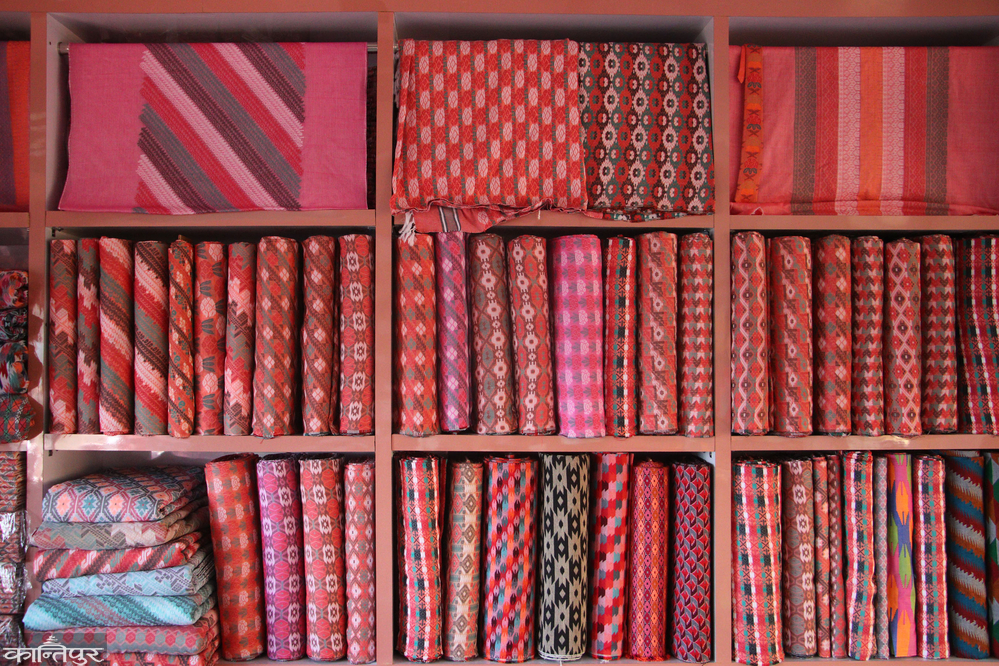 In the year 2015, Ganeshman Maharjan started production of Palpali Dhaka cloth. It was Maharjan's family who came to New Delhi, India and brought Dhaka cloth weaving industry to Nepal. More than 500 men and women got employment from the Palpali Dhaka industry run by the Maharjan couple. The then Panchayat government, kings, foreign guests increased the use of Dhaka cloth as well as Palpali Dhaka hats.
that made the industry flourish. 'Let's not talk about that time,' says 87-year-old Purnamaya Maharjan, the owner of Swadeshi Vastrakala Palpali Dhaka cloth industry, 'now our industry has been closed due to the import of fake Dhaka, only hand-woven Palpali Dhaka is going on.' Purnamaya has requested not to sell the prepared fake Dhaka Palpali. "I have said the same thing everywhere," she said. Don't cheat the customer.
Palpa's handwoven cloth is called Palpali Dhaka because the yarn is brought from Dhaka, the capital of Bangladesh. Purnamaya says that the design of the prints started in Dhaka, Bangladesh. However, Ganeshman also said that "Dhaka cloth is a legendary cloth made of muslin and cotton related to Bangladesh". He used to say, "But later, Palpali became more famous by comparing the Dhaka hat with the Himalayan peaks of Nepal." Even before 2050, Purnamaya had employed many women in her industry. Women were trained to weave dhaka and used to work in factories. "I rescued many women," she said, "Majority came, democracy came, but what happened?" The existing and well-run Dhaka textile industry also declined. Many people stopped wearing hats.'
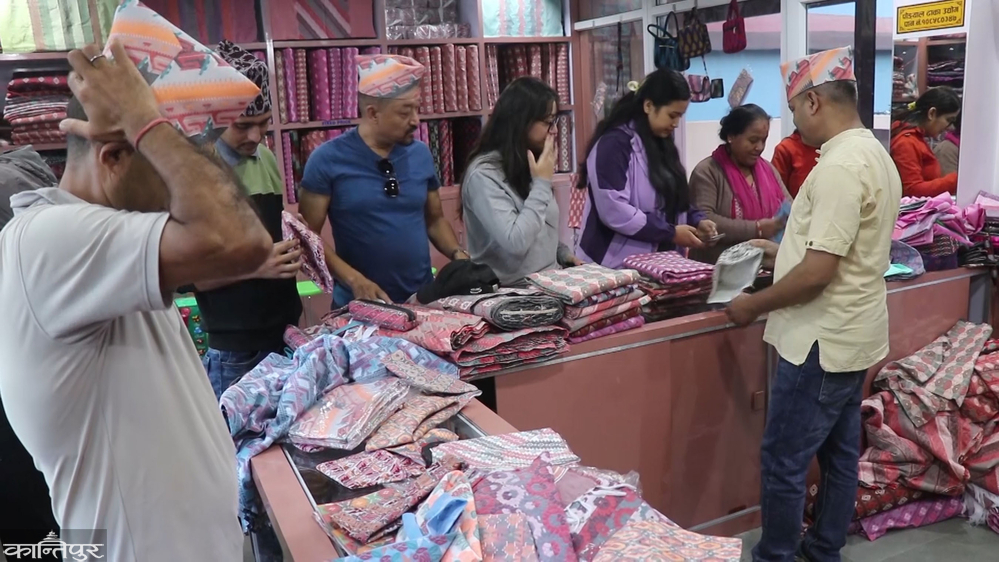 In recent times, with the modernization, it has become difficult to get real palpali dhaka while producing fake dhaka after learning here in India and the country. Purnamaya said that she felt like crying when she saw not only machine-woven and jacquard dhaka but also sofa covers being sold as Palpali dhaka. According to him, it has become difficult to get real "Palpali Dhaka" due to the lack of government support in recent times. "But if Palpali Dhaka is to be saved, there is a need for government support," she said, "To save the brand of Palpali Dhaka, we need the support of all three levels of government." Purnamaya said that she breathed a sigh of relief after the "Skill Driven" project was launched in Tansen 5 years ago. After that Palpali Dhaka Sangh was formed under the chairmanship of Purnamaya, 11 industries joined it. After this, Palpali helped to revive the Dhaka industry, she said.
This is how Palpali Dhaka is woven
The loom of old Palpali Dhaka cloth was made of wood. Now they are also made of iron. It was woven on a square loom. It was produced according to the graphics design by placing the goti. Wages are expensive when keeping goats. It also takes more effort. Purnamaya, the founder, said that it takes a lot of effort to weave old designs.
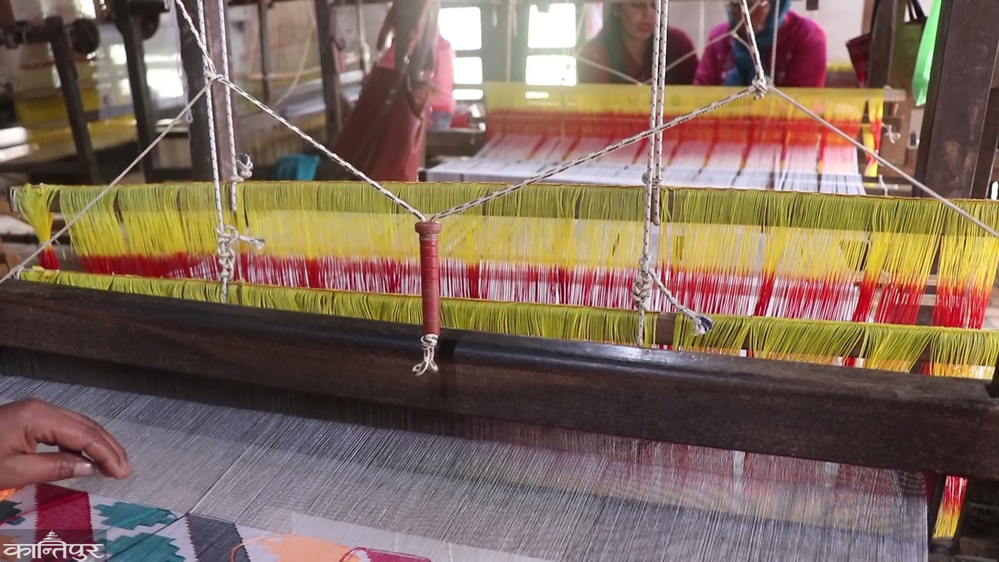
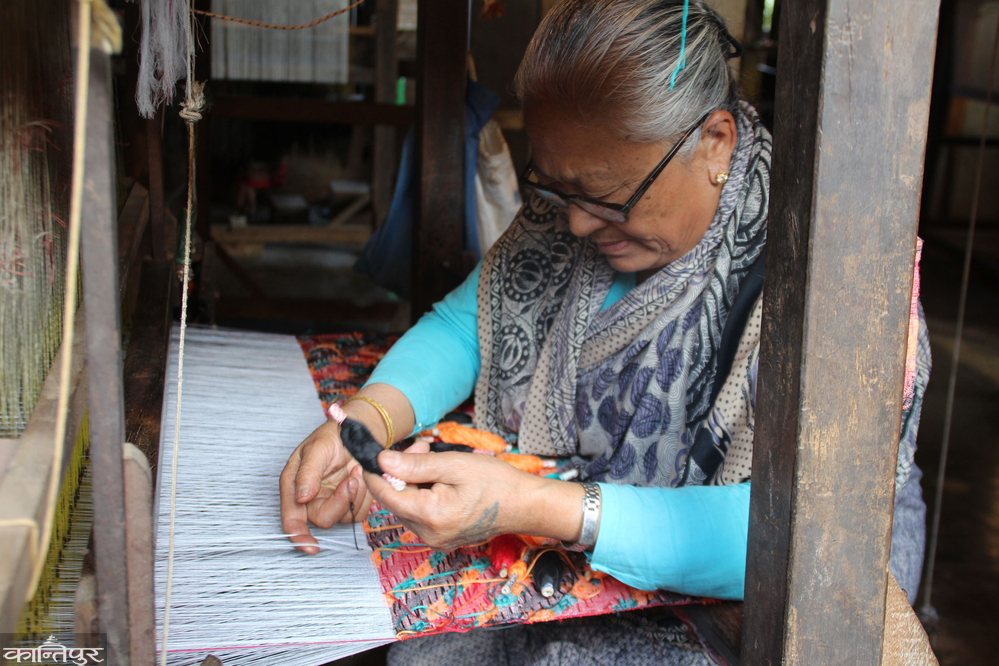 'Thread used in Dhaka used to come to Laxima. It is wound on a bobbin with the help of a machine (previously it was wound by hand). Then the filling is placed on the grill. The beam is made like a lattai. There is a small hole in the place of knitting. The thread is held by making a cross. The thread is taken from the comb. Tan is ready. A man weaves a quilt. Design card, butta is made by hand. Before that, butta's graph is done," she said. It was Poornamaya for the first time in 2013 that Palpali Dhaka cloth weaving loom (hand machine) was installed. At that time, she remembered that she was looking for a loan of 3 thousand rupees. She herself used to do everything from warping. Husband used to weave dhaka.
In the beginning, customers did not agree to buy handwoven Dhaka cloth. "It was only heard that the hand-woven clothes were taken to the shop and left, they were not sold," she said. She said that although Palpali Dhaka cloth was registered in the year 2015, it was in the year 2013/14 that they started weaving the cloth. While learning to weave cloth on the loom, he started weaving in different colors and patterns. That is why the same learning came later and started weaving dhaka cloth. Other cloths were woven with different types of yarn. However, later Dhaka cloth was registered and started weaving. It was woven only from cotton thread. Khaddar sarees and other fabrics were woven on the loom.
It is the Maharjan family that introduced the design of woven cloth in the capital of Bangladesh, Dhaka. She said that after starting weaving in the same design, it was called Dhaka cloth. It took a long time to pull and finish. Due to those who understand Dhaka cloth, it started to be bought and sold at a high price. At that time, the government agency registered with the home office and started weaving Dhaka. Since the husband works in the home office, the sale became easy. After the opening of home handicraft store in Tansen, selling was not a problem. Dacca pachaura, Khaddar saree, Tanna were sold more at that time.
Maharjan claims that the SAARC summit held in Kathmandu in 2030 gave more recognition to Dhaka cloth. He remembers that there was a lot of demand for sarees at the conference. From the same year, the demand for Palpali Dhaka was also increasing in the Nepali market. So much was sold in the market that the demand for Dhaka cloth and other cloth could not be met. "Having hired 500 workers, I have settled down to 20," she said. Now there is a problem as workers are not even found. He complains that they do not have to pay tax on yarn, they cross the border from Sunauli on a bicycle, and the poor yarn used in Dhaka is sold as Palpali.
Excitement after 'branding'
Palpali Dhaka got the 'Palpali brand' from the Ministry of Industry and all industrialists affiliated to the Palpali Dhaka Association are happy, said Manojraj Sharma Paudyal, the owner of the Dhaka textile industry and secretary of the Palpali Dhaka Association. He says that emphasis is placed on diversification of Palpali Dhaka not only choli, pachauri but tie, coat, kurta, purse, bag, shirt. Sagarman Maharjan, Program Coordinator of Palpali Dhaka Association, said that 'Palpali Branding' is to maintain the identity of Palpali Dhaka. The customers who reached the Dhaka store had to be cheated when they were not informed which was Palpali and which was outside. After 'Palpali Branding', consumers can also recognize the quality.
 Its program coordinator Maharjan said that 'branding' will help to make Dhaka known in the national and international markets. "Palpali brand belongs to all 11 industries," he said, "It is not made by one factory or firm." Some of them weave at home. He said that he will move forward by including such as well. "Even if the production is not much now, we will diversify it," he said.
Even Nepalese and foreigners living abroad have been taking sample clothes and materials made from them. But there is concern that it cannot be sent in large quantities. On the other hand, there is no tax exemption on cotton yarn,'' he said, 'which makes clothes more expensive. There is confusion as to whether the garment can be delivered for export. "Capital of Dhaka"
It has been three years since Palpa was declared the 'Capital of Dhaka' by the Ministry of Industry, Commerce and Supply. The announcement was made for the commercialization and diversification of Dhaka weaving skills and art. But the industry has complained that the ministry has not paid much attention to its marketing. Even the budget was not allocated from next year.
Before announcing Dhaka as the capital city, Tansen Municipality, Lumbini Provincial Government and Skill Project also supported its promotion, marketing and skill development. Anushesh Rayamazhi, program officer of the Palpali Dhaka Association, said that now more support will be needed to make it recognized in the international market as well. But the industrialist is disappointed that it did not happen as much as expected. "Industrialists felt that commercialization and diversification should be emphasized instead of the traditional way," he said, "but the government's neglect after that has disappointed again."
program coordinator Sagarman Palpali says that Dhaka and imported Dhaka should be sold as separate products with a 'design patent'. "After checking the brand and coming to the market, you have to tell the difference in quality," he said. Paudyal, secretary of the Palpali Dhaka Textile Association, said that the customers believe that most of the Palpali Dhaka handlooms are of good quality. Therefore, its business was increasing because the color did not fade when washed. He said that there is no problem for the market even though the production of Dhaka cloth is more in Palpa. He suggested that the union, state and local governments should help for that. The industrialists suggest that there should be policy rules to protect the indigenous industry. Investment friendly environment should be created. There is a shortage of skilled workers. A few years ago, 368 people were trained by Palpali Dhaka Sangh to solve it. Anushesh Rayamazhi, program officer of Palpali Dhaka Sangh, said that there are 354 women among them.
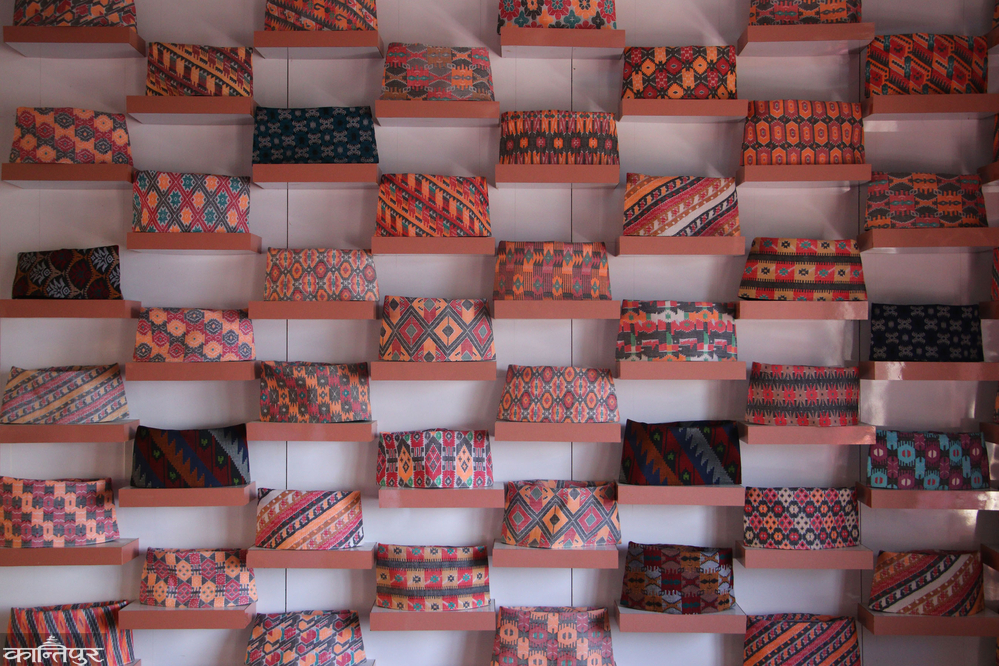 Previously, skilled trainers were produced from the government level. Even if the training notices come out now, they don't mean anything. There is a lack of quality training in Dhaka cloth weaving, stitching, loom repair. Its experts suggest that the looms in the market area should be transferred from the local level by establishing a domestic industrial zone. There is also a suggestion that it should be made compulsory to wear a tie in schools and colleges. Palpali Dhaka hats or dresses can be made for employees of organizations and government offices. It is suggested that a 'branding and marketing' strategy should be developed for Palpali Dhaka as well as national and international markets.
An annual turnover of 10 crores
The annual turnover of Dhaka cloth in Palpa is worth 10 crores, according to the Palpali Dhaka Association. Through the Federal Government, Lumbini State Government, Tansen Municipality and UKAD Skill Development Project, Dhaka Weaving Training has been given support to increase the spin in the industry. According to the association, till 5 years ago, not even 200 looms in Dhaka were in operation, but now 350 looms are in operation in Palpa. It costs at least 70,000 rupees to keep a normal tow. Paudyal, secretary of Palpali Dhaka Association, said that the trained women have become self-employed even in the villages.
Work is being done for the promotion of Palpali Dhaka through the Lumbini State Government through the Household and Small Industries Office. According to the head of the office, Shyam Kumar Paudel, last year, training was conducted in Tansen and Birkot in Purvkhola with a budget of 1.8 million to conduct label-1 training with skills test in Dhaka. Similarly, he said, 10 Palpali hand looms were purchased from the 5 lakh allocated by the federal government. This year, the state government has allocated 10 lakhs for training. He said that he did not know that any budget has been allocated by the federal government so far.