We use Google Cloud Translation Services. Google requires we provide the following disclaimer relating to use of this service:
This service may contain translations powered by Google. Google disclaims all warranties related to the translations, expressed or implied, including any warranties of accuracy, reliability, and any implied warranties of merchantability, fitness for a particular purpose, and noninfringement.
In the humming rehearsal room, the instrumentalist's fingers are spreading waves. Sometimes Natikaji, sometimes Shanti Chatal and sometimes the music of Abhas are being played in the wave.
A familiar voice echoes through the instrumentals . The voice which has not only made many actors, actresses, but also students who show their dance skills in cultural programs from school to college, has not wanted to be seen repeatedly .
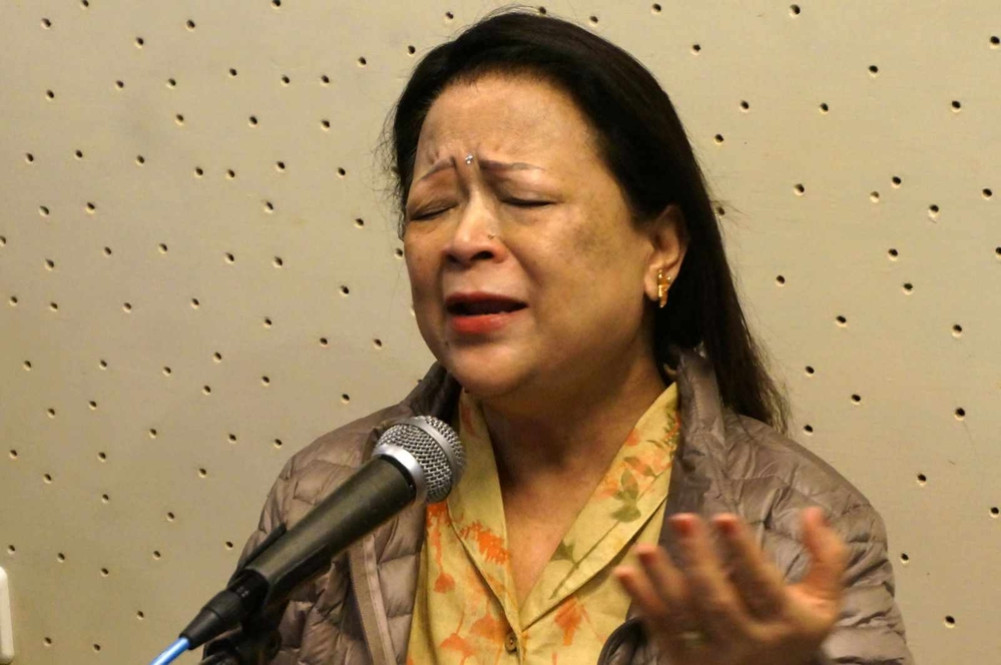
The magical voice that keeps ringing from the time of the cassette to the time of YouTube will delight the visitors in this Palanti series. Sangeeta Pradhan Rana, a classical music connoisseur, is rehearsing in the studio of Nepalaya to make her taste music of different tastes.
At this time, Palenti's opening series music was ringing in Sangeeta's ears . "It feels like it's been 18 years since I sang with Shanti Didi in Palenti," Sangeeta became nostalgic while filling her voice in Shanti Thatal's music. She remembered the instrumentalist of that time .
With Palenti's comeback, Sangeeta was remembered by musician Abhas . Sangeeta also wanted, 'Let's do thumri in Palenti.' She was saying to Abhas. One day Abhas said, 'Yepali khayal and thumri garne ta didi ?' Classical and sub-classical genres of music are filled with soulful beauty. Thumri was sung by Melwadevi long ago in Nepal. In the memory of Sangeeta, it has no history after that. "We thought we should give something to the new generation," says Sangeeta.
Abhaas has used not only music this time, but also a new way of creating words. So this year Palanti will resonate with classical music, classical and semi-classical songs .
000
Sangeeta has done playback singing in many Nepali films. Dozens of songs including 'Salal Pani Yo Zindgani, Yo Ratai Raaza', 'Chiako Botaima', 'Chhitko Gunyu' can bring many people back to the precious memories of the old days . In the eyes of Sangeeta, who brings back the memory of Sorata from the Azar-Amar song, the scenes of the past are spinning like a reel.
Music has traveled with Sangeeta since the moment she felt life. Born in Biratnagar, she grew up in Duvars, India. "There was a music culture in the geography we were in." In that culture, my mother wanted to see me with music,'' says Sangeeta, looking back on her decades-long memories, 'at that time, music was routine, music was a discipline.' In a society where a daughter's hand is handed over to someone else, her father and mother handed over music. "Ba, the most important thing for mothers to give to their children was health and education." They used to say - after this, you can go on your way,' says Sangeeta about the golden time given by the family.
In 1977, Sangeeta gave SLC . She went to Visva Bharati University in West Bengal for graduation. This university founded by famous poet Rabindranath Tagore became an ocean of music for him. By the time she dived there, she had completed her master's degree in classical music.
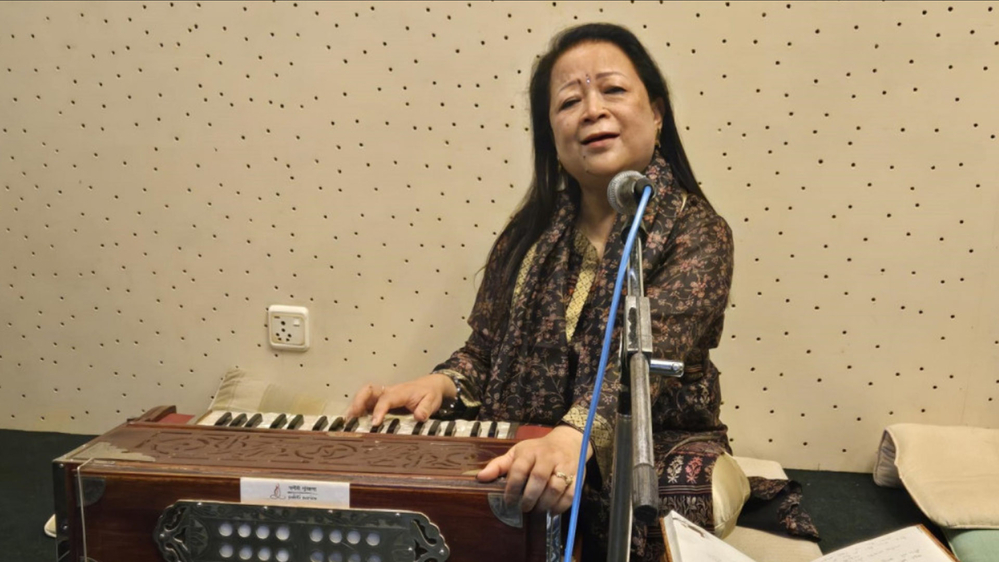
Those 6 years were as exciting as they were tough. Music seemed easy. When I got there, I found out that it was difficult,'' who passed through rigorous meditation. Sangeeta remembers nights and days.
After studying at the university, she auditioned for Radio Kharsang. After passing the vocal test, she started running a musical program there.
In Calcutta, there was a musical program on the birth anniversary of the then king and queen. Guru Gopal Shrestha entrusted that opportunity to Sangeeta. At that time, Sangeeta sang Taradevi's song 'Phoolo Thunga'. A new color of opportunity also appeared in life when the flowers were sung.
A gentleman came to the program and said - can you sing with us? He is the director of Master's Voice. I was happy about that. And I released 12 songs under their sponsorship,' she recalls that moment with a smile, 'Then Manveer Singh Dai said I will take you to Radio Nepal.'
She used to listen to Radio Nepal a lot. There was also a strong desire to meet Natikaji, Shivshankar, Taradevi, Narayan Gopal. After that, his visit to Nepal increased.
000
Gopal Yonjan was a composer whom Sangeeta respected very much. He met Gopal in Calcutta . At that time, Gopal had reached Calcutta to record the song of the film 'Bhumri'. Musicians often wanted to record a song in the voice of an Indian singer. At that time, Gopal decided, "My song is sung by Nepali blood, Nepali soil." Sangeeta got that golden opportunity. After singing a song in
'Bhumri', his stay started in Nepal. At the same time, Gopal Yonjan introduced Sangeeta to the Fine Arts Campus. Gopal said to the administration, "A very good singer has come here". On top of that, he learned classical music. You have to keep it.' She started teaching at Lalitkala Campus. "I will never forget Gopal Dai's song because of this," says Sangeeta.
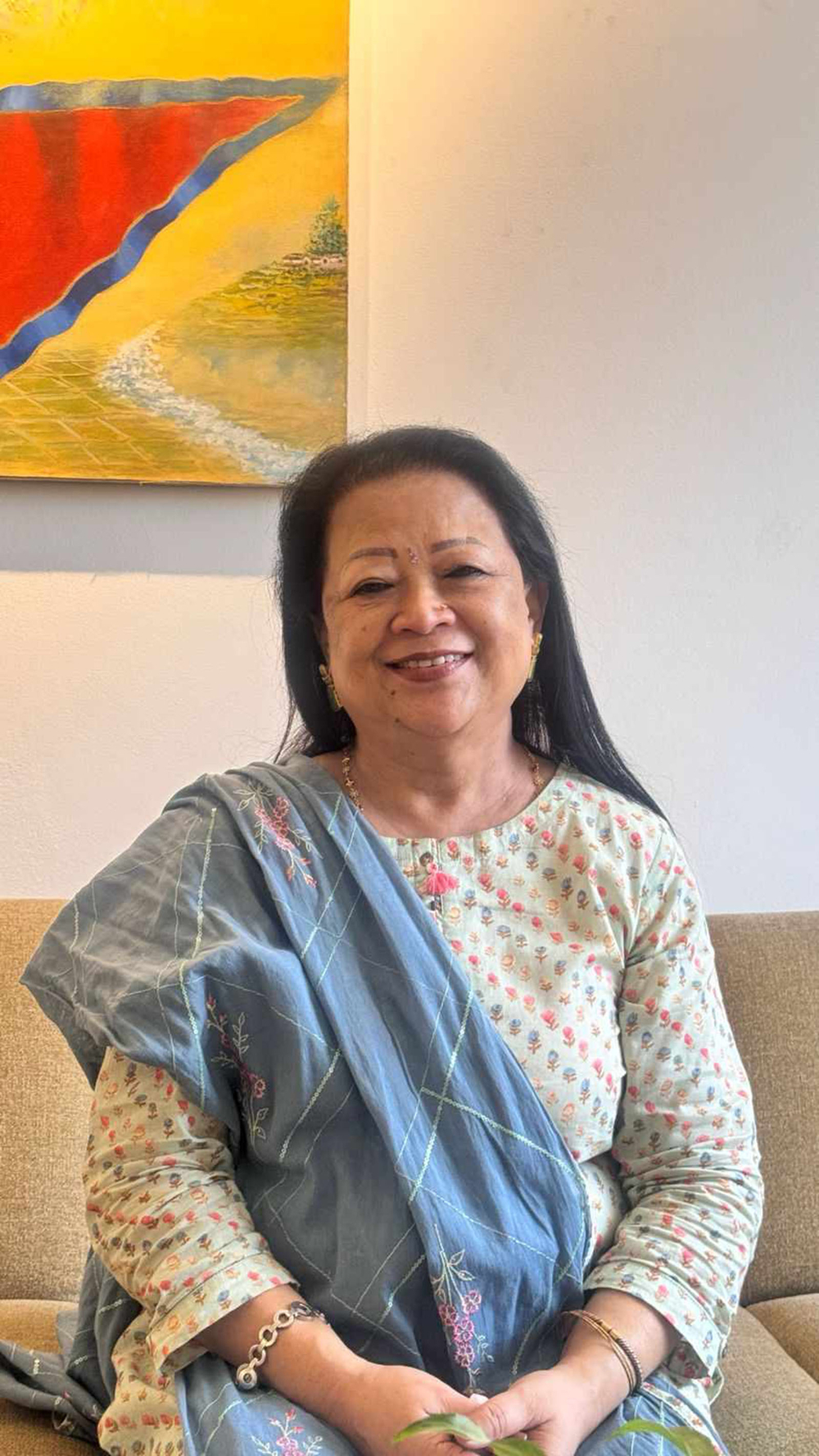
After 'Bhoomari', Sangeeta got an opportunity to sing in the movie 'Ranko'. Yonjan took that opportunity too. Gopal said to Sangeeta, "You have to be selected in the song". The director will come from Bombay. He is a running name . He chooses .' She met that director in the midst of wondering whether she would be chosen or not. He is Kishor Ranamgar . Kishore liked the sound of Sangeeta . Not only the voice, but over time I liked him . Along with film and music, they also traveled together in life .
After 'Ranko', his musical rhythm became wider and wider through films like Bandhaki, Batuli, Durga, Ajammari Maya.
000
Looking back at the golden time spent in music, Sangeeta feels, 'At that time, music was fertile.' "Singing live". Perfectly sung only. It's time for the right artist to get a place, beautiful teamwork,' she says while looking at the music needle moving backwards on the time clock, 'where is the time that can't be forgotten even if you forget it?' He feels that the lack of sadhana seen in the last generation has made music like fast food. There is no patience, there is a temptation to go viral, there is a rush to go abroad. Luxury and looks are . But there is no music,' she ponders.
However, there is also a generation that considers music as culture and discipline. Those who are beyond the hustle and bustle . Who has cable music . Who is not interested in being popular . His hope lies with these skilled organizers.
Even remembering them, the hope of the clock's hands turning upside down lives on in Sangeet . She wants to dedicate this year's festival to these seekers as well.