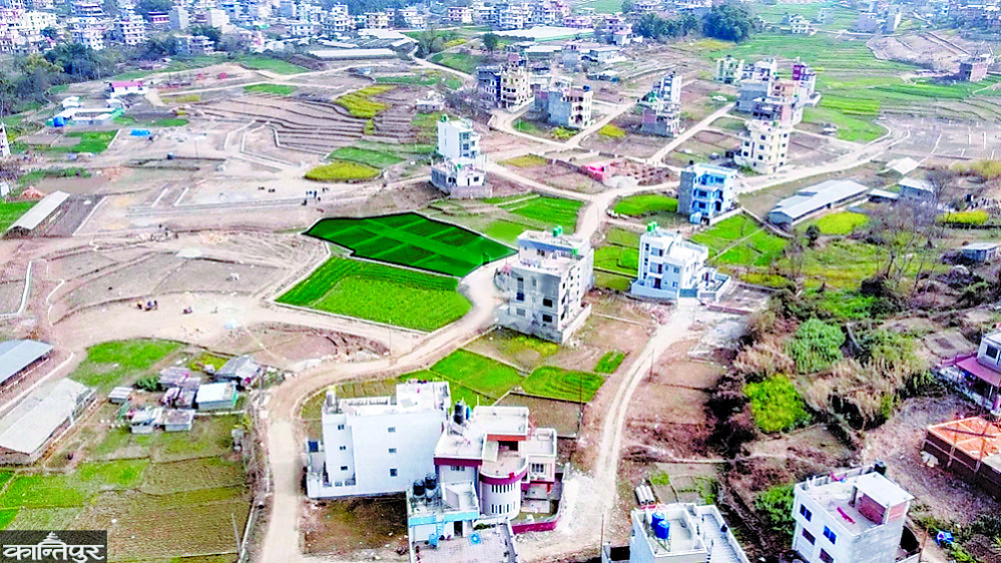
Municipalities must obtain approval from the federal government to establish and operate a land bank, but so far, no municipality has applied for approval.
We use Google Cloud Translation Services. Google requires we provide the following disclaimer relating to use of this service:
This service may contain translations powered by Google. Google disclaims all warranties related to the translations, expressed or implied, including any warranties of accuracy, reliability, and any implied warranties of merchantability, fitness for a particular purpose, and noninfringement.
The concept of a land bank has been introduced to bring barren private land or land not in use into utilization through the respective local levels. In accordance with the Land Use Act, 2019 and the Land Use Regulations, 2022 (Third Amendment, 2025), the Land Bank (Establishment and Operation) Procedure, 2026 has been introduced to establish and operate a land bank in each local level.
The federal Ministry of Land Management has approved the procedure and already circulated it to all local governments. The government has also requested that the relevant local governments facilitate access to this provision. With the aim of implementing land use classification provisions and increasing productivity through optimal land utilization, land banks are being established and operated at the local level to bring underutilized or unused private land into productive use under certain conditions and incentives.
The Ministry of Land Management has stated that, since the federal government has already issued the procedure, it is not mandatory for local governments to formulate their own. Subsection 1 of Section 21 of the Land Use Act, 2019 stipulates that local governments must obtain approval from the federal Ministry of Land Management to establish a land bank. The procedure states: “A local government wishing to establish a land bank must submit a written request to the ministry, including a copy of the executive decision. The Land Use Division of the ministry will investigate as necessary and recommend the establishment of the land bank.”
The procedure also requires local governments to establish a land division with the necessary infrastructure to operate a land bank. The land division must also identify and prepare details of private land that is unused, cannot be used by the owner, or is fallow for other reasons within its jurisdiction.
Once approval is obtained to operate a land bank, Subsection 2 of Rule 13ka of the regulations requires the formation of a Land Bank Operation Committee. The regulations specify that the head of the municipality or chairperson of the rural municipality, or a designated member of the executive, will serve as the coordinator of the committee. The chief administrative officer of the respective local level will be a member, and the head of the land-related division of the local government will serve as the member secretary.
The procedure requires local governments to open a separate account for the land bank. Deposits from land users, returns paid by land users for utilization, service fees collected from landowners, and similar revenues must be deposited into this account. Likewise, grants provided by the federal, provincial, and local governments, as well as other funds determined by the executive, must also be deposited into this account.
Payments to depositors, procurement of necessary machinery and equipment for the land bank, expenses incurred during field inspections, and incentives for employees assigned to the land bank may be paid from this account.
Local governments are also allowed to jointly operate a land bank. For this, a written agreement must be made between the local governments, specifying the location of the joint land bank’s secretariat, the person to serve as member secretary, the official authorized to sign agreements on behalf of the joint land bank when acquiring or providing land for use, the method for managing the joint land bank’s income and expenditure, and the responsibility for auditing the accounts.
Local governments must issue notices as needed for landowners wishing to utilize their land through the land bank. Landowners must submit an application stating the ownership, plot number, area, and the period for which the land will be made available for use. The land division must establish and maintain a land bank registration register.
The procedure stipulates that the division must verify that there are no disputes regarding land ownership (including joint or tenant ownership), that tenants have consented in the case of tenant land, that the plot number, area, and boundaries are accurate, that the land is not mortgaged, and that the land can be used according to land use classification. If a field inspection is required, technical staff must be deployed to submit a report on whether the land is suitable for use.
If the division finds the land unsuitable for use, it must inform the landowner. If suitable, it must submit the land details and the expected returns of the landowners to the operation committee for deposit. The procedure also states that the operation committee may approve or reject the deposit. If approved, an agreement must be signed between the landowner and the division within seven days, and after the agreement, the land must be recorded in the deposit register and listed for use.
The division must publicly announce, within 15 days, a call for applications to use the listed land, specifying the details of the land to be made available for use through the land bank. Applications received for land use must be registered in the land bank register. When providing land through the bank, the proposed return from the landowner, local residents (neighbors), the feasibility of the proposed use, employment generation, and environmental suitability must be considered.
The land division must prepare a priority list for providing land and have it approved by the executive. For applications received to use land, the division must submit them to the operation committee within seven days after the application period ends, and the committee must decide on the provision of land. The committee must clearly specify the annual return to be paid by the user. The procedure states that those seeking to use the land must deposit 10 percent of the annual return as collateral.
Once permission to use the land is granted, the land division must notify the Land Revenue Office to place a restriction so that the landowner cannot transfer, sell, or mortgage the land. The procedure also states that if the landowner, with the consent of the user, takes back the land, if the local government takes back the land it provided for use, or if the period of use expires without renewal, the restriction may be lifted.
If no applications are received to use the listed land, the land bank may invite applications from cooperatives, groups, or companies. If the local government decides to use the land itself, it must make the land available to interested target groups within its jurisdiction according to the specified conditions. When providing land to target groups, it must be done according to the priority list approved by the local government.
The procedure requires local governments to prepare a priority list of target groups, including landless and squatters, Dalits with less than five kattha of land, freed Kamaiya or Haliya families, martyr families, families with identity cards for state facilities, small farmers, and others.
If a land use agreement expires and the user does not renew it, the land will be considered automatically returned. If either party wishes to return or reclaim the land, both must notify the operation committee at least three months in advance, and the land must be returned in the same condition as it was received. However, if any structure has been built and the landowner has no objection to its presence, it need not be demolished and removed.
The return to be received by the landowner will be as per the agreement with the local government, and the land bank may charge a service fee not exceeding 10 percent of the return for making the land available for use. The local government must deposit the remaining amount, after deducting the service fee, into the landowner’s bank account.
The user must pay 10 percent of the annual amount as collateral at the time of agreement and the remaining amount as per the agreement. If the user fails to pay the required amount to the land bank, the local government may recover it as government dues.
The procedure also clarifies the rights and responsibilities of landowners and users. Under the rights and responsibilities of landowners, ownership and rights over the land remain during the agreement period, land revenue and property tax must be paid regularly to the government, no interference is allowed during the agreement period, and the land cannot be sold without the user’s consent.
The user must use the land only for the specified purpose, protect the boundaries, existing infrastructure, and soil fertility, not sublet the land, and if any embankment, wall, or boundary is damaged due to negligence or any other reason during use, it must be repaired and restored to its original condition before returning the land. The land’s form cannot be altered without the landowner’s approval.
Local governments must provide seeds, fertilizer, technical support, and cash grants through the land bank to individuals, organizations, or companies utilizing fallow land to increase production. When providing grants, priority must be given to grain, vegetable, or cash crops, fish and livestock farming, fruit cultivation, local product purchase and processing, and other businesses. In case of any dispute between the user, land bank, and landowner regarding land use or returns, the operation committee must resolve it based on the terms of the agreement. If the user cannot fully utilize the land due to any pre-existing legal dispute, the landowner must compensate the user through the land bank.
If any embankment, wall, or boundary is damaged due to negligence or any other reason during land use, the user must pay compensation. The procedure states that the user is not liable for damage caused by natural disasters, and compensation will be determined by the local government.
Although the federal government approved and implemented the procedure in 2026 BS (2083 BS), some local governments have already formulated procedures for establishing and operating land banks under the Local Government Operation Act, 2017. However, these have not yet been implemented. Rupa Rural Municipality of Kaski, Modi Rural Municipality of Parbat, Gulmi Darbar Rural Municipality of Gulmi, and Kaligandaki Rural Municipality of Syangja formulated procedures as early as 2020 (2077 BS). Similarly, Machhapuchhre Rural Municipality of Kaski did so in 2023 (2080 BS), Resunga Rural Municipality of Gulmi and Bhanu Municipality of Tanahun in 2024 (2081 BS), and Fikkal Rural Municipality in 2026 (2083 BS).
Fikkal Rural Municipality Chairperson Parvati Sunuwar said that, having already introduced the Land Bank Establishment and Operation Procedure 2083, they are issuing notices for both leasing in and leasing out land. “We have set rents according to the lease period, and we have already informed the federal government that we have formulated the procedure,” she said. She also mentioned that they are providing a grant of 2,500 rupees per ropani to those cultivating fallow land. She said the program, which started last year, is being continued this year as well.
Gulmi Darbar Rural Municipality of Gulmi formulated the procedure and issued a notice as early as 2020 (2077 BS). However, Vice Chair Tara Thapa Dhenga said that no landowners have come forward to provide fallow land for use. “For the past three or four years, we have issued notices inviting those with fallow land to make it available for use, but no one has come forward,” she said.
Rupa Rural Municipality of Kaski has prepared the Land Bank Program Operation Procedure, 2077. However, Vice Chair Lalsubba Gurung said that work has been hampered due to a lack of further clarification in the federal government’s Land Use Regulations.
Even though the procedure was introduced and work began in 2077, Rupa Rural Municipality Chair Nawaraj Ojha said that implementation has not been possible due to a lack of clarification in the federal regulations regarding land banks. “We formulated the procedure, established the land bank, and issued a call for applications, but the land was not restricted,” he said. “The federal government said the Land Revenue Office cannot restrict the land unless instructed by the federal government. We had made all arrangements for leasing land in and out.”
The government announced the establishment of land banks across the country in fiscal year 2077/78 to bring fallow and unused private land into productive use. As the trend of private land lying fallow increased nationwide, the government made this announcement to bring such land into commercial use and increase productivity. The policy and program for fiscal year 2077/78 stated that land bank units would be established in 300 local governments with joint investment from the federal, provincial, and local levels.
The Land Use Act, 2019, Section 21, also contains provisions regarding land banks. However, the regulations issued on 23 Jestha 2079 did not include land banks. Although the Act contained provisions on land banks, the regulations did not. The federal government has now included land banks in the Land Use (Third Amendment) Regulations, 2082. Ministry of Land Management spokesperson Ganesh Bhatt said that local governments can operate land banks only after obtaining approval from the federal government. “Before the procedure was approved, one local government had requested approval. But since our procedure had not been approved, it was not granted. Since then, no local government has requested approval,” he said.