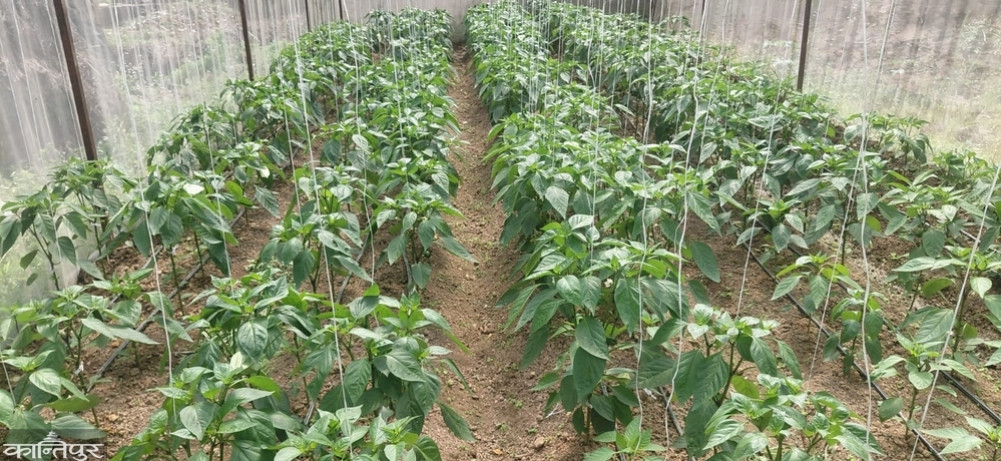
This technology, which delivers water drop by drop directly to the roots of the plants, has started to become the choice of commercial farmers in the district because it enables higher yields with less water.
We use Google Cloud Translation Services. Google requires we provide the following disclaimer relating to use of this service:
This service may contain translations powered by Google. Google disclaims all warranties related to the translations, expressed or implied, including any warranties of accuracy, reliability, and any implied warranties of merchantability, fitness for a particular purpose, and noninfringement.
Due to climate change, water sources are drying up, there is a lack of irrigation on arable land, and production costs are rising, leading farmers in Dadeldhura to become attracted to modern irrigation technologies. Especially, farmers engaged in commercial agriculture have started adopting drip irrigation technology, and some are preparing to expand its use in the coming days.
This technology, which delivers water drop by drop directly to the roots of plants, has become the choice of commercial farmers in the district because it allows for higher yields with less water. Since traditional methods of flooding fields do not fully utilize the water and drip irrigation also saves labor and time, farmers practicing modern agriculture are enthusiastic about its use.
Padam Bahadur Air, a farmer from Amargadhi Municipality–1, Dola, has been cultivating potatoes commercially. He started commercial farming after receiving training on seed potato production. This year, he produced 740 quintals of seed potatoes. Air, who received various types of support from the Agriculture Knowledge Center and the Potato Superzone Program, said he plans to adopt drip irrigation technology in the coming days to make production even more effective. He believes that modern irrigation technology is the only sustainable option as water scarcity increases.
Another commercial farmer from Amargadhi, Prince Raj Awasthi, has also been producing potatoes in large quantities. He received a grant of four hundred thousand rupees under the Potato and Entrepreneurship Development Program operated through the Agriculture Knowledge Center’s block farming initiative. With the goal of increasing production and productivity through the use of modern technology, he is actively engaged in commercial potato farming.
Kamal Singh Jhukal of Amargadhi Municipality–9, on the other hand, has devoted himself full-time to agriculture after retiring from teaching. Every year, he applies for various support programs announced by the Agriculture Knowledge Center. Last year, he received support under the mulching and drip irrigation program from the center. 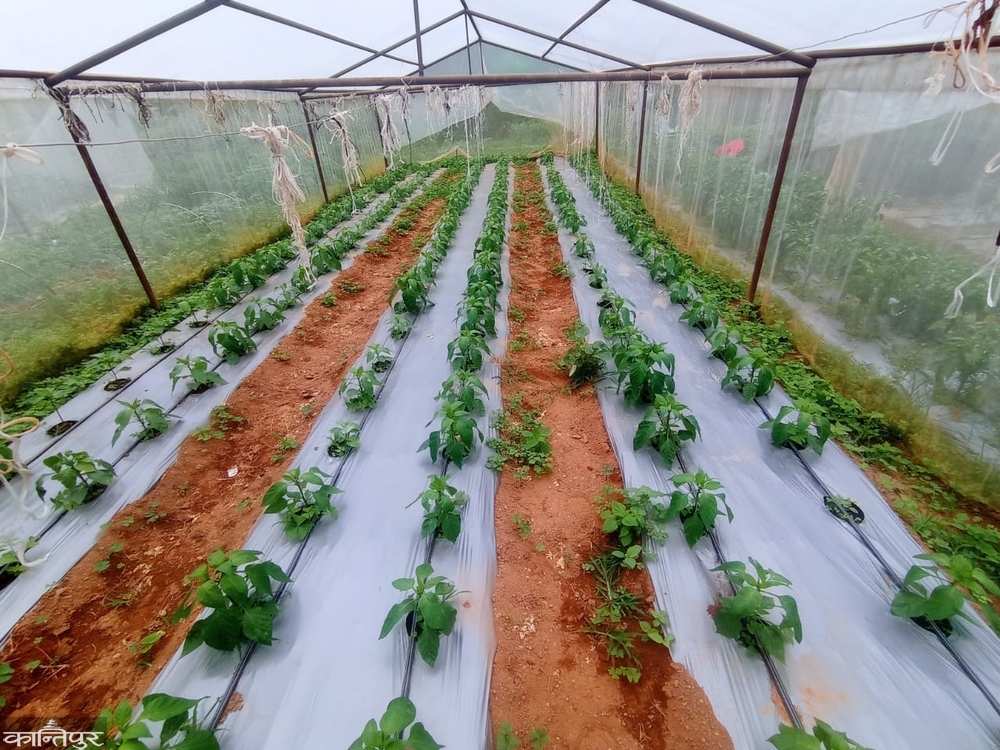
According to him, although drip irrigation technology is somewhat expensive at first, its benefits are significant. “There’s no need to water by hand; every plant receives an equal amount of water as needed,” he said. “Even though the initial cost is higher, this is an extremely necessary technology for commercial farmers.”
Khem Raj Awasthi, a farmer from Ganyapdhura Rural Municipality–1, Dhaulakot, is also active in commercial potato farming. Awasthi is preparing to adopt drip irrigation technology in the near future to make agricultural production more effective. He believes that modern irrigation systems will make farming more sustainable as water availability decreases.
Prakash Bahadur Air of Amargadhi Municipality–1, Tadibata, is one of the model farmers using drip irrigation technology. After retiring from teaching, he has been engaged in commercial agriculture and is now producing vegetables and other crops using modern technology.
According to him, although this technology seemed somewhat complicated at first, its importance has grown with use. He shared that drip irrigation makes it easier to manage fertilizer along with water, facilitates weeding, eliminates the need for separate irrigation, and increases production. “With little effort, you can achieve good yields,” he said. “If you want to make agriculture commercial, there is no alternative to adopting modern technology.”
Dharma Bhatt, a farmer from Amargadhi Municipality–1, is also using drip irrigation for crops such as cabbage, cauliflower, eggplant, and chili with the same support. According to agricultural technicians, some commercial farmers in the district are using drip irrigation technology along with mulching.
According to Pitambar Basnet, head of the National Agricultural Modernization Program, Program Implementation Unit, Dadeldhura, support has been provided to farmers for installing drip irrigation systems inside plastic houses (tunnels) under the Farmer Entrepreneurship Program. He said that this program encourages farmers engaged in commercial vegetable farming to adopt modern irrigation technology. 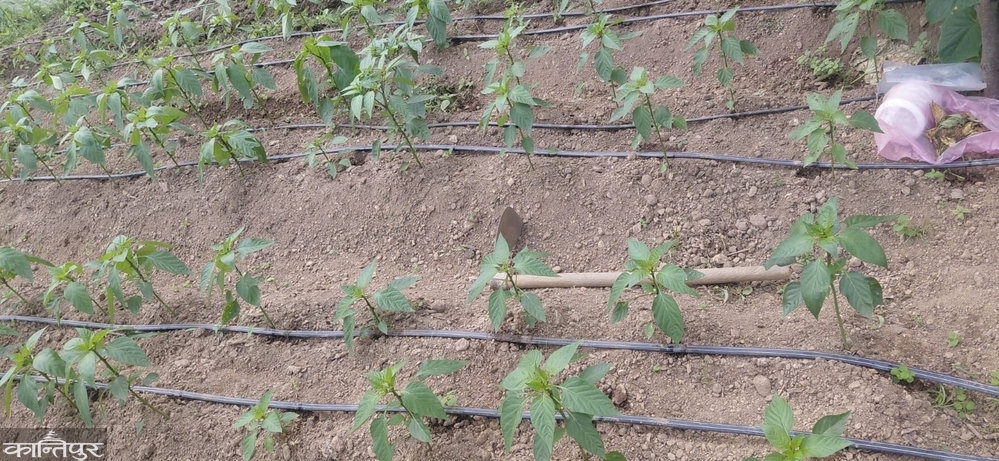
According to Narendra Paneru, head of the Agriculture Knowledge Center Dadeldhura, under the Potato Promotion Program in the district, subsidies are being provided for improved seed varieties, agricultural mechanization, small irrigation projects, and storage of seed potatoes in cold stores for farmers producing seed potatoes.
He said that the use of drip irrigation technology is increasing especially in off-season vegetable farming. He stated that this technology is being promoted as a priority in areas where water sources are declining due to climate change, as it allows for higher yields with less water.
“With drip irrigation, water reaches directly to the roots as needed,” Paneru said. “This saves a lot of water and increases both production and productivity. Although the initial cost is somewhat higher, in the long term, this is a very effective technology.” According to him, just last fiscal year, grants were provided to 10 farmers for installing drip irrigation systems both inside and outside tunnels. Currently, about one hundred commercial farmers across the district have already adopted drip irrigation technology.
At present, potatoes are cultivated on 1,122 hectares in Dadeldhura. In recent years, as the district has established a reputation for seed potato production, the use of modern irrigation, agricultural mechanization, and advanced technology has increased, resulting not only in higher production but also in increased farmer incomes. Agricultural technicians say that amid the challenges of climate change, drip irrigation is being established as an effective option for developing a sustainable agricultural system by making optimal use of water.