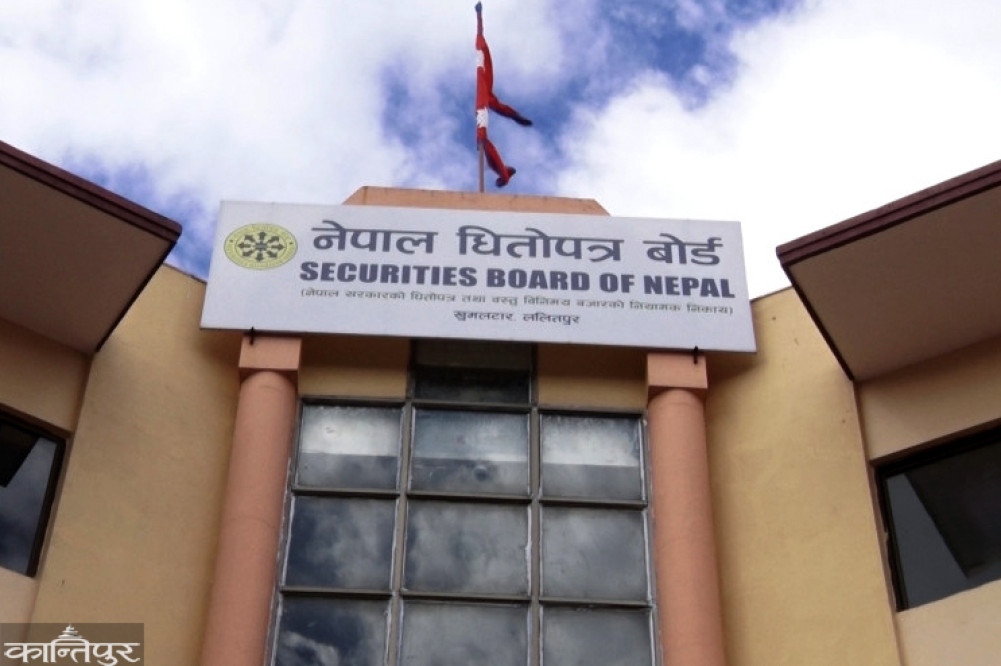
The board stated that this will pave the way for Nepal's capital market to develop into a modern, reliable, and competitive financial system in South Asia in the coming decade.
We use Google Cloud Translation Services. Google requires we provide the following disclaimer relating to use of this service:
This service may contain translations powered by Google. Google disclaims all warranties related to the translations, expressed or implied, including any warranties of accuracy, reliability, and any implied warranties of merchantability, fitness for a particular purpose, and noninfringement.
The Securities and Exchange Board of Nepal has declared the fiscal year 2083/84 as the ‘Year of Structural Reform and Institutional Strengthening’ of the capital market. This has been announced in the capital market policy for the coming year issued by the board.
The board claims that the policy is the first annual implementation document to put into practice the long-term vision of capital market development. The board has stated that this will pave the way for Nepal’s capital market to develop as a modern, reliable and competitive financial system in South Asia in the coming decade.
Along with this, it is mentioned that transparency, accountability and technology-friendly management will be institutionalized in the securities market by accelerating regulatory reforms in the coming year. ‘A fair and trustworthy market environment will be created by effectively controlling insider trading, price manipulation and other unfair activities in the market,’ the policy states. ‘A program will be launched to increase financial inclusion and involve youth, women, Nepalis in foreign employment and rural citizens in the capital market.’
The board has stated that in the coming fiscal year, priority will be given to the structural transformation of the capital market. The board also has a policy to attract capable companies in the manufacturing industry, information technology, tourism, agribusiness, infrastructure and service sectors to the capital market by expanding the scope of listing. ‘Special initiatives will be taken towards effectively operating the corporate bond market, institutionalizing the private equity and venture capital industry, allowing non-resident Nepalis to enter the securities market, developing an alternative capital market for small and medium enterprises and startups, and increasing the active participation of institutional investors,’ the policy states. ‘Equal importance will also be given to modernizing market infrastructure, artificial intelligence-based market surveillance system, strengthening cyber security, and capital market research.’
The board’s policy is to take Nepal’s capital market out of the limited structure of just securities trading and establish it as a major financial infrastructure for national economic transformation, industrialization, infrastructure development, innovation, productive investment, and sustainable economic prosperity.