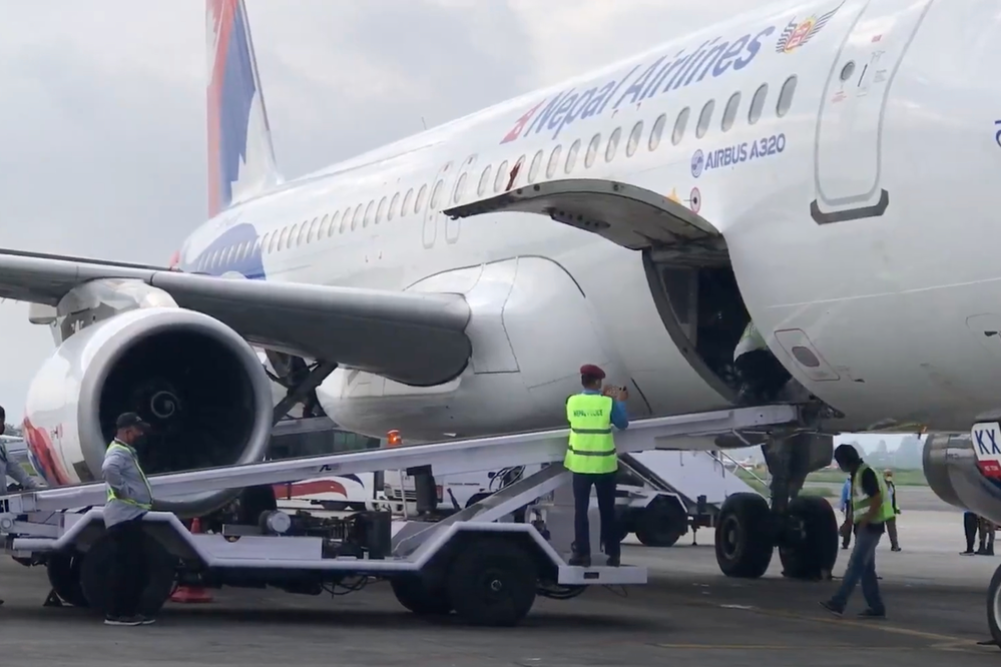
After pressure from a parliamentary committee, the old solution of pocketless uniforms was reintroduced. But the question from within the airport is - will the problem be solved simply by removing pockets from the uniforms of baggage handling employees?
We use Google Cloud Translation Services. Google requires we provide the following disclaimer relating to use of this service:
This service may contain translations powered by Google. Google disclaims all warranties related to the translations, expressed or implied, including any warranties of accuracy, reliability, and any implied warranties of merchantability, fitness for a particular purpose, and noninfringement.
A fear that has been alive for years among passengers flying internationally from Tribhuvan International Airport is that of suitcases breaking, valuables getting lost, or items inside bags disappearing.
This problem is not limited to ordinary passengers. Cases of victims ranging from high-ranking officials of the Nepal government, ministers, secretaries to high-level employees have been made public.
According to airport sources, 15 to 20 such complaints are registered at the terminal office out of 12,000 passengers daily. Not only do many passengers not receive compensation, but they also do not know where their luggage went missing.
The government has been adopting various measures for years in an attempt to find a solution to this problem. The police have been cleaning the aircraft, monitoring workers loading and unloading luggage with GoPro cameras, and sometimes even using CCTV cameras from the aircraft to the baggage belt. But the complaints of passengers have not stopped yet. Instead, the old measure has now been implemented as a new achievement. Pocket-free uniforms for employees working in ground handling.
This provision was a major point in the list of reforms recently presented by Acting General Manager of Tribhuvan International Airport Teknath Sitaula to the International Relations and Tourism Committee of the House of Representatives. But officials within the airport do not seem confident that removing the pockets will solve the problem that has been going on for years.
The International Relations and Tourism Committee has held three consecutive meetings on the cleanliness, service and passenger experience of Tribhuvan Airport. The fourth meeting held on 12 Jestha 2083 had directed to immediately improve the cleanliness, passenger-friendly service, hygiene and management of the airport. Then, the fifth meeting on 29 Jestha reiterated the directive to make result-oriented improvements in cleanliness, toilets, terminal management and basic infrastructure.
After continuous instructions, Acting General Manager Teknath Sitaula gave a detailed presentation of the improvements to the committee in the sixth meeting on 17 Ashad. He presented terminal cleanliness, building maintenance, smoking room management, toilet improvements, customer service, additional CCTV installation and implementation of pocketless uniforms as achievements.
According to Sitaula, the pocketless uniform, which was not fully implemented even though it was decided earlier, has now been fully implemented. Now, all baggage handling employees going to the aircraft parking ramp area must wear pocketless uniforms. They are not allowed to carry personal bags within the work area. They can enter work only after keeping the bags in a separate place.
Sitaula said that the airport administration has also started a system of taking immediate photos of bags found in damaged condition on foreign aircraft, recording them in the logbook and reporting them. He said that additional CCTV cameras have also been installed in the arrival area.
But most airport employees say that this measure alone will not provide a sustainable solution to the problem. According to an airport official, pocketless uniforms have been an issue that has been coming up and going for many years. 'From the very beginning, there has been a proposal that cleaning staff entering the aircraft should not have mobile phones, dot-pens or any personal items, that there should not be a single pocket in their uniforms, and that there should be a body check before boarding and after disembarking,' said an official who has been closely monitoring the problem. But in practice, he says, such strictness has not been sustained. 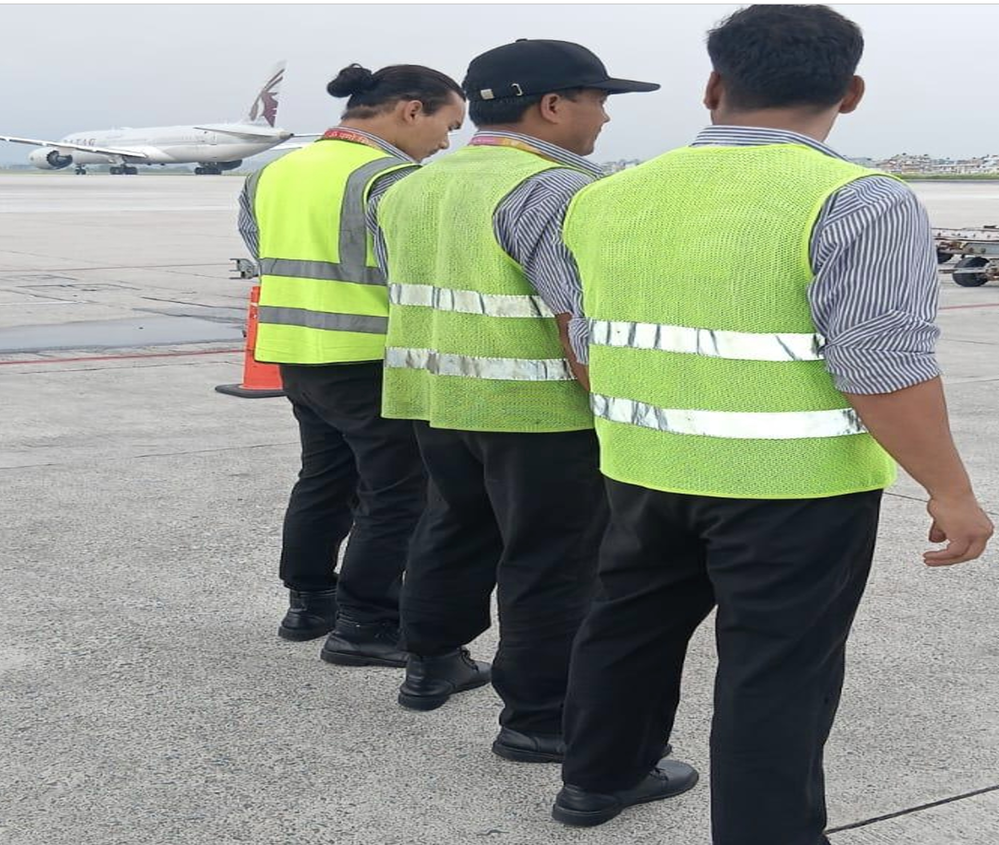
According to sources, an attempt was made to implement pocketless uniforms a decade ago. Even then, the trade union opposed it. 'We were the only ones treated like thieves and discriminated against,' was their argument. After the opposition, the implementation became weak. Although it is claimed that complaints of broken baggage have decreased now, the source says that the real situation is different. 'Not one or two people a day, but 20-30 people come to the terminal desk to fill out forms for lost or damaged luggage. Complaints about lost, broken or stolen luggage are common, even in pocketless uniforms,' an airport security source told Kantipur on Thursday.
Acting General Manager Sitaula says there is no guarantee that all incidents will occur in Kathmandu. He says, 'They can also come from abroad and be damaged. But since the complete investigation system is not effective, it is difficult to distinguish the reality.'
According to a director of the Nepal Airlines Corporation, the airport, when this system was first introduced, the trade unions of loaders and workers had accused them of 'Why only workers? Discrimination'.
This rule was discontinued after the right to equality given by the constitution was also raised. This time, the airport administration has moved ahead with the implementation, saying that this decision is part of the security system. There has been no opposition to it.
The two major private companies providing ground handling services for Nepal Airlines are Sungabha Supply and Services and Naya Nepal Pvt. Ltd.
According to Sungabha's operator Shiva Karki, the current arrangement is the third attempt. According to him, such a plan had been proposed before. But the implementation was stopped after the company protested.
'Why only our people? Our stance at that time was that the same rules should be applied to all employees across the airport,' he said.
According to him, workers have to carry basic items like lunch money, medicine or pens. Therefore, it was argued that the arrangement without pockets was not practical. Now, the company has sewn pocketless uniforms at its own expense according to the design specified by Nepal Airlines and given them to its employees.
Sungabha is providing services to Nepal Airlines through about 250 employees. The company receives a service fee based on each flight. Karki informed that they will get Rs 7,500 for narrow-body aircraft and Rs 8,500 for wide-body aircraft.
According to Dharma Shrestha, the operator of Naya Nepal Service Pvt. Ltd., about 130 employees of the company are currently working in pocketless uniforms. He also said that there is no dispute within the company on this issue.
According to him, the company is mainly involved in loading and unloading cargo and departures. There is an agreement with Nepal Airlines on a per-person basis. According to Shrestha, all employees entering security-sensitive areas now wear the specified uniform.
The station chiefs of the airlines, service provider companies and officials associated with the management at the airport say that the problem of luggage theft and vandalism should not only be solved by removing pockets, but also by emphasizing the entire surveillance system, accountability and security culture.
The Acting General Manager said that 13,000 international passengers and 7,000 domestic passengers travel daily.