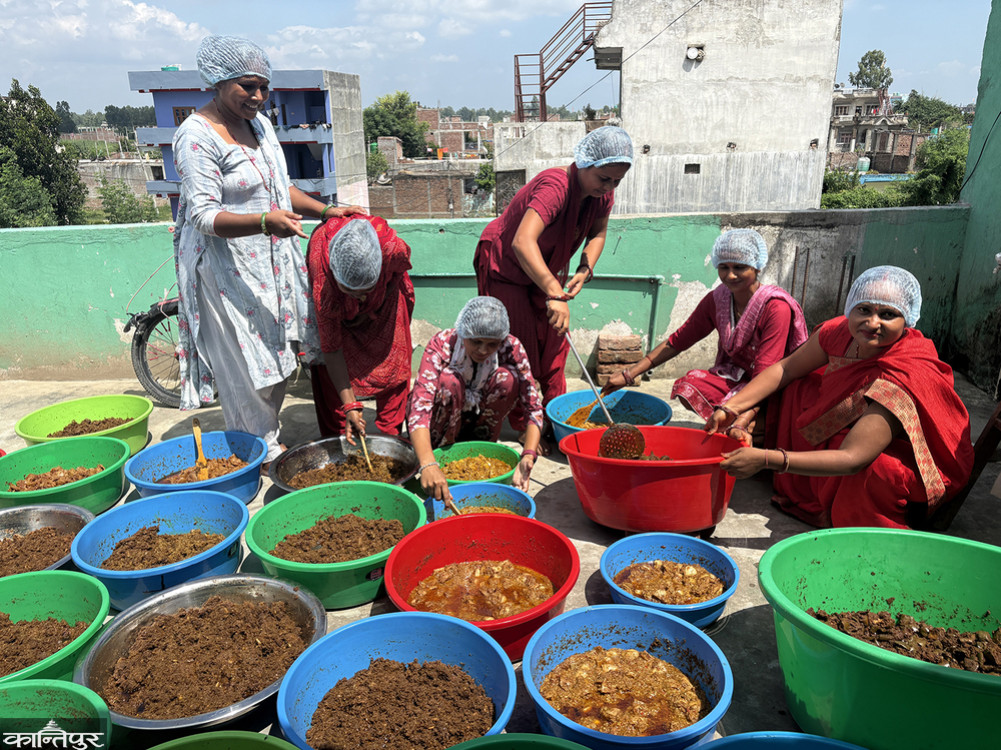
In the last month of Jestha, the price increase in the food and beverage group was 4.95 percent and that in the non-food and services group was 5.37 percent.
We use Google Cloud Translation Services. Google requires we provide the following disclaimer relating to use of this service:
This service may contain translations powered by Google. Google disclaims all warranties related to the translations, expressed or implied, including any warranties of accuracy, reliability, and any implied warranties of merchantability, fitness for a particular purpose, and noninfringement.
The inflation rate paid by consumers when purchasing goods and services has started to rise in recent months. In the same vein, the Rastra Bank has stated that the average inflation rate until last Jestha was 5.22 percent. The inflation rate during the same period of this year is 2.5 percentage points higher than that in Jestha of the previous fiscal year. In Jestha of the previous year, such inflation rate was 2.72 percent.
From Asad to Mangshir 2082, the inflation rate was around one to two percent. Inflation, which had been increasing continuously since Poush, reached 5.04 percent in Baisakh. It further skyrocketed to 5.22 percent in Jestha.
Rastra Bank officials say that the challenge of inflation has been increasing in recent months. Satyendra Timilsina, Head of the Rastra Bank Research Department, admitted that there has been pressure on inflation due to supply-side factors. ‘As mentioned in the economic outlook of the macroeconomic report released along with the monetary policy a week ago, there has been some pressure on prices due to supply-side factors in recent months,’ he said,
‘External indicators are getting stronger and remittance inflows are continuously increasing, so deposits in the market have increased. This poses an additional challenge in liquidity management.’ However, he said that liquidity will be gradually utilized after the implementation of the policy arrangements in the monetary policy.
According to the monthly report of the National Bank, the price increase in the food and beverage group was 4.95 percent in the last month of Jestha and 5.37 percent in the non-food and service group. In Jestha 2082, the price increase in the food and beverage group was 0.54 percent and the price increase in the non-food and service group was 3.94 percent.
The average price increase rate in the eleven months of the fiscal year 2082/83 is 2.89 percent. The average price increase rate in the same period last year was 4.24 percent. The National Bank has stated that in the month of Jestha 2083, the annual point consumer price index of the fruits subgroup under the food and beverage group increased by 17.40 percent, ghee and oil by 15.10 percent, fish and meat by 5.26 percent, and vegetables by 4.14 percent. However, the annual point consumer price index of the pulses and legumes subgroup decreased by 0.93 percent.
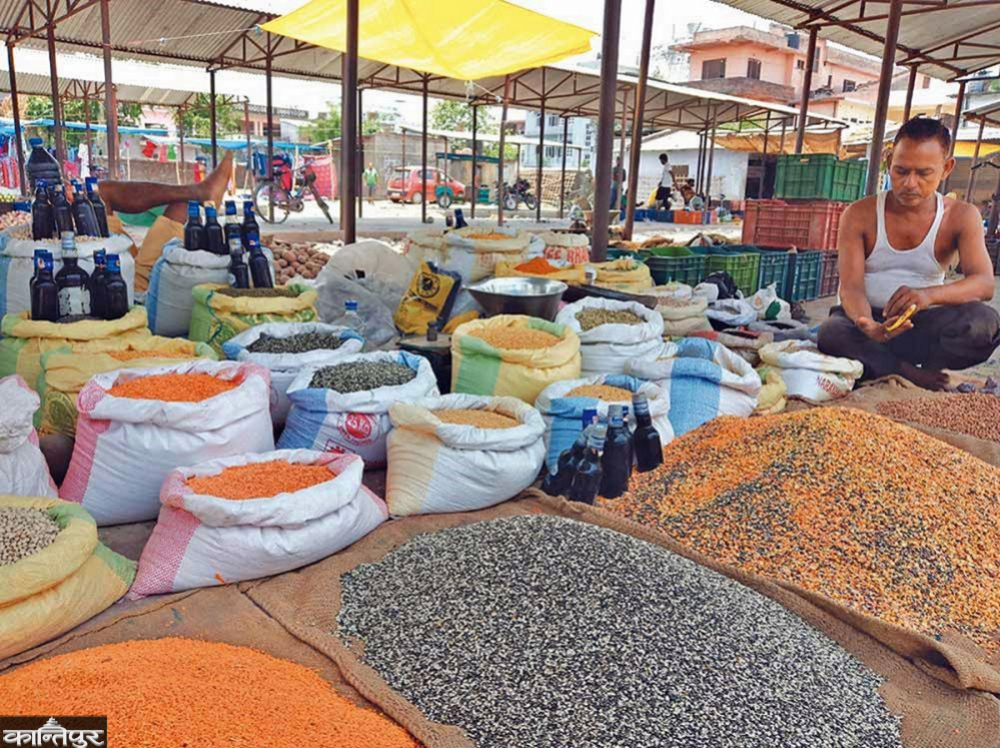
The annual point consumer price index of the miscellaneous goods and services subgroup under the non-food and service group increased by 16.68 percent, transportation by 15.31 percent, alcoholic beverages by 7.20 percent, education by 5.54 percent, and clothing and footwear by 5.53 percent.
Similarly, in the eleven months of the current fiscal year (from Shrawan to Jestha), the country received remittances worth Rs 2120 billion. The monthly report of the National Bank has shown that remittances increased by 38.2 percent in the same period this year compared to Jestha last year.
Remittance inflow increased by 15.6 percent in the 11 months of last year. On a monthly basis, Rs 23.89 billion was received in Jestha 2083. In Jestha 2082, Rs 176.32 billion was received. ‘During the review period, remittance inflow in US dollars increased by 29.6 percent to Rs 14.59 billion. Last year, such inflow increased by 12.8 percent,’ the Rastra Bank said.
In the last eleven months, the number of Nepalis who obtained final labor permits (institutional and individual-new) for foreign employment was 367,211 and the number of those who obtained re-labor permits was 355,735. In the same period of the previous year, such numbers were 452,324 and 388,067, respectively.
Similarly, the country’s foreign exchange reserves have been setting new records every month. In the same vein, foreign exchange reserves have reached Rs 3755 billion by last Jestha. Foreign exchange reserves have increased by 40.3 percent compared to last Ashar.
Total foreign exchange reserves in Ashar 2082 were 2677.68 billion rupees. ‘Such reserves in US dollars have increased by 26.5 percent to 24.68 billion rupees in mid-Ashar 2082, from 19.5 billion rupees in mid-Jeshar 2082,’ the NRB said. The share of Indian currency in total foreign exchange reserves is 21.5 percent.
Based on imports up to ten months of the fiscal year 2082/83, the NRB claims that the foreign exchange reserves held by the banking sector will be sufficient to cover 22.5 months of goods imports and 19.1 months of goods and services imports. The NRB had set a target of maintaining foreign exchange reserves sufficient to cover at least 7 months of imports in the current fiscal year.
Similarly, in last Jeshar, the current account is in surplus by 82.6 billion rupees. In 2082 Jestha, the current account was in surplus by Rs 321.74 billion. In the last 11 months, Rs 22.82 billion in direct foreign investment (equity only) has been inflow. In the same period last year, such direct foreign investment (equity only) was Rs 11.07 billion.
In the last 11 months, Rs 748.62 billion in deposits have been added to banks and financial institutions. This is an increase of 10.3 percent. Such deposits had increased by 8 percent in the same period last year.
In the last 11 months, banks and financial institutions have disbursed additional loans of Rs 340.57 billion. This is an increase of 6.2 percent. The Rastra Bank's target was to expand credit by 12 percent this year. In the last few years, only half of the target set by the Rastra Bank has been expanding credit.