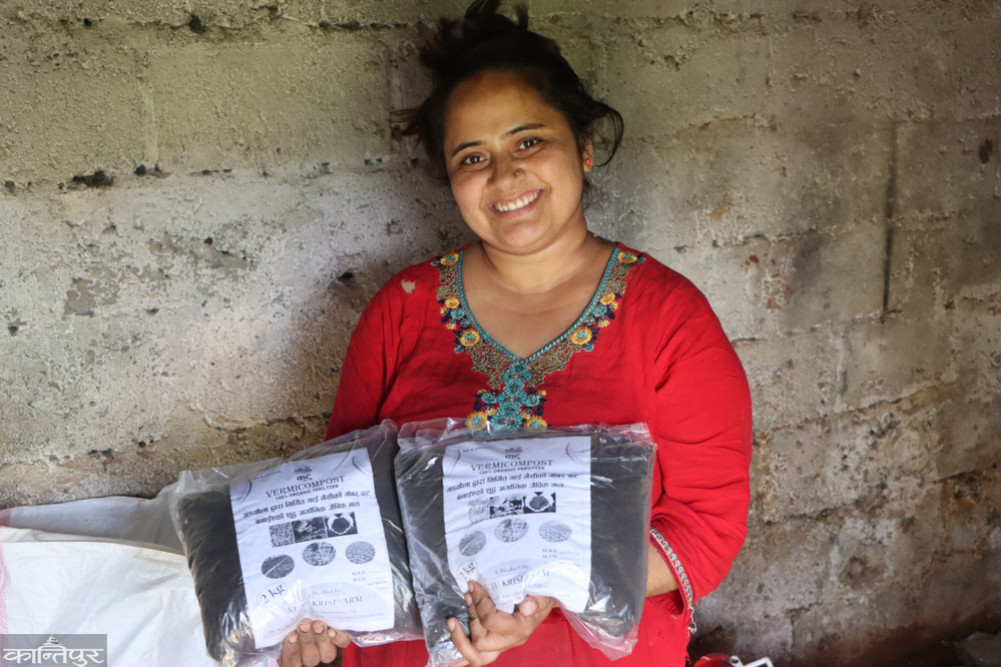
Sensing a decline in soil fertility, many farmers in Palpa have begun to adopt alternatives such as farmyard manure, green manure, and vermicompost.
We use Google Cloud Translation Services. Google requires we provide the following disclaimer relating to use of this service:
This service may contain translations powered by Google. Google disclaims all warranties related to the translations, expressed or implied, including any warranties of accuracy, reliability, and any implied warranties of merchantability, fitness for a particular purpose, and noninfringement.
In recent years, farmers in Palpa have been reducing their use of chemical fertilizers. They have been searching for alternatives to chemical fertilizers. Specifically, the use of urea fertilizer in the district has been decreasing, with farmers turning to green manure, vermicompost, farmyard manure, liquid fertilizers, and organic fertilizers.
Those who have been using chemical fertilizers have also started seeking alternatives in recent years due to the lack of easy availability. After agricultural experts suggested that the use of chemical fertilizers was increasing soil acidity, some local governments have begun investing in the use of alternative fertilizers. Agricultural expert Sagar Karki says that after farmers themselves experienced a decline in soil fertility due to chemical fertilizers, they have started reducing the excessive use of urea and adopting alternative methods. “I have found that farmers themselves have experienced a decrease in soil fertility,” he said, “so now, as farmyard manure has become scarce, they are seen searching for other alternative fertilizers.”
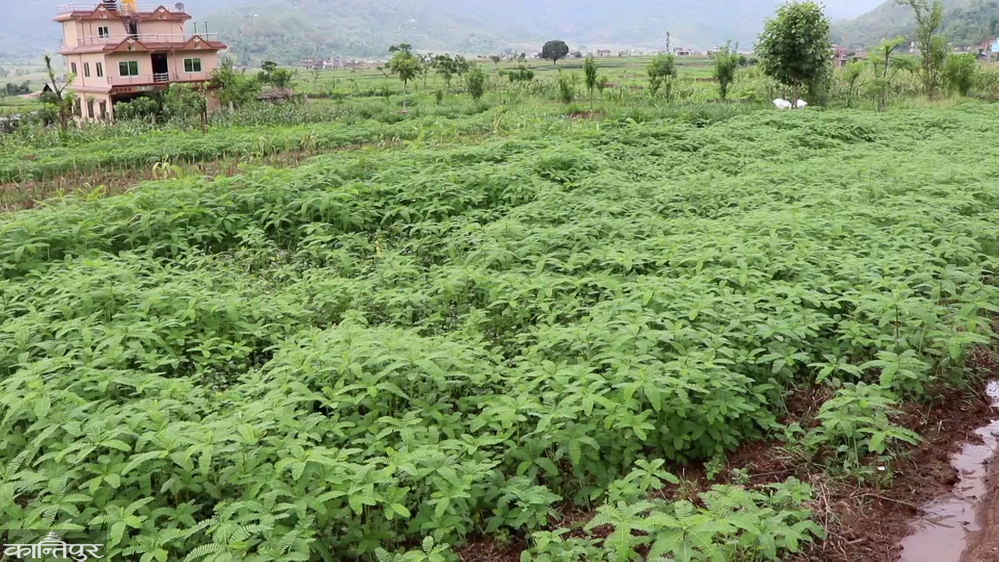
Ribdikot Rural Municipality has been investing more than 3 million rupees annually in activities such as producing liquid, organic, and compost fertilizers as alternatives to chemical fertilizers. According to Rural Municipality Chair Narayan Bahadur Karki, the Ribdikot Organic Fertilizer Industry has been established in Kusumkhola through the Jaleshwar Multipurpose Cooperative.
The organic fertilizer factory was established under the concept of public-private partnership, involving Ribdikot Rural Municipality, farmers affiliated with the cooperative, and the cooperative itself. The price of the fertilizer has been set at 25 rupees per kilogram. Chair Karki said that the factory was opened in response to farmers’ complaints that, despite their daily hard work, yields were not as expected. A total of 4.5 million rupees has already been spent during the establishment phase.
Soil and fertilizer testing conducted by the Khajura Banke Soil and Fertilizer Testing Laboratory in Ribdikot, Palpa, found that the soil was acidic and, in some places, alkaline. Recently, due to the increasing and indiscriminate use of chemical fertilizers and pesticides in crops, soil quality has been deteriorating, so each municipality can open small factories like this, according to organic fertilizer production expert Yam Bahadur Darlami.
This fertilizer, named Amritbuti Organic Fertilizer, is made by mixing banmara, titepati, and mountain weeds. In addition, bone meal, oilcake, bio-bacteria, pseudomonas, trichoderma, seaweed, calcium, cow dung, and press mud are used in the organic fertilizer, according to expert Darlami. It contains 1 percent nitrogen, 0.5 percent phosphorus, 1 percent potash, 25 percent moisture, and a pH of 7 percent.
Attraction to Green Manure
After facing problems obtaining chemical fertilizers on time, farmers in Damkada, Keseni, Rupse, Madipokharathok, Madanpokhara, and Jhumsa of Dovan have started producing green manure. Rishiraj Khanal of Tansen Municipality–9 said that, as livestock farming has declined, there is a shortage of farmyard manure, so he has had to produce green manure.
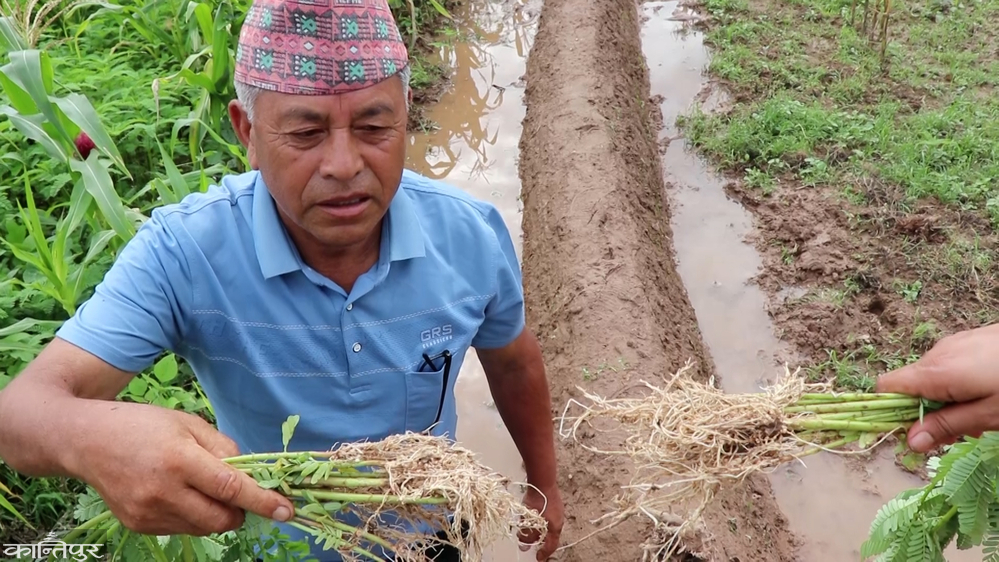
Here, green manure of the dhaicha variety is produced for rice cultivation. This type of grass is sown 20 days before transplanting rice. Farmers grow the green grass for fertilizer and plant it on the field ridges to produce seeds. According to farmer Buddha Basnyat, dhaicha grass seeds are available at 50 to 70 rupees per kilogram. After sowing dhaicha, the field must be plowed without cutting the grass for 20 to 35 days and then left soaked in water for two days. The dhaicha plant absorbs nitrogen from the air. Agricultural expert Thaman Bahadur Karki said that the plant sends the nitrogen to its roots and supplies the nitrogen needed for rice crops.
Vermicompost as an Alternative
Dil Bahadur Thapa of Kajipauwa, Tansen–7, shared his experience that using vermicompost for seedling production has been effective. He raises earthworms himself in two cockpits. He has found that vermicompost is especially good for raising seedlings compared to farmyard manure. He said that using vermicompost instead of always using farmyard manure results in better yields. In recent years, farmers have been using vermicompost produced from earthworms. Initially, he used vermicompost for seedling production, but in recent years, Dilu Magar, a farmer from Devistan, Rampur Municipality–4, said he has been using it for vegetable production as well.
According to farmers, Kutu Agriculture Farm in Dharampani, Tansen–5, has started producing vermicompost. Agro-vets in Tansen purchase the fertilizer produced by the farm. Some farmers have even started buying directly from the farm. Bhagwati Paudel Ghimire, the farm’s operator, said that to restore soil fertility, she has been producing fertilizer through commercial earthworm farming. Ghimire has built more than 15 pits to raise earthworms. In addition to the pits, fertilizer is also produced separately.
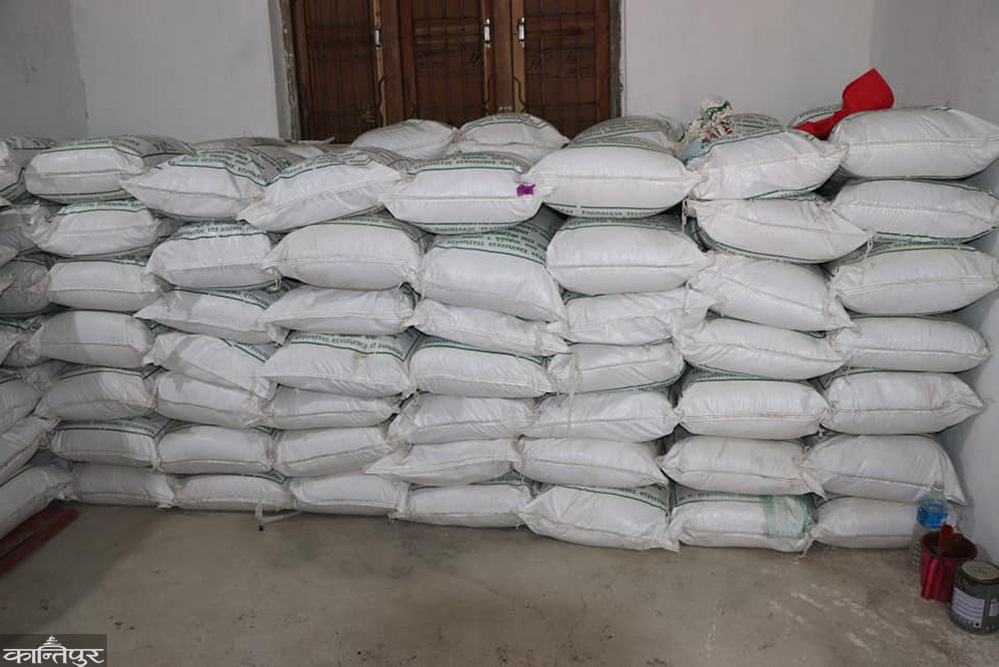
She said that six years ago, she started raising earthworms by bringing 20 kilograms from Kapilvastu at 1,500 rupees per kilogram. With the help of her husband, Suvin, she raises earthworms and produces fertilizer from them. From 300 kilograms of earthworms, she produces about 30 quintals of organic vermicompost fertilizer per month.
Sirjana Pandey, head of the Palpa branch of the Agriculture Inputs Company, said that improper use of chemical fertilizers adversely affects soil quality. According to her, although balanced use of urea, DAP, and potash is necessary, most farmers have been using more urea than needed, which has increased the problem. As the number of farmers conducting soil tests has increased, the demand for urea fertilizer has also started to decline.
This year, the target is to sell about 1,550 metric tons of urea, 1,000 metric tons of DAP, and 150 metric tons of potash in Palpa. So far, 1,000 metric tons of urea, 436 metric tons of DAP, and 83 metric tons of potash have been sold. Last fiscal year, although the target was to sell 2,000 metric tons of urea, only 1,186 metric tons were sold. At that time, 637 metric tons of DAP and 92 metric tons of potash were sold, according to the company.