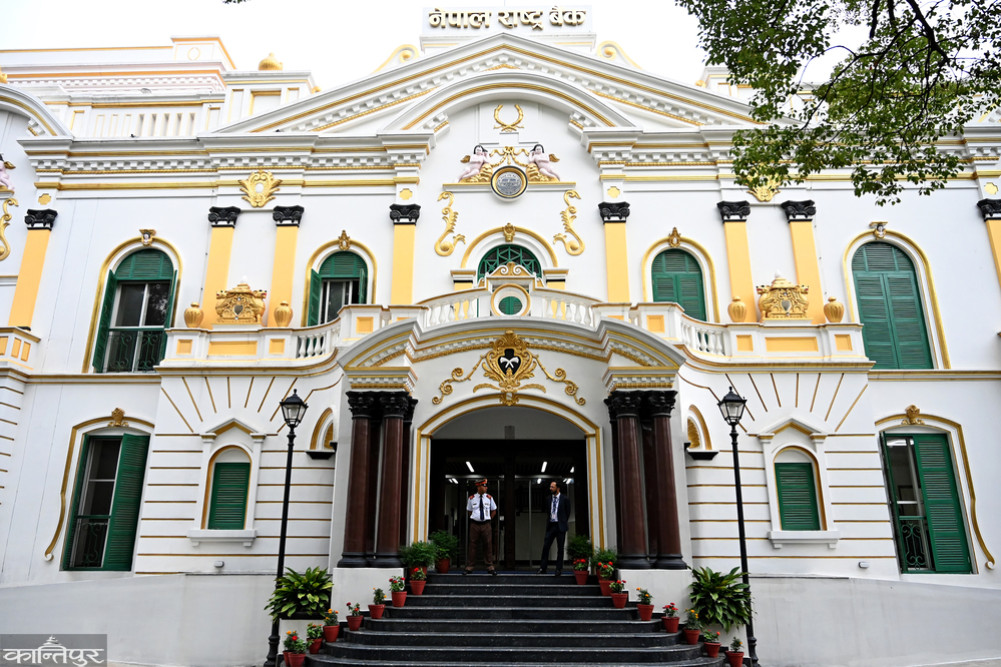
According to the National Bank, the current loan-to-value ratio for all types of vehicles, including electric vehicles, is 60 percent. The National Bank is preparing to increase this limit to 70 percent or more for large electric vehicles.
We use Google Cloud Translation Services. Google requires we provide the following disclaimer relating to use of this service:
This service may contain translations powered by Google. Google disclaims all warranties related to the translations, expressed or implied, including any warranties of accuracy, reliability, and any implied warranties of merchantability, fitness for a particular purpose, and noninfringement.
The Nepal Rastra Bank has adopted a policy to facilitate the loan-to-value ratio of large electric vehicles used as public transport. Point No. 20 of the monetary policy for the upcoming fiscal year, made public by Governor Bishwanath Poudel, mentions that special policy arrangements will be made to facilitate the loan-to-value ratio of large electric vehicles used as public transport. The point covers not only electric vehicles but also other sectors.
According to the Nepal Rastra Bank, the loan-to-value ratio is currently 60 percent for all types of vehicles, including electric vehicles. The National Bank is preparing to increase this limit to 70 percent or more for large electric vehicles.
The loan-to-value ratio limit for personal vehicles and all types of electric vehicles has been set at 60 percent in the semi-annual review of the monetary policy for the fiscal year 2081/82. Before that, there was a maximum of 50 percent in loans for personal other (fuel-powered) vehicles for private use and a maximum of 80 percent in the case of personal electric vehicles.
Due to the recent policy to promote electric vehicles put forward by the government, electric vehicles are now seen dominating private vehicles on the road. Large electric buses have not been able to increase significantly.
Former chairman of NADA, Dhruv Thapa, says that the policy of the National Bank will provide relief as the import of large public vehicles has not increased due to their high cost. ‘If you have to buy a 30/35 seater electric bus, it will cost around 15 million on average. On the other hand, 3 fuel-powered buses come at the same price,’ he said, ‘That is why the demand for large public vehicles has not increased.’
He said that small vehicles are also gaining a good market in the public sector. He also informed that they are demanding to increase the loan-to-value ratio for all types of vehicles to 80 percent. Thapa said that the NRB may have adopted this policy to increase the attractiveness of large public vehicles. “It remains to be seen whether the debt ratio will be below or above 65 percent,” he said.
The government has set a target of maintaining a 25 percent share of private electric vehicles and 20 percent share of public electric vehicles in total vehicle sales by 2025. The government aims to achieve a 90 percent share of private vehicles and 60 percent share of public electric vehicles by 2030. The government’s goal is to transform public and private sector transport to zero carbon emissions, as stated in the National Implementation Plan for Climate Change Mitigation and Adaptation (080-87). Although the import and use of private electric vehicles has increased significantly, the import of large public vehicles has not increased.
According to the Customs Department, 22 public vehicles with more than 25 seats have been imported as of mid-June of the current fiscal year. In the fiscal year 2081/82, 16 buses were imported, in the fiscal year 2080/81 11, in the fiscal year 2079/080 37, in the fiscal year 2078/2079 7 and in the fiscal year 2077/078 4 buses were imported.
Public vehicles with more than 25 seats were subject to customs duty of 1 percent, road construction fee of 2.5 percent and value added tax of 13 percent. The budget for the upcoming fiscal year has made provision for road construction fee of 2.5 percent, clean infrastructure investment fee of 2.5 percent and VAT of 13 percent.