More than 30,000 farmers are involved in coffee farming spread across 43 districts. Amid the growing attraction of youth in coffee farming, the National Nepali Coffee Exhibition and National Coffee Cupping Championship are being held in Pokhara on Saturday.
We use Google Cloud Translation Services. Google requires we provide the following disclaimer relating to use of this service:
This service may contain translations powered by Google. Google disclaims all warranties related to the translations, expressed or implied, including any warranties of accuracy, reliability, and any implied warranties of merchantability, fitness for a particular purpose, and noninfringement.
Coffee, which was once grown in small quantities in rural fields, is now becoming a good source of income in the Nepali hills. Nepali coffee, which has made a name for itself as a ‘specialty coffee’ in the international market due to its taste and quality, is now becoming popular in the country as well.
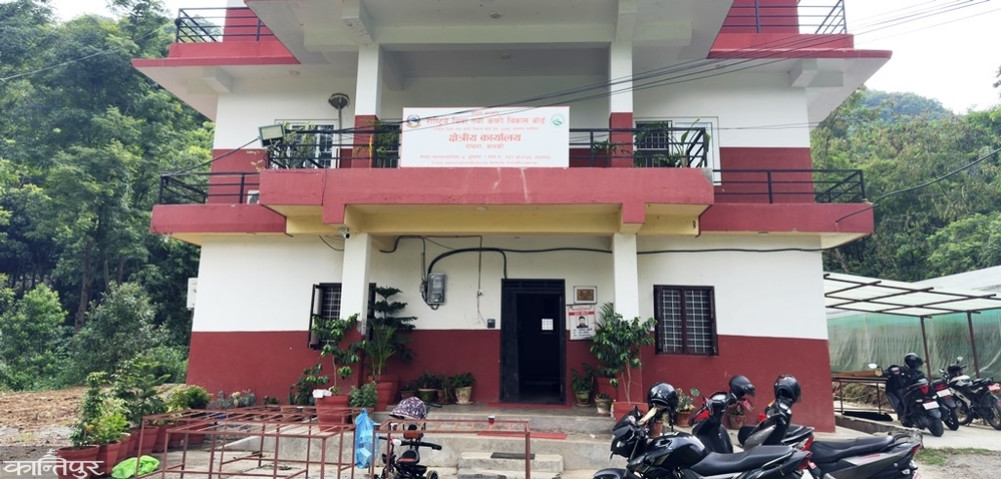
Due to the growing culture of coffee cafes, the attraction of the youth generation and the easy market, coffee farming is now expanding not only as an additional income option but also as a commercial agricultural enterprise. To further highlight this growing potential, the Regional Office of the National Tea and Coffee Development Board, Pokhara, is organizing a National Exhibition of Nepali Coffee and a National Coffee Cupping Championship in Pokhara next Saturday. The program, which will be organized with the slogan ‘Let’s know, taste, adopt, promote’, is preparing to bring farmers, businessmen, cooperatives, coffee experts and consumers from all over the country together.
The history of coffee farming in Nepal is almost 9 decades old. It is believed to have started in 1995 BS when Saint Hira Giri planted coffee seeds brought from Burma in Aapchaur, Gulmi. Although not a native crop, coffee gradually became a means of income for Nepali farmers. In the early years, farmers had to struggle a lot due to lack of processing technology and lack of markets. But in recent years, the situation has changed. Now, along with individual gardens, commercial state farms are also expanding.
According to the National Tea and Coffee Development Board, coffee farming is now spread across 43 districts of Nepal. More than 30,000 small and large farmers are involved in it. 100 percent Arabica coffee is being produced in the mid-hills at an altitude of 800 to 1,600 meters. Arabica is a variety known for its excellent taste and quality in the world. Experts say that Nepal's altitude, climate, soil, and the organic farming system adopted in most places have given Nepali coffee a unique taste.
In the last fiscal year 2081/82, coffee was cultivated in an area of 5,501 hectares across the country. The board's data shows that 642 metric tons of 'green beans' were produced from it. During the same period, Nepal imported 230 metric tons of coffee worth Rs 144.1 million and exported 64 metric tons of coffee worth Rs 114.3 million. It seems that about 10 percent of the total production has reached abroad.
Nepali coffee has been exported mainly as 'microlot' coffee to countries like Germany, Japan, Switzerland, South Korea, Britain and Australia. The board says that despite the low production, Nepali coffee has been fetching a relatively high price in the international market.
According to Chandra Puri, acting regional director of the National Tea and Coffee Development Board, Pokhara, the demand for coffee is also increasing rapidly in the country. ‘The number of coffee cafes has increased significantly in recent years, and coffee culture is expanding among the younger generation,’ he said. ‘As a result, the price found in the international market is now being obtained in the domestic market. This is also why the youth’s attraction towards coffee farming is increasing.’ He said that coffee is imported into Nepal at a cost of Rs 750 per kg and exported abroad at a cost of Rs 2,200 per kg.
He said that Gandaki Province is at the forefront in both coffee production and consumption. Coffee is produced in 9 of the 11 districts of the province. Kaski, Syangja, Gorkha, Lamjung, Tanahun and Parbat are the main producing districts. In the last fiscal year, coffee cultivation was expanded to an area of 1,451 hectares across the province, and 156 metric tons of green beans were produced.
Gandaki is second in terms of consumption after Bagmati. Statistics show that Nepali coffee is being consumed through more than 1,500 coffee cafes in Pokhara alone. This is why Pokhara has been established as a major hub for Nepali 'specialty coffee' in recent years, says Puri.
The organizer has stated that coffee producers, entrepreneurs, cooperatives, stakeholders and consumers from all provinces of the country will participate in the national exhibition to further promote this potential. The exhibition will be held at the board's regional office in Dumribot, Molpatan.
Puri informed that the winners of the National Coffee Cupping Championship will be honored at the program. In addition, coffee nursery and garden observation, free cupping of the best Nepali coffee, specialty coffee brewing, coffee bar equipment exhibition, exhibition of the entire value chain from seed to cup, entertaining games related to coffee, interactions on quality improvement and technical advice from experts will also be provided. Entry to the program will be free.
Coffee Cooperative Association Limited, Lalitpur has secured the first place with 86.25 points in the National Coffee Cupping Championship. Mahabharat Small Farmers Agricultural Cooperative Society, Kavre has secured the second place with 86 points. Kot Tok Coffee Producer Farmers Group (Gorkha), Mahadevtar Dhog Agricultural Firm (Kavre) and Gulmi Coffee State Pvt. Ltd. (Gulmi) have jointly secured the third place with 84.75 points.
Regional Director Puri says that Nepali coffee is now making a new identity not only in the global market but also in its own country. According to him, this exhibition will further accelerate the production, quality and market promotion of Nepali coffee by connecting farmers to consumers on a single platform. He said, ‘We believe that everyone’s participation in the campaign to introduce the potential, taste and quality of Nepali coffee to the world will make a significant contribution to the sustainable development of the coffee sector.’